Official updates from important public, service, business and development institutions in Solomon Islands.
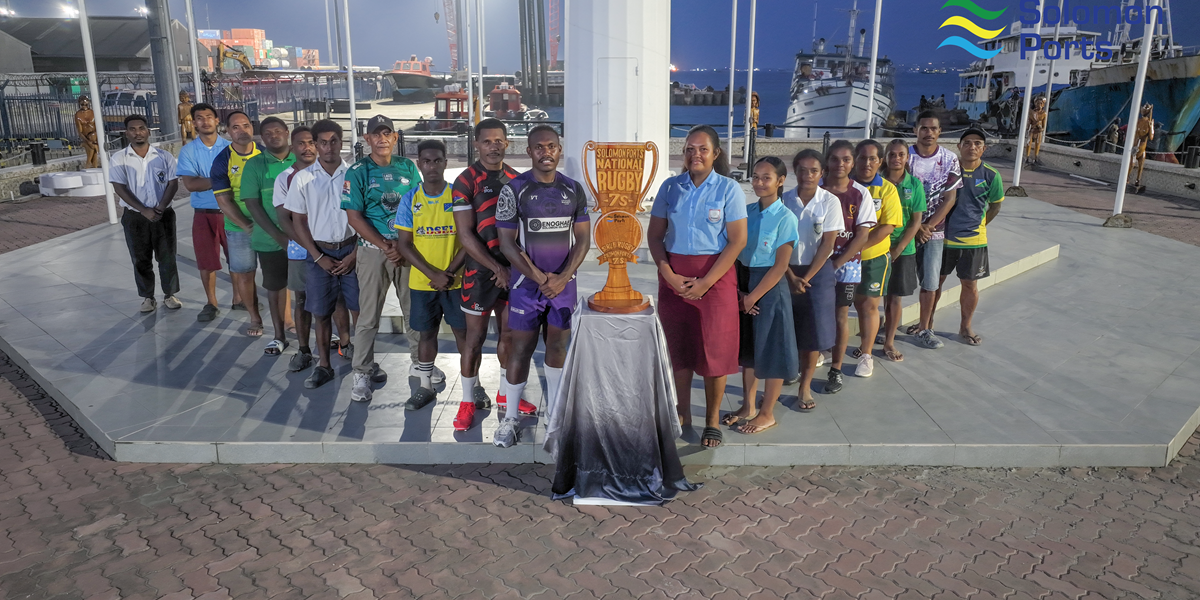
Solomon Islands Ports Authority (SIPA), trading as Solomon Ports, has reaffirmed its commitment to sports development in Solomon Islands with a SBD $100,000 sponsorship towards the Solomon Ports National Rugby 7s Tournament, scheduled to take place in Honiara this September.
The 3 day Rugby Competition will commence on Wednesday 16th Sep and ends on Friday 18th Spe. The tournament will bring together 8 Association members and top 4 local clubs for the Men’s category. While 4 teams for women’s category , and 13 teams from High schools.
The official sponsorship announcement was held at the SIPA Headquarters and was attended by SIPA Interim Board Chairman Mr. Robert Iroga , Chief Executive Officer Mr. George Rausi , and representatives of the Solomon Islands Rugby Union Federation (SIRUF), including Chief Executive Officer Mr. Alivereti Mocelutu and Vice President Mr. Carlwin Tengemoana .
As the major sponsor of the National 7s Tournament, SIPA’s contribution will support the successful hosting and delivery of the competition, which is expected to bring together rugby players from across the country.
Solomon Ports has a strong history of supporting rugby and sports development in Solomon Islands. Its most recent major rugby sponsorship was in 2024 , when Solomon Islands hosted the prestigious Oceania 7s Tournament in Honiara , with Solomon Ports also serving as a major sponsor.
Speaking at the sponsorship ceremony, SIPA Interim Board Chairman Mr. Robert Iroga said Solomon Ports was pleased to support the tournament, highlighting the important role of sport in bringing people together.
“SIPA believes that through sports we can create good citizens in all sectors of life, especially with young people, and we want to see the widespread development of this sport,” he said.
SIPA Chief Executive Officer Mr. George Rausi said the sponsorship also reflects the Authority’s continued efforts to strengthen its relationship with the wider community.
“SIPA is not only about the berthing of vessels; it is also about being part of the community. When a port is effective, the community also thrives, and we believe this support will surely go towards its intended purpose,” he said.
Mr. Rausi added that SIPA and SIRUF share common values in using sport as a platform to bring people together.
“I believe SIPA and SIRUF share the same values when it comes to bringing people together through such initiatives,” he said.
In response, SIRUF Chief Executive Officer Mr. Alivereti Mocelutu thanked Solomon Ports for its continued support towards rugby development in Solomon Islands.
He said the sponsorship goes beyond financial assistance and represents an investment in the future development of rugby in the country.
“This tournament is about giving opportunities to rugby players in the country, turning challenges into opportunities, especially for our young players,” he said.
The Solomon Ports National Rugby 7s Tournament is expected to provide a valuable platform for players to showcase their skills, gain competitive experience and contribute to the continued growth of rugby in Solomon Islands.
Solomon Ports remains committed to supporting initiatives that contribute to youth development, community engagement and the growth of sports in the country.
Solomon Ports wishes all the participating teams the very best in the competition.
所罗门群岛港务局(SIPA),以所罗门港口(Solomon Ports)名义运营,重申了其对所罗门群岛体育发展的承诺,赞助金额为100,000所罗门元,支持定于9月在霍尼亚拉举行的所罗门港口国家七人制橄榄球锦标赛。
为期三天的橄榄球比赛将于9月16日(星期三)开始,并于9月18日(星期五)结束。比赛将汇聚8个协会成员和4个顶级地方俱乐部参加男子组。女子组将有4支队伍,来自高中的13支队伍。
官方赞助宣布仪式在SIPA总部举行,出席者包括SIPA临时董事会主席罗伯特·伊罗加(Mr. Robert Iroga)、首席执行官乔治·劳西(Mr. George Rausi)及所罗门群岛橄榄球联合会(SIRUF)的代表,包括首席执行官阿利维雷提·莫切鲁图(Mr. Alivereti Mocelutu)和副主席卡尔温·滕戈莫阿纳(Mr. Carlwin Tengemoana)。
作为国家七人制锦标赛的主要赞助商,SIPA的贡献将支持比赛的成功举办和交付,预计将汇聚来自全国的橄榄球运动员。
所罗门港口在支持所罗门群岛的橄榄球和体育发展方面有着悠久的历史。其最近一次主要的橄榄球赞助是在2024年,当时所罗门群岛在霍尼亚拉举办了享有盛誉的大洋洲七人制橄榄球锦标赛,所罗门港口也作为主要赞助商参与其中。
在赞助仪式上,SIPA临时董事会主席罗伯特·伊罗加表示,所罗门港口很高兴能支持此次锦标赛,强调了体育在团结人们方面的重要作用。
“所罗门港务局相信,通过体育我们可以培养各个领域的好公民,特别是年轻人,我们希望看到这项运动的广泛发展,”他说。
SIPA首席执行官乔治·劳西表示,赞助也反映了该局继续努力加强与更广泛社区的关系。
“所罗门港务局不仅仅是船只停靠;它还意味着成为社区的一部分。当一个港口运作良好,社区也会繁荣,我们相信这项支持肯定会达到预期的目的,”他说。
劳西先生补充说,SIPA和SIRUF在利用体育作为平台团结人们方面有着共同的价值观。
“我相信SIPA和SIRUF在通过这样的倡议团结人们方面有着相同的价值观,”他说。
对此,SIRUF首席执行官阿利维雷提·莫切鲁图感谢所罗门港口对所罗门群岛橄榄球发展的持续支持。
他说,赞助不仅仅是经济援助,更是对国家橄榄球未来发展的投资。
“这项锦标赛是为国内橄榄球运动员提供机会,将挑战转化为机遇,特别是对于我们的年轻球员,”他说。
所罗门港口国家七人制橄榄球锦标赛预计将为球员提供一个展示技能、获得竞争经验并为所罗门群岛橄榄球的持续发展做出贡献的宝贵平台。
所罗门港口将继续支持有助于青年发展、社区参与和体育增长的倡议。
所罗门港口祝愿所有参赛队伍在比赛中取得优异成绩。
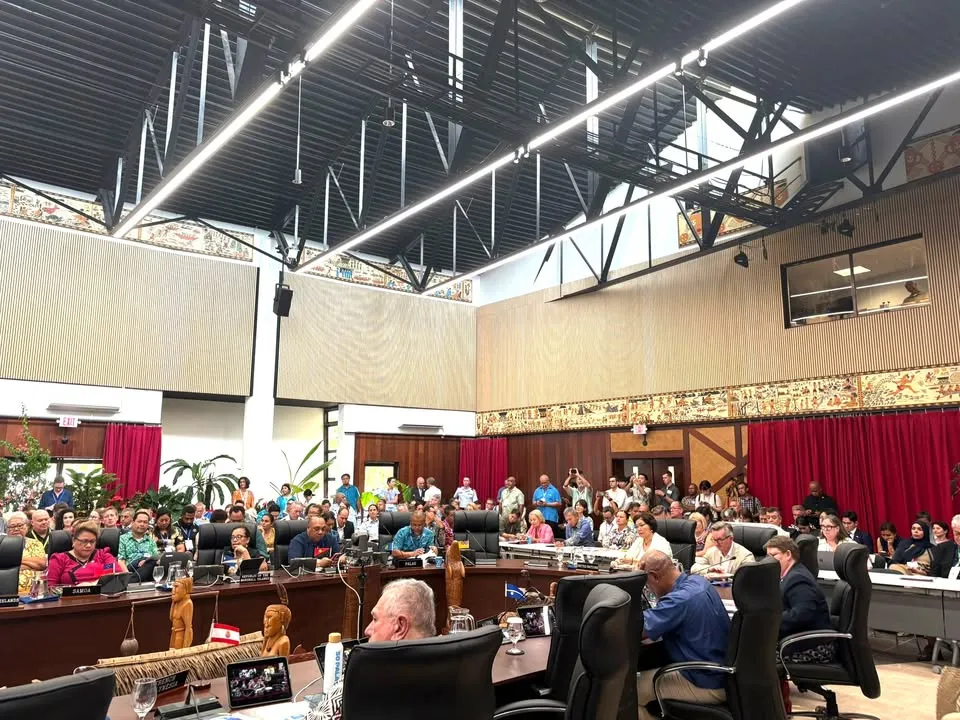
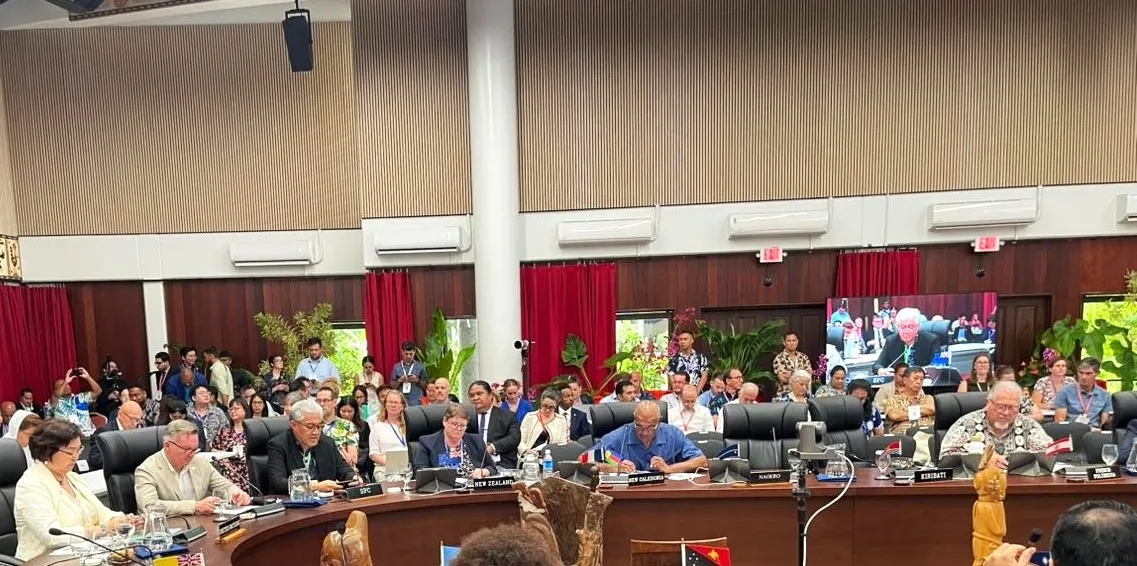
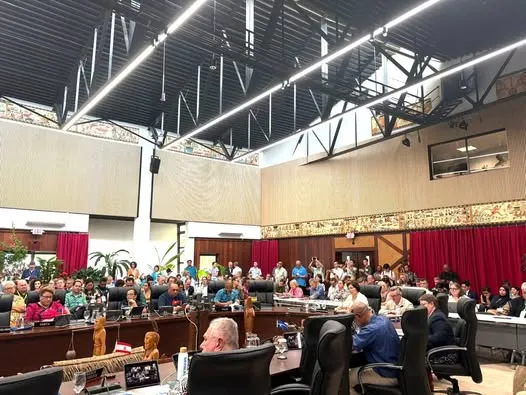
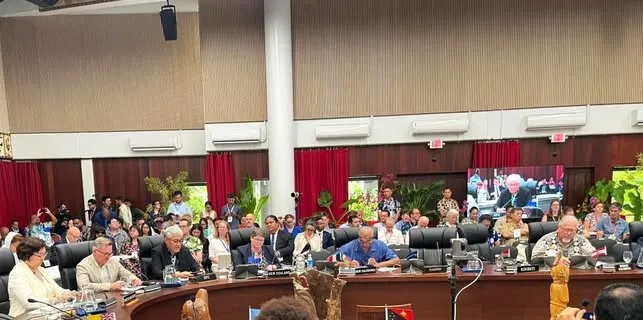
The Leaders Ascent Dialogue, hosted by President of Palau, H.E. Surangel S. Whipps Jr., brought together Pacific leaders and development partners to advance climate action ahead of COP31 and during the 55th Pacific Islands Forum Leaders Meeting.
The dialogue focused on regional solutions to climate change, with particular emphasis on energy security and the Pacific’s ambition to achieve 100% renewable energy. Discussions highlighted the urgency of accelerating the transition
to clean energy while ensuring no communities are left behind.
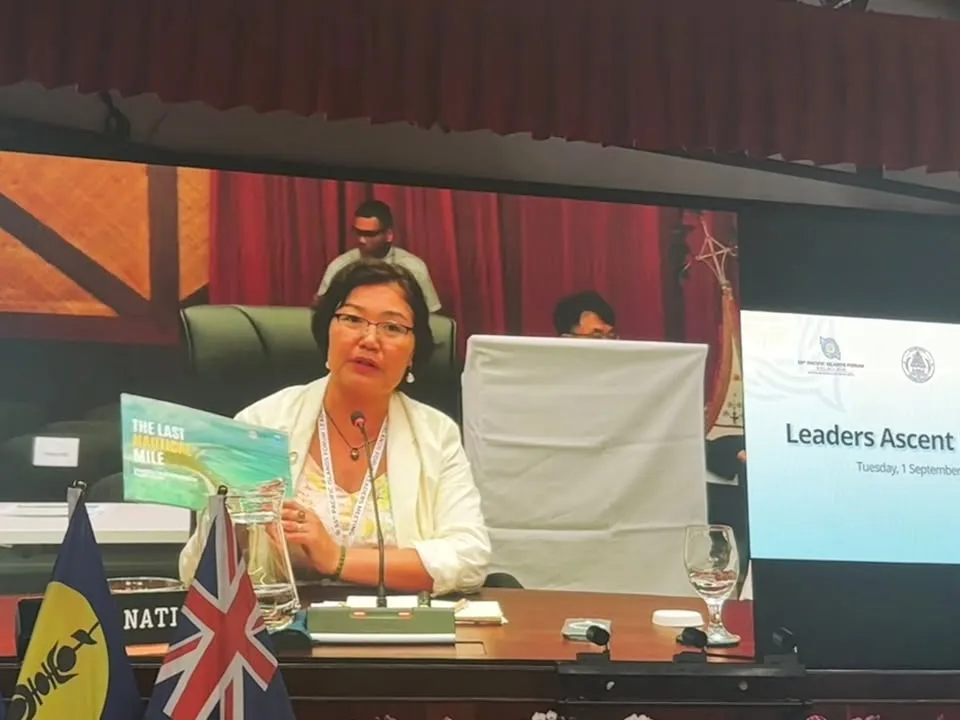
Our Resident Representative, Munkhtuya Altangerel, brought the “Last Nautical Mile” (https://zurl.co/hWqOL) into the discussion, emphasising the need for a whole-of-island approach that ensures renewable energy investments reach rural, remote and maritime communities.
She also highlighted the importance of building local capacity and empowering communities to plan, operate and maintain renewable energy systems – strengthening long-term energy security, resilience and local ownership across the Pacific.
由帕劳总统苏兰杰尔·S·惠普斯(H.E. Surangel S. Whipps Jr.)主持的领导者高峰对话,汇聚了太平洋领导人和发展伙伴,以在COP31之前和第55届太平洋岛国论坛领导人会议期间推进气候行动。
对话集中讨论了应对气候变化的区域解决方案,特别强调能源安全和太平洋实现100%可再生能源的雄心。讨论突出了加速向清洁能源过渡的紧迫性,同时确保没有社区被遗留在外。
我们的驻地代表穆克图亚·阿尔坦格雷尔(Munkhtuya Altangerel)在讨论中引入了“最后一海里”(Last Nautical Mile),强调需要采取全岛的方式,确保可再生能源投资能够惠及农村、偏远和海洋社区。
她还强调了建设地方能力和赋权社区规划、运营和维护可再生能源系统的重要性,从而增强整个太平洋地区的长期能源安全、韧性和地方所有权。
🎉 SPREAD THE BLESSING THIS FATHERS’ DAY! 🎉
Purchase from anywhere overseas on our eShop and spread the blessing during this Fathers’ Day special. ❤️
When you're on the eShop, whether you're using your computer or phone, make sure that when checking out you enter the coupon code:
🔥 FathersDay 🔥
to get your instant discount!
📅 Promotion Period: 31st August – 12th September 2026
Surprise your father with an awesome phone deal at a special discounted price! 📱🎁
Shop from overseas, send the blessing home, and make this Fathers’ Day extra special for Dad. ❤️
https://www.ourtelekom.com.sb/
Don’t miss out — shop now and use FathersDay at checkout!
🎉 SPREAD THE BLESSING THIS FATHERS’ DAY! 🎉
在我们的电子商店从海外购买,并在这个父亲节特别活动中传播祝福。❤️
当您在电子商店时,无论是使用电脑还是手机,请确保在结账时输入优惠券代码:
🔥 FathersDay 🔥
以获得即时折扣!
📅 Promotion Period: 2026年8月31日 – 9月12日
以特别折扣价给父亲一个惊喜的手机交易!📱🎁
从海外购物,把祝福送回家,让这个父亲节对爸爸来说更加特别。❤️
https://www.ourtelekom.com.sb/
Don’t miss out — shop now and use FathersDay at checkout!
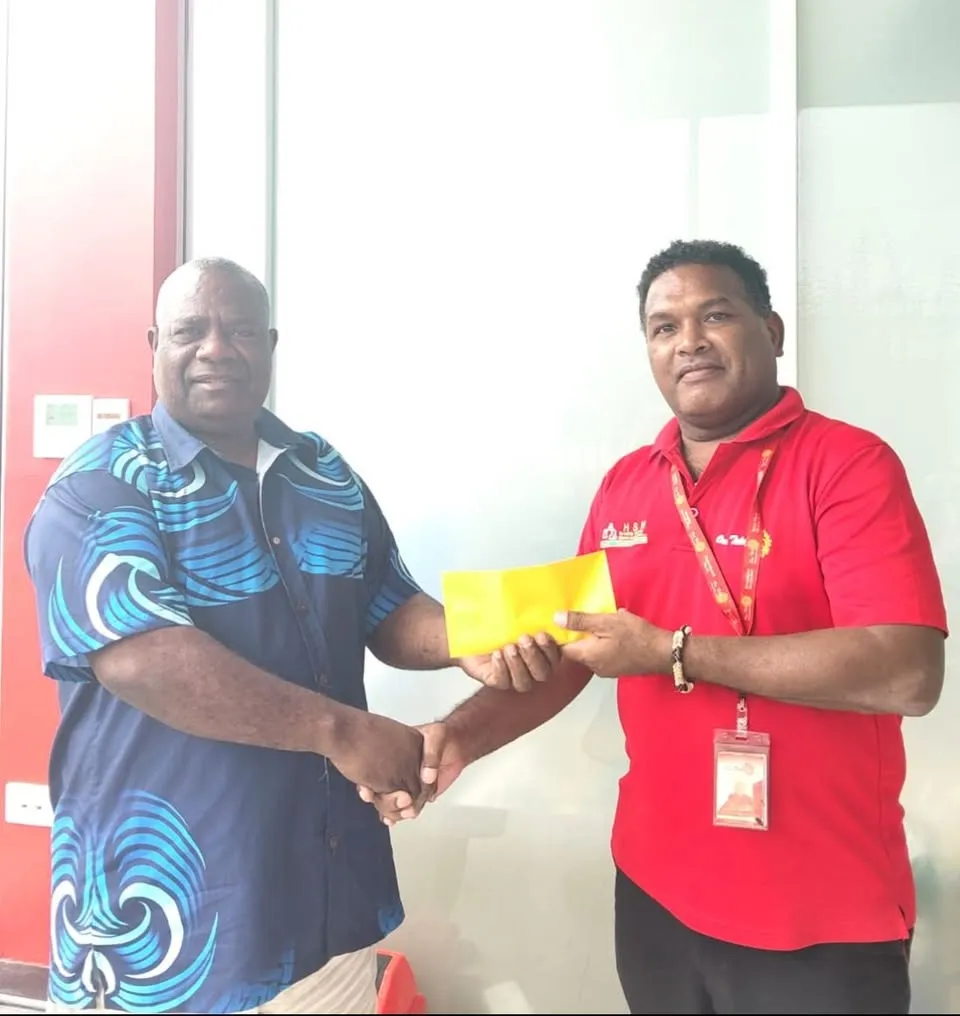
🎉 CONGRATULATIONS to our Top Up & Win Big Second Winner — Hon. Bradley Smoky Rodo Tovosia! 🏆🎁
The Top Up & Win Big Promotion officially concluded last month, and we’re excited that we’ve finally managed to get our winner to collect his well-deserved prize! 🎉
A huge thank you to everyone who participated and made the promotion a success. Your support means a lot to us!
🔥 We’re already looking forward to bringing you another awesome promotion very soon — and everyone can be part of it!
Once again, CONGRATULATIONS, Hon. Bradley Smoky Rodo Tovosia! 👏🎊
Stay tuned... your chance to WIN BIG could be next! 🚀
🎉 CONGRATULATIONS 祝贺我们的 Top Up & Win Big 第二位获奖者 — Hon. Bradley Smoky Rodo Tovosia! 🏆🎁
Top Up & Win Big 促销活动上个月正式结束,我们很高兴终于让我们的获奖者领取他应得的奖品!🎉
非常感谢所有参与并使促销活动取得成功的人。您的支持对我们意义重大!
🔥 我们已经期待着很快为您带来 another awesome promotion — 每个人都可以参与!
再次祝贺,Hon. Bradley Smoky Rodo Tovosia! 👏🎊
敬请关注......您的机会可能是下一个 WIN BIG!🚀
Solomon Airlines has announced an earlybird sale on fares to three tropical leisure destinations just a short three-hour international flight away from Brisbane.
The special fares are discounted by up to 20% off regular prices offering affordable getaways to three diverse destinations now easily reachable from Brisbane - beautiful Santo in Vanuatu, bustling capital Honiara and spectacular Munda in Solomon Islands Western Province.
The specials apply to flights on selected dates between 7 October, 2026 through to 25 June, 2027.
Solomon Airlines says be quick to bags a bargain, as the fares are on sale until 18 September only unless sold out prior. Solomon Airlines is a full-service carrier with all fares including complimentary inflight meal and drinks, Economy Class checked baggage allowance of 30kg per person and 7kg cabin baggage, generous legroom on board and the opportunity to experience the warm hospitality of the Hapi Isles. Fares quoted also include all fees, taxes and charges.
The Earlybird specials are as follows:
Brisbane to Santo fares are priced from AUD$429 one-way or AUD$835 return (including all fees and taxes) for flights between 10 Nov to 10 Dec 2026, 28 Jan to 25 Mar, 13 Apr to 10 Jun and 15 to 24 Jun 2027.
Brisbane-Honiara fares are priced from AUD$429 one-way or AUD$839 return (including all fees and taxes) for flights between 7 Oct to 11 Dec 2026, 27 Jan to 24 Mar and 12 Apr to
25 Jun 2027.
Brisbane to Munda one-way fares to Munda are also on sale from AUD$429 (including all fees and taxes) for selected dates 9 Oct to 11 Dec 2026, 29 Jan to 19 Mar, and 16 Apr to
25 Jun 2027,
For further details or to book visit Solomon Airlines website, www.flysolomons.com or contact Solomon Airlines Reservations via email reservations@flysolomons.com, or phone our Australian Reservation team on 1300 894 311. Service and card payment fees may apply.
所罗门航空公司宣布推出早鸟特卖,提供前往三个热带休闲目的地的特价机票,这些目的地距离布里斯班仅有短短三个小时的国际航班。
特价机票的折扣高达20%,为前往三个多样化目的地提供了实惠的度假选择,这些目的地现在从布里斯班出发都很容易到达——美丽的瓦努阿图圣托、繁忙的首都霍尼亚拉以及所罗门群岛西部省壮观的蒙达。
特价适用于2026年10月7日至2027年6月25日之间的指定日期航班。
所罗门航空公司表示,抓紧时间抢购特价机票,因为这些票价仅在9月18日之前出售,售完为止。所罗门航空是一家全方位服务的航空公司,所有票价均包括免费机上餐饮、经济舱每人30公斤的托运行李配额和7公斤的随身行李、宽敞的机上腿部空间,以及体验哈皮群岛温暖款待的机会。所报价的票价还包括所有费用、税费和附加费。
早鸟特卖的具体信息如下:
布里斯班至圣托的单程票价从429澳元起,往返票价为835澳元(包括所有费用和税费),适用于2026年11月10日至12月10日、2027年1月28日至3月25日、4月13日至6月10日以及6月15日至24日的航班。
布里斯班至霍尼亚拉的单程票价从429澳元起,往返票价为839澳元(包括所有费用和税费),适用于2026年10月7日至12月11日、2027年1月27日至3月24日以及4月12日至6月25日的航班。
布里斯班至蒙达的单程票价也从429澳元起(包括所有费用和税费),适用于2026年10月9日至12月11日、2027年1月29日至3月19日以及4月16日至6月25日的指定日期。
欲了解更多详情或进行预订,请访问所罗门航空官网 www.flysolomons.com,或通过电子邮件 reservations@flysolomons.com 联系所罗门航空预订部,或拨打我们的澳大利亚预订团队电话 1300 894 311。可能会收取服务费和信用卡支付费。
The Governor of the Central Bank of Solomon Islands (CBSI) has been formally appointed as Vice Chair of the Pacific Islands Regional Initiative (PIRI), following the leadership rotation endorsed at the 15th PIRI Leaders' Roundtable held in Port Moresby, Papua New Guinea.
The appointment reflects the growing role of CBSI in advancing financial inclusion and digital finance initiatives across the Pacific region and reinforces Solomon Islands' commitment to regional collaboration and policy leadership.
During the Leaders' Roundtable, the Governor provided updates on several key CBSI initiatives, including the upcoming nationwide Financial Services Demand Side Survey, progress on the Unified QR Code project, development of the Digital Financial Literacy Hub, implementation of Inclusive Green Finance activities, and financial literacy programmes reaching communities across the country. CBSI also reported advances in MSME financing, the National Payment System, and preparations for the rollout of Bokolo Cash, the Bank's Central Bank Digital Currency initiative.
Speaking after the meeting, the Governor acknowledged the importance of regional cooperation in addressing shared opportunities and challenges in financial inclusion.
"CBSI is honoured to assume the role of PIRI Vice Chair and looks forward to working closely with fellow members to advance an inclusive, innovative, and resilient financial sector across the Pacific."
PIRI is a regional platform under the Alliance for Financial Inclusion (AFI) that brings together central banks and financial regulators to promote financial inclusion, digital financial services, consumer empowerment, and inclusive green finance throughout the Pacific region.
As Vice Chair, CBSI will support the implementation of PIRI's regional work programme and strengthen collaboration among member institutions to expand access to financial services and drive sustainable economic development across the Pacific.
Ends//
About the Central Bank of Solomon Islands:
The Central Bank of Solomon Islands (CBSI) is the nation’s premier financial institution, responsible for formulating and implementing monetary policy. CBSI oversees and regulates the country’s banking and financial system, ensuring economic stability and growth.
Fore more information contact Central Bank of Solomon Islands Tel: (677) 21791 | Email: umatanani@cbsi.com.sb| info@cbsi.com.sb www.cbsi.com.sb
所罗门群岛中央银行(CBSI)行长正式被任命为太平洋岛国区域倡议(PIRI)副主席,此任命是在巴布亚新几内亚莫尔兹比港举行的第15届PIRI领导人圆桌会议上经过领导层轮换批准后作出的。
这一任命反映了CBSI在推动太平洋地区金融包容和数字金融倡议方面日益增长的作用,并加强了所罗门群岛对区域合作和政策领导的承诺。
在领导人圆桌会议上,行长提供了关于CBSI几项关键倡议的最新情况,包括即将进行的全国金融服务需求侧调查、统一二维码项目的进展、数字金融素养中心的开发、包容性绿色金融活动的实施,以及覆盖全国社区的金融素养项目。CBSI还报告了中小微企业融资、国家支付系统的进展,以及Bokolo Cash的推出准备工作,这是该行的中央银行数字货币倡议。
会议结束后,行长承认区域合作在应对金融包容的共同机遇和挑战中的重要性。
“CBSI很荣幸担任PIRI副主席,并期待与其他成员密切合作,推动太平洋地区包容性、创新性和韧性的金融部门发展。”
PIRI是金融包容联盟(AFI)下的一个区域平台,汇集了中央银行和金融监管机构,旨在促进金融包容、数字金融服务、消费者赋权和包容性绿色金融在整个太平洋地区的发展。
作为副主席,CBSI将支持PIRI区域工作计划的实施,并加强成员机构之间的合作,以扩大金融服务的可及性,推动太平洋地区的可持续经济发展。
结束//
关于所罗门群岛中央银行:
所罗门群岛中央银行(CBSI)是国家的主要金融机构,负责制定和实施货币政策。CBSI监督和监管国家的银行和金融系统,确保经济的稳定和增长。
如需更多信息,请联系所罗门群岛中央银行,电话:(677) 21791 | 电子邮件:umatanani@cbsi.com.sb | info@cbsi.com.sb www.cbsi.com.sb
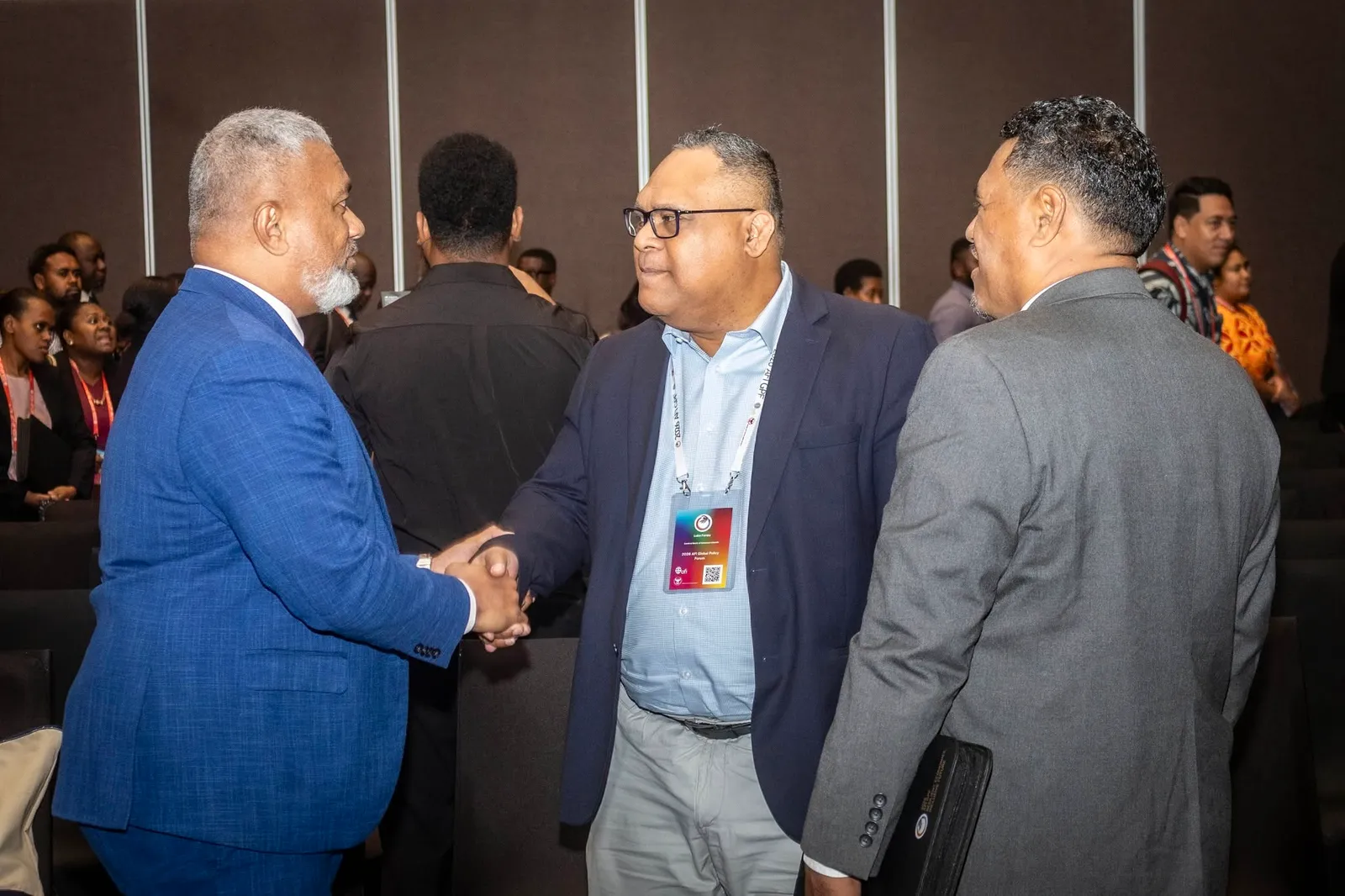
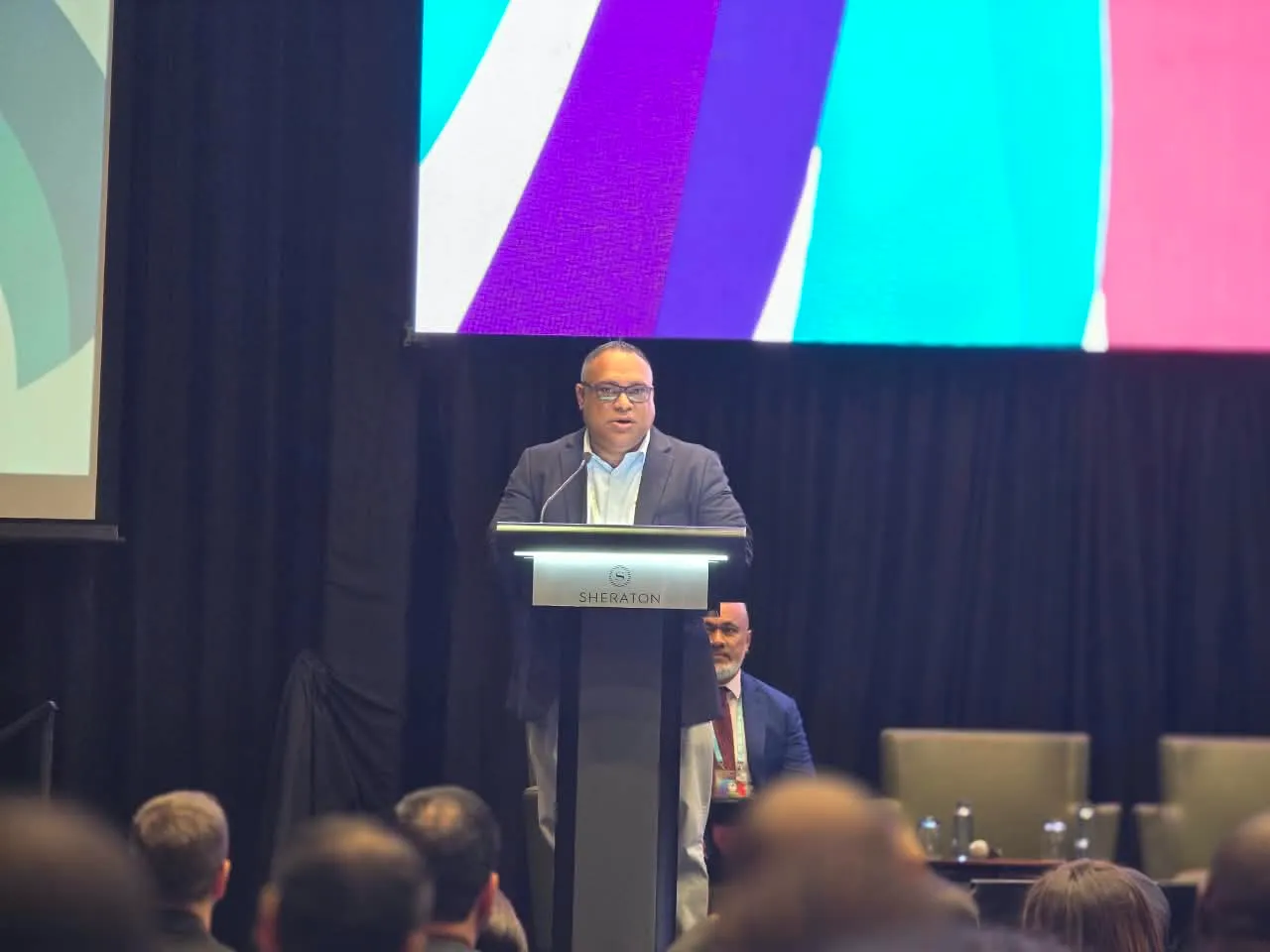
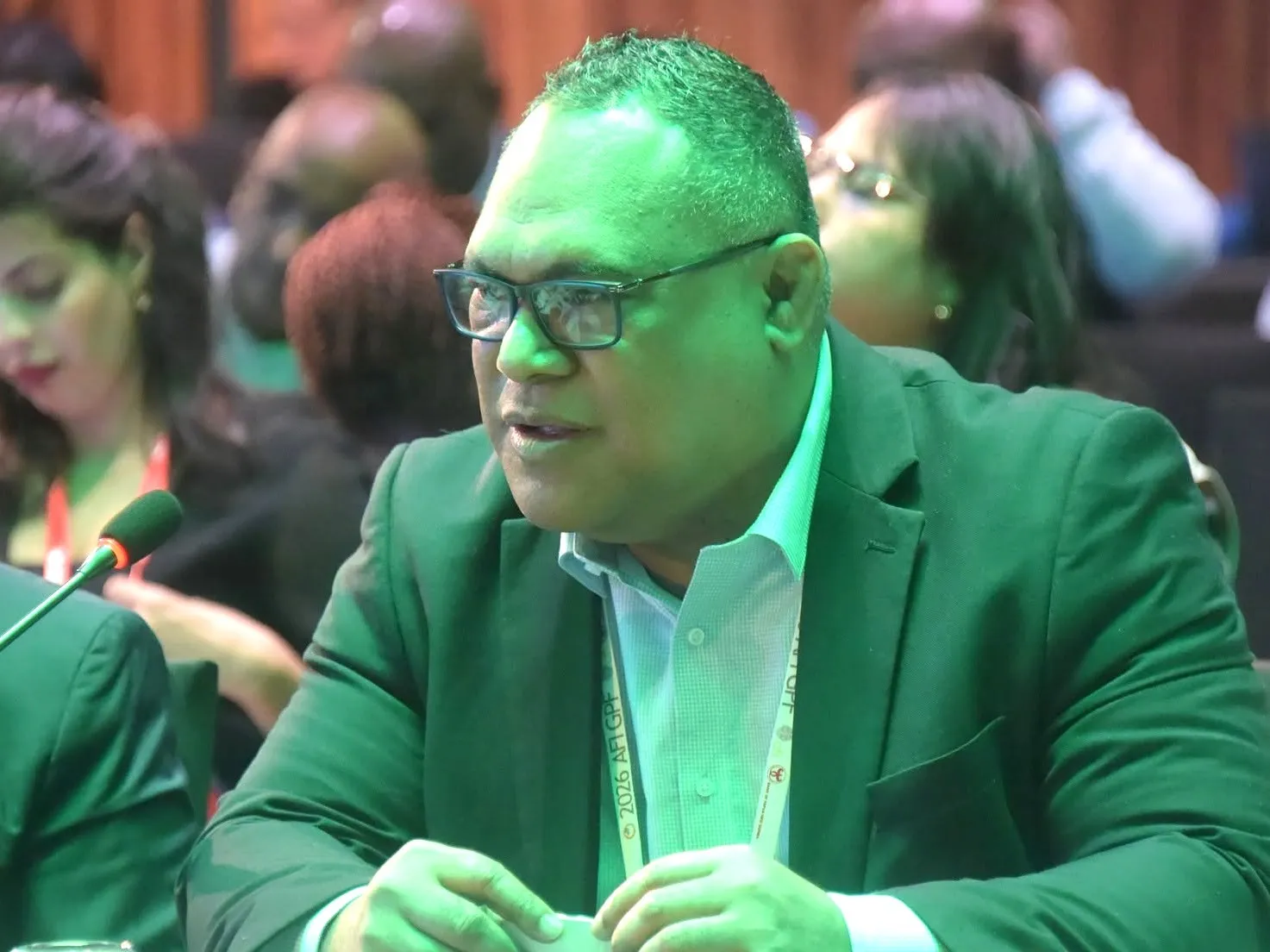
Governor of the Central Bank of Solomon Islands (CBSI), Dr. Luke Forau officially launched WG-CONNECT, a new Alliance for Financial Inclusion (AFI) Working Group Alumni Programme aimed at strengthening collaboration, preserving policy expertise, and maintaining engagement among former AFI Working Group members worldwide.
The launch took place during the AFI Working Group Convergence in Port Moresby this week as part of the 2026 AFI Global Policy Forum programme. The initiative provides a platform for former Working Group participants to remain connected with AFI activities, continue sharing expertise, and contribute to advancing financial inclusion long after completing their active Working Group service.
Speaking at the launch, Governor Forau emphasized the important role that AFI Working Groups have played in developing practical financial inclusion solutions and strengthening cooperation among policymakers and regulators across the globe.
“AFI's Working Groups have brought together hundreds of policymakers and regulators from across the network to develop practical solutions and advance financial inclusion. WG-CONNECT ensures that this expertise remains connected and continues to support the growth of inclusive financial systems around the world,” Governor Forau said.
Governor Forau stated that the new programme would help retain valuable institutional knowledge accumulated through years of policy development and peer learning while creating opportunities for experienced practitioners to continue supporting future generations of policymakers.
He also acknowledged the contributions of CBSI officers who have actively participated in AFI Working Groups over the years, noting that their engagement has helped advance financial inclusion efforts both nationally and across the Pacific region.
WG-CONNECT enables former Working Group members to remain engaged with the AFI network through knowledge-sharing, mentoring, and collaboration opportunities while formally recognizing their contributions to advancing inclusive finance.
The launch supports the broader objectives of the 2026 AFI Global Policy Forum, which is being held under the theme “Resilient Economies, Inclusive Future.” The Forum brings together central banks, financial regulators, development partners and industry leaders to explore how financial inclusion can contribute to resilient and sustainable economic development.
Ends//
About the Central Bank of Solomon Islands:
The Central Bank of Solomon Islands (CBSI) is the nation’s premier financial institution, responsible for formulating and implementing monetary policy. CBSI oversees and regulates the country’s banking and financial system, ensuring economic stability and growth.
Fore more information contact Central Bank of Solomon Islands Tel: (677) 21791 | Email: umatanani@cbsi.com.sb| info@cbsi.com.sb www.cbsi.com.sb
所罗门群岛中央银行(CBSI)行长卢克·福劳博士正式启动了WG-CONNECT,这是一个新的金融包容联盟(AFI)工作组校友计划,旨在加强合作、保留政策专业知识,并维持全球前AFI工作组成员之间的互动。
启动仪式在本周于莫尔兹比港举行的AFI工作组汇聚会上进行,作为2026年AFI全球政策论坛项目的一部分。该倡议为前工作组参与者提供了一个平台,使他们能够与AFI活动保持联系,继续分享专业知识,并在完成活跃工作组服务后继续推动金融包容。
福劳行长在启动仪式上强调了AFI工作组在开发实用金融包容解决方案和加强全球政策制定者与监管者之间合作方面的重要作用。
“AFI的工作组汇集了来自网络各地的数百名政策制定者和监管者,共同开发实用解决方案并推动金融包容。WG-CONNECT确保这些专业知识保持联系,并继续支持全球包容性金融系统的发展,”福劳行长表示。
福劳行长指出,该新计划将有助于保留通过多年的政策发展和同行学习积累的宝贵机构知识,同时为经验丰富的从业者创造机会,继续支持未来一代政策制定者。
他还承认了多年来积极参与AFI工作组的CBSI官员的贡献,指出他们的参与有助于推动国家和太平洋地区的金融包容努力。
WG-CONNECT使前工作组成员能够通过知识分享、指导和合作机会与AFI网络保持互动,同时正式认可他们在推动包容性金融方面的贡献。
此次启动支持2026年AFI全球政策论坛的更广泛目标,论坛的主题为“韧性经济,包容未来”。论坛汇集了中央银行、金融监管机构、发展伙伴和行业领导者,探讨金融包容如何促进韧性和可持续的经济发展。
结束//
关于所罗门群岛中央银行:
所罗门群岛中央银行(CBSI)是国家的主要金融机构,负责制定和实施货币政策。CBSI监督和监管国家的银行和金融系统,确保经济的稳定和增长。
如需更多信息,请联系所罗门群岛中央银行,电话:(677) 21791 | 电子邮件:umatanani@cbsi.com.sb | info@cbsi.com.sb www.cbsi.com.sb
FATHER’S DAY ESHOP SPECIAL!
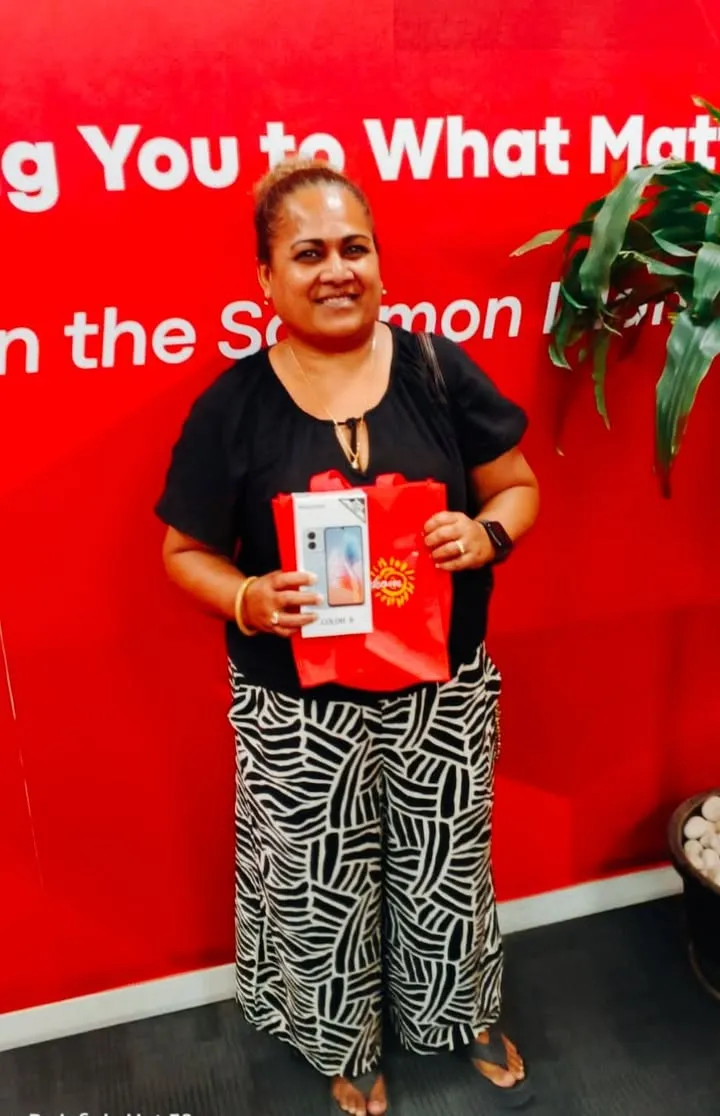
A BIG THANK YOU to Kevin Kemuel for choosing Our Telekom eShop for his Father’s Day purchase!
Collected on his behalf is family member Jean at our Point Cruz Phone Shop.
DON’T MISS OUT!
Want to surprise Dad with a brand-new handset? Head over to the Our Telekom eShop, choose your favourite product and use the coupon code:
FathersDay
GET YOUR DISCOUNT & MAKE THIS FATHER’S DAY EXTRA SPECIAL!
Whether you’re here in Solomon Islands or buying from overseas for Dad back home, Our Telekom makes it easy to send something special his way.
Shop online. Get the discount. Make Dad smile.
Thank you for choosing Our Telekom!
父亲节电子商店特别活动!
非常感谢 Kevin Kemuel 选择我们的 Telekom 电子商店进行父亲节购物!
他的家人 Jean 在我们的 Point Cruz 电话商店代为领取。
不要错过!
想给爸爸一个全新的手机惊喜吗?赶快前往我们的 Telekom 电子商店,选择你喜欢的产品并使用优惠码:
FathersDay
获取折扣,让这个父亲节更加特别!
无论你是在所罗门群岛,还是在海外为家里的爸爸购买礼物,我们的 Telekom 都能轻松帮助你送去特别的心意。
在线购物,获取折扣,让爸爸微笑。
感谢你选择我们的 Telekom!
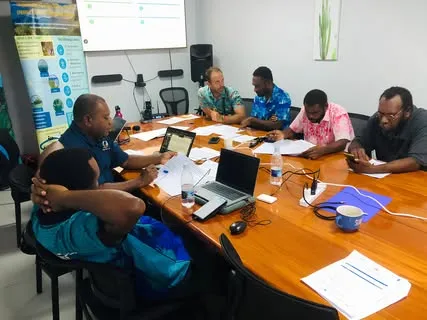
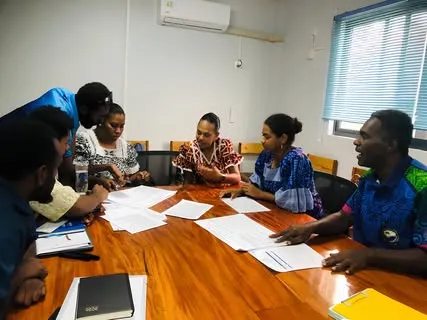
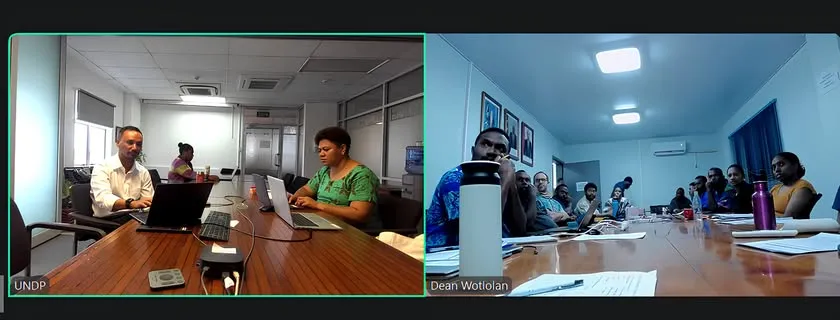
Government representatives, civil society, communities, development partners and technical experts came together this week to review and validate Vanuatu’s Policy and Institutional Review under the Biodiversity Finance Initiative (BIOFIN).
The discussions looked at what is working, where the gaps remain, and how Vanuatu can strengthen coordination, better track biodiversity spending and identify more sustainable sources of financing for conservation.
Feedback from the workshop will now help finalise the review and inform the development of Vanuatu’s Biodiversity Finance Plan with a focus on practical solutions that support both nature and the communities that depend on it.
The workshop was opened by Mr Osborne Melenamu, Director of the Department of Environmental Protection and Conservation, with remarks from Mr Nawaraj Chhetri, UNDP Pacific Team Leader for Resilience and Climate Change.
政府代表、民间社会、社区、发展伙伴和技术专家本周聚集在一起,审查和验证瓦努阿图在生物多样性融资倡议(BIOFIN)下的政策和制度审查。
讨论内容包括哪些方面运作良好、仍存在哪些差距,以及瓦努阿图如何加强协调,更好地跟踪生物多样性支出,并识别更可持续的保护融资来源。
研讨会的反馈将有助于最终确定审查结果,并为瓦努阿图生物多样性融资计划的制定提供信息,重点是支持自然和依赖自然的社区的实际解决方案。
研讨会由环境保护与保护部主任奥斯本·梅伦阿穆(Mr Osborne Melenamu)主持,联合国开发计划署(UNDP)太平洋团队气候变化与韧性负责人纳瓦拉杰·切特里(Mr Nawaraj Chhetri)发表了讲话。
Wednesday 2nd September 2026
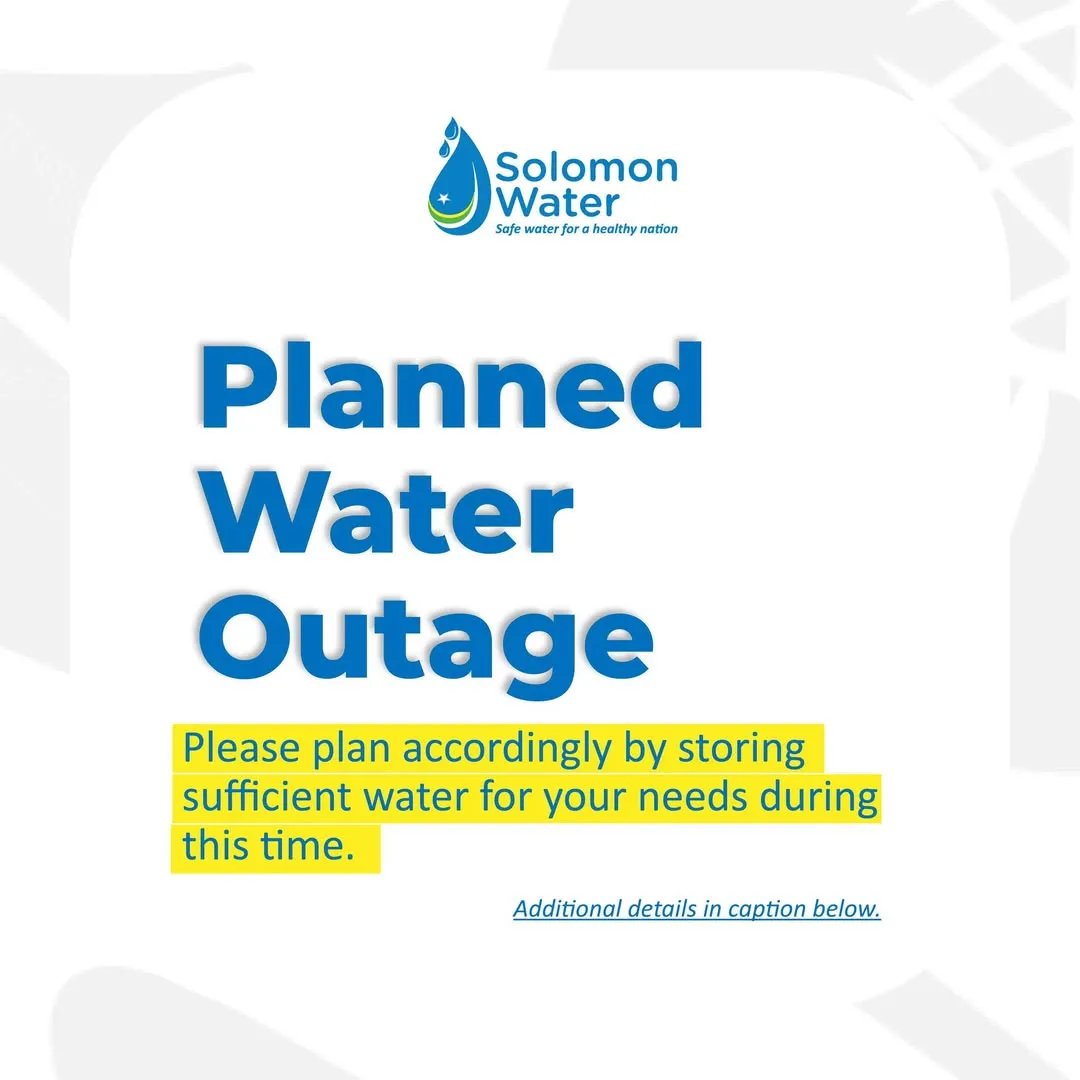
PLANNED WATER DISRUPTION – KONGULAI GRAVITY SUPPLY
Friday 4 September 2026 | 9:00pm – 5:00am, Saturday 5 September 2026
Solomon Water would like to advise our valued customers that there will be a planned water shutdown affecting the Kongulai Gravity Supply System from 9:00pm on Friday 4 September to 5:00am on Saturday 5 September 2026.
The shutdown is necessary to allow our contractor to carry out gate valve installation as part of works on the new trunk main lines.
During the shutdown, customers in the following areas may experience low water pressure or no water:
1. Windy Valley
2. White River School and Clinic areas
3. Namoruka
4. Savo Market areas
5. Tanaghai
6. Kouvare
7. White River 01 and 02 areas
8. Tandai Fuel Station areas
9. Rifle Range areas
10. Tamlan School areas
11. Rove Bulk Shop/Sullivans areas
12. St. John School areas
Affected customers are advised to store water for use during this shut down period.
We thank you for your patience and appreciate your understanding.
For more information, please contact Customer Care Service.
Phone: 44700
Email: service@solomonwater.com.sb
Website: www.solomonwater.com.sb
Wednesday 2nd September 2026
PLANNED WATER DISRUPTION – KONGULAI GRAVITY SUPPLY
Friday 4 September 2026 | 9:00pm – 5:00am, Saturday 5 September 2026
Solomon Water(所罗门水务)希望通知我们的尊贵客户,计划于2026年9月4日星期五晚上9:00至2026年9月5日星期六早上5:00对Kongulai重力供水系统进行停水。
此次停水是为了让我们的承包商进行阀门安装,作为新干管工程的一部分。
在停水期间,以下地区的客户可能会遇到低水压或无水供应:
1. 风谷(Windy Valley)
2. 白河学校和诊所区域(White River School and Clinic areas)
3. Namoruka
4. Savo市场区域(Savo Market areas)
5. Tanaghai
6. Kouvare
7. 白河01和02区域(White River 01 and 02 areas)
8. Tandai加油站区域(Tandai Fuel Station areas)
9. 射击场区域(Rifle Range areas)
10. Tamlan学校区域(Tamlan School areas)
11. Rove大宗商品商店/Sullivans区域(Rove Bulk Shop/Sullivans areas)
12. 圣约翰学校区域(St. John School areas)
受影响的客户建议在停水期间储存水以备使用。
感谢您的耐心与理解。
如需更多信息,请联系客户服务中心。
电话:44700
电子邮件:service@solomonwater.com.sb
网站:www.solomonwater.com.sb
SICCI WELCOMES VALIDATION OF NATIONAL BIOSECURITY STRATEGY 2026–2036
The Solomon Islands Chamber of Commerce and Industry (SICCI) welcomes the validation of the Solomon Islands National Biosecurity Strategy 2026–2036—an important step towards protecting the country’s agriculture, food security, natural resources, livelihoods and economy.
SICCI Export Industry Development Officer, Ms. Freda Tekulu engaged with Government and key stakeholders
For the private sector, an effective biosecurity system is essential for maintaining reliable supply chains, protecting local producers and industries, facilitating safe trade, and strengthening access to domestic and export markets.
Biosecurity is not solely the responsibility of Government. Businesses, importers, exporters, transport operators, farmers and communities all have an important role in preventing the introduction and spread of invasive pests and diseases.
SICCI supports a coordinated, whole-of-country approach and encourages continued engagement with the private sector as the Strategy moves from validation to implementation. Implementation should be practical, adequately resourced and supported by clear procedures, strong coordination, business awareness and efficient border and inter-island biosecurity services.
SICCI acknowledges the leadership of the Ministry of Agriculture and Livestock Development and Biosecurity Solomon Islands, together with the support provided by UNDP, the Australian Government and other technical and development partners.
The private sector stands ready to work alongside Government and relevant partners to strengthen Solomon Islands’ biosecurity system and protect the foundations of sustainable business and economic growth.
See it. Report it. Work together.
所罗门商会欢迎国家生物安全战略2026–2036的验证
所罗门群岛商会(SICCI)欢迎所罗门群岛国家生物安全战略2026–2036的验证——这是保护国家农业、粮食安全、自然资源、生计和经济的重要一步。
SICCI出口行业发展官员Freda Tekulu女士与政府和主要利益相关者进行了接触。
对于私营部门而言,有效的生物安全系统对于维护可靠的供应链、保护当地生产者和行业、促进安全贸易以及加强对国内和出口市场的准入至关重要。
生物安全不仅仅是政府的责任。企业、进口商、出口商、运输运营商、农民和社区在防止外来害虫和疾病的引入和传播方面都扮演着重要角色。
SICCI支持协调的、全社会的方式,并鼓励在战略从验证到实施的过程中继续与私营部门进行接触。实施应当切实可行,资源充足,并得到明确程序、强有力协调、商业意识以及高效的边境和岛际生物安全服务的支持。
SICCI感谢农业和畜牧业发展部及所罗门群岛生物安全局的领导,以及联合国开发计划署、澳大利亚政府和其他技术与发展合作伙伴提供的支持。
私营部门随时准备与政府及相关合作伙伴携手合作,以加强所罗门群岛的生物安全系统,保护可持续商业和经济增长的基础。
看见它。报告它。共同努力。
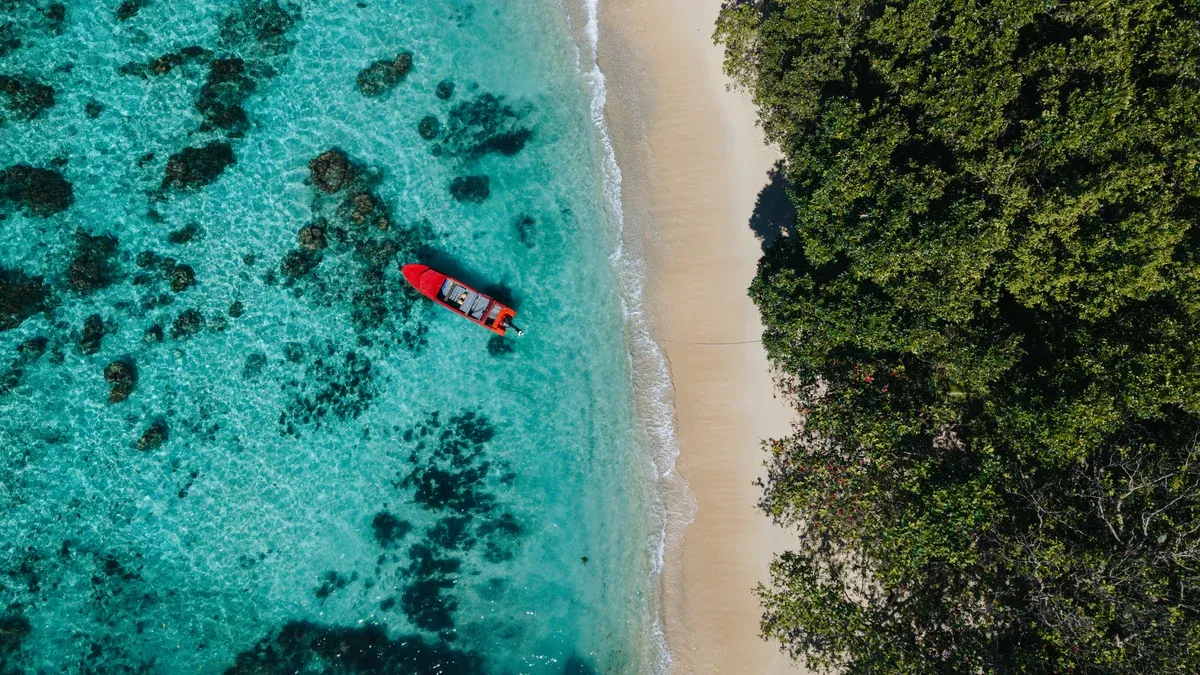
There’s off-grid, then there’s Munda!
Think deserted islands, dugout canoes, sea eagles circling overhead and sunsets that turn the whole lagoon orange. Back in town, mornings start slowly with betel nut stalls and Munda Market coming to life, while reminders of WWII are still scattered through the jungle!
Sometimes peace and quiet really does live up to the hype (trust us).
Read the full story in the latest issue of our in-flight magazine: https://assets.flysolomons.com/media/documents/issue98.pdf
离网生活,还有曼达!
想象一下荒无人烟的岛屿、独木舟、海鹰在头顶盘旋,以及将整个泻湖染成橙色的日落。回到城镇,早晨在槟榔摊和曼达市场的热闹中缓缓开始,同时二战的遗迹仍散落在丛林中!
有时,宁静与安详确实名副其实(相信我们)。
在我们最新一期的航班杂志中阅读完整故事: https://assets.flysolomons.com/media/documents/issue98.pdf
Father’s Day is just around the corner, and what better way to show your appreciation than with a brand-new handset for Dad?
For those of you living overseas, you can still make your fathers back home in Solomon Islands feel special. Take advantage of our Father’s Day Special + eShop Discounts and surprise Dad with a brand-new handset at a special discounted price.
SHOP ONLINE & SAVE!
For purchases made through our eShop, simply use the coupon code “FathersDay” at checkout to receive your special discount on selected products.
Whether you’re here at home or overseas, you can make Dad feel loved and appreciated this Father’s Day.
Shop now. Send love home. Make Dad smile.
Happy Father’s Day!
父亲节即将来临,还有什么比送给爸爸一部全新的手机更能表达您的感激之情呢?
对于那些生活在海外的人来说,您仍然可以让在所罗门群岛的父亲感受到特别的关爱。利用我们的父亲节特惠和电子商店折扣,以特别的折扣价格给爸爸一个惊喜,送上全新的手机。
在线购物,节省开支!
通过我们的电子商店购买时,只需在结账时使用优惠码“FathersDay”,即可在精选产品上享受特别折扣。
无论您是在家还是在海外,今年的父亲节,您都可以让爸爸感受到爱与被重视。
现在就购物吧。把爱送回家。让爸爸微笑。
祝父亲节快乐!
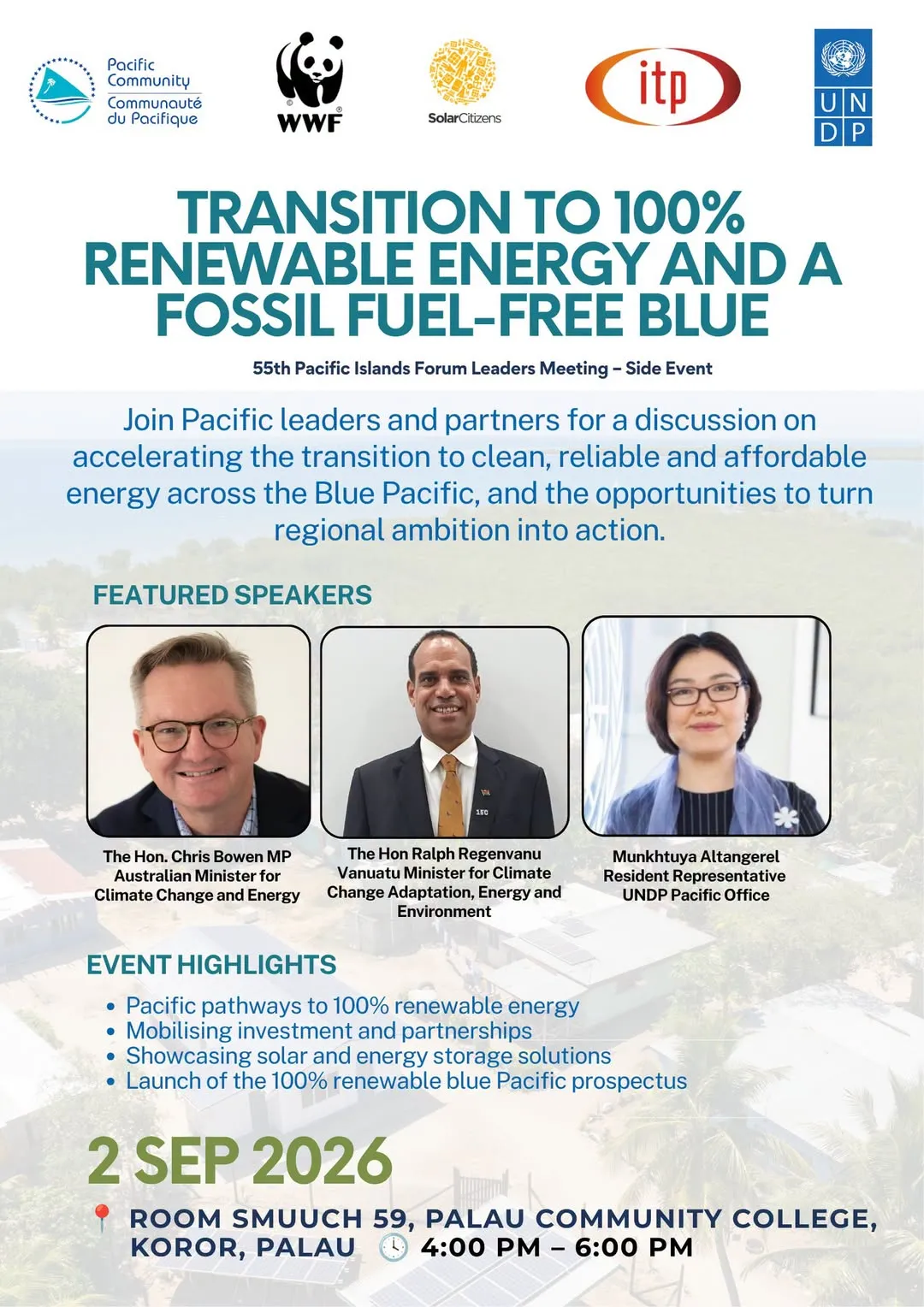
On the sidelines of the 55th Pacific Islands Forum Leaders Meeting in Palau, the Pacific’s renewable energy future takes centre stage.
Join us for a side event bringing Pacific leaders, ministers and partners together to explore what it will take to accelerate the transition towards 100% renewable energy and a fossil fuel-free Blue Pacific.
The conversation will look at opportunities to scale solar and energy storage, unlock investment, strengthen energy security, and build partnerships that can turn the region’s renewable energy ambition into action.
在帕劳举行的第55届太平洋岛国论坛领导人会议期间,太平洋的可再生能源未来成为焦点。
请加入我们的边会,汇聚太平洋领导人、部长和合作伙伴,共同探讨加速向100%可再生能源和无化石燃料的蓝色太平洋过渡所需的条件。
此次讨论将关注扩大太阳能和能源储存的机会,解锁投资,加强能源安全,以及建立能够将该地区可再生能源愿景转化为行动的伙伴关系。
Tuesday 1st September 2026
WATER RESTORATION NOTICE: Kombito Water Source
Kombito water source and supply has been turned back on as of 7:00pm Tuesday 1st September 2026.
Please note it will take up to 24 hours for our water supply systems at Borderline, Kombito and Panatina to fully recover after restoration.
This means customers will continue to experience low water pressure or no water for up to 24 hours.
If you still experience no water or low water pressure after 24 hours, please phone 44700 or send us a message with your water meter account and phone contact details on Messenger.
BOIL WATER ADVISORY.
Customers receiving water are advised to boil all water for drinking, food preparation, cooking and consumption. This boil water notice is in effect until further notice.
We thank you for your patience throughout this time and we appreciate your understanding.
Please contact Customer Care for more information.
Phone: 44700
Email: service@solomonwater.com.sb
Website: www.solomonwater.com.sb
2026年9月1日星期二
水源恢复通知:Kombito 水源
Kombito 水源和供水已于2026年9月1日星期二晚上7:00恢复供水。
请注意,边界线(Borderline)、Kombito 和 Panatina 的供水系统在恢复后需要最多 24 小时才能完全恢复。
这意味着客户在接下来的 24 小时内将继续经历低水压或无水供应。
如果您在 24 小时后仍然没有水或水压低,请拨打 44700 或通过 Messenger 发送您的水表账户和联系电话信息给我们。
BOIL WATER ADVISORY。
Customers receiving water are advised to boil all water for drinking, food preparation, cooking and consumption. This boil water notice is in effect until further notice.
我们感谢您在此期间的耐心,并感谢您的理解。
如需更多信息,请联系客户服务。
电话:44700
电子邮件:service@solomonwater.com.sb
网站:www.solomonwater.com.sb
At its meeting on 28th August 2026, the Board of the Central Bank of Solomon Islands (CBSI) decided to maintain the policy rate at 1.5% for the next six months. The decision reflects the Board’s assessment that the current inflation outlook is driven predominantly by supply-side and external factors rather than by excess domestic demand and that a stable exchange rate and subdued domestic demand are expected to cushion, to some extent, the pass-through of external pressures on domestic prices.
The global economic outlook remains highly uncertain, particularly amid the ongoing conflict in the Middle East, which has contributed to higher energy prices, weighing on global growth and slowing the pace of global disinflation.
Headline inflation rose to 4.6% in June 2026, from 0.4% in December 2025, driven largely by supply-side factors. Movements in betel nut prices alone contributed 2.5 percentage points, or 54%, of headline inflation, while higher transport and utility prices linked to the global oil price movements accounted for the remainder. The stability of the exchange rate, together with Government tax exemptions on fuel, has helped mitigate some of the impact of higher global oil prices on domestic inflation.
Inflation is projected to rise to around 5–6% by the end of 2026, reflecting base effects, higher oil prices, and weather-related pressures on domestic food supply. It is expected to moderate to around 4.4% from March 2027, as oil price pressures ease. Core inflation is projected to remain below 1%, indicating subdued underlying domestic demand. However, the outlook remains subject to considerable uncertainty: a further escalation of the conflict in the Middle East, El Niño-related disruptions to food supply, and the pace of fiscal spending could push inflation above 5% in early 2027.
CBSI has revised its 2026 economic growth forecast to 3.0% from an initial projection of 3.8% at the beginning of the year. The revision reflects the impact of higher fuel costs, Tropical Cyclone Maila, and El Niño-related disruptions. Meanwhile, fiscal conditions are expected to become more expansionary in the second half of 2026 following the supplementary budget, which could provide additional support to domestic demand. Economic growth is expected to recover to 3.7% in 2027, supported by mining, infrastructure investment, and continued expansion in the services sector. The external position remains strong, with foreign reserves of $6.9 billion in June 2026, equivalent to 12.5 months of import cover, which is projected to remain adequate through the end of the year. Monetary conditions remain supportive with ample liquidity and moderate credit growth.
“CBSI will continue to monitor macroeconomic developments. If inflation becomes more persistent or begins to broaden into domestic demand, the Bank will reassess its policy stance.”
- Dr Luke Forau, Governor, Central Bank of Solomon Islands
The Bank remains attentive to the risk that supply-side inflation pressures could move above the upper bound of its 2–5% desired range towards the end of 2026 and into early 2027. CBSI will continue to closely monitor developments and adjust its monetary policy stance as necessary to maintain price and financial stability.
End//
About the Central Bank of Solomon Islands:
The Central Bank of Solomon Islands (CBSI) is the nation’s premier financial institution, responsible for formulating and implementing monetary policy. CBSI oversees and regulates the country’s banking and financial system, ensuring economic stability and growth.
Fore more information contact Central Bank of Solomon Islands Tel: (677) 21791 | Email: umatanani@cbsi.com.sb| info@cbsi.com.sb www.cbsi.com.sb
在2026年8月28日的会议上,所罗门群岛中央银行(CBSI)董事会决定在接下来的六个月内维持政策利率在1.5%。这一决定反映了董事会的评估,即当前的通货膨胀前景主要受到供应方和外部因素的驱动,而不是由于国内需求过剩,并且预计稳定的汇率和低迷的国内需求将在一定程度上缓冲外部压力对国内价格的传导。
全球经济前景仍然高度不确定,特别是在中东持续冲突的背景下,这导致能源价格上涨,影响全球增长并减缓全球去通胀的步伐。
2026年6月,整体通货膨胀率上升至4.6%,而2025年12月为0.4%,主要受到供应方因素的推动。槟榔价格的波动单独贡献了2.5个百分点,或54%的整体通货膨胀,而与全球油价波动相关的运输和公用事业价格上涨则占其余部分。汇率的稳定,加上政府对燃料的税收豁免,帮助减轻了全球油价上涨对国内通货膨胀的部分影响。
预计到2026年底,通货膨胀将上升至约5-6%,反映出基数效应、油价上涨和天气相关的国内食品供应压力。预计到2027年3月,通货膨胀将缓和至约4.4%,因为油价压力减轻。核心通货膨胀预计将保持在1%以下,表明国内需求低迷。然而,前景仍然面临相当大的不确定性:中东冲突的进一步升级、厄尔尼诺现象导致的食品供应中断以及财政支出的速度可能会在2027年初将通货膨胀推高至5%以上。
CBSI已将2026年的经济增长预测从年初的3.8%下调至3.0%。这一修订反映了燃料成本上升、热带气旋Maila和厄尔尼诺现象导致的中断的影响。同时,预计财政状况将在2026年下半年变得更加扩张,补充预算可能会为国内需求提供额外支持。预计经济增长将在2027年恢复至3.7%,受到采矿、基础设施投资和服务业持续扩张的支持。外部形势依然强劲,2026年6月外汇储备为69亿美元,相当于12.5个月的进口覆盖,预计到年底将保持充足。货币条件依然支持,流动性充足,信贷增长适度。
“CBSI将继续监测宏观经济发展。如果通货膨胀变得更加持久或开始扩展到国内需求,银行将重新评估其政策立场。”
- 所罗门群岛中央银行行长 Dr Luke Forau
银行仍然关注供应方通货膨胀压力可能在2026年底和2027年初超出其2-5%理想范围的上限的风险。CBSI将继续密切监测事态发展,并根据需要调整其货币政策立场,以维持价格和金融稳定。
结束//
关于所罗门群岛中央银行:
所罗门群岛中央银行(CBSI)是国家的主要金融机构,负责制定和实施货币政策。CBSI监督和监管国家的银行和金融系统,确保经济稳定和增长。
如需更多信息,请联系所罗门群岛中央银行 电话: (677) 21791 | 邮箱: umatanani@cbsi.com.sb | info@cbsi.com.sb www.cbsi.com.sb
Pacific governments and development partners have been urged to support a modern, fit-for-purpose Regional Fisheries Surveillance Centre (RFSC) as the region responds to changing illegal fishing practices and wider maritime security threats.
Solomon Islands Minister for Foreign Affairs and External Trade, Hon. Rick Houenipwela, made the call during his keynote address at the Pacific Islands Forum Fisheries Agency (FFA) side event held alongside the 55th Pacific Islands Forum Leaders Meeting in Koror, Palau.
Solomon Islands Minister of Foreign Affairs and External Trade, Hon. Rick Houenipwela delivering the keynote address at FFA’s side event on the margins of the 55th Pacific Islands Forum Leaders Meeting in Koror, Palau. Photo: FFA
Minister Houenipwela said the RFSC, based at the FFA headquarters in Honiara, Solomon Islands, continues to demonstrate what Pacific countries can achieve by combining national authority with regional information, technology and operational support.
“As the operational environment becomes more complex, the Centre must also evolve,” Minister Houenipwela said.
“A future-fit RFSC will require resilient infrastructure, secure and modern technology, sustained access to surveillance assets, stronger analytical capability and continued investment in Pacific people. It must be equipped to respond to the needs of Members today while anticipating the risks and opportunities of tomorrow.”
The side event, Securing our Blue Pacific: Integrated Monitoring, Control and Surveillance and the future of the Regional Fisheries Surveillance Centre, was co-hosted by FFA and Palau’s Ministry of Agriculture, Fisheries and the Environment.
It brought together Pacific leaders, ministers, regional organisations, development partners and other guests to discuss national action, partnership and investments, regional cooperation and the future capability required to protect Pacific fisheries.
A key issue raised during the side event was the need to upgrade the RFSC facility in Honiara to support the growing scale and complexity of regional monitoring, control and surveillance.
Minister Houenipwela said the RFSC had turned political unit and regional cooperation into practical action support for the 17 FFA Members by maintaining a shared maritime picture, identifying risks and coordinating regional surveillance operations.
“The RFSC shows what Pacific regionalism looks like when it moves from commitment to implementation. It brings together national sovereignty and regional solidarity,” he said.
“It demonstrates that cooperation does not diminish our sovereign authority. Rather, it strengthens our ability to exercise that authority across the vast ocean spaces entrusted to us.”
The panel discussion highlighted three connected parts of the regional surveillance effort: strong national action, regional partnership and the central coordinating role of the RFSC.
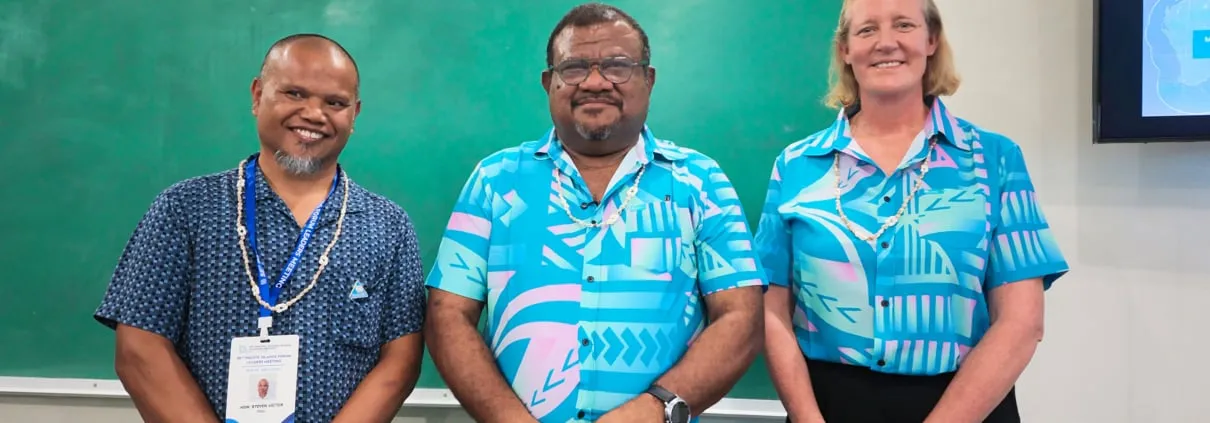
Palau’s Minister for Agriculture, Fisheries and the Environment, Hon. Steven Victor, highlighted the importance of national leadership in fisheries monitoring, control and surveillance and managing resource and legal framework challenges.
Palau’s Minister for Agriculture, Fisheries and the Environment, Hon. Steven Victor, as a panelist at the FFA side event that centred discussions around the FFA Regional Fisheries Surveillance Centre. Photo: FFA
Minister Victor explained how national enforcement, maritime coordination, regional surveillance systems and international partnerships work together to support Palau’s response to fisheries and wider maritime risks.
Assistant Secretary of Australia’s Department of Foreign Affairs and Trade Office of the Pacific, Amy Guihot, emphasised the importance of regional cooperation and Australia’s continued support for Pacific monitoring, control and surveillance.
Assistant Secretary of Australia’s Department of Foreign Affairs and Trade Office of the Pacific, Amy Guihot. Photo: FFA
Australia’s support includes the Pacific Maritime Security Program, aerial surveillance, maritime domain technology, training and assistance to Pacific regional institutions such as the work of the RFSC.
FFA Director-General Noan David Pakop outlined the changing nature of illegal, unreported and unregulated (IUU) fishing and the collective work being undertaken by FFA Members and partners.
FFA Director-General Noan David Pakop led the discussion around the changing nature of illegal, unreported and unregulated (IUU) fishing, and the collective work being undertaken by FFA Members and partners. Photo: FFA
“The RFSC stands as our collective shield, maintaining a near-real-time maritime domain awareness picture across the Exclusive Economic Zones of our 17 Members and the adjacent high seas,” Mr Pakop said.
“In the past year alone, coordinated regional operations analysed more than 104,000 satellite detections and supported over 1,000 vessel boardings.”
Mr Pakop said the RFSC strengthened national capability by providing Members with information and risk analysis that could guide the deployment of patrol vessels, aircraft and inspection teams.
Audience members showed strong interest in the estimated value of IUU fishing and the progress made in reducing it across the region.
A quantification study conducted in 2016 estimated the annual value of tuna linked to IUU fishing in the Pacific at around US$616 million. A second study in 2021 placed the figure at approximately US$333 million, representing a drastic reduction of 46%.
Mr Pakop attributed much of the reduction to stronger regional surveillance, including the increased use of satellite technology to monitor fishing activity across the Pacific.
He said the reduction also reflected improved information-sharing, coordinated surveillance operations and stronger national enforcement. However, Mr Pakop warned that the region could not afford to become complacent.
“To sustain this success, we must develop a modern, fit-for-purpose RFSC equipped to manage growing volumes of surveillance data, electronic reporting and changes across the wider maritime domain,” he said, reinforcing the call made in the keynote address.
“Investment in the Centre is an investmd expand its infrastructure, technology, analytical capability and training facilities. Australia has committed initial financial support towards the project. However, further investment from Members and development partners will be required to deliver the full upgrade and equip the Centre to meet the region’s long-term surveillance needs.
High-level participants included Ambassador Peter Thomson, the United Nations Secretary-General’s Special Envoy for the Ocean, Papua New Guinea’s Minister for Fisheries and Marine Resources, Hon. Jelta Wong, Ulu o Tokelau, Hon. Alapati Tavite, Solomon Islands Minister for National Planning and Development Coordination, Hon. Peter Kenilorea Junior and representatives from the Palau National Congress.
In attendance included Ambassador Peter Thomson, the United Nations Secretary-General’s Special Envoy for the Ocean. Photo: FFA
Papua New Guinea Minister of Fisheries, Hon. Jelta Wong, also showed his support at the FFA side event. Photo: FFA
Ulu o Tokelau, Hon. Alapati Tavite, were among the high level participants at the event. Photo: FFA
Solomon Islands Minister of National Planning and Development Coordination, Hon. Peter Kenilorea Junior. Photo: FFA
FFA Surveillance Operations Officer, Yohni Fepuleai, was the moderator of the side event, guiding the discussions around FFA’s monitoring, control and surveillance work as well as the role of the Regional Fisheries Surveillance Centre. Photo: FFA
The event also featured a video showing how the RFSC combines vessel-monitoring information, satellite detections, aerial surveillance and regional intelligence to support national enforcement and coordinated regional operations.
Established in 1994 and based at the FFA headquarters in Honiara, the RFSC supports all 17 FFA Members in monitoring fishing activity, assessing risks, coordinating surveillance operations and developing national capability.
FFA acknowledged Palau’s Ministry of Agriculture, Fisheries and the Environment for co-hosting the event and thanked the speakers, participants and partners who contributed to the discussion.
KOROR, 31 AUGUST 2026
太平洋各国政府和发展伙伴被呼吁支持一个现代化、适应性强的区域渔业监测中心(RFSC),以应对该地区日益变化的非法捕鱼行为和更广泛的海洋安全威胁。
所罗门群岛外交与对外贸易部长瑞克·霍恩尼普维拉(Hon. Rick Houenipwela)在帕劳科罗尔举行的第55届太平洋岛国论坛领导人会议的边会中发表了主题演讲,呼吁各方关注。
霍恩尼普维拉部长表示,RFSC位于所罗门群岛霍尼亚拉的FFA总部,继续展示太平洋国家通过结合国家权威与区域信息、技术和运营支持所能取得的成就。
“随着操作环境变得愈加复杂,中心也必须不断发展,”霍恩尼普维拉部长说。
“一个适应未来的RFSC将需要坚韧的基础设施、安全和现代的技术、持续的监测资产获取、更强的分析能力以及对太平洋人民的持续投资。它必须能够满足成员国今天的需求,同时预见明天的风险和机遇。”
此次边会以“保护我们的蓝色太平洋:综合监测、控制和监督及区域渔业监测中心的未来”为主题,由FFA和帕劳农业、渔业与环境部共同主办。
会议汇聚了太平洋领导人、部长、区域组织、发展伙伴及其他嘉宾,共同讨论国家行动、伙伴关系和投资、区域合作以及保护太平洋渔业所需的未来能力。
在边会上提出的一个关键问题是,需要升级位于霍尼亚拉的RFSC设施,以支持区域监测、控制和监督日益增长的规模和复杂性。
霍恩尼普维拉部长表示,RFSC已将政治单位和区域合作转化为对17个FFA成员国的实际行动支持,通过维护共享的海洋图景、识别风险和协调区域监测行动。
“RFSC展示了太平洋区域主义在从承诺到实施过程中的样貌。它将国家主权与区域团结结合在一起,”他说。
“这表明合作并不会削弱我们的主权权威。相反,它增强了我们在广阔海洋空间中行使这一权威的能力。”
小组讨论强调了区域监测努力的三个相互关联的部分:强有力的国家行动、区域伙伴关系以及RFSC的中央协调角色。
帕劳农业、渔业和环境部长史蒂文·维克多(Hon. Steven Victor)强调了国家领导在渔业监测、控制和监督以及管理资源和法律框架挑战中的重要性。
帕劳农业、渔业和环境部长史蒂文·维克多(Hon. Steven Victor)作为FFA侧边活动的发言人,围绕FFA区域渔业监测中心展开讨论。照片:FFA
维克多部长解释了国家执法、海洋协调、区域监测系统和国际伙伴关系如何协同工作,以支持帕劳应对渔业和更广泛的海洋风险。
澳大利亚外交与贸易部太平洋办公室助理秘书艾米·吉霍特(Amy Guihot)强调了区域合作的重要性,以及澳大利亚对太平洋监测、控制和监督的持续支持。
澳大利亚外交与贸易部太平洋办公室助理秘书艾米·吉霍特(Amy Guihot)。照片:FFA
澳大利亚的支持包括太平洋海洋安全计划、空中监测、海洋领域技术、培训以及对RFSC等太平洋区域机构的协助。
FFA总干事诺安·大卫·帕科普(Noan David Pakop)概述了非法、未报告和无管制(IUU)捕鱼的变化性质,以及FFA成员和合作伙伴所开展的集体工作。
FFA总干事诺安·大卫·帕科普(Noan David Pakop)引导了关于非法、未报告和无管制(IUU)捕鱼变化性质的讨论,以及FFA成员和合作伙伴所开展的集体工作。照片:FFA
“区域渔业监测中心(RFSC)作为我们共同的屏障,维护着我们17个成员国专属经济区及邻近公海的近实时海洋领域意识,”Pakop先生表示。
“仅在过去一年,协调的区域行动分析了超过104,000次卫星探测,并支持了超过1,000次船只登检。”
Pakop先生表示,RFSC通过向成员国提供信息和风险分析,增强了国家能力,这些信息和分析可以指导巡逻船、飞机和检查团队的部署。
与会者对非法、不报告和无管制(IUU)捕鱼的估计价值以及在减少该现象方面取得的进展表现出浓厚的兴趣。
2016年进行的一项量化研究估计,太平洋地区与IUU捕鱼相关的金枪鱼年价值约为6.16亿美元。2021年的第二项研究将这一数字定为约3.33亿美元,代表着46%的大幅减少。
Pakop先生将这一减少的很大一部分归因于更强的区域监测,包括增加使用卫星技术监测太平洋地区的捕鱼活动。
他说,这一减少还反映了信息共享的改善、协调的监测行动和更强的国家执法。然而,Pakop先生警告说,该地区不能自满。
“为了维持这一成功,我们必须发展一个现代化、适合目的的RFSC,能够管理日益增长的监测数据、电子报告和更广泛海洋领域的变化,”他说,重申了在主题演讲中提出的呼吁。
“对该中心的投资是对其基础设施、技术、分析能力和培训设施的投资。澳大利亚已承诺为该项目提供初步财政支持。然而,成员国和发展伙伴的进一步投资将是实现全面升级并使该中心能够满足该地区长期监测需求的必要条件。
高级别参与者包括联合国秘书长海洋特使彼得·汤姆森大使、巴布亚新几内亚渔业和海洋资源部长Hon. Jelta Wong、托克劳首领Hon. Alapati Tavite、所罗门群岛国家规划与发展协调部长Hon. Peter Kenilorea Junior以及来自帕劳国会的代表。
出席活动的包括联合国秘书长海洋特别代表彼得·汤姆森大使。照片:FFA
巴布亚新几内亚渔业部长杰尔塔·王(Hon. Jelta Wong)在FFA侧边活动中也表示了支持。照片:FFA
托克劳的乌鲁(Ulu o Tokelau)阿拉帕提·塔维特(Hon. Alapati Tavite)也是此次活动的高级参与者之一。照片:FFA
所罗门群岛国家规划与发展协调部长彼得·肯尼洛雷亚·小(Hon. Peter Kenilorea Junior)。照片:FFA
FFA监测操作官约赫尼·费普雷亚(Yohni Fepuleai)担任侧边活动的主持人,引导围绕FFA的监测、控制和监督工作以及区域渔业监测中心的角色进行讨论。照片:FFA
活动还展示了一段视频,展示了RFSC如何结合船舶监测信息、卫星探测、空中监视和区域情报,以支持国家执法和协调区域行动。
RFSC成立于1994年,位于霍尼亚拉的FFA总部,支持所有17个FFA成员国监测捕鱼活动、评估风险、协调监测行动和发展国家能力。
FFA感谢帕劳农业、渔业和环境部共同主办此次活动,并感谢为讨论做出贡献的发言人、参与者和合作伙伴。
科罗尔,2026年8月31日
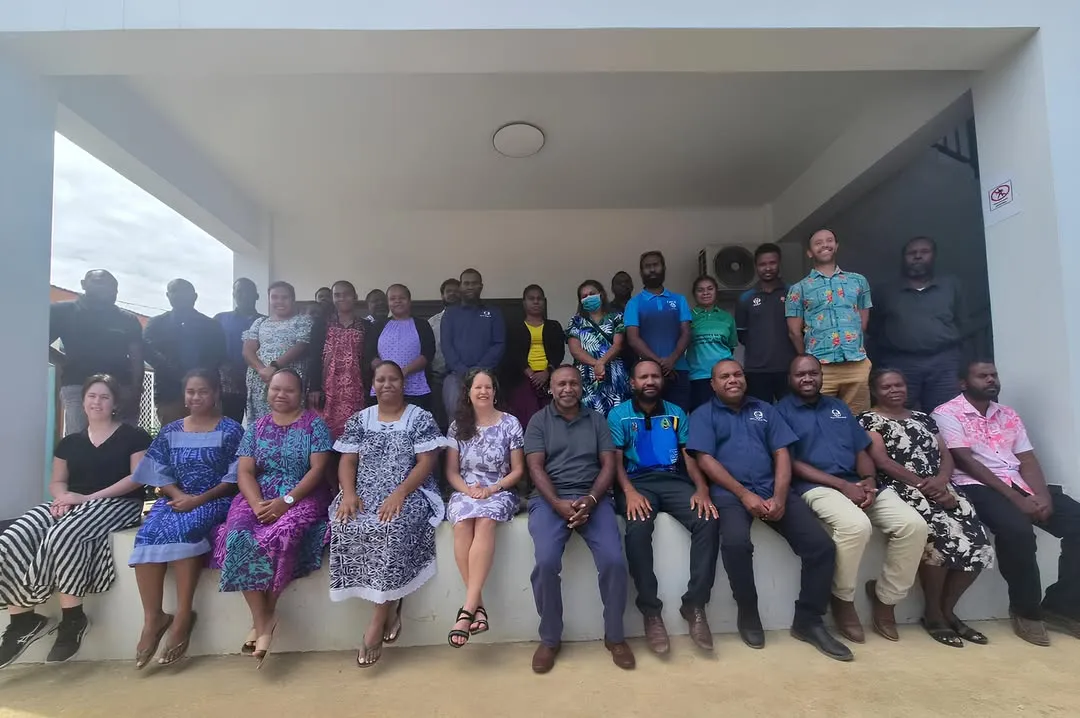
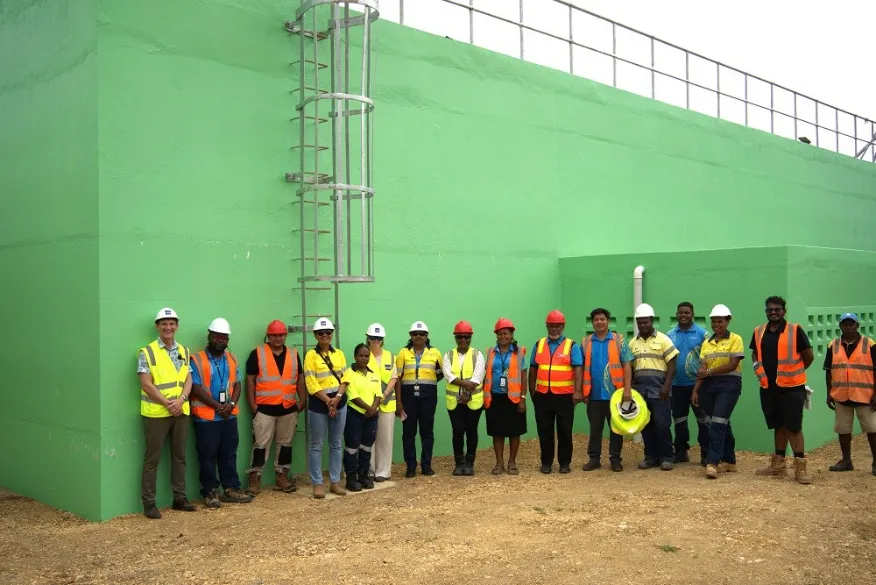
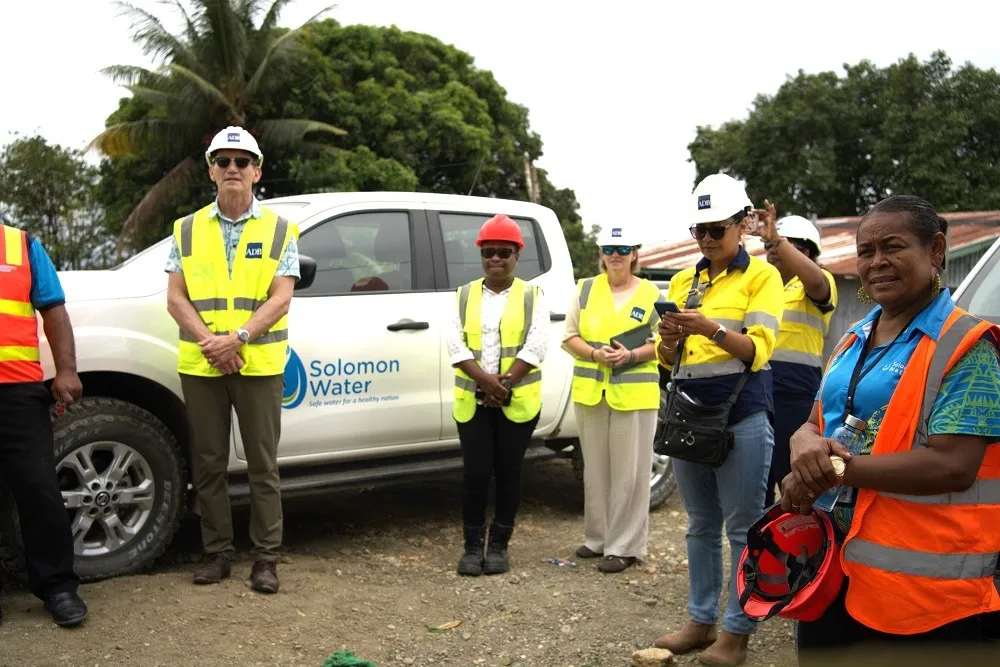
Honiara, Solomon Islands (August 24), 2026 — Solomon Water, with support from the Asian Development Bank (ADB), recently completed a week long Environmental and Social Management System (ESMS) knowledge-sharing and development workshop with the Water Authority of Fiji (WAF) in Honiara from 17-21 August, 2026.
The workshop provided an opportunity for Solomon Water staff to learn from WAF’s experience in developing and implementing an ESMS, undertake practical site visits, and conduct consultations with Solomon Water teams to understand existing environmental and social practices, systems, policies and procedures.
A key outcome of the workshop was the completion of an initial gap analysis, which confirmed that Solomon Water already has a range of systems and good practices for managing environmental and social risks. These include the Water Safety Plan, health and safety systems, catchment management arrangements, customer and grievance mechanisms, human resources policies, operational procedures and project safeguards processes. However, these practices are currently spread across different departments and are not always connected through one consistent organisational framework.
The workshop therefore provided a clear basis for developing a Solomon Water-owned ESMS that will connect existing practices, clarify roles and responsibilities, strengthen risk management and ensure environmental and social considerations are incorporated into routine organisational decision-making.
The ESMS will be aligned with Solomon Islands legislation and Solomon Water’s existing policies, plans and procedures.
Key outcomes:
Increased knowledge-sharing between WAF and Solomon Water on practical ESMS development and implementation.
Completed initial consultations and gap analysis across Solomon Water departments.
Identified existing environmental and social systems and good practices that can be strengthened and integrated.
Identified priority gaps, including coordination, documentation, accountability, early integration of E&S considerations and capacity.
Agreed on the direction and key components of the Solomon Water ESMS.
Established a practical work programme for developing the ESMS framework, policy, tools, templates and SOP integration recommendations.
The next phase will focus on translating the findings from the workshop into a practical ESMS package consisting of framework and policy for senior management and Board consideration, followed by awareness, socialisation and eventual implementation support.
The overall objective is not to create another donor safeguards system, but to establish a practical, Solomon Water-owned management system that builds on existing practices and makes environmental and social management part of normal business operations.
As part of the closing, Solomon Water and WAF exchanged cultural gifts, celebrating friendship, shared Pacific values and regional cooperation.
Acting CEO Mr. Ray Andresen expressed his gratitude to WAF and ADB for facilitating the workshop, highlighting the importance of Pacific collaboration and peer-to-peer knowledge sharing in strengthening water utilities across the region.
The workshop was facilitated by Ms Julia Whippy, ESMS Consultant WAF, Ms Rolini Nand, Manager of Environment Safeguards Unit, WAF, Mr Jay Roop, ADB Safeguards Team Leader, and Ms Kate Walker, ADB Technical Assistance Consultant.
Team from ADB, Water Authority Fiji and Solomon Water during a site visit at Tasahe Reservoir.
Team from ADB, WAF and Solomon Water during a site visit at Tuvaruhu center.
霍尼亚拉,所罗门群岛(2026年8月24日)——在亚洲开发银行(ADB)的支持下,所罗门水务于2026年8月17日至21日在霍尼亚拉与斐济水务局(WAF)完成了一周的环境与社会管理系统(ESMS)知识分享与发展研讨会。
此次研讨会为所罗门水务员工提供了向WAF学习开发和实施ESMS经验的机会,进行实地考察,并与所罗门水务团队进行咨询,以了解现有的环境和社会实践、系统、政策和程序。
研讨会的一个关键成果是完成了初步的差距分析,确认所罗门水务已经拥有一系列管理环境和社会风险的系统和良好实践。这些包括水安全计划、健康和安全系统、集水区管理安排、客户和投诉机制、人力资源政策、操作程序和项目保障流程。然而,这些实践目前分散在不同部门之间,并不总是通过一个一致的组织框架连接在一起。
因此,研讨会为开发一个所罗门水务自有的ESMS提供了明确的基础,该系统将连接现有实践,明确角色和责任,加强风险管理,并确保环境和社会考虑纳入日常组织决策中。
ESMS将与所罗门群岛的立法以及所罗门水务现有的政策、计划和程序保持一致。
关键成果:
- 增强WAF与所罗门水务在实际ESMS开发和实施方面的知识分享。
- 完成了对所罗门水务各部门的初步咨询和差距分析。
- 确定了可以加强和整合的现有环境和社会系统及良好实践。
- 确定了优先差距,包括协调、文档、问责、环境与社会考虑的早期整合和能力。
- 就所罗门水务ESMS的方向和关键组成部分达成一致。
- 建立了开发ESMS框架、政策、工具、模板和标准操作程序整合建议的实际工作计划。
下一阶段将重点将研讨会的发现转化为一个实际的ESMS方案,包括供高级管理层和董事会考虑的框架和政策,随后进行意识提升、社会化和最终的实施支持。
总体目标不是创建另一个捐助者保障系统,而是建立一个实用的、所罗门水务自有的管理系统,基于现有实践,使环境和社会管理成为正常业务运营的一部分。
在闭幕式上,所罗门水务与WAF互赠文化礼物,庆祝友谊、共同的太平洋价值观和区域合作。
代理首席执行官Ray Andresen先生对WAF和ADB为研讨会提供的支持表示感谢,强调太平洋地区合作和同行知识分享在加强区域水务机构中的重要性。
此次研讨会由WAF的ESMS顾问Julia Whippy女士、WAF环境保障单位经理Rolini Nand女士、ADB保障团队负责人Jay Roop先生和ADB技术援助顾问Kate Walker女士共同主持。
ADB、斐济水务局和所罗门水务团队在Tasahe水库进行实地考察。
ADB、WAF和所罗门水务团队在Tuvaruhu中心进行实地考察。
Pacific Islands Forum Fisheries Agency (FFA) Director-General Noan David Pakop has called on partners to invest alongside Pacific countries to strengthen fisheries surveillance and retain more of the economic benefits from tuna within the region.
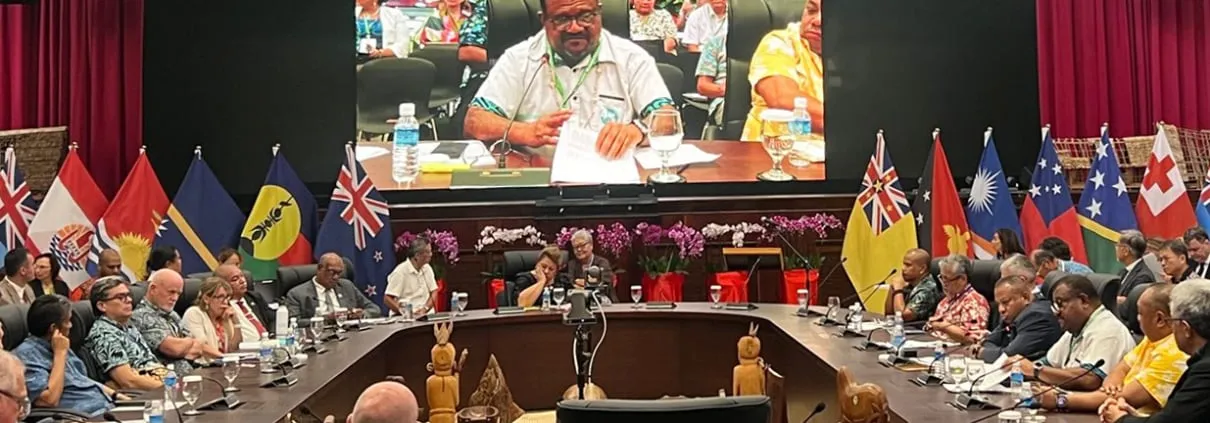
Mr Pakop was speaking at the Ocean Partnership Roundtable during the 55th Pacific Islands Forum Leaders Meeting, convened by H.E. Surangel Whipps Jr., President of the Republic of Palau.
The Roundtable brought together Pacific leaders, development partners, philanthropic organisations, investors and technical institutions to explore practical pathways for accelerating investment, partnerships and implementation in support of Pacific-led ocean priorities.
Contributing to Roundtable 1 Pacific-Led Priorities and Implementation Opportunities, Mr Pakop highlighted the complementary roles of the East New Britain Initiative (ENBi) and the Regional Fisheries Surveillance Centre (RFSC).
“The Regional Fisheries Surveillance Centre helps secure the resource, while ENBi helps our countries capture more of its value,” he said.
Endorsed by Pacific Leaders in 2023, ENBi seeks to retain greater economic value from tuna fisheries within Pacific Island countries.
Mr Pakop noted that while the Pacific supplies more than half of the world’s tuna, only around 15 per cent of tuna caught in the region’s waters is processed or handled in Pacific Island countries.
He stressed that ENBi aims to generate greater value from tuna already being sustainably harvested, without increasing fishing pressure.
Opportunities include investment in processing, ports, cold storage, renewable energy, transport, workforce development and digital traceability. A regional network of fisheries development hubs and spokes would connect larger processing centres with smaller island economies, creating jobs and business opportunities for women, young people and Pacific enterprises.
FFA is also advancing work with the Pacific Islands Forum Secretariat and the Parties to the Nauru Agreement Office alongside relevant stakeholders on a Regional Fisheries Development Fund to help develop viable enterprises and attract responsible private investment.
Mr Pakop emphasised that these economic opportunities depend on a secure and sustainably managed fisheries resource. The RFSC combines vessel-monitoring information, intelligence, satellite products and surveillance assets to support coordinated operations and enforcement by national authorities, protecting fisheries revenue, livelihoods and food security.
“The Pacific has the resources, the political commitment, the regional institutions and a proven record of collective action,” Mr Pakop said.
“Our invitation is simple: invest with us to secure the Pacific fishery, add value, and build a sustainable tuna economy for the Pacific people.”
While countering illegal, unreported and unregulated (IUU) fishing remains its core mandate, the RFSC also strengthens maritime domain awareness and cooperation to address transnational organised crime and emerging maritime threats.
FFA is seeking investment in a modern, fit-for-purpose surveillance centre with the space, technology and training capacity to meet Members’ evolving needs, strengthen national enforcement and contribute to regional peace and security.
KOROR, 30 AUGUST 2026
太平洋岛国论坛渔业机构(FFA)总干事诺安·大卫·帕科普(Noan David Pakop)呼吁合作伙伴与太平洋国家共同投资,以加强渔业监测并保留更多来自金枪鱼的经济利益。
帕科普先生在由帕劳共和国总统苏兰杰尔·惠普斯(Surangel Whipps Jr.)召集的第55届太平洋岛国论坛领导人会议的海洋伙伴关系圆桌会上发表了讲话。
此次圆桌会议汇聚了太平洋领导人、发展伙伴、慈善组织、投资者和技术机构,共同探讨加速投资、建立伙伴关系和实施支持太平洋主导的海洋优先事项的实际途径。
在圆桌会议1中,关于太平洋主导的优先事项和实施机会,帕科普先生强调了东新不里坦倡议(ENBi)和区域渔业监测中心(RFSC)互补的角色。
“区域渔业监测中心帮助确保资源,而ENBi帮助我们的国家捕获更多的价值,”他说。
ENBi在2023年获得太平洋领导人的认可,旨在保留太平洋岛国金枪鱼渔业的更大经济价值。
帕科普先生指出,尽管太平洋提供了全球一半以上的金枪鱼,但在该地区水域捕获的金枪鱼中,只有约15%的鱼是在太平洋岛国进行加工或处理的。
他强调,ENBi旨在从已经可持续捕捞的金枪鱼中创造更大的价值,而不增加捕鱼压力。
机会包括对加工、港口、冷藏、可再生能源、运输、劳动力发展和数字追溯的投资。一个区域渔业发展中心和支点的网络将连接更大的加工中心与较小的岛屿经济,为女性、年轻人和太平洋企业创造就业和商业机会。
FFA还在与太平洋岛国论坛秘书处和瑙鲁协议各方办公室及相关利益相关者合作,推进区域渔业发展基金的工作,以帮助发展可行的企业并吸引负责任的私人投资。
帕科普先生强调,这些经济机会依赖于安全和可持续管理的渔业资源。RFSC结合了船只监测信息、情报、卫星产品和监测资产,以支持国家当局的协调行动和执法,保护渔业收入、生计和粮食安全。
“太平洋拥有资源、政治承诺、区域机构和集体行动的良好记录,”帕科普先生说。
“我们的邀请很简单:与我们投资以确保太平洋渔业,增加价值,并为太平洋人民建立可持续的金枪鱼经济。”
尽管打击非法、未报告和无管制(IUU)捕鱼仍然是其核心任务,RFSC还加强了海洋领域意识和合作,以应对跨国有组织犯罪和新兴海洋威胁。
FFA正在寻求对一个现代化、适用的监测中心进行投资,该中心具备满足成员不断变化需求的空间、技术和培训能力,加强国家执法并为区域和平与安全做出贡献。
科罗尔,2026年8月30日
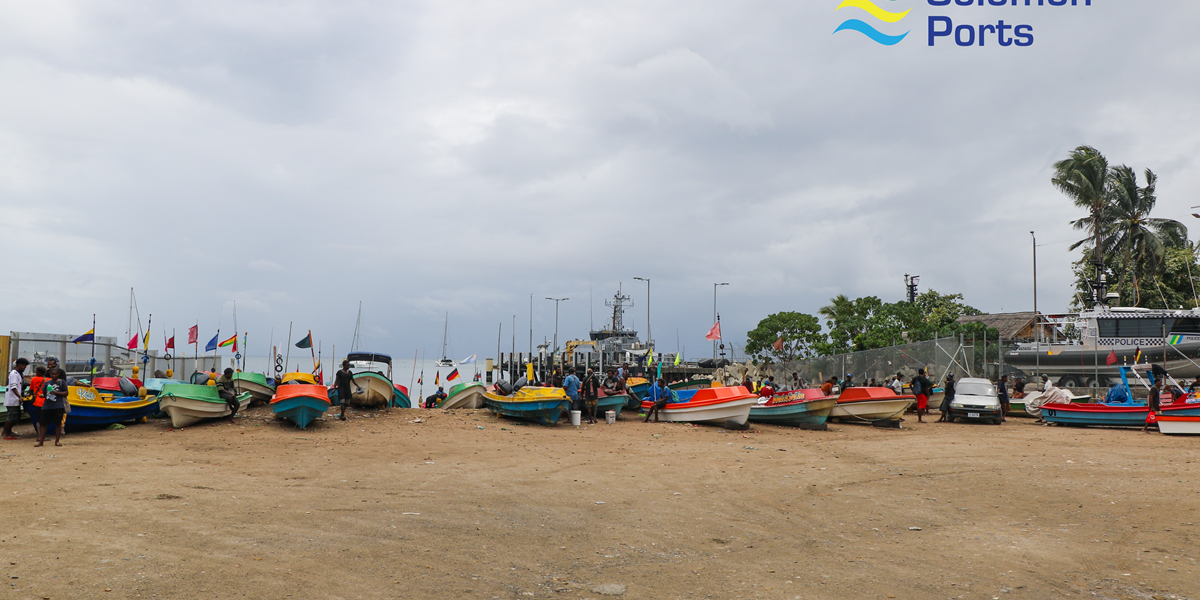
Solomon Ports has undertaken a major cleanup and regulation exercise at the Yacht Club boat landing area, formally known as Mbokona Bay, as part of ongoing efforts to improve the cleanliness, safety, security and overall management of the facility.
The boat landing area is an important access point for small boat operators and passengers travelling to and from nearby islands and communities, including Savo, Isabel, Ngella, East and West Guadalcanal, and Malaita Province.
Over recent weeks, Solomon Ports has removed abandoned and derelict boats from the area, including some boats that are believed to have remained at the site for more than 10 years. The removal has helped clear the area and create a safer and more organised environment for boat operators and users.
The cleanup also involved the removal of accumulated rubbish and waste from the area. Solomon Ports has simultaneously strengthened security and management measures to address activities that are not permitted within the facility, including informal market stalls, betel nut selling, alcohol sales and consumption, and other unauthorised or illegal activities.
With the cleanup now substantially completed, the area is being more closely regulated to ensure it remains clean, safe, secure and properly managed for the benefit of all users.
As part of the new management arrangements, the temporary operating hours for the boat landing area are currently 4:00am to 6:00pm daily. These hours may be reviewed and adjusted in the future depending on operational requirements and the ongoing management of the facility.
Solomon Ports Assistant Property Manager, Mr. Augustine Waleka, has urged boat operators, passengers and other users of the Yacht Club area to cooperate with Solomon Ports and help maintain the improvements that have been made.
“We want to make it clear that we are not stopping people from using this important area. This cleanup and regulation exercise is about better managing the facility and ensuring that it is safe, secure and properly maintained in accordance with appropriate marine and port standards,” Mr. Waleka said.
“Solomon Ports has future plans for this area to improve the facilities and infrastructure, provide a safer and more suitable environment for boats to land, strengthen waste management and ensure that people can use the area properly and safely,” he said.
Solomon Ports will continue working towards improving the standard of its facilities and services while ensuring that important public and maritime access points are maintained for the communities and users who depend on them.
We call on all users of the Mbokona Bay boat landing area to take responsibility for keeping the facility clean, following the operating requirements and cooperating with security and port personnel to ensure the area remains safe and accessible to everyone.
ENDS///.
所罗门港口公司在游艇俱乐部船只登岸区(正式称为Mbokona湾)进行了大规模清理和管理规范,这是改善设施清洁、安全、安保和整体管理的持续努力的一部分。
船只登岸区是小型船只运营商和乘客往返附近岛屿和社区(包括萨沃岛、伊莎贝尔岛、恩杰拉岛、东瓜达尔卡纳尔和西瓜达尔卡纳尔以及马莱塔省)的重要通道。
在最近几周,所罗门港口公司已从该区域移除了被遗弃和破旧的船只,包括一些据信在该地点停留超过10年的船只。此次清理有助于清理区域,为船只运营商和用户创造一个更安全和更有序的环境。
清理工作还涉及从该区域移除积累的垃圾和废物。所罗门港口公司同时加强了安全和管理措施,以应对在设施内不允许的活动,包括非正式市场摊位、槟榔销售、酒精销售和消费以及其他未经授权或非法活动。
随着清理工作基本完成,该区域正在更严格地进行管理,以确保其保持清洁、安全、安保和妥善管理,以造福所有用户。
作为新管理安排的一部分,船只登岸区的临时营业时间目前为每天上午4:00至下午6:00。这些时间可能会根据运营需求和设施的持续管理进行审查和调整。
所罗门港口公司助理物业经理奥古斯丁·瓦莱卡(Mr. Augustine Waleka)呼吁船只运营商、乘客和其他游艇俱乐部区域的用户与所罗门港口公司合作,帮助维护已取得的改善。
“我们想明确表示,我们并不是要阻止人们使用这个重要区域。这次清理和管理工作是为了更好地管理设施,确保其安全、安保和妥善维护,符合适当的海洋和港口标准,”瓦莱卡先生说。
“所罗门港口公司对该区域有未来的规划,以改善设施和基础设施,提供一个更安全和更适合船只登岸的环境,加强废物管理,确保人们能够安全和妥当地使用该区域,”他说。
所罗门港口公司将继续致力于提高其设施和服务的标准,同时确保重要的公共和海事通道为依赖它们的社区和用户保持畅通。
我们呼吁所有使用Mbokona湾船只登岸区的用户对保持设施清洁负责,遵循运营要求,并与安全和港口人员合作,以确保该区域对所有人保持安全和可达。
结束///
The Pacific Islands Forum Fisheries Agency (FFA) has commenced discussions with the Overseas Fishery Cooperation Foundation of Japan (OFCF) on the next Japan Promotion Fund (JPF) Arrangement, with the current Arrangement coming to an end in December 2027.
The discussions took place at the FFA–OFCF Annual Informal Consultations held at OFCF headquarters in Tokyo on 25–26 August 2026. The meeting was co-chaired by FFA Director-General Noan David Pakop and OFCF Senior Vice President Shingo Ota, with Member representatives from New Zealand, Fiji, Kiribati and the Federated States of Micronesia in attendance.
FFA-OFCF JPF Informal Consultations, 24-25 August 2026. Photo: Supplied
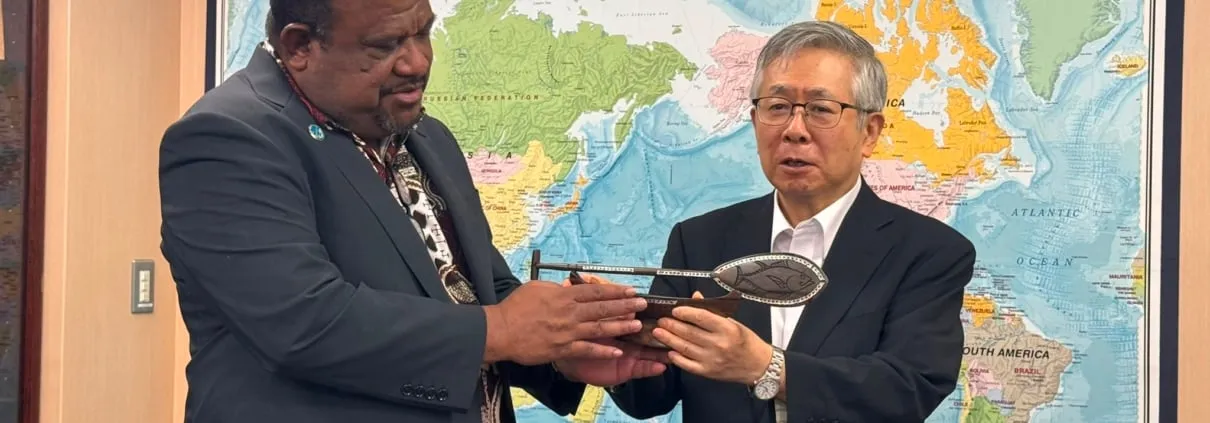
During the meeting, the Director-General and Member representatives also met with OFCF President Toshiro Shirasu and presented him with a gift from FFA.
“This gift symbolises Pacific unity and today recognises the great relationship and collaboration between the government of Japan, OFCF Japan and FFA as we jointly row our canoe towards our mutual goal of sustainably managing and developing Pacific tuna fisheries. We acknowledge and thank the government of Japan and OFCF Japan for the invaluable support provided to the Pacific and look forward to working closely with Senior Vice President Shingo Ota and the OFCF team in finalising the next JPF Arrangement,” Mr Pakop said.
Since the Fund’s establishment in 2008, JPF support has strengthened the ability of FFA Members to manage and develop their fisheries, meet their international obligations and participate in regional and international fisheries processes. The current JPF Arrangement provides around US$800,000 per year.
The Tokyo consultations marked the start of the process toward the next JPF Arrangement, which will take effect from 2028. Both sides agreed to progress the next ten-year Workplan for consideration at the 2027 FFA–OFCF JPF Joint Committee meeting.
TOKYO, 28 AUGUST 2026
太平洋岛国论坛渔业机构(FFA)已与日本海外渔业合作基金会(OFCF)就下一届日本推广基金(JPF)安排展开讨论,目前的安排将于2027年12月结束。
讨论于2026年8月25日至26日在东京OFCF总部举行的FFA-OFCF年度非正式磋商会上进行。会议由FFA总干事诺安·大卫·帕科普(Noan David Pakop)和OFCF高级副总裁大田慎吾(Shingo Ota)共同主持,来自新西兰、斐济、基里巴斯和密克罗尼西亚联邦的成员代表出席。
FFA-OFCF JPF非正式磋商,2026年8月24-25日。照片:提供
在会议期间,总干事和成员代表还会见了OFCF总裁白须俊郎(Toshiro Shirasu),并向他赠送了FFA的礼物。
“这份礼物象征着太平洋的团结,今天也表彰了日本政府、OFCF日本和FFA之间的良好关系与合作,因为我们共同划船朝着可持续管理和发展太平洋金枪鱼渔业的共同目标前进。我们感谢日本政府和OFCF日本对太平洋提供的宝贵支持,并期待与高级副总裁大田慎吾和OFCF团队密切合作,最终确定下一届JPF安排,”帕科普先生表示。
自2008年基金成立以来,JPF的支持增强了FFA成员管理和发展其渔业的能力,满足其国际义务,并参与区域和国际渔业事务。目前的JPF安排每年提供约80万美元。
东京的磋商标志着下一届JPF安排的进程开始,该安排将于2028年生效。双方同意推进下一届十年工作计划,以便在2027年FFA-OFCF JPF联合委员会会议上进行审议。
东京,2026年8月28日
Salutation
Hon. Minister MCILI / Hon. Minister MOFT
PS MCILI, PS MOFT
Directors MCILI & MOFT
Heads of Financial Institutions
On behalf of the Central Bank of Solomon Islands, I congratulate the Minister, the government and all stakeholders on the re-launch of the Small and Medium Enterprises Credit Guarantee Scheme.
AS we all know, the scheme ceased in January of 2025 because the guaranteed commitment far exceeded the available funding. The issue then was whether CBSI would be willing to take on additional exposure. At the time, this was unclear, so the scheme had to be temporarily suspended for discussion with stakeholders.
Under the NFIS 3 strategy, improving access to finance for MSMEs and building their capacity through financial literacy and business training is one of the key strategic objectives in the country’s financial inclusion strategy.
This inclusion is in recognition of the fact that MSMEs are one of the key segments which drive financial inclusion, through job creation, income-generating activities, and inclusive participation in the SI economy.
Thus, to assist MSMEs have access to finance, the Central and financial inclusion stakeholders, including the MCILI have collaborated on a number of important initiatives. These include the SME Credit Guarantee Scheme (where over 160 MSMEs have accessed or participated in), the SME Export Finance Facility, and MSME Credit line, among others.
Undoubtedly, these initiatives have assisted many MSMEs to grow over the years, but I think more coordinated efforts are needed to disseminate information and promote the scheme. Based on the data we have, uptake appears very low among youth- and women-owned MSMEs. This speaks to the challenges we faced in attracting youth- and women-owned MSMEs to tap schemes and access finance. Moreover, it also highlights the interconnected barriers prevalent in the country that prevent MSMEs from accessing finance and expanding their businesses.
Before I conclude, I would like to share some general observations regarding the challenges faced by MSMEs. Firstly, the difficulties that MSMEs encounter in accessing finance are not primarily due to a lack of initiatives intended to support them. Rather, the issue primarily concerns the design of schemes or products, which are either not sufficiently tailored to meet the unique needs of MSMEs or do not adequately reflect the existing ecosystem intended to support these enterprises. To promote inclusivity, the schemes might necessitate innovative thinking, extending their design beyond traditional product development, and focusing on MSMEs.
Secondly, our MSMEs also need compliance support and management resources not just for the purpose of accessing finance but to help them prepare to compete with MSMEs in the country, in the region, and globally.
My final observation is that MSMEs require support. In addition to accessing finance, this encompasses the provision of structured training programs throughout the borrowing cycle, personalized mentoring and advisory services, as well as access to markets and market infrastructure.
A recent MSME survey on the scheme's administration offers valuable recommendations, which should be considered to enhance the scheme. These include:
Simplifying the loan application process;
Implementing risk-based lending strategies;
Enhancing post-loan business support;
Adding flexible repayment options; and
Improving financial literacy and awareness through a joint government and financial institutions approach.
Role of CBSI and Words of Appreciation to the Government
CBSI stands ready to administer the Scheme in accordance with the agreed framework and to work closely with Government, participating financial institutions and other stakeholders. Our shared responsibility is to ensure that this Scheme is practical, accountable, and focused on real outcomes for MSMEs, people and communities.
Honourable Minister and esteemed colleagues, this re-launch signifies a vote of confidence in our citizens. It communicates that Solomon Islanders willing to work, invest, and create opportunities should not be hindered solely by a lack of collateral. With meticulous execution, this scheme has the potential to transform business ideas into employment, income, and the growth of local enterprises.
To this end, I commend the Solomon Islands Government for its recognition of the importance of SMEs' contribution to the Solomon Islands Economy by re-launching the scheme, including its commitment to provide funding support to the SMECGS.
In closing I would like to make three calls for action.
Currently, DBSI is the only financial institution active in the SMECGS space. I urge other financial institutions and service providers to support SMEs through this Credit Guarantee Scheme.
I also encourage all FIs to actively participate by sharing their ideas on how to improve the scheme's design and usage, ensuring it remains sustainable and contributes to economic growth.
Finally, I call on SMEs to be responsible borrowers—practicing responsible borrowing and reducing the risk of high defaults—and to use the SMECGS responsibly so that more SMEs can access it in the future.
With these, I once again congratulate the Minister, the Solomon Islands Government, and all stakeholders on the relaunch of the SME Credit Guarantee Scheme and its future success.
Tagio tumas.
End//
致辞
尊敬的MCILI部长 / 尊敬的MOFT部长
MCILI常务秘书,MOFT常务秘书
MCILI和MOFT的主任们
金融机构负责人
我代表所罗门群岛中央银行,祝贺部长、政府及所有利益相关者重新启动中小企业信用担保计划。
众所周知,该计划于2025年1月停止,因为担保承诺远远超过可用资金。当时的问题是CBSI是否愿意承担额外的风险。那时,这一点尚不明确,因此该计划不得不暂时暂停,以便与利益相关者进行讨论。
根据NFIS 3战略,提高中小微企业(MSMEs)获得融资的机会,并通过金融素养和商业培训提升其能力,是国家金融包容战略的关键战略目标之一。
这一包容性认识到,MSMEs是推动金融包容的关键部分,通过创造就业、产生收入活动以及在所罗门群岛经济中实现包容性参与。
因此,为了帮助MSMEs获得融资,中央银行和金融包容利益相关者,包括MCILI,已在多个重要举措上进行了合作。这些举措包括中小企业信用担保计划(已有超过160家MSMEs参与或受益)、中小企业出口融资设施和MSME信用额度等。
毫无疑问,这些举措多年来帮助了许多MSMEs成长,但我认为需要更协调的努力来传播信息和推广该计划。根据我们掌握的数据,青年和女性拥有的MSMEs的参与率似乎非常低。这反映了我们在吸引青年和女性拥有的MSMEs参与计划和获得融资方面所面临的挑战。此外,这也突显了在国家中普遍存在的相互关联的障碍,这些障碍阻止了MSMEs获得融资和扩展业务。
在我结束之前,我想分享一些关于中小企业(MSMEs)面临挑战的一般观察。首先,中小企业在获取融资方面遇到的困难,主要并不是由于缺乏旨在支持它们的举措。相反,问题主要在于方案或产品的设计,这些设计要么没有充分满足中小企业的独特需求,要么没有充分反映出旨在支持这些企业的现有生态系统。为了促进包容性,这些方案可能需要创新思维,将其设计延伸到传统产品开发之外,专注于中小企业。
其次,我们的中小企业还需要合规支持和管理资源,不仅仅是为了获取融资,而是帮助它们为与国内、区域和全球的中小企业竞争做好准备。
我最后的观察是,中小企业需要支持。除了获取融资外,这还包括在借款周期内提供结构化培训项目、个性化指导和咨询服务,以及获取市场和市场基础设施的机会。
最近对该计划管理的中小企业调查提供了宝贵的建议,这些建议应被考虑以增强该计划。这些建议包括:
简化贷款申请流程;
实施基于风险的贷款策略;
增强贷款后的商业支持;
增加灵活的还款选项;以及
通过政府与金融机构的联合方式提高金融素养和意识。
中央银行(CBSI)的角色及对政府的感谢
中央银行(CBSI)准备根据商定的框架管理该计划,并与政府、参与的金融机构及其他利益相关者密切合作。我们的共同责任是确保该计划切实可行、问责,并专注于为中小企业、人民和社区带来实际成果。
尊敬的部长和各位同事,这次重新启动标志着对我们公民的信任。它传达了这样的信息:愿意工作、投资和创造机会的所罗门岛民不应仅因缺乏抵押品而受到阻碍。通过细致的执行,该计划有潜力将商业想法转化为就业、收入和地方企业的增长。
为此,我赞扬所罗门群岛政府重新启动该计划,承认中小企业对所罗门群岛经济的重要贡献,并承诺提供资金支持。
最后,我想提出三项行动呼吁。
目前,DBSI 是唯一一家活跃于中小企业信用担保计划(SMECGS)领域的金融机构。我呼吁其他金融机构和服务提供商通过这一信用担保计划支持中小企业。
我还鼓励所有金融机构积极参与,分享他们对如何改善该计划设计和使用的想法,确保其可持续性并促进经济增长。
最后,我呼吁中小企业成为负责任的借款人——实践负责任的借款,降低高违约风险——并负责任地使用中小企业信用担保计划,以便未来更多中小企业能够获得该计划的支持。
在此,我再次祝贺部长、所罗门群岛政府及所有利益相关者重新启动中小企业信用担保计划,并祝愿其未来成功。
非常感谢。
结束//
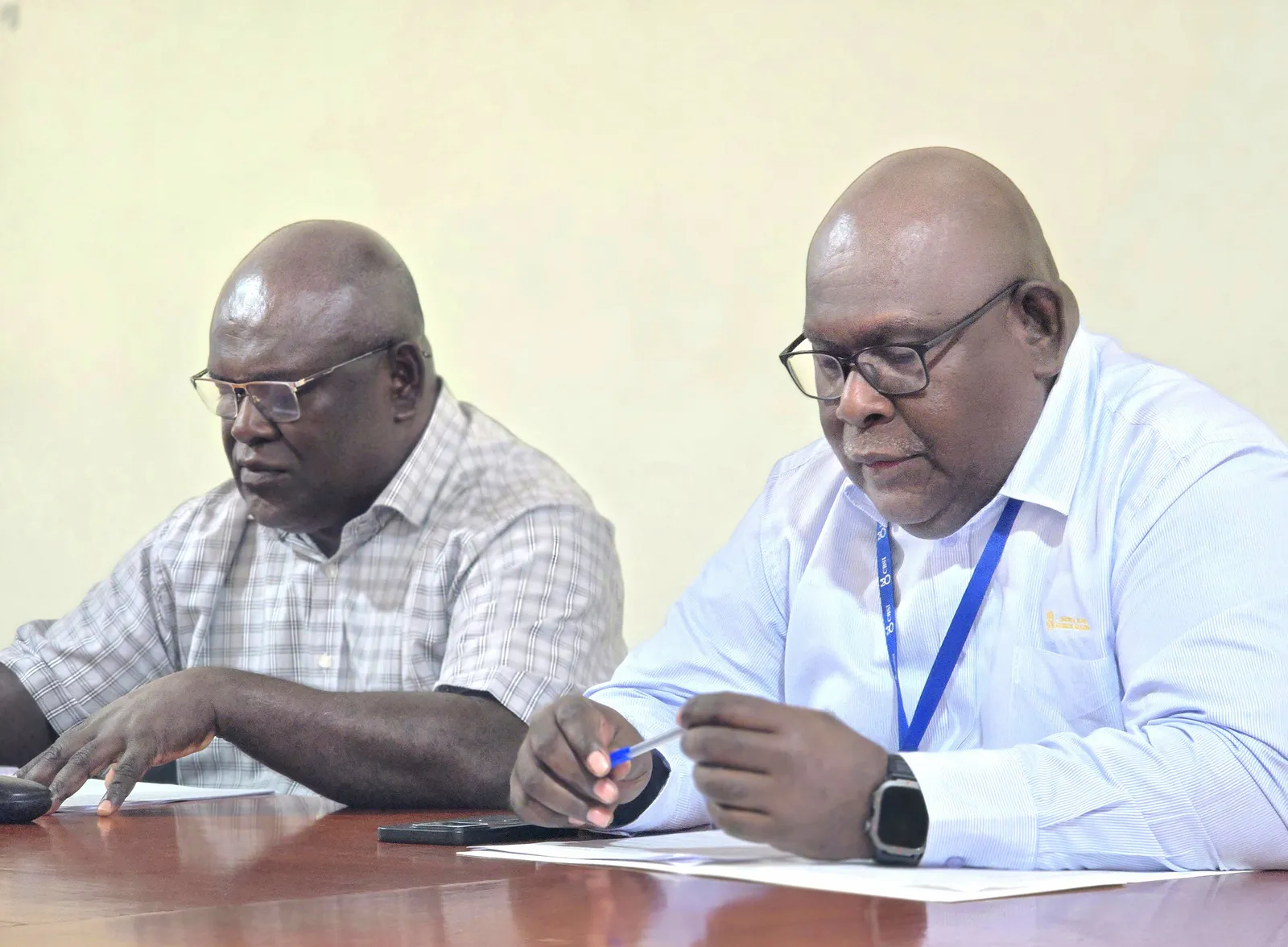
Fisheries authorities and stakeholders in Vanuatu are reviewing regional and international human rights and labour standards, looking at the national changes needed to implement new standards protecting crew aboard fishing vessels.
Fisheries authorities and stakeholders in Vanuatu are reviewing relevant regional and international human rights standards and examining the national changes needed to implement new standards protecting crew aboard fishing vessels.
The Pacific Islands Forum Fisheries Agency (FFA) supported a three-day national stakeholder consultation in Port Vila from 25 – 27 August 2026. The Vanuatu Fisheries Department took part as the key national authority that will lead and coordinate the Crew Labour Standards work in Vanuatu.
The workshop focused on the awareness of the FFA Harmonised Minimum Terms and Conditions (HMTCs) and the Western and Central Pacific Fisheries Commission’s (WCPFC) landmark Conservation and Management Measure for Crew Labour Standards, known as CMM 2024-04, that takes effect on 1 January 2028.
Vanuatu Fisheries Department Deputy Director of Offshore Fisheries Tony Taleo, said the workshop was important for the country’s legal, economic and social interests.
Tony Taleo, Deputy Director of Offshore, Vanuatu Fisheries Department. Photo: FFA
“As a Pacific Island nation with a significant maritime domain and an active international vessel registry, Vanuatu’s participation in and alignment with these regional labour standards directly impacts its sovereignty, reputation and workforce protection,” Mr Taleo said.
“For Vanuatu, the FFA workshop on WCPFC labour standards is not merely a regulatory formality; it is a strategic imperative. It equips the country with the tools to protect vulnerable fishing crews, close legal loopholes in maritime labour enforcement, uphold its international commitments, and safeguard the long-term sustainability and reputation of its blue economy.”
The consultation brought together 10 participants from fisheries, maritime, police and health authorities, as well as representatives from the fishing industry.
Vanuatu Minister for Health, Hon. Robert Bohn were among national authorities and stakeholders that took part in the consultation. Photo: FFA
Participants from the Vanuatu Fisheries Department, who are playing a key role in the implementation of the Crew Labour Standards. Photo: FFA
Local fishing agent and industry representative, Wesley Obet. Photo: FFA
Participants reviewed Vanuatu’s existing arrangements, identified possible gaps and discussed the legal, policy and operational changes that may be required.
In November 2025, FFA signed an MOU with the International Labour Organisation (ILO) to work together through contracts and agreements to combine resources, expertise and training materials to support FFA Members in their preparation for the Crew Labour Standards.
The workshop also included ILO representatives who joined virtually to present on the UN ILO conventions that relate to the protections of fishers.
Following the consultation, participants agreed that the Vanuatu Fisheries Department will play a leading role in coordinating continued discussions with the national agencies and stakeholders responsible for different parts of implementation.
As part of the Vanuatu workshop outcomes, participants agreed to a revised Vanuatu National Crewing Policy, a national crewing policy implementation plan and considered the best option to domesticate CMM 2024-24 by license conditions and then by regulations into Vanuatu’s national laws.
The workshop outcome also recommends Vanuatu considers ratifying the ILO Working in Fishing Convention 2007 (C188).
FFA is supporting similar consultations across its membership as Pacific countries and territories prepare for the new standards. The workshops help Members clarify agency responsibilities, review their national systems and plan the changes required before the measure takes effect.
“The different Members are at different levels of implementation, but all the Members have shown keen interest to implement CMM 2024-04 well before it comes into force,” said Isala Tito Isala, FFA’s Labour Standards Advisor.
FFA Labour Standards Advisor, Isala Tito Isala. Photo: FFA
“The Vanuatu workshop participants understand that protecting our fishers and sustaining our tuna go hand in hand. If we look after the people who catch the fish, we also manage our tuna resources properly.”
The WCPFC adopted CMM 2024-04 at its 21st Annual Regular Session in Suva, Fiji in December 2024, following sustained advocacy by FFA Members.
It was the first comprehensive and binding measure on fishing vessel crew labour standards adopted by a regional fisheries management organisation. The measure sets minimum requirements covering written employment agreements, pay, safe working and living conditions, medical care, rest, access to identity documents and protection from forced labour, abuse and mistreatment.
It also sets responsibilities for responding when crew members suffer serious illness or injury, go missing at sea or report mistreatment.
Through national consultations and technical advice, FFA is helping Members identify gaps and prepare practical steps for implementation. This involves coordination among agencies responsible for fisheries, labour, maritime affairs, health, immigration, law enforcement and vessel registration.
With less than 500 days remaining until CMM 2024-04 takes effect, the Vanuatu consultation marks another step towards fair treatment, safer working conditions and stronger protection for fishing crew across the Pacific.
PORT VILA, 27 AUGUST 2026
瓦努阿图的渔业当局和利益相关者正在审查区域和国际人权及劳动标准,研究实施保护渔船船员的新标准所需的国家变更。
瓦努阿图的渔业当局和利益相关者正在审查相关的区域和国际人权标准,并检查实施保护渔船船员的新标准所需的国家变更。
太平洋岛国论坛渔业机构(FFA)支持于2026年8月25日至27日在维拉港举行为期三天的国家利益相关者咨询会议。瓦努阿图渔业部作为主要国家机构参与了此次会议,将负责领导和协调瓦努阿图的船员劳动标准工作。
此次研讨会重点关注FFA统一最低条款和条件(HMTCs)以及西部和中部太平洋渔业委员会(WCPFC)具有里程碑意义的船员劳动标准保护措施,即CMM 2024-04,该措施将于2028年1月1日生效。
瓦努阿图渔业部离岸渔业副主任托尼·塔莱奥(Tony Taleo)表示,此次研讨会对国家的法律、经济和社会利益至关重要。
“作为一个拥有重要海洋领域和活跃国际船舶登记的太平洋岛国,瓦努阿图参与并与这些区域劳动标准保持一致,直接影响其主权、声誉和劳动力保护,”塔莱奥先生说。
“对于瓦努阿图而言,FFA关于WCPFC劳动标准的研讨会不仅仅是一个监管形式;它是一个战略必要。它为国家提供了保护脆弱渔船船员的工具,填补海事劳动执法中的法律漏洞,维护其国际承诺,并保障其蓝色经济的长期可持续性和声誉。”
此次咨询会议汇聚了来自渔业、海事、警察和卫生当局的10名参与者,以及来自渔业行业的代表。
瓦努阿图卫生部长罗伯特·博恩(Hon. Robert Bohn)也是参与此次咨询的国家当局和利益相关者之一。
当地渔业代理人和行业代表,韦斯利·奥贝特(Wesley Obet)。照片:FFA
与会者回顾了瓦努阿图现有的安排,识别出可能的缺口,并讨论了可能需要的法律、政策和操作变更。
在2025年11月,FFA与国际劳工组织(ILO)签署了一份谅解备忘录(MOU),共同通过合同和协议整合资源、专业知识和培训材料,以支持FFA成员为船员劳动标准的准备工作。
研讨会还包括ILO代表,他们通过虚拟方式参与,介绍与渔民保护相关的联合国ILO公约。
在咨询结束后,与会者一致同意,瓦努阿图渔业部将在协调与负责实施不同部分的国家机构和利益相关者的持续讨论中发挥主导作用。
作为瓦努阿图研讨会成果的一部分,与会者同意修订瓦努阿图国家船员政策、国家船员政策实施计划,并考虑通过许可条件和随后通过法规将CMM 2024-24纳入瓦努阿图的国家法律。
研讨会成果还建议瓦努阿图考虑批准ILO 2007年《渔业工作公约》(C188)。
FFA正在支持其成员之间进行类似的咨询,以帮助太平洋国家和地区为新标准做好准备。这些研讨会帮助成员明确机构职责,审查国家系统,并规划在措施生效前所需的变更。
“不同的成员在实施方面处于不同的水平,但所有成员都表现出强烈的兴趣,希望在CMM 2024-04生效之前就能很好地实施它,”FFA劳动标准顾问伊萨拉·蒂托·伊萨拉(Isala Tito Isala)表示。
FFA劳动标准顾问伊萨拉·蒂托·伊萨拉。照片:FFA
“瓦努阿图研讨会的参与者明白,保护我们的渔民和可持续管理我们的金枪鱼是密不可分的。如果我们照顾好捕捞鱼类的人,我们也能妥善管理我们的金枪鱼资源。”
WCPFC在2024年12月于斐济苏瓦举行的第21届年度例行会议上通过了CMM 2024-04,此前FFA成员进行了持续的倡导。
这是区域渔业管理组织通过的首个全面且具有约束力的渔船船员劳动标准措施。该措施设定了最低要求,包括书面雇佣协议、薪酬、安全的工作和生活条件、医疗护理、休息、获取身份证明文件的权利,以及对强迫劳动、虐待和不当对待的保护。
该措施还规定了在船员遭受严重疾病或受伤、在海上失踪或报告遭受虐待时的响应责任。
通过国家咨询和技术建议,FFA(太平洋渔业协会)正在帮助成员国识别差距,并为实施准备实际步骤。这涉及到负责渔业、劳动、海事事务、健康、移民、执法和船舶注册的机构之间的协调。
距离 CMM 2024-04 生效还有不到 500 天,瓦努阿图的咨询标志着向太平洋地区渔船船员实现公平对待、更安全的工作条件和更强保护的又一步。
PORT VILA,2026年8月27日
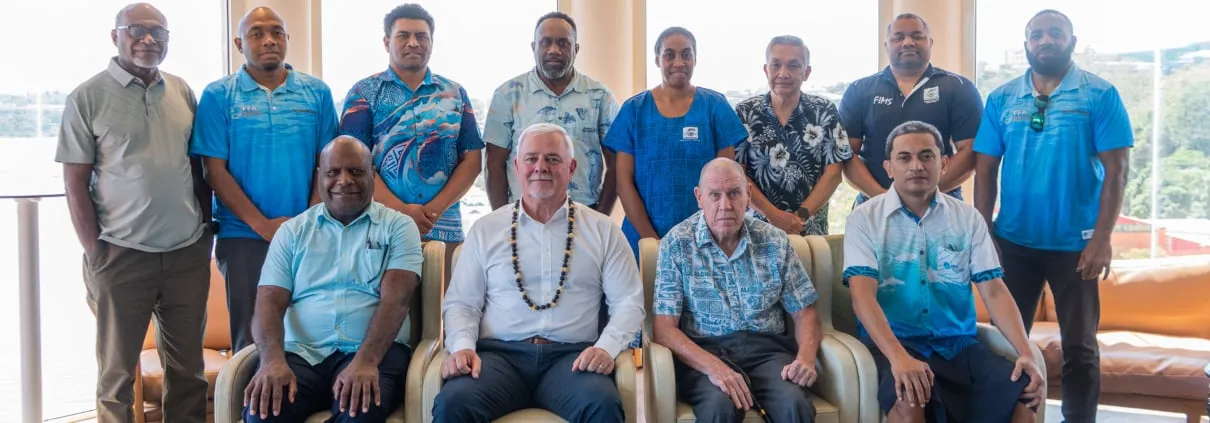
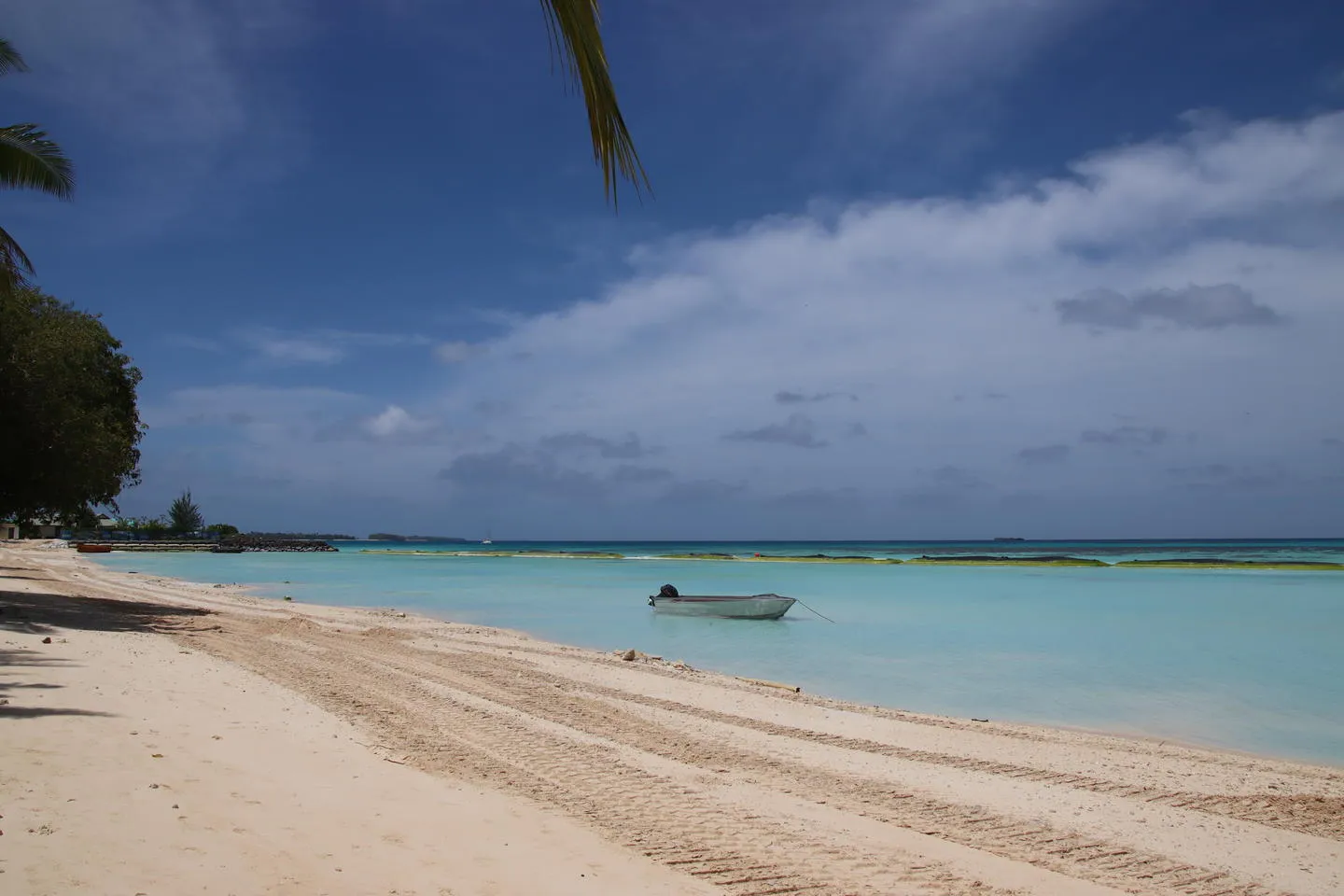
On the narrow atoll of Funafala, on the southern side of Funafuti, the capital of Tuvalu, Miliama watched the shoreline change.
As a child, the lagoon felt wide and playful – a place where children ran barefoot along the white sandy beach and where the rhythms of the ocean brought comfort rather than uncertainty. Today, the tides reach further inland. The sea swallows parts of the shore that once felt safe. Saltwater seeps into the land. The ground beneath feels less stable with each passing year.
But she remained. Because for Miliama, land was never just physical space. It was identity, belonging, and kinship.
In the Pacific, climate adaptation is not only about safeguarding infrastructure or managing environmental and economic risk. It is about protecting the relational bonds between people, land, ancestors, and future generations. Cultural continuity is not an afterthought, it is a key metric of development.
The question is no longer whether culturally-grounded climate adaptation can be done – but whether the international system can support solutions at the speed and scale required.
Understanding climate change from a Pasifika relational perspective
Life is inherently relational. Human wellbeing is inseparable from the wellbeing of the planet and the cosmos. There is no distinction between the physical and the spiritual worlds – the spiritual manifests in physical practices of rituals, protocols, and community governance.
In the fenua-based understanding of place, land is not just land, it is ocean, skies, people, ancestors, and spirit – all in mutual belonging, as kin. The fenua is boundless, in time and space, extending to include the past (ancestors) and the future (future generations) as the present can only find meaning when it is defined within the past and the future. Vaa fesokotaki (relational bonds) hold these together in sacred balance.
Protecting the fenua and vaa fesokotaki is a core part of cultural security: the protection of traditional knowledge systems, customary land tenure, governance structures, and Pacific people’s sacred connection to land and sea.
Climate change, such as rising seas, coastal erosion and extreme weather events, harm the fenua by disrupting relational bonds and severing continuity between past, present and future. For indigenous Tuvaluan's this looks like saltwater bubbling up from the ground during king tides making it hard to grow the traditional crops that have nourished communities for generations, or the deterioration of coral reefs impacting communities cultural fishing grounds.
In this context, climate action is an act of relational care. People have a sacred responsibility to protect the fenua and the vaa fesokotaki. Within this worldview, cultural security is not separate from environmental protection. It emerges from maintaining relationships – between people and place, between present and future generations, and between cultural identity and physical territory.
Climate adaptation as cultural continuity
Pasifika relational worldviews fundamentally reshape what climate adaptation is, what it protects, and how success should be measured.
Nowhere is this more apparent than in Tuvalu.
Tuvalu sits, on average, less than two metres above sea level, and Tuvalu's entire population of around 11,500 people live within one kilometre of the ocean. Rising seas, coastal erosion, recurrent king tides, and extreme weather events are not just theoretical projections. They are felt realities.
According to technical modelling undertaken by UNDP in Tuvalu, and consistent with IPCC sea-level rise scenarios, nearly half of the land area of the capital of Funafuti will become routinely inundated during normal monthly high tides by 2050 to 2060. By 2100, less than 10 percent of the land area will remain above the reach of annual high spring tide events.
In this context, adaptation is both a future consideration and a present necessity for survival – of all life systems and the vaa fesokotaki that connect them.
To meet this need, The Government of Tuvalu and UNDP are working together to build creative, transformational and holistic adaptation solutions based on the scientific evidence and local context. The Tuvalu Coastal Adaptation Project (TCAP) is one of those solutions. Funded by the GCF and the governments of Tuvalu, Australia and New Zealand, and implemented by UNDP, TCAP Phase 1 was completed in 2025.
Across Fogafale and the outer islands of Nanumea and Nanumaga, the project has strengthened nearly 2.9 kilometres of vulnerable shoreline and created over 7.3 hectares of reclaimed, elevated land in Funafuti, providing safe space for communities and future development.
This is not incremental adaptation. It is adaptation at the scale of survival.
TCAP brings together infrastructure, planning, and capacity. More than 200 national stakeholders have been trained in coastal management, while risk-informed planning tools such as the LiDAR data and risk and hazard platforms are guiding long-term decision-making.
Reflecting the Pasifika principle of mutual contradictions, these interventions are informed by both scientific evidence and Indigenous knowledge. Berm-top barriers constructed from sand-filled geotextile bags are covered with soil and planted with vegetation, allowing them to become part of the natural environment. Meanwhile, coral nurseries have been established to rehabilitate reef ecosystems and strengthen natural coastal protection. The elders’ knowledge of seasons, currents and plant species is critical to success.
The next phases of TCAP are already underway and will protect approximately 1,170 meters of coastline and deliver an additional 13.6 hectares of raised land designed to remain above future sea levels.
TCAP demonstrates what climate adaptation requires in small island states: scale, coordination, and sustained investment.
This is about more than just infrastructure. It is about ensuring that communities can remain in their ancestral lands – retaining connection to land, culture, and identity, while creating the conditions for future generations to stay. In doing so, it is an important step in building cultural security.
But in Tuvalu, adaptation is also inseparable from questions of sovereignty. TCAP supports national security through safeguarding the physical territory upon which statehood is currently recognised under international law. This goes hand in hand with The Government of Tuvalu’s advocacy for the formal recognition of statehood irrespective of the existence of physical territory and is aligned with the Pacific’s Declaration on the Continuity of Statehood and the Protection of Persons in the Face of Climate Change-Related Sea-Level Rise.
An invitation for the global community
The Pacific is not short on solutions. TCAP is proof that with the right partnerships, investment and drive the continuity of a nation can be safeguarded – in terms of both cultural and national security.
What the region faces is a gap between climate finance needs and climate finance flows, between ambition and implementation. Closing that gap requires more than just projects. It requires systems that connect finance to policy, and policy to delivery that is grounded in local realities and wisdom, and capable of operating at scale. Indigenous knowledge must be integrated and embraced as a critical part of policy design.
COP31 is an important opportunity for world leaders to come together and commit to climate adaptation at scale across the Pacific. At the same time, topics such as compensation for non-economic loss and damage and continuity of statehood despite loss of territory must also be on the agenda.
But above all, climate action requires the spirit of alofa (love), aava (respect), and tiute (responsibility). Pre-COP in Fiji and Tuvalu in October this year is an invitation for the global community to engage in climate dialogue, consensus and action through the Pacific Way.
The TCAP project has received funding from the GCF and the governments of Tuvalu, Australia, New Zealand, and the United States.
Miliama Lupe was a respected Tuvaluan elder from Funafala who passed away earlier this year. We pay our deepest respects to Miliama and all the Pacific ancestors who have nurtured the land across generations.
This blog is co-authored between Rev. Dr. Taufe M Lusama who is a theologian with a deep sense for climate justice from the Ekalesia Kelisiano Tuvalu, serving as the Director of the Institute for Climate Indigenous Knowledge within the Pasifika Communities University, an ecumenical educational institution based in Suva, Fiji, and Aquila Van Keuk, UNDP Pacific Office Policy, Innovation and Partnerships Analyst.
在图瓦卢首都富纳富提南侧的狭窄环礁富纳法拉,米利亚玛目睹了海岸线的变化。
作为一个孩子,泻湖显得宽广而充满玩乐——这是一个孩子们赤脚在白色沙滩上奔跑的地方,海洋的节奏带来的是安慰而非不确定。如今,潮水向内陆涌得更远。大海吞没了曾经感觉安全的海岸部分。咸水渗入土地。随着每年的流逝,脚下的土地感觉越来越不稳定。
但她依然留在这里。因为对米利亚玛来说,土地从来不仅仅是物理空间。它是身份、归属和亲情。
在太平洋地区,气候适应不仅仅是保护基础设施或管理环境和经济风险。它还关乎保护人与土地、祖先和未来世代之间的关系纽带。文化延续不是事后考虑,而是发展的关键指标。
问题不再是文化根植的气候适应是否可行,而是国际体系是否能够支持所需速度和规模的解决方案。
从帕西菲卡关系视角理解气候变化
生活本质上是关系性的。人类的福祉与地球和宇宙的福祉是不可分割的。物质世界与精神世界之间没有区别——精神在仪式、协议和社区治理的物质实践中显现。
在基于fenua(土地)的地方理解中,土地不仅仅是土地,它是海洋、天空、人民、祖先和精神——所有这些都在相互归属中,作为亲属。fenua是无边界的,在时间和空间上延伸,涵盖过去(祖先)和未来(未来世代),因为当下只有在过去和未来的定义中才能找到意义。vaa fesokotaki(关系纽带)将这些保持在神圣的平衡中。
保护fenua和vaa fesokotaki是文化安全的核心部分:保护传统知识体系、习惯性土地使用权、治理结构,以及太平洋人民与土地和海洋的神圣联系。
气候变化,如海平面上升、海岸侵蚀和极端天气事件,破坏了fenua(土地),扰乱了人与人之间的关系纽带,切断了过去、现在和未来之间的连续性。对于土著图瓦卢人来说,这表现为在大潮期间,盐水从地面冒出,使得种植世代以来滋养社区的传统作物变得困难,或者珊瑚礁的恶化影响了社区的文化捕鱼场。
在这种背景下,气候行动是一种关系关怀的表现。人们有神圣的责任去保护fenua和vaa fesokotaki。在这种世界观中,文化安全与环境保护并不是分开的,它源于维持关系——人与地方之间、现在与未来世代之间,以及文化身份与物理领土之间的关系。
气候适应作为文化连续性
太平洋地区的关系世界观从根本上重塑了气候适应的定义、保护的内容以及成功的衡量标准。
在图瓦卢,这一点表现得尤为明显。
图瓦卢的平均海拔不到两米,约11,500人的整个居民都生活在离海洋一公里以内。海平面上升、海岸侵蚀、反复的大潮和极端天气事件不仅仅是理论预测,而是切实的现实。
根据联合国开发计划署(UNDP)在图瓦卢进行的技术建模,并与气候变化政府间专门委员会(IPCC)海平面上升情景一致,到2050年至2060年,首都富纳富提(Funafuti)近一半的土地将在正常的每月高潮期间经常被淹没。到2100年,只有不到10%的土地将保持在年度高潮潮汐事件的影响范围之外。
在这种背景下,适应既是对未来的考虑,也是生存的当务之急——对于所有生命系统以及连接它们的vaa fesokotaki。
为了满足这一需求,图瓦卢政府与联合国开发计划署(UNDP)共同努力,基于科学证据和当地背景,建立创造性、变革性和整体性的适应解决方案。图瓦卢沿海适应项目(TCAP)就是其中之一。该项目由绿色气候基金(GCF)以及图瓦卢、澳大利亚和新西兰政府资助,由UNDP实施,TCAP第一阶段预计在2025年完成。
在福加法莱及外岛纳努梅亚和纳努马加,该项目加强了近2.9公里的脆弱海岸线,并在富纳富提创造了超过7.3公顷的填海抬高土地,为社区和未来发展提供了安全空间。
这不是渐进式的适应,而是生存规模的适应。
TCAP(气候适应项目)结合了基础设施、规划和能力建设。已有超过200名国家利益相关者接受了海岸管理培训,同时,基于风险的规划工具如LiDAR数据和风险与危害平台正在指导长期决策。
这些干预措施反映了太平洋地区互相矛盾的原则,既受到科学证据的启发,也融合了土著知识。用沙子填充的土工布袋构建的堤坝顶部覆盖土壤并种植植被,使其成为自然环境的一部分。同时,珊瑚苗圃已建立,以恢复珊瑚礁生态系统并增强自然海岸保护。长者对季节、潮流和植物种类的知识对成功至关重要。
TCAP的下一阶段已经开始,将保护约1,170米的海岸线,并提供额外13.6公顷的抬高土地,旨在保持在未来海平面之上。
TCAP展示了小岛屿国家在气候适应方面所需的规模、协调和持续投资。
这不仅仅关乎基础设施。它关乎确保社区能够留在他们的祖传土地上,保持与土地、文化和身份的联系,同时为未来几代人创造留存的条件。这样做是建立文化安全的重要一步。
但在图瓦卢,适应也与主权问题密不可分。TCAP通过保护国家在国际法下被承认的物理领土来支持国家安全。这与图瓦卢政府倡导的无论物理领土是否存在都应正式承认国家地位的主张相辅相成,并与太平洋地区关于国家地位连续性和在气候变化相关海平面上升面前保护个人的宣言相一致。
向全球社区发出邀请
太平洋地区并不缺乏解决方案。TCAP(气候适应伙伴关系)证明了在正确的合作伙伴关系、投资和推动下,一个国家的连续性可以得到保障——无论是在文化还是国家安全方面。
该地区面临的挑战是气候融资需求与气候融资流动之间的差距,以及雄心与实施之间的差距。弥合这一差距不仅仅需要项目。它需要将融资与政策连接起来的系统,以及将政策与基于地方现实和智慧的交付连接起来的系统,并能够在大规模运作。土著知识必须被整合并视为政策设计的关键部分。
COP31(第31届缔约方会议)是世界领导人聚集在一起并承诺在太平洋地区大规模进行气候适应的重要机会。同时,非经济损失和损害的赔偿以及尽管失去领土仍能保持国家身份等议题也必须列入议程。
但最重要的是,气候行动需要alofa(爱)、aava(尊重)和tiute(责任)的精神。今年10月在斐济和图瓦卢举行的预COP会议是全球社区通过太平洋方式参与气候对话、达成共识和采取行动的邀请。
TCAP项目已获得GCF(绿色气候基金)以及图瓦卢、澳大利亚、新西兰和美国政府的资助。
Miliama Lupe是来自富纳法拉的受人尊敬的图瓦卢长者,今年早些时候去世。我们向Miliama以及所有滋养这片土地的太平洋祖先致以最深切的敬意。
本博客由Taufe M Lusama牧师博士和Aquila Van Keuk共同撰写。Taufe M Lusama是来自图瓦卢基督教会的神学家,深具气候正义意识,担任太平洋社区大学气候土著知识研究所主任,该校是一所位于斐济苏瓦的生态教育机构;Aquila Van Keuk是联合国开发计划署太平洋办公室政策、创新与合作分析师。