BY DOUGLAS VAHIA
THE Solomon Islands and Australia Community Partnership officially handed over a Streets Solar Lights Project at Matavale Community, next to SIBC Rove in West Honiara Constituency, today, 25th August.
Lord Mayor of the Honiara City Council, Mr. Eddie Siapu, highlighted the impact of the 100 solar-powered street lights installed across West Honiara under the partnership, saying the project has measurably improved safety and mobility for residents after dark, particularly for the elderly, women, girls, children and people with disabilities.
Mr. Siapu also appealed to residents to protect the lights from vandalism and to report any damage, stressing that sustaining the infrastructure is now a shared community responsibility.
Speaking at the handover, Australian High Commissioner, His Excellency Jeff Roach, said the Community Partnerships programme has grown significantly, now funding 342 projects across the Solomon Islands, spanning all 50 constituencies and all 9 provinces.
High Commissioner Roach said the programme continues to receive a growing number of applications, which he described as a strong sign of genuine community engagement. He announced that the next round of Community Partnerships, expected to open around January or February next year, will be the largest round yet, encouraging communities to begin preparing applications for 2027 despite the current round having closed the previous day.
He said the continued growth of the programme reflects strong aspirations and ambitions within communities across the country.
For feedback, contact: diivee56@gmail.com
Editor: irwin2angiki@gmail.com
作者:道格拉斯·瓦希亚
所罗门群岛与澳大利亚社区伙伴关系于今天(8月25日)在西霍尼亚拉选区的马塔瓦莱社区(靠近SIBC Rove)正式交接了一项街道太阳能灯项目。
霍尼亚拉市议会市长埃迪·西亚普(Mr. Eddie Siapu)强调了在该伙伴关系下安装的100盏太阳能路灯对西霍尼亚拉居民的影响,表示该项目显著改善了居民在黑暗中的安全和出行,特别是对老年人、女性、女孩、儿童和残疾人士。
西亚普先生还呼吁居民保护路灯,防止破坏,并报告任何损坏,强调维护基础设施现在是社区共同的责任。
在交接仪式上,澳大利亚高级专员杰夫·罗奇(His Excellency Jeff Roach)表示,社区伙伴关系项目已显著增长,目前在所罗门群岛资助342个项目,覆盖所有50个选区和9个省份。
罗奇高级专员表示,该项目持续收到越来越多的申请,他将其描述为社区真实参与的强烈迹象。他宣布,预计明年1月或2月开放的下一轮社区伙伴关系将是迄今为止规模最大的一轮,鼓励社区开始为2027年准备申请,尽管当前轮的申请已于前一天关闭。
他说,项目的持续增长反映了全国各地社区的强烈愿望和雄心。
如需反馈,请联系:diivee56@gmail.com
编辑:irwin2angiki@gmail.com
Island SunDisasters & Weather灾害与天气·2026-08-25Original ↗原文 ↗
BY BEN BILUA
Gizo
COMMUNITIES in central Ranongga have acknowledged the continued support provided by Plan International before, during and after Cyclone Maila.
Disaster committee member of Keigold, Aldrin Jacob, said Plan International had remained with communities throughout the disaster response and recovery process.
He said the organisation’s approach had touched the lives of families because its support went beyond initial relief assistance.
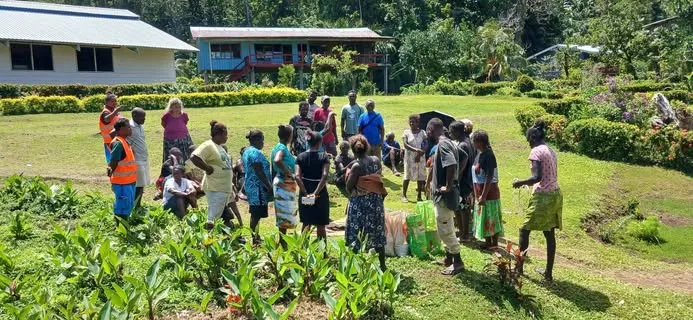
Soil demonstration at Keigold village: Photo Ben Bilua.
“Here at Keigold we meet with different Non-Government Organizations (NGOs) but the one that returns to us is Plan International. We don’t know where other NGOs go or what they have done with the assessment they carried out in our community.
“I may be biased, but this is the truth. Lots of NGOs came here after the cyclone to do assessments but they never returned,” Jacob said.
He said Plan International had continued to support the community from the initial relief effort through to recovery activities.
Jacob said families had received food supplies, gardening tools, dignity kits, school kits, training and awareness.
Henson hands over a chainsaw and other items to help Keigold community. Photo Ben Bilua.
“This week, we received gardening tools to help us improve food production. Officers from the Agriculture Division in Western Province also taught us how to make backyard gardens. We also received seeds.
“Our children also received school kits, which is a huge relief to us parents,” he said.
Chairperson of Lale community, Billy Aqolo, shared similar sentiments, saying families were now harvesting vegetables following backyard gardening training supported by Plan International.
A mother at Lale working on her vegetable farm. She received gardening tools and seedlings when Plan International visit Lale few weeks ago. Photo Ben Bilua.
“I really appreciate the strategy that Plan International adopted before, during and after Maila. First, they helped us with relief supplies such as food and non-food items, then they followed up with activities that can help affected communities rebuild their lives,” Aqolo said.
He said the organisation later provided gardening tools and seedlings, together with training to help families grow vegetables and other crops.
“Here at Lale, we already harvest vegetables that we planted with the help of Plan International,” he said.
Aqolo said several other organisations had conducted assessments in Lale, but had not returned with programmes that were beneficial and relevant to the community’s recovery.
Agriculture staffs carry out soil demonstration at Mondo. Photo Ben Bilua.
At Mondo village, community leader Silas Reuban said the support had encouraged families to work harder to rebuild their livelihoods following the cyclone.
Reuban said Mondo families had received gardening tools including hoes, knives and files, as well as water bottles – items he described as very beneficial to families.
“I’m excited that my people received this support from Plan International. I’m confident that the gardening tools will help families to go back to their gardens and work.
“For me, these items are more than donations. These are blessings that will help me and my family for years to come,” he said.
Reuban also raised concerns about other organisations that had collected information from the community but had not returned with support.
Agriculture tools and dignity kits ready to be distributed at Keigold. Photo Ben Bilua.
Plan International’s Emergency Response Manager for Cyclone Maila, Henson Makoani, said the organisation had been on the ground since the declaration of the state of emergency, working with people in some of the most isolated communities.
He said Plan International had worked closely with the provincial government, disaster authorities, other stakeholders and community leaders to deliver humanitarian assistance to affected communities.
“With support from the Australian Government through the Humanitarian Partnership and the Asia Pacific Humanitarian Fund, Plan International managed to roll out programmes and activities in the communities,” Makoani said.
He said the organisation’s response focused on five key areas: food and non-food items, water, sanitation and hygiene, child protection, education and livelihoods.
Children of Mondo with their school bags. Photo Ben Bilua.
“To date, we are working with 18 different communities,” Makoani said.
He said there had been significant improvements in community livelihoods, although the needs of affected communities remained urgent.
Makoani said recovery will take time, adding that Plan International was committed to working alongside the national government, provincial government and other stakeholders during the recovery and rehabilitation phase.
A team from Plan International just returned from Ranongga on Monday 24 th August.
For communities in central Ranongga, the continued support has provided more than immediate relief, with gardening tools, seeds, training and education assistance helping families begin rebuilding their lives and livelihoods after Cyclone Maila.
Two elderly women with their dignity kits. Photo Ben Bilua.
For feedback, contact: maetuana777@gmail.com
Editor: irwin2angiki@gmail.com
BY BEN BILUA
Gizo
THE Solomon Islands Red Cross Society has held a lesson learned workshop to review its response to Tropical Cyclone (TC) Maila and strengthen its preparedness for future disasters.
The one-day workshop was held on Monday 24 th August at the Outback Living Conference Room in Gizo, Western Province, bringing together Red Cross volunteers from Munda, Gizo and Honiara, as well as Red Cross staff.
Secretary General of the Solomon Islands Red Cross Society, Sheebah Mirisa, was also present to provide oversight and support during the workshop.
Speaking at the opening, Mirisa said the Solomon Islands Red Cross Society had been actively involved in the TC Maila response since operations began in early April 2026.
She said Red Cross staff and volunteers worked alongside the Western Provincial Government in establishing and supporting the Provincial Emergency Operations Centre (EOC), logistics and warehousing, conducting assessments and distributing non-food items (NFIs) to communities affected by the cyclone.
“We had 70 Red Cross volunteers from Honiara, Munda and Gizo including the Red Cross staff who had worked tirelessly during the TC Maila operations,” Mirisa said.
She said the workshop provided an important opportunity to assess the organisation’s overall operational performance during the TC Maila response, while identifying both successes and shortcomings.
Mirisa said the workshop would also help the organisation identify key priorities for strengthening its disaster preparedness and response capabilities.
“It was important to bring together the full operations team from Honiara to Gizo and officers from the International Federation of the Red Cross Red Crescent (IFRC) Country Cluster Division in Suva and the IFRC Asia-Pacific Regional Office in Malaysia to discuss the operational context of the responses through the eyes of the volunteers and set realistic actionable plans,” she said.
She said the lessons and action plans developed during the workshop would also contribute to the current reform process underway within the Solomon Islands Red Cross Society.
The workshop is expected to help strengthen coordination, improve operational systems and ensure lessons from TC Maila are incorporated into future disaster response planning.
For feedback, contact: maetuana777@gmail.com
Editor: irwin2angiki@gmail.com
BY BEN BILUA
Gizo
COMMUNITIES in remote parts of Ranongga are still in need of food supplies as food security concerns continue to grow following Cyclone Maila.
Chief of Mondo, Silas Reuban, said most gardens planted after the cyclone have been unable to produce enough food to meet the needs of families.
He said the ongoing bad weather has further contributed to the difficulties faced by communities trying to restore their food gardens.
“Currently, we are surviving on the bags of rice that were distributed after the cyclone. Gardening is quite difficult at the moment due to the ongoing weather and also pest invasion,” Reuban said.
He said people in Mondo are now relying on wild taro, locally known as kakake, to supplement their food supplies.
Reuban said food distributions should continue to support communities and families that are struggling to restore their gardens and achieve food security.
Disaster Chairperson of Lale village, Billy Aqolo, shared similar concerns, saying some families are still struggling to put enough food on the table.
“We are slowly recovering from the disaster, but we still need food supplies to support our families,” Aqolo said.
He calls on the Provincial Disaster Committee and the national government to consider continuing food distributions to communities still affected by the disaster.
For feedback, contact: maetuana777@gmail.com
Editor: irwin3angiki@gmail.com
BY JOHN HOUANIHAU
THE recovery process following Tropical Cyclone Maila will take time, David Hiriasia, Permanent Secretary of the Ministry of Environment, Climate Change, Disaster Management and Meteorology (MECCDM), said.
Speaking at a press conference last week to update the media on the Government’s recovery efforts following the cyclone, PS Hiriasia said that while funding had been announced to support recovery, the funds could not be distributed immediately because each funding arrangement had its own processes.
“A lot of funding has been announced, and people always refer to those funds, but they also have their own processes. One of the main funding sources was the supplementary appropriation, which Parliament had already passed,” he said
He said the Government will continue with the allocation, but can seek additional funding if the approved amount is insufficient.
“If it is not enough, then we request the Government to support with additional funds,” he said.
Hiriasia said Maila’s severity had triggered disaster financing arrangements and support from development partners, including the World Bank, Asian Development Bank, Australia, New Zealand, and other partners.
He said the Government is now working through the different processes to ensure assistance reaches affected communities.
“It will take time, and we continue to ask our people in those affected areas to be patient with us and understand that we are prioritising these areas,” he said.
Hiriasia also said the Government’s response to Maila was being guided by the national disaster plan, which provides for a whole-of-government approach.
He said the plan was developed following the Gizo earthquake and tsunami and had continued to be refined based on lessons learned from previous disasters.
“The current version, developed in 2018, is reviewed to identify gaps and areas requiring improvement,” he said.
Hiriasia said new government structures, including Constituency Development Committees and Ward Development Committees, will also need to be incorporated into the disaster plan.
“By including these changes, hopefully it will improve response and recovery in the future,” he said.
He acknowledged that recovery from previous disasters had sometimes been delayed because of limited resources, with some disasters not receiving adequate recovery support.
Mr Hiriasia said the Government will use lessons learned to improve its disaster response and recovery approach.
He urges affected communities to remain patient as the Government continues to prioritise recovery needs and work through the required processes.
For feedback, contact: jhouanihau24@gmail.com
Editor: irwin3angiki@gmail.com
BY BEN BILUA
Gizo
COMMUNITIES in Ranongga are facing a new threat to their food gardens, with a wave of pests damaging vegetables and root crops.
The emerging problem has added to the challenges already faced by communities recovering from the devastation caused by Cyclone Maila.
Silas Reuban, an elder from Mondo Community, said the pests were aggressively feeding on crops, creating another struggle for people trying to restore their food gardens.
He said residents had noticed new pests feeding on vegetables and potato leaves—some of which had not been seen in the area before.
“After the cyclone, we witnessed pests invading our gardens. It’s like we are competing to survive. While we try to plant our gardens, these pests destroy them.
“This is a new thing. We did not see some of the pests feeding on plants before,” Reuban said.
He said people in Mondo Community continued to work hard to recover from the damage caused by Cyclone Maila, but the pest outbreak was making their efforts more difficult.
Similar problems have also been reported in Lale Community, where residents are experiencing pest damage to their food gardens.
The emergence of the pests has raised concerns about food security in the affected communities.
Biosecurity teams are being urged to carry out an immediate investigation to identify the pests, determine the cause of their spread and provide appropriate measures to protect food gardens.
For feedback, contact: maetuana777@gmail.com
Editor: irwin2angiki@gmail.com
It is a house that has suddenly become the centre of a political storm. Since November last year, Solomon Islands...
The post The House at The Centre of a Political Storm appeared first on In-depth Solomons .
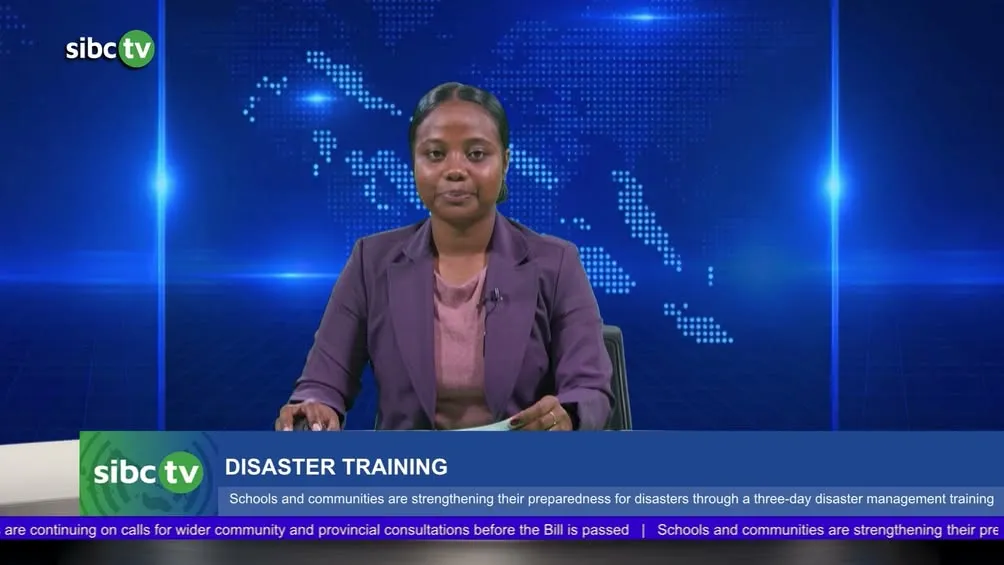
Schools and communities are strengthening their preparedness for disasters through a three-day disaster management training conducted by Live and Learn Solomon Islands.
The training which concluded on Wednesday, involves stream valley community in White River, Mbokona community zone one, Perch school and Mbokona school, focusing on practical ways to prepare for and respond to disasters.
Note: This TV News Package was first aired on 19/08/26.
Follow our Youtube channel for more of our news stories.
https://www.youtube.com/@sibc-TV
学校和社区通过由所罗门群岛生活与学习组织(Live and Learn Solomon Islands)进行的为期三天的灾害管理培训,增强了对灾害的应对能力。
此次培训于周三结束,涉及白河(White River)溪谷社区、姆博科纳(Mbokona)社区一区、佩奇学校(Perch School)和姆博科纳学校,重点关注准备和应对灾害的实用方法。
Note: This TV News Package was first aired on 19/08/26.
Follow our Youtube channel for more of our news stories.
https://www.youtube.com/@sibc-TV
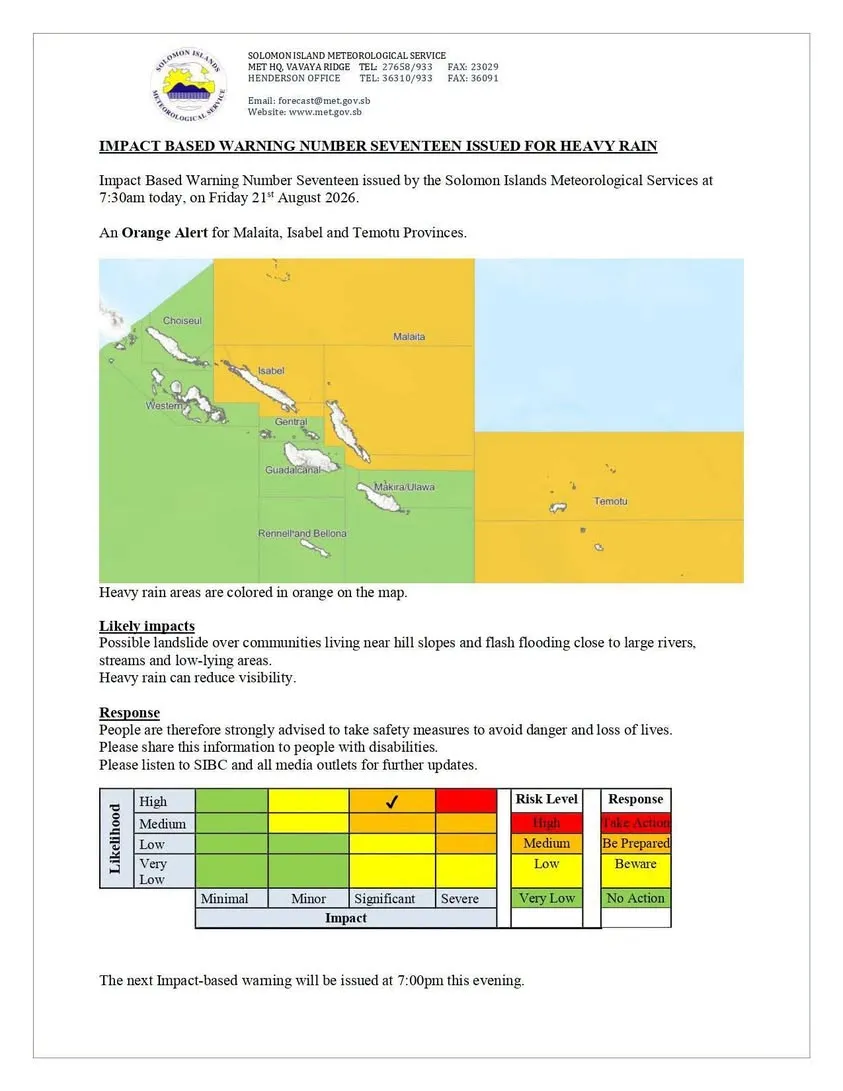
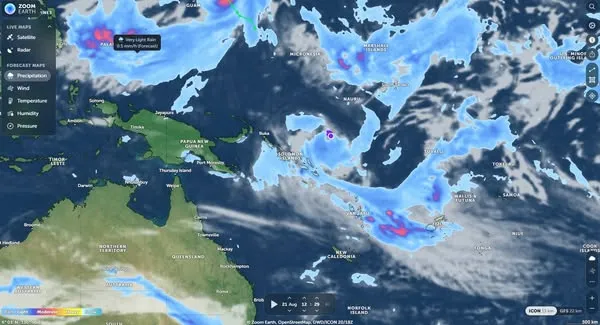
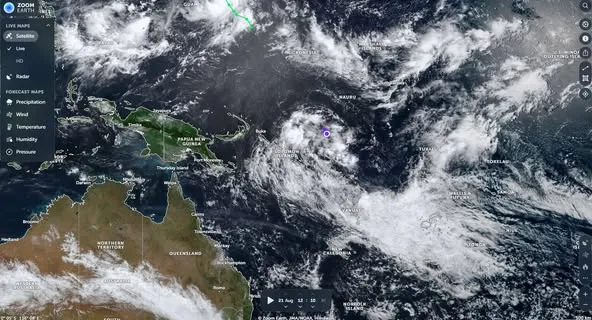
PROVINCIAL COMMUNITIES WARNED OF HEAVY RAIN | The Solomon Islands Meteorological Service (SIM) has issued a heavy rain warning for Malaita, Isabel and Temotu provinces. The warning was issued at 7:30am today, Friday 21 August 2026. Solomon Islands Meteorological Service says a trough is lying north of Solomon Islands, while southeasterly trade winds continue across the country. The weather conditions may bring heavy rain to the affected provinces. People living near hillsides are warned of possible landslides. Flash flooding is also possible near large rivers, streams and low-lying areas. Heavy rain may also reduce visibility, creating dangerous conditions for road users and other travellers. SIMS is advising people to take safety measures to avoid danger and loss of life. Communities are also encouraged to share the warning with people with disabilities so they can take necessary precautions. People are urged to continue listening to the Solomon Islands Broadcasting Corporation (SIBC) and other media outlets for further weather updates.
Source: Solomon Islands Meteorological Service
BY JOHN HOUANIHAU
Permanent Secretary of the Ministry of Environment, Climate Change, Disaster Management and Meteorology (MECDM), David Hiriasia, urges the public to take weather warnings seriously, particularly strong wind warnings issued for sea conditions.
PS Hiriasia made the remarks during a press conference yesterday at the National Disaster Management Office (NDMO) in Honiara, as he raised concern over the continuing number of incidents at sea in the Solomon Islands and across the region.
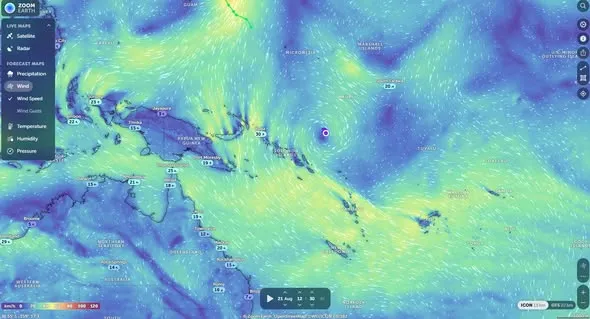
He said easterly winds have continued to strengthen, prompting the Meteorological Service to issue repeated weather warnings. At one point, more than 100 strong wind warnings were issued.
PS Hiriasia said people need to understand what weather warnings mean and use the information to make safe decisions before travelling.
He said the warnings are particularly important for people travelling in small boats (OBMs), where rough seas and strong winds can quickly become dangerous.
He said a strong wind warning does not necessarily mean that dangerous conditions will persist throughout the entire day.
“Instead, it means that at some point during the forecast period, strong winds and rough seas are expected,” he said.
He warns people not to assume that conditions are safe simply because the sea appears calm when they are preparing to travel.
“If there is a warning in place, the point for our people to understand is that the sea is rough and the forecast looks at a whole day. If a strong wind warning is issued, there could be a period during that day when winds become strong enough to produce rough seas and swells,” he said.
PS Hiriasia also urges boat operators and passengers to ensure they have the necessary safety equipment on board, including life-saving equipment, before travelling.
He advises people to avoid unnecessary trips, particularly in small boats, when strong wind warnings are in place.
He said this will also help reduce the need for search-and-rescue operations, which can be costly and place rescuers at risk.
PS Hiriasia said the increasing number of maritime incidents in the Solomon Islands and the wider region is a concern and should serve as a reminder for people to take warnings seriously.
He said the number of people reported missing at sea has become a significant concern, with maritime incidents continuing to claim lives and create emergencies.
“Understand the warnings, check the forecast, carry the necessary safety equipment and avoid unnecessary travel when conditions are unsafe. Taking weather warnings seriously can help prevent avoidable emergencies and save lives,” he said.
For feedback, contact: jhouanihau24@gmail.com
Editor: irwin3angiki@gmail.com
BY JOHN HOUANIHAU
The Government is progressing plans to provide new, cyclone-resilient homes for more than 1,300 families whose houses were destroyed or are no longer safe for habitation following Tropical Cyclone Maila.
Permanent Secretary, Ministry of Environment, Climate Change, Disaster Management and Meteorology (MECDM) David Hiriasia told the media yesterday.
He said the shelter recovery programme is currently considering two housing options, including a standard two-bedroom house and another option that could involve prefabricated houses.
He said the prefabricated option is being explored based on a design to be agreed upon with the relevant council.
“The estimated cost is between $30,000 and $70,000 per house, meaning the overall programme could run into millions of dollars given the number of homes required,” he said.
He said a key consideration in the designs is to ensure that families have the opportunity to expand their homes in the future.
“The houses will also be designed to be cyclone-proof and suitable for long-term use. Work on the designs has already started, with authorities now finalising the two housing options and preparing the bill of quantities for each design. Once completed, the council will be brought together to agree on the preferred housing type before the proposal is submitted to Cabinet for final endorsement and approval,” Hiriasia said.
He said authorities are also coordinating with other partners involved in shelter assistance to ensure that there is a consistent housing standard and similar cost structure across the recovery programme.
“The process is also being aligned with the supplementary budget, which must go through the required approval and gazetting process before funds become available. Procurement is expected to begin within the next few months, although actual construction is likely to continue into next year.
“Under the disaster recovery arrangements, a Recovery Coordination Committee, under the Ministry of National Planning and Development Coordination, has already begun meeting to coordinate activities planned for the recovery phase,” he said.
He said authorities are also working with constituencies and their respective committees to ensure that the shelter recovery programme is coordinated and implemented effectively.
For feedback, contact: jhouanihau24@gmail.com
Editor: irwin2angiki@gmail.com
The government will be taking a shelter recovery approach as part of its response to the impacts of Tropical Cyclone Maila on affected communities.
This will see the construction of more than 1,300 houses for people whose homes were severely destroyed by Cyclone Maila.
Note: This TV News Package was first aired on 19/08/26.
Follow our Youtube channel for more of our news stories.
https://www.youtube.com/@sibc-TV
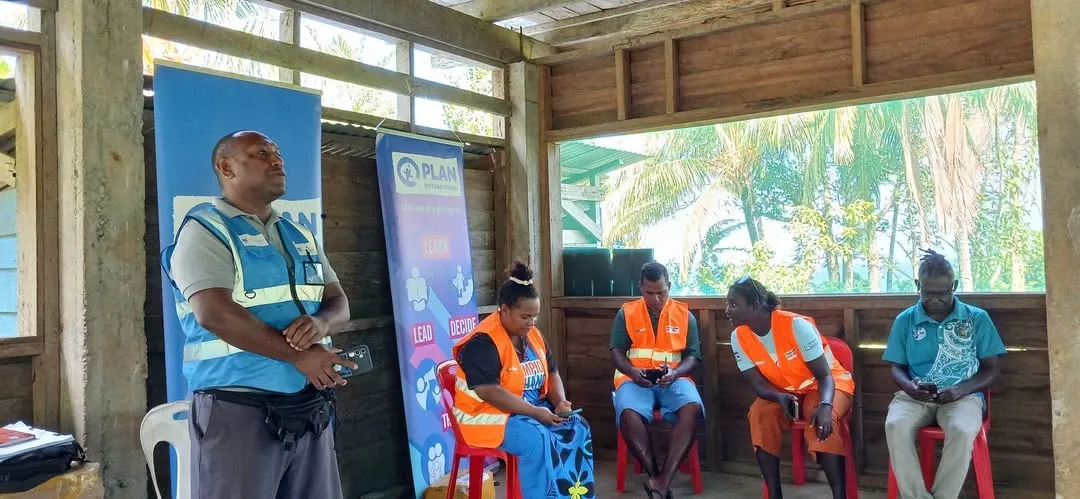
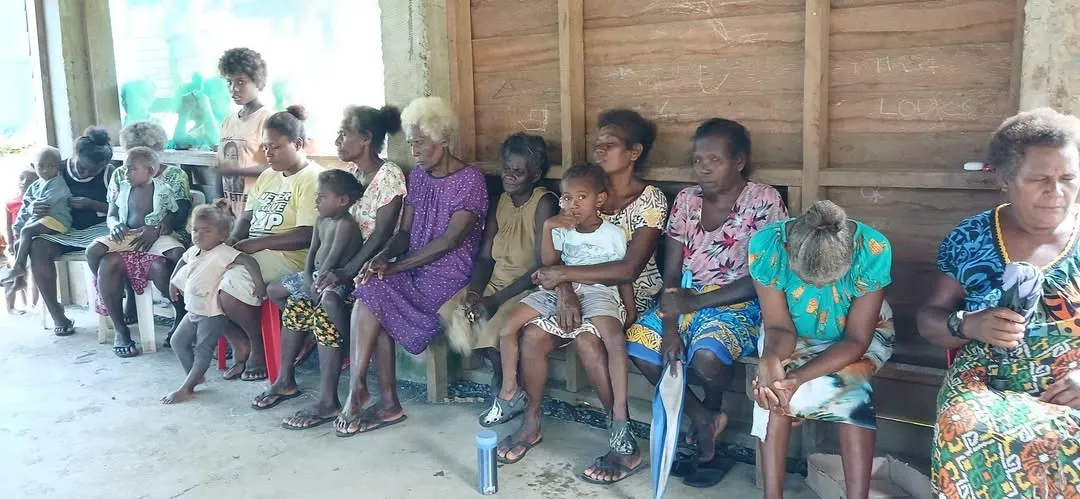
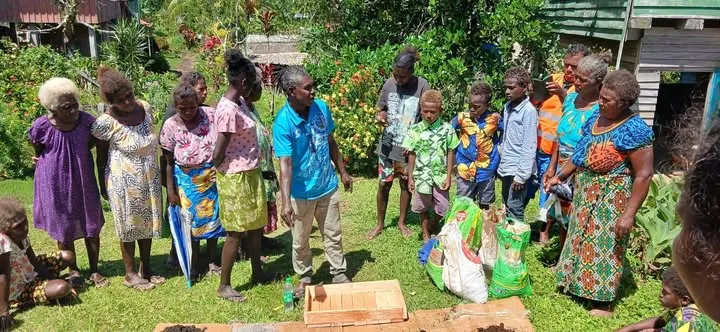
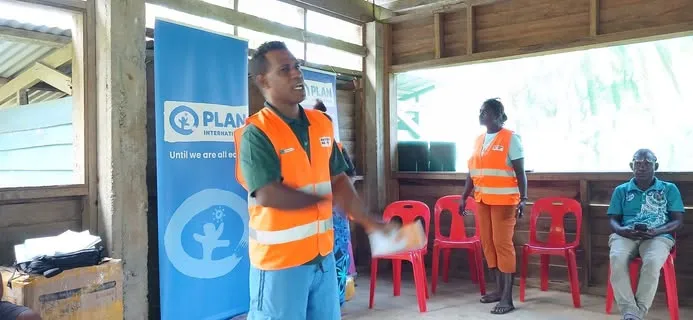
PLAN International has deployed a team to Ranonga with emergency supplies and support for some of the island’s most isolated communities affected by Tropical Cyclone Maila. The team, which includes officers from the social and livelihood sectors, arrived safely at Mondo yesterday and began programmes and activities there this morning. Emergency Response Manager for TC Maila, Henson Makoani, said the team will visit five communities to conduct awareness activities and distribu...te essential supplies. He said the assistance includes an agriculture toolkit for every household, dignity kits and basic hygiene supplies for girls aged between 13 and 19, as well as school kits for children aged between five and 11. “These communities are badly affected by the cyclone but they are isolated and hard to reach. “Plan International with the support of partners are happy to lend a hand,” Makoani said. He said the supplies are part of Plan International’s recovery programmes and activities aimed at supporting communities affected by the cyclone. Makoani said the communities were identified following assessments conducted by Plan International after Cyclone Maila, with the needs of each community determined through the assessment process. He acknowledged the Australian Government and the Asia Pacific Humanitarian Fund for supporting the response activity.
BY JOHN HOUANIHAU
The Solomon Islands Government’s planned shelter recovery programme for communities affected by Tropical Cyclone Maila could cost about a million with implementation projected to begin next year, subject to proper planning, costing, design and eligibility assessments.
Permanent Secretary of the Ministry of Environment, Climate Change, Disaster Management and Meteorology (MECDM), David Hiriasia, said the above at a press conference today.
He said the government is still working on the details of the recovery programme.
He said the programme will provide shelter assistance to families in Western and Choiseul provinces whose homes were completely destroyed by the cyclone.
Hiriasia said the government is considering several housing options as part of the recovery programme, including standard two-bedroom houses and three FAB houses.
He said the options were still being assessed as the government works with relevant ministries to determine the most affordable and practical housing solution.
He said the shelter recovery initiative is significant because the government had not undertaken a similar programme on this scale since Tropical Cyclone Namu.
“This is the first time where government will be going shelter recovery,” he said.
He said the programme will take time because the government needs to ensure the proposed housing solution is affordable and can be delivered within approved budget.
“We are currently working with relevant ministries, particularly the Ministry of Infrastructure Development (MID), to develop house designs, bills of quantities and construction costs. We are also considering whether to directly construct the houses or provide building materials to affected households as part of the recovery programme,” he said.
He said the proposed standard two-bedroom houses will be designed to allow recipients to expand them in the future.
Hiriasia acknowledged concerns from affected communities over delays but said careful planning was necessary to ensure the programme is properly implemented.
He said accurate and verified assessment data will also be used to determine which households qualify for shelter assistance.
“We need valid data to make sure the house inside the data deserves it,” Hiriasia said.
He appeals to affected residents in Western and Choiseul provinces to remain patient while the government finalises the design, costing, eligibility and delivery arrangements.
Hiriasia said the priority is to ensure assistance reaches people whose homes had been genuinely destroyed or rendered uninhabitable by Cyclone Maila.
He said the recovery programme will also focus on essential community infrastructure, including schools and health clinics damaged by the cyclone.
He said discussions are continuing with the Ministry of Education and Human Resources Development and the Ministry of Health and Medical Services to determine recovery needs in the affected areas.
“Assessments have already been conducted with government agencies, provincial authorities and development partners to identify damaged schools and clinics and determine priorities for allocating recovery resources,” he said.
Hiriasia said the shelter and infrastructure programmes forms part of the government’s transition from the immediate response to the longer-term recovery phase following Cyclone Maila.
He acknowledged the support of the World Bank, United Nations agencies, Papua New Guinea Red Cross, Asian Development Bank, Australian and New Zealand governments, government ministries, provincial governments, businesses and individuals.
He said continued cooperation among the government, provinces and development partners is critical as the country moves into the recovery and rebuilding phase.
For feedback, contact: jhouanihau24@gmail.com
Editor: irwin3angiki@gmail.com
BY JOHN HOUANIHAU
Response to Tropical Cyclone Maila is gradually moving into the recovery phase, with most major emergency operations completed in the worst-affected areas of Western and Choiseul provinces.
Director of the National Disaster Council (NDC) and Chairman of the National Disaster Operations Centre (N-DOC), Jonathan Tafiariki, made the statement during a press conference at the National Disaster Management Office today (NDMO).
Tafiariki said the government activated its national disaster management arrangements following Cyclone Maila, triggering a whole-of-government response to support affected communities.
“Following the declaration of a disaster in Western and Choiseul provinces, the NDC assumed overall responsibility, while the National Disaster Operations Committee (N-DOC) and Provincial Disaster Operations Committees (P-DOCs) coordinated emergency response activities,” he said.
He said the response was guided by the Government-approved National Response and Early Recovery Plan of Action.
Tafiariki said significant progress has been made in restoring essential services, particularly health, education and livelihoods.
He said the health sector has stabilised its services and scaled down its large emergency response component.
“Importantly, no disease outbreaks have been detected in either affected province. We were fortunate that there was no outbreak detected from the two provinces, the disaster had not resulted in a secondary health crisis,” Tafiariki said.
“The education sector has also completed much of its emergency response, allowing children to continue their education and schools to return towards normal operations. Some recovery measures will require continued maintenance and assistance.
“In terms of emergency food and non-food assistance, Choiseul has completed a large portion of its relief distributions. Western Province has also made substantial progress, although some communities are still awaiting final distributions,” he said.
Tafiariki said most government agencies had completed major emergency activities and are now transitioning into longer-term recovery.
Meanwhile, the disaster order remains under review. N-DOC and P-DOCs are assessing the response and will advise the NDC on recommendations for revoking the order.
Tafiariki stressed that outstanding relief activities will continue while the government shifts its focus towards recovery and rebuilding affected communities.
For feedback, contact: jhouanihau24@gmail.com
Editor: irwin3angiki@gmail.com
BY RODRICK DESURI
Auki
Malaita Premier Elijah Asilau’a has said the United States’ interest in supporting development of the long-awaited Bina Harbour Project must result in tangible progress for the people of Malaita.
The Premier said this following recent interest from the United States in supporting key components of the Bina Harbour development, including the wharf, jetty, port facilities, fuel storage, water and energy and roads infrastructures
Asilau’a welcomed the United States’ interest but warns that the project must not experience a similar outcome to the previous Winrock initiative.
“Yes, I just caution about the strong interest that the United States has committed to support us with this national project. Make sure it must not be like the Winrock initiative,” he said.
Asilau’a said the Malaita Provincial Government is fully prepared to work alongside the national government and development partners to advance the project.
He said the people of Malaita are eager to see Bina Harbour move beyond years of planning and discussions into actual development on the ground.
Last week, a United States assessment team visited the proposed Bina Harbour site as part of efforts to assess the project and identify areas where support could be provided. The team is expected to produce reports following its assessment.
The Bina Harbour Project has been identified as one of Solomon Islands’ major national development projects and has remained under discussion for many years.
Photo: Supplied
For feedback, contact: rodrickdesuri50@gmail.com
Editor: irwin3angiki@gmail.com
$3 million set aside to support Cyclone Maila-affected tourism operators
The Ministry of Culture and Tourism (MCT) has identified tourism operators in Choiseul and Western provinces to receive support from a $3 million allocation for businesses affected by Cyclone Maila, following a government assessment.
Five operators in Choiseul were identified for $335,000, while 24 affected operators in Western Province were assessed, with the ministry also considering renewed airport welcoming activities to improve the country’s tourism image.
Read more
https://theislandsun.com.sb/3-million-set-aside-to.../
By Simon Tavake
There have been growing concerns and calls from landowners, communities and individuals over pollution and environmental impacts allegedly caused by logging and mining activities.
While these concerns and calls are being heard and considered by the relevant authorities, affected parties say there is still no clear or immediate solution that can fully address their concerns.
Legal action and support from the Government may be among the options available to those affected, but prolonged and lengthy court processes can also cause cases to stall and lose momentum, leaving communities to continue living with the impacts they are seeking to address.
In light of these concerns, Chairman of the Public Accounts Committee (PAC) and Member of Parliament for North Guadalcanal Constituency, Hon. Paul Popora Bosawai, has called for the establishment of an Environmental Bond.
He said the bond would ensure that companies responsible for environmental damage are held accountable and required to pay for the clean-up and restoration of areas affected by their activities.
Hon. Bosawai raised the issue following reports from downstream communities along the Metapona River regarding alleged pollution caused by mining activities upstream. The affected communities are also located within his North Guadalcanal Constituency.
The Minister for Environment, Climate Change, Disaster Management and Meteorology, Hon. Wayne Ghemu, confirmed that his Ministry has conducted an assessment following the reports.
However, he highlighted that while the assessment was carried out through field observations and consultations with affected communities, the Ministry requires a comprehensive scientific investigation before any conclusion can be drawn on the extent and level of pollution along the river.
This prompted the PAC Chairman to ask whether the country has an Environmental Bond in place that could be accessed by the Ministry to help support the affected communities.
“My question to you, Minister, is: does the country have an Environmental Bond so that you can assist?
“I am also a medical doctor, and there are a lot of allergic cases along the Metapona downstream because of sedimentation inside the food chain. Those are indirect evidence to the case. So I want to ask: if we have an Environmental Bond, how can you access it and build water supply for these communities?” said Hon. Bosawai.
Prime Minister Hon. Matthew Wale, while acknowledging the concern raised, said there is currently no such mechanism as an Environmental Bond in the country.
He said this has left the country “high and dry” when environmental issues such as this arise.
“This is a very significant and serious matter and is going on for far too long, so we must address it.
“There is no Environmental Bond anywhere in any mining assets in the country, and that’s a defect in our regulatory system. Our laws, both in environment and mining, do not require it, so we are left high and dry when these things happen,” Prime Minister Wale said.
Hon. Bosawai further pressed for the matter to be regulated, stressing that although it has yet to be addressed through the amended Bills, regulations providing for it have already been passed.
Hon. Bosawai previously served as Minister of Health and Medical Services under the Government for National Unity and Transformation (GNUT), which has since been succeeded by the GREAT Coalition Government.
During his tenure as Health Minister, he similarly pursued the regulation of dangerous drugs, including the Dangerous Drugs (Methylamphetamine) Rules 2025.
“There are no regulations on how to deal with methylamphetamine in the country. I took a Cabinet paper to regulate it, and it worked. Even the methylamphetamine amendment will come later in the Bill, but its regulations have already been passed. So I thought the Environment Minister can do better regulation on this,” Hon. Bosawai said.
While the matter was being debated and considered in Parliament, the Minister for Mines, Energy and Rural Electrification (MMERE) highlighted that an Environmental Bond is already provided for under the interim measures of the Mineral Resources Bill 2025.
If passed, the Bill, together with the review of the Environment Act, could have a significant impact on how environmental responsibilities and liabilities are managed in the country, particularly in the mining sector.
[end]
The post Dr Bosawai calls for Environmental Bond to protect communities first appeared on Solomon Islands Broadcasting Corporation (SIBC) .
Solomon Islands’ economic recovery is continuing, but the World Bank says growth remains fragile and vulnerable to fuel price shocks, climate disasters, declining logging and weak private investment. The World Bank projects economic growth of 2.8% in 2026, before a modest recovery to around 3.1% in 2027–28. The report says the 2026 outlook is being affected by higher fuel costs, the impacts of Cyclone Maila, weak private-sector investment and the continued decline of logging. Fuel prices have risen by more than 40% since March 2026, creating renewed inflationary pressure. The World Bank warns that annual headline inflation could reach 5–8% if fuel prices remain elevated. At the same time, the country’s fiscal position remains under pressure. Fiscal deficits are projected to average 3.4% of GDP over the medium term, with public debt expected to rise above 35% by 2029. The World Bank says Solomon Islands has limited room to absorb future shocks because fiscal policy is carrying most of the burden, while other economic adjustment mechanisms remain weak. The report argues that the country must rebuild public finances while developing a broader economy capable of absorbing shocks. //ENDS//
Solomon Islands is developing its first dedicated national policy to address the growing economic and social costs of climate change...
The post Solomons Develops First Policy to Address Climate Loss & Damage appeared first on In-depth Solomons .
BY BEN BILUA
Gizo
THE Government has allocated SBD75 million towards recovery and rehabilitation efforts following the devastation caused by Tropical Cyclone Maila.
Minister of Finance Gordon Darcy Lilo made the announcement during the second reading of the 2025 Appropriation Bill in Parliament last week.
Lilo said the SBD75 million allocation will support recovery and rehabilitation services through to 31 December 2026.
“I will not go through the details of the bill, but the details can be viewed in the bill itself,” he said.
Lilo said the allocation reflects the Government’s commitment to ensure budget and donor-funded projects, including credit and grant assistance, are appropriately coordinated to support the recovery effort.
He said the funds will be administered through the National Disaster Council and the National Disaster Management Office (NDMO).
Lilo also warned political leaders against politicising the funding, stressing that the appropriate authorities should be allowed to administer and deliver recovery programmes and activities to cyclone-affected communities.
“Let the rightful authorities administer and deliver much needed programs and activities that will support communities that were affected by Cyclone Maila,” he said.
The announcement comes as a relief to many communities in Western and Choiseul provinces, which have expressed growing frustration over the pace of recovery and rehabilitation efforts following the cyclone.
Communities have been waiting for assistance to rebuild homes, restore livelihoods and repair essential infrastructure damaged by Maila.
For months, affected communities have questioned when substantial recovery assistance will reach them.
Lilo, however, said assistance was coming and urged communities to remain patient while the Government puts the necessary arrangements in place.
He said funds needed to be properly administered before being dispersed for recovery and rehabilitation programmes.
The SBD75 million allocation now provides a dedicated financial commitment towards addressing the needs of communities affected by Tropical Cyclone Maila as the Government moves into the recovery phase.
Photo credit: NPSI
For feedback, contact: maetuana777@gmail.com
Editor: irwin3angiki@gmail.com
BY DOUGLAS VAHIA
The Solomon Islands Meteorological Service (SIMS) has issued Heavy Rain Warning Number Eight cautioning that a heavy rain warning remains current for Temotu Province.
The warning was issued at 7:00pm yesterday evening, Sunday 16th August 2026.
According to the Meteorological Service, a trough lies northeast of the Solomon Islands, while a general southeast trade wind flow continues to persist over the country. The associated cloud and heavy rain, accompanied by thunderstorms, are expected to affect Temotu Province.
SIMS warns that such localised heavy rain may trigger landslides and flash flooding, particularly over communities living near hill slopes, and close to large rivers, streams and low-lying areas.
Sea travellers have been urged to take safety precautions, as heavy rain can significantly reduce visibility.
The public is strongly advised to take necessary safety measures to avoid danger and loss of lives, and residents are encouraged to share this information with people living with disabilities.
For feedback, contact: diivee56@gmail.com
Editor: irwin3angiki@gmail.com
'PROTOCOL IS OVER' TUKE DEMANDS DIRECT MAILA RECOVERYBy ULUTAH GINASolomon Star, HoniaraThe post-Cyclone Maila recovery process should now move beyond established relief protocols and allow assistance to be implemented directly with affected communities, Ward 2 Provincial Assembly Member Gideon Tuke says.The Simbo MPA is questioning how the current disaster-response system is being implemented, arguing that four months after the cyclone, recovery assistance should no longer be held up by the procedures used during the immediate relief phase.“I want them to deal directly with leaders in the community, not through PDOC. That protocol is over now. The implementation should go straight to the victims,” Mr Tuke said.His concern is not only about the delivery of assistance but also about how the recovery system is operating and communicating with those at community level.Mr Tuke said affected communities and their leaders needed clear information on what happens after the initial disaster-response phase, including when recovery assistance would be delivered, why particular approaches were being taken and how communities would be involved.“It has been four months since two Prime Ministers set foot on the very islands and villages affected by Cyclone Maila,” he said.“What took so long? We need the right information. If not to the village leaders, then let us MPAs know what is going on when, why and how recovery is going to be carried out," he questioned.Mr Tuke said the current system was leaving elected provincial representatives unable to properly respond to their constituents.“As MPAs, we are the first point of contact for our people, but we cannot give them answers. We are just as confused as they are,” he said.He said community leaders and MPAs should be directly included in the recovery implementation process so they could understand what assistance was planned and when it would reach affected communities.The call comes as communities affected by Cyclone Maila continue to seek assistance following damage to homes, food gardens and livelihoods.Mr Tuke's criticism places the focus on the transition from disaster relief to recovery, questioning whether the existing response system and communication channels are still appropriate four months after the cyclone.For the Simbo MPA, the priority now is to move the recovery process from protocol to implementation with affected communities directly involved and assistance reaching the intended victims.///Ends/////
‘PROTOCOL IS OVER’ TUKE DEMANDS DIRECT MAILA RECOVERY By ULUTAH GINA Solomon Star, Honiara 梅拉飓风后的恢复过程现在应超越既定的救援协议,允许直接与受影响社区实施援助,西姆博省议会成员吉迪恩·图克(Gideon Tuke)表示。 这位西姆博省议员质疑当前的灾后响应系统如何实施,认为在飓风过后四个月,恢复援助不应再受到紧急救援阶段所使用程序的阻碍。 “我希望他们直接与社区领导人沟通,而不是通过PDOC。那个协议已经结束了。实施应直接面向受害者,”图克先生说。 他关心的不仅是援助的交付,还有恢复系统如何运作以及与社区层面的沟通。 图克先生表示,受影响的社区及其领导人需要明确的信息,了解在初步灾后响应阶段之后会发生什么,包括恢复援助何时交付、为何采取特定方法以及社区将如何参与。 “自从两位总理踏上受梅拉飓风影响的岛屿和村庄已经过去四个月了,”他说。 “为什么花了这么长时间?我们需要正确的信息。如果不能告知村庄领导人,那么请让我们这些省议员知道恢复将何时、为何以及如何进行,”他质疑道。 图克先生表示,当前的系统使得当选的省代表无法有效回应选民的需求。 “作为省议员,我们是人民的第一接触点,但我们无法给他们答案。我们和他们一样困惑,”他说。 他表示,社区领导人和省议员应直接参与恢复实施过程,以便他们能够了解计划中的援助及其何时到达受影响社区。 这一呼吁是在梅拉飓风影响的社区继续寻求援助之际,因其房屋、食品花园和生计受到损害。 图克先生的批评将焦点放在从灾后救援到恢复的过渡上,质疑在飓风过后四个月,现有的响应系统和沟通渠道是否仍然适用。 对于西姆博省议员来说,当前的优先事项是将恢复过程从协议转向实施,直接让受影响的社区参与,并确保援助能够到达预期的受害者。 ///结束/////
CYCLONE MAILA VICTIMS DEMAND ANSWERS OVER DELAYED ASSISTANCEBy ULUTAH GINASolomon Star, HoniaraFour months after Cyclone Maila devastated communities in Western Province, affected families in Ranonggah and Simbo are demanding answers over delays in disaster relief and recovery assistance.Residents say promised support, including financial assistance, food supplies and materials to rebuild damaged homes, has yet to reach many affected communities.The situation has left some families struggling to secure food, while uncertainty continues over when recovery assistance will reach villages.Speaking to the Solomon Star, Koriovuku resident Chris Pondokolo said families on Ranonggah have been facing serious food shortages following the destruction of their gardens by the cyclone.“Families here have yet to receive further assistance from national or provincial disaster recovery teams,” Pondokolo said.“Our food gardens were destroyed, and the root crops we are pulling up now, like cassava and kumara, are just dry roots. “For months weeks, families have survived on water and swamp taro shared among neighbours. Gardens will not be ready for harvest until September.”.Pondokolo said affected families were also unclear about assistance for damaged houses and destroyed cash-crop plantations.He said no tents or building materials had reached affected households in Koriovuku.The situation has been further complicated by uncertainty over the distribution of relief supplies, with communities receiving conflicting information about the status of recovery operations.Pondokolo said there were reports that relief shipments intended for Gizo had encountered problems because of unsuitable vessels.There were also reports that disaster recovery operations had ended in areas classified as “orange zones”, with further assistance reportedly being restricted to designated “red zones”.However, affected communities and local leaders have not received clear information confirming the status of the assistance.The lack of communication has also frustrated local leaders, who say they are struggling to respond to questions from their constituents.The Member of the Provincial Assembly (MPA) for Ward 2 in Simbo has criticised the communication breakdown between national disaster authorities, local leaders and communities affected by Cyclone Maila.“It has been four months since two Prime Ministers set foot on the very islands and villages affected by Cyclone Maila,” MPA Hon. Gideon Tuke.“What took so long? We need the right information. If not to the village leaders, then let us MPAs know what is going on when, why, and how recovery is going to be carried out," he questioned.The leader said MPAs were often the first point of contact for communities but were unable to provide clear answers because they had not been properly informed about the recovery process.“As MPAs, we are the first point of contact for our people, but we cannot give them answers. We are just as confused as they are,” the leader said.The concerns come as some communities continue to face food shortages and remain uncertain about assistance to rebuild homes and restore livelihoods damaged by the cyclone.Community members and provincial leaders are now calling on the National Disaster Management Office and other responsible authorities to provide clear information on the status of relief funds and recovery programmes.They are also calling for urgent assistance to affected communities in Ranonggah and Simbo, particularly families facing food shortages and those whose homes and livelihoods were destroyed by Cyclone Maila."Information is power. I called directly to the Prime Minister and his office to to deal with this as matter of priority and urgency."While the government is now embarking on reforms some parts of the country and the very people whom we want to serve been long ignored are still suffering," MPA Tuke further added.//Ends///
CYCLONE MAILA VICTIMS DEMAND ANSWERS OVER DELAYED ASSISTANCEBy ULUTAH GINASolomon Star, Honiara四个月前,气旋梅拉摧毁了西部省的社区,受影响的家庭在拉农嘎(Ranonggah)和辛博(Simbo)要求对灾后救助和恢复援助的延迟给出解释。居民们表示,承诺的支持,包括财政援助、食品供应和重建受损房屋的材料,尚未到达许多受影响的社区。这种情况使一些家庭在获取食物方面面临困难,同时对恢复援助何时能到达村庄仍然感到不确定。拉农嘎居民克里斯·庞多科(Chris Pondokolo)在接受《所罗门星报》采访时表示,气旋摧毁了他们的花园,导致家庭面临严重的食品短缺。“这里的家庭尚未收到来自国家或省级灾后恢复团队的进一步援助,”庞多科说。“我们的食品花园被毁,现在挖出来的根茎作物,如木薯和甘薯,只有干枯的根。“几个月以来,家庭只能靠邻居分享的水和湿地芋头生存。花园要到九月才能收获。”庞多科表示,受影响的家庭对受损房屋和被毁现金作物种植园的援助情况也不清楚。他说,科里奥武库(Koriovuku)受影响家庭没有收到帐篷或建筑材料。由于对救援物资分发的情况不确定,社区收到关于恢复行动状态的相互矛盾的信息,情况变得更加复杂。庞多科表示,有报告称,原定运往吉佐(Gizo)的救援物资因船只不适合而遇到问题。还有报告称,灾后恢复行动在被划分为“橙色区域”的地区已结束,进一步的援助据称仅限于指定的“红色区域”。然而,受影响的社区和地方领导人并未收到确认援助状态的明确信息。缺乏沟通也让地方领导人感到沮丧,他们表示难以回应选民的提问。辛博(Simbo)第二选区的省议会成员(MPA)批评国家灾害当局、地方领导人与气旋梅拉受影响社区之间的沟通失灵。“自从两位总理踏上受气旋梅拉影响的岛屿和村庄已经四个月了,”省议会成员吉迪恩·图克(Gideon Tuke)说。“为什么花了这么长时间?我们需要准确的信息。如果不能告知村庄领导人,那么请让我们这些省议会成员知道恢复工作何时、为何以及如何进行,”他质疑道。这位领导人表示,省议会成员通常是社区的第一接触点,但由于没有得到关于恢复过程的适当信息,无法提供明确的答案。“作为省议会成员,我们是人民的第一接触点,但我们无法给他们答案。我们和他们一样困惑,”这位领导人说。随着一些社区继续面临食品短缺,并对重建房屋和恢复因气旋而受损的生计感到不确定,相关担忧不断加剧。社区成员和省领导人现在呼吁国家灾害管理办公室及其他相关当局提供关于救援资金和恢复项目状态的明确信息。他们还呼吁对拉农嘎和辛博受影响社区提供紧急援助,特别是面临食品短缺的家庭以及那些因气旋梅拉而失去家园和生计的家庭。“信息就是力量。我直接致电总理及其办公室,将此事作为优先和紧急事项处理。“尽管政府现在在国家某些地区进行改革,但我们希望服务的那些人却长期被忽视,仍在遭受痛苦,”省议会成员图克进一步补充。