BY CAMPION OHASIO – DIGITAL CREATOR
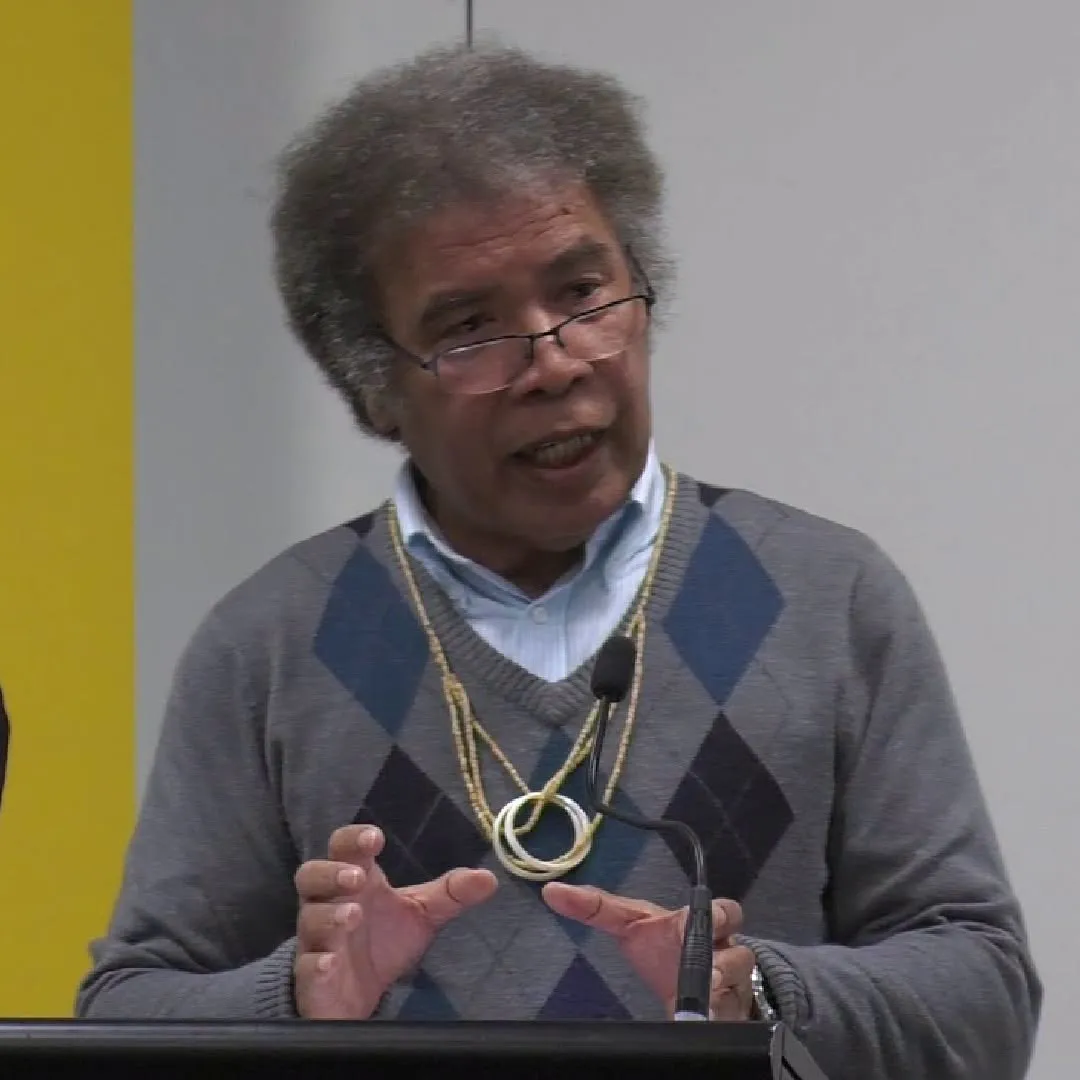
Digital creator, Campion Ohasio.
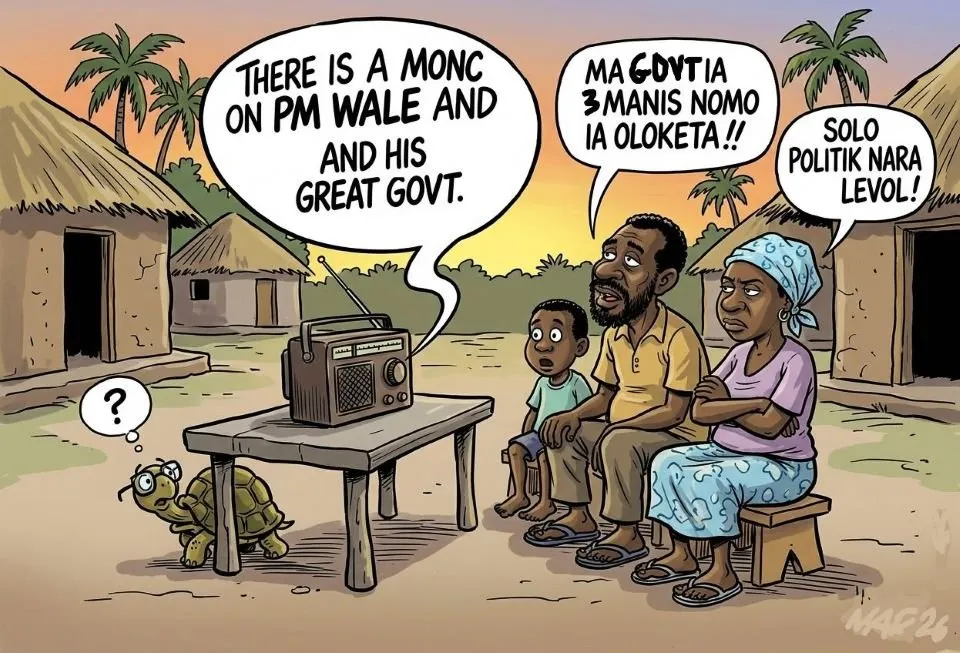
For decades, the Solomon Islands Government (SIG) has relied on a single method to share news: issuing press releases from the Prime Minister’s Office (PMO) to mainstream media like SIBC, Solomon Star, Island Sun, and local FM stations. While this old approach reaches the public, relying entirely on private media is no longer enough.
The Limits of the Old Way.
Relying solely on mainstream outlets creates serious gaps in public knowledge:
Firstly, there is only a short-term Focus: The public only hears the initial announcement or latest headline.
Second, is Missing Follow-ups: Important projects are rarely updated unless a media house takes the initiative to investigate. As a result, major stories often get buried until a scandal happens.
Third, is Unclear Impact: A key example is the current GREAT Coalition Policy Statement. While its launch made big headlines, many citizens still do not know how its ideas will affect their daily lives, how the plans will work, or what role they play in it.
Building a Dedicated Information Network
Announcing a policy in a single press release is not enough. To fix this, SIG must invest in its own dedicated information platform that links every line ministry directly to the PMO and out to the people. The current SIG web portal needs an immediate upgrade to ensure official information remains updated, clear, and accessible in one central place.
Government media officers must actively break down complex policies—like the GREAT Coalition Policy—into small, easy-to-understand information packages for everyday citizens. It is the responsibility of the government to make sure people fully understand public plans and progress.
If the government does not take control of its own story and explain its work clearly, social media will fill the silence with rumors, leading to confusion and chaos. The time to modernize government communication is now.
作者:坎皮恩·奥哈西奥 - 数字创作者
数字创作者坎皮恩·奥哈西奥。
几十年来,所罗门群岛政府(SIG)一直依赖一种单一的方法来分享新闻:从总理办公室(PMO)向主流媒体如SIBC、所罗门星报、岛屿太阳报和当地FM电台发布新闻稿。虽然这种旧方法能够触及公众,但完全依赖私人媒体已不再足够。
The Limits of the Old Way.
仅依赖主流媒体渠道会造成公众知识的严重缺口:
首先,关注短期:公众只听到初步公告或最新头条。
其次,缺乏后续:重要项目很少更新,除非媒体主动进行调查。因此,重大新闻往往被埋没,直到发生丑闻。
第三,影响不明确:一个关键例子是当前的GREAT联盟政策声明。虽然其发布引起了广泛关注,但许多公民仍然不知道其想法将如何影响他们的日常生活,计划将如何运作,或他们在其中扮演什么角色。
Building a Dedicated Information Network
仅通过一份新闻稿宣布政策是不够的。为了解决这个问题,SIG必须投资于自己的专门信息平台,将每个部门直接与总理办公室连接,并向公众发布信息。当前的SIG网络门户需要立即升级,以确保官方信息保持更新、清晰,并集中在一个地方可供访问。
政府媒体官员必须积极将复杂的政策(如GREAT联盟政策)拆分成小而易于理解的信息包,供普通公民使用。政府有责任确保人们充分理解公共计划和进展。
如果政府不控制自己的叙事并清晰地解释其工作,社交媒体将填补沉默,传播谣言,导致混乱和混乱。现代化政府沟通的时机已到。
BY CAMPION OHASIO – DIGITAL CREATOR
Digital creator, Campion Ohasio.
If you are a fee-paying parent in the Solomon Islands like me, you know the deep stress of school fee day. Whether you run a small market stall in Gizo, farm cocoa in Guadalcanal, or work in Honiara, saving up for school fees every term is an uphill battle. When the GREAT Coalition govt. launched its policy statement, its flagship promise caught everyone’s attention: Universal Free Education.
Naturally, parents and community leaders including many around the country are asking big, practical questions. How is the government going to pay for this massive plan? Is free education actually new in our country, or have we heard this before? And can our government really pull this off?
The Clear Breakdown: What Government Pays vs. What Parents Pay.
To prevent confusion and stop hidden school fees from creeping back in, the policy framework makes a clear distinction between what the government covers and what parents provide.
What the Solomon Islands Government (SIG) Commits to Pay:
1. Tuition Fee: The core cost of instruction in the classroom [127].
2. Registration Fee: The official enrollment fee required at the start of the school year.
3. Transfer Fee: Administrative costs when a student moves between schools.
4. Development Fee: Charges meant for building and maintaining school facilities.
5. National Exam Fee: Official fees for sitting national secondary and primary examinations.
6. Stationaries: Essential learning tools like exercise books, pencils, and classroom materials.
What Parents Still Pay:
1. Food: Daily meals and lunches for children.
2. Clothes: School uniforms and daily wear.
3. Busfare: Daily transport costs to get kids to and from school.
4. Personal School Needs: Personal hygiene items, bags, and individual study needs.
As a fee-paying parent, this clear division is a massive relief. By taking over tuition, registration, development, exam, and stationery costs, the government removes the heaviest financial barriers to education. Parents can focus their hard-earned money on keeping their children healthy, fed, clothed, and safely transported.
作者:坎皮恩·奥哈西奥 – 数字创作者
数字创作者坎皮恩·奥哈西奥。
如果你和我一样是所罗门群岛的收费家长,你就会知道学费日的巨大压力。无论你是在吉佐经营一个小市场摊位,在瓜达尔卡纳尔种可可,还是在霍尼亚拉工作,每学期为学费存钱都是一场艰苦的斗争。当伟大联盟政府发布其政策声明时,其旗舰承诺引起了所有人的关注:普及免费教育。
自然,家长和社区领导,包括全国各地的许多人,都在问一些重要的实际问题。政府将如何为这个庞大的计划支付费用?免费教育在我们国家真的新吗,还是我们以前听过?我们的政府真的能做到这一点吗?
The Clear Breakdown: What Government Pays vs. What Parents Pay。
为了防止混淆并阻止隐藏学费的再次出现,政策框架明确区分了政府承担的费用和家长提供的费用。
What the Solomon Islands Government (SIG) Commits to Pay:
1. 学费:课堂教学的核心费用 [127]。
2. 注册费:学年开始时所需的官方入学费。
3. 转学费:学生在学校之间转学时的行政费用。
4. 发展费:用于建设和维护学校设施的费用。
5. 国家考试费:参加国家中学和小学考试的官方费用。
6. 文具:如练习本、铅笔和课堂材料等必需学习工具。
What Parents Still Pay:
1. 食物:孩子们的日常餐食和午餐。
2. 衣服:校服和日常穿着。
3. 交通费:每天接送孩子上学的交通费用。
4. 个人学校需求:个人卫生用品、书包和个人学习需求。
作为一名收费家长,这种明确的划分让我感到极大的宽慰。通过承担学费、注册费、发展费、考试费和文具费用,政府消除了教育的最大财务障碍。家长可以将辛苦得来的钱用于保持孩子的健康、饮食、穿着和安全运输。
BY CAMPION OHASIO – DIGITAL CREATOR
For decades, families across our beautiful Solomon Islands have felt like they are carrying a heavy, exhausting load. We’ve counted our coins at side-road market tables, struggled with high school fees, paid some of the highest power bills in the world, and visited local clinics only to find empty medicine shelves. We’ve watched our pristine timber, rich gold, and premium fish sail away on giant foreign ships, leaving our rural communities and people waiting for a development that never seems to arrive.
But in mid-2026, a bright light appeared. The new Government for Reform, Empowerment, Accountability, and Transformation (the “GREAT Coalition”) launched its national policy statement. They didn’t look at themselves as high-and-mighty bosses. Instead, they made a simple, beautiful promise: “we are not your lords; we are your servants”. They pledged that real, purposeful change was finally coming to our shores.
Digital creator, Campion Ohasio.
Now, after just a few months, some of their very own politicians are already trying to bring them down with a sudden Motion of No Confidence. It is the same old, frustrating cycle of political games that has held our country back for years. But before we let this progress and hope go, I have put together here “10 real, life-changing reasons” why this government must remain in power for the good of our country.
1. A 25-Year Roadmap for Free Schooling
For us most parents, the start of every school term is a time of pure stress as they scramble to find money for fees. The coalition rejects the old idea that education is just an expense. Instead, they’re implementing a massive “25-year national education plan” to make education completely free. This starts from early childhood kindy, goes all the way through primary and secondary school, and covers technical trades or university studies at SINU. This is true nation-building that lifts the heavy fee burden straight off your shoulders.
2. Services and Decision Power Brought Straight to Your Village
For too long, our provincial families have had to board crowded boats and travel all the way to Honiara just to get simple official documents sorted out. The coalition’s decentralisation plan is designed to bring services, authority, and resources straight to your village. They’re “strengthening provincial and local offices” with real decision-making power so local leaders can solve everyday problems immediately, without waiting for Honiara’s permission.
3. Lowering Our High Electricity Bills
We pay some of the highest electricity rates in the entire world, which eats up our hard-earned cash and makes it tough for local shops to survive. The third flagship program is a bold “transition to clean, renewable energy”. By utilizing our sunshine, flowing rivers, and volcanic heat, the government aims to bring down daily bills and make our local industries competitive.
4. Making Sure Clinics Have Reliable Medicine
There is nothing more heartbreaking than taking a sick child to a clinic, only to find the shelves empty of basic medicines like Panadol or malaria treatments. The coalition’s universal healthcare plan focuses heavily on “reforming our medicine buying and supply systems” to ensure clinics are always fully stocked. They’re also upgrading provincial laboratories and local clinics so you can get quality care close to home.
5. Processing Our Own Resources at Home to Create 25,000 Jobs
For years, we’ve exported raw cocoa beans and logs, only to buy back expensive imported chocolate and building materials. The coalition is saying “enough is enough”. Their resilient economy plan focuses on “downstream processing”: which means building local factories to process our fish, coconut, cocoa, seaweed, and kava right here. This game-changing move is designed to create “twenty-five thousand local jobs” in just four years!
6. Free Practical Skills Training for Our Youth
Not every young person wants or needs a university degree to build a successful. The coalition is making “technical and vocational training (TVET) completely free”. This means our youth can learn valuable, hands-on trades like carpentry, mechanics, plumbing, and electricity at Rural Training Centres without worrying about expensive fees.
7. Reserving Mining and Resource Wealth for Local People
For too long, big foreign companies have taken the lion’s share of our mineral wealth, leaving local landowners with nothing but damaged land. The coalition is turning this around by “reserving all alluvial mining exclusively for indigenous Solomon Islanders”. This ensures that our golden mineral wealth stays in local hands to build up provincial communities and improve daily livelihoods.
8. A Long-Overdue Pay Rise for Our Hardworking Public Servants
Our nurses, doctors, paramedics, teachers, and police officers work under incredibly tough conditions to keep us healthy and safe. The coalition understands that we cannot expect top services if we don’t look after our staff. That’s why they have committed to a “direct public service pay rise” to support our essential workers and their families.
9. Finally Fixing Our Fragile, Unstable Political System
Our country has been held back by a fragile political system where governments are constantly threatened by shifting alliances and late-night hotel deals. The coalition’s “political party integrity reforms” are designed to stop this musical chairs game once and for all. They want coalitions built on solid national policies and priorities, not just on buying and trading numbers.
10. Real Support and Welfare for Our Mothers and Children
A country is measured by how it treats its most vulnerable citizens. The coalition’s final flagship program is a “resilient social welfare system” to uplift vulnerable groups. They are advancing women’s economic empowerment, protecting children’s rights, and legally guaranteeing the political leadership of women in provincial assemblies so that everyone has a seat at the table.
The Choice Before Us
The upcoming vote in Parliament is not just a routine political contest. It is a choice between a dream for a prosperous, self-reliant future or a return to the same old, unstable cycle of late-night horse-trading.
It is time our leaders have the courage to do the right thing to “give the government a chance to work” and let these life-changing reforms become a reality for our families. Let’s us hope and pray our leaders will stand strong for our children, our education, and the future of the Solomon Islands! GOD Bless our leaders. GOD Bless Solomon Islands.
作者:坎皮恩·奥哈西奥(Campion Ohasio) – 数字创作者
几十年来,我们美丽的所罗门群岛的家庭感到肩负沉重而疲惫的负担。我们在路边市场的摊位上数着硬币,挣扎于高昂的高中费用,支付着世界上最高的电费,去当地诊所却发现药品架空空如也。我们目睹了洁净的木材、丰富的黄金和优质的鱼类在巨大的外国船只上扬帆离去,留下我们的乡村社区和人民在等待似乎永远不会到来的发展。
但在2026年中,光明的希望出现了。改革、赋权、问责和转型新政府(“伟大联盟”)发布了其国家政策声明。他们并没有把自己视为高高在上的老板,而是做出了一个简单而美好的承诺:“我们不是你的主人;我们是你的仆人”。他们承诺,真正有意义的变化终于要来到我们的海岸。
数字创作者,坎皮恩·奥哈西奥。
然而,仅仅几个月后,他们的一些政客就试图通过突然提出的不信任动议将他们推翻。这是同样令人沮丧的政治游戏循环,多年来一直阻碍着我们的国家。但在我们放弃这份进步和希望之前,我在这里整理了“10个真实的、改变生活的理由”,说明这个政府必须继续执政,以造福我们的国家。
1. 25年免费教育路线图
对于我们大多数家长来说,每个学期的开始都是一段纯粹的压力时期,因为他们急于寻找学费。联盟拒绝了教育仅仅是支出的旧观念。相反,他们正在实施一项庞大的“25年国家教育计划”,使教育完全免费。这从幼儿园开始,一直延续到小学和中学,并涵盖技术职业或所罗门国立大学(SINU)的大学学习。这是真正的国家建设,直接减轻了你肩上的沉重学费负担。
2. 服务和决策权直接带到你的村庄
我们的省级家庭长期以来不得不乘坐拥挤的船只,前往霍尼亚拉(Honiara)仅仅是为了处理一些简单的官方文件。联盟的分权计划旨在将服务、权力和资源直接带到你的村庄。他们正在“加强省级和地方办公室”的实际决策权,使地方领导能够立即解决日常问题,而无需等待霍尼亚拉的许可。
3. Lowering Our High Electricity Bills
我们支付的电费是全世界最高的,这消耗了我们辛苦赚来的现金,使当地商店生存变得困难。第三个旗舰项目是一个大胆的“向清洁可再生能源过渡”。通过利用我们的阳光、流动的河流和火山热,政府旨在降低日常账单,使我们的地方产业具有竞争力。
4. Making Sure Clinics Have Reliable Medicine
没有什么比带着生病的孩子去诊所,却发现货架上没有基本药物如扑热息痛或疟疾治疗药物更让人心碎的了。联盟的全民医疗计划重点关注“改革我们的药品采购和供应系统”,以确保诊所始终保持充足的药品库存。他们还在升级省级实验室和地方诊所,以便你能在家附近获得优质护理。
5. Processing Our Own Resources at Home to Create 25,000 Jobs
多年来,我们一直在出口生可可豆和木材,却又花高价购买进口巧克力和建筑材料。联盟表示“够了就是够了”。他们的韧性经济计划专注于“下游加工”:这意味着在这里建立本地工厂,处理我们的鱼、椰子、可可、海藻和卡瓦。这一改变游戏规则的举措旨在在短短四年内创造“二万五千个本地就业机会”!
8. Free Practical Skills Training for Our Youth
并不是每个年轻人都想或需要大学学位来建立成功。联盟正在使“技术和职业培训(TVET)完全免费”。这意味着我们的年轻人可以在农村培训中心学习有价值的实践技能,如木工、机械、管道和电气,而不必担心昂贵的费用。
7. Reserving Mining and Resource Wealth for Local People
对于我们来说,太长时间以来,大型外国公司一直占据着我们矿产财富的绝大部分,留下的只有受损的土地给当地土地所有者。联盟正在通过“将所有冲积矿采矿专门保留给土著所罗门岛人”来改变这一现状。这确保了我们的黄金矿产财富留在当地手中,以建设省级社区并改善日常生活。
8. A Long-Overdue Pay Rise for Our Hardworking Public Servants
我们的护士、医生、急救人员、教师和警察在极其艰苦的条件下工作,以保持我们的健康和安全。联盟明白,如果我们不照顾好我们的员工,就不能期待优质服务。这就是为什么他们承诺进行“直接公共服务加薪”,以支持我们的重要工作者及其家庭。
9. Finally Fixing Our Fragile, Unstable Political System
我们的国家一直受到脆弱政治体系的制约,政府不断受到变幻莫测的联盟和深夜酒店交易的威胁。联盟的“政党诚信改革”旨在彻底终止这种换椅子游戏。他们希望建立在坚实国家政策和优先事项基础上的联盟,而不仅仅是通过买卖数字来维持。
10. Real Support and Welfare for Our Mothers and Children
一个国家的衡量标准在于它如何对待最脆弱的公民。联盟的最后一项旗舰计划是“有韧性的社会福利系统”,以提升脆弱群体。他们正在推动女性经济赋权,保护儿童权利,并在省级议会中合法保障女性的政治领导地位,以确保每个人都有发言权。
The Choice Before Us
即将到来的国会投票不仅仅是一次例行的政治竞争。这是一个在繁荣、自给自足的未来梦想与回归同样不稳定的深夜交易循环之间的选择。
是时候让我们的领导人有勇气做正确的事情,以“给政府一个工作的机会”,让这些改变生活的改革成为我们家庭的现实。让我们希望并祈祷我们的领导人能够为我们的孩子、我们的教育以及所罗门群岛的未来坚定立场!上帝保佑我们的领导人。上帝保佑所罗门群岛。
PRIVATE VIEW: WHEN “NATIONAL INTEREST ” BECOMES A POLITICAL COVER UP WITH PUBLIC DECEPTION
The ordinary Solomon Islanders sitting in the villages, at the markets, on the buses, at the wharfs, in the offices, or listening to Parliament understands what is happening. They may not speak loudly in Honiara, they may not speak loudly in Sikaiana nor in Shorthands but they see. They hear. They remember. They suffer! They see MPs who speak about the “National Interest” while protecting themselves.
Private View Link:
Solomon Islands Needs Leadership
That Serves, Not Politics than Wins
COMMENTARY By Dr Kabini Sanga,
Victoria University of Wellington,
New Zealand.
Every time Solomon Islands is pulled back into the drama of politician numbers, loyalties, coalitions, and contests for power, many Solomon Islands citizens ask the same quiet question: When will politics return to the needs of the people? A nation is not strengthened when leaders master the rules of power but forget the ethics of service.
When Procedure Is Not Enough
Westminster democracy gives Parliament important tools.
Motions, votes, realignments, and changes of government all have their place.
Used well, they can strengthen accountability. Used poorly, they can become political theatre.
Procedure matters, but procedure is not leadership. As well, legality is not the same as moral legitimacy.
This is why the deeper question is not, “Who has the numbers?”
The deeper question is, “Who is being served?”
That question belongs to everyone: those seeking power, those defending power, and those watching from villages, churches, schools, offices, markets, and homes across the country.
Democracy loses its moral centre when Parliamentary procedure becomes a cover for bargaining, ambition, destabilisation, or survival.
While leaders count support, ordinary people continue to count school fees, clinic costs, transport fares, food prices, lost opportunities, and the daily weight of uncertainty.
That is where the ethical measure of leadership must begin.
What Solomon Islands Leadership Asks
From an Indigenous Solomon Islands leadership perspective, leadership is not cleverness with parliament rules or politicians’ rights.
It is deep listening, truthful speech, relational responsibility, institutional care, service to families, and remembrance of future generations.
Leadership is witnessed by community. It carries obligation. It is tested not by how long one holds power, but by what power gives back to the people.
Power is not private property. It is not a vote to be bought.
Public office is not a prize to be possessed. It is a trust temporarily held on behalf of the people.
That trust is honoured through honest and truthful speech, transparent decision-making, independent accountability, humility, and commitment to the common good.
This is why Solomon Islands politicians must not hide behind Westminster democratic practice when ethical responsibility is being avoided.
The rules of Parliament matter, but they should never become a shield for conduct that weakens trust, divides communities, or places political survival above people’s wellbeing.
A Call to Expect More
Solomon Islands does not need more clever politics. It needs ethical leadership: accountable, truth-telling, relational, transparent, consultative, and people-centred leadership that remembers why democracy matters in the first place.
So my invitation to Solomon Islands is this: Let us expect more from our public leaders.
Let us ask harder ethical questions. Let us refuse to accept procedure as a substitute for service.
And let us keep calling public power back to the standard our people deserve.
If public power is not returned to the people through service, integrity, and care, then what kind of democracy are we really building?
//ENDs//
Solomon Islands Needs Leadership
That Serves, Not Politics than Wins
COMMENTARY By Dr Kabini Sanga,
Victoria University of Wellington,
New Zealand.
每当所罗门群岛被卷入政治人物的数字、忠诚、联盟和权力争夺的戏剧中,许多所罗门群岛公民都会默默地问同一个问题:政治何时会回归人民的需求?一个国家并不会因为领导者掌握了权力的规则而变得强大,而是因为他们没有忘记服务的伦理。
When Procedure Is Not Enough
威斯敏斯特民主制度赋予议会重要的工具。
动议、投票、重新调整和政府更替都有其存在的意义。
如果使用得当,它们可以增强问责制;如果使用不当,它们可能变成政治戏剧。
程序很重要,但程序并不等同于领导力。同时,合法性并不等同于道德合法性。
这就是为什么更深层次的问题不是“谁拥有数字?”
而是“谁得到了服务?”
这个问题属于每一个人:那些寻求权力的人、那些捍卫权力的人,以及那些在全国各地的村庄、教堂、学校、办公室、市场和家中观察的人。
当议会程序成为讨价还价、野心、不稳定或生存的掩护时,民主失去了其道德中心。
当领导者在计算支持时,普通人仍在计算学费、诊所费用、交通费、食品价格、失去的机会以及每日的不确定性。
这就是领导力的伦理衡量必须开始的地方。
What Solomon Islands Leadership Asks
从所罗门群岛土著领导力的角度来看,领导力并不是对议会规则或政治家权利的聪明运用。
它是深度倾听、真实发言、关系责任、机构关怀、对家庭的服务,以及对未来世代的铭记。
领导力在社区中得以见证。它承载着责任。它的考验不在于一个人掌握权力的时间有多长,而在于权力回馈给人民的多少。
权力不是私有财产。它不是可以被购买的选票。
公职不是可以占有的奖品。它是代表人民暂时持有的信任。
这种信任通过诚实和真实的发言、透明的决策、独立的问责、谦逊以及对共同利益的承诺来得到尊重。
这就是为什么所罗门群岛的政治家在回避伦理责任时,不能躲在威斯敏斯特民主实践的背后。
议会的规则很重要,但它们绝不能成为削弱信任、分裂社区或将政治生存置于人民福祉之上的行为的保护伞。
A Call to Expect More
所罗门群岛不需要更多聪明的政治。它需要的是伦理领导:负责任、讲真话、注重关系、透明、协商和以人民为中心的领导,记住民主为何重要。
所以我对所罗门群岛的邀请是:让我们对我们的公共领导者寄予更多期望。
让我们提出更艰难的伦理问题。让我们拒绝接受程序作为服务的替代品。
让我们继续呼唤公共权力回归到我们人民应得的标准。
如果公共权力不通过服务、诚信和关怀回归人民,那么我们到底在建设什么样的民主?
//ENDs//
BY CHRISTOPHER LANDAU IS THE UNITED STATES DEPUTY SECRETARY OF STATE
The United States is a Pacific nation, and thus strong ties with the Pacific Islands are a top priority for our foreign policy.
On behalf of President Trump and Secretary Rubio, I’ve been honored to lead our diplomatic efforts in this vital part of the world. As Deputy Secretary of State, I’ve traveled to Fiji, Samoa, Tonga, the Republic of the Marshall Islands, Palau, and Papua New Guinea. I’ve also welcomed Pacific leaders to Washington, including a recent visit by Solomon Islands Prime Minister Matthew Wale. I spend so much time engaging the region because our Pacific partners are important to us.
I’m excited to embark soon on my third trip to the region, where I’ll be representing the United States at the Pacific Islands Forum Leaders’ Summit in Palau, with follow-on stops in the Federated States of Micronesia, the Solomon Islands, and Kiribati. This trip underscores the unwavering U.S. commitment to the Pacific focused on our shared security and economic interests.
As the United States commemorates the 250 th anniversary of its independence, we celebrate our shared history and how our nation is enriched by the contributions of Pacific Islanders living in the United States, including those Americans in Hawaii, Guam, American Samoa, and the Northern Mariana Islands. As President Reagan once noted, “it’s not all foreign policy; America is part of the Pacific.”
As we look back to 1776 as a foundation for freedom in America and around the world, we are proud to share this foundation with the peoples of the Pacific Islands, many of whom fought side-by-side with Americans during World War II to defend freedom in places like Guadalcanal, Peleliu, and Tarawa. And we also are proud to share a common foundation of Judeo-Christian beliefs, which underpin strong civil society in our countries. I’ve appreciated that meetings with Pacific leaders often open with a prayer or blessing, and I’ve been privileged to worship alongside local communities during my travels in the region.
I’ve seen in my travels that Pacific Island nations continue to value the strength and mutual respect offered by partnering with the United States. When the United States works with sovereign nations to protect fish stocks, train law enforcement, or build infrastructure, we do so as true partners.
Nowhere is this partnership clearer than through our Compacts of Free Association with Palau, Republic of the Marshall Islands, and the Federated States of Micronesia, which advance regional security and prosperity. Evolving risks require reexamination of our defense and security ties with the Pacific Islands. Recent submarine-launched ballistic missile tests in the region unfortunately are just the latest example of why we must do so.
Strengthening U.S. commercial ties to support private sector-led growth in the Pacific is an imperative, as is bolstering the region’s disaster resilience. As we do so, we will promote “Trade Over Aid.” A great example of this approach is our work with the private sector and with Australia, Japan, New Zealand, and Taiwan to collectively ensure every single Pacific Island Forum country is connected to a trusted undersea cable network. Another is our reaffirmed commitment to the South Pacific Tuna Treaty, which for nearly four decades has supported jobs and livelihoods for Americans and Pacific Islanders.
Just in the last year, the United States connected Pacific leaders with more than 80 U.S. companies at an investment summit at the East-West Center in Honolulu, signed an Open Skies agreement with Samoa. We also entered into a critical minerals agreement with Cook Islands – now served by its inaugural U.S. Ambassador Jared Novelly – and agreed to a Framework for Strategic Cooperation with Papua New Guinea. And these are just a few examples. As I travel to Palau with an interagency delegation, we look forward to delivering concrete results for the people of the United States and the Pacific Islands on energy supplies, economic development, and regional security.
Strong U.S. ties with the Pacific make our country and the region safer, stronger, and more prosperous. As I prepare for my upcoming journey to the region, I believe our Pacific partners also subscribe to the view I shared at the Honolulu investment summit, that “what differentiates America from the rest of the world— our openness, transparency, trustworthiness, commitment to freedom and innovation, and free market capitalism—will continue to make us the global partner of first choice.”
The United States stands ready, willing, and eager to deepen its partnerships in the Pacific, and I return to the region with a hand of friendship outstretched to deepen our partnerships for the benefit of our peoples.
Asia is no longer just a distant region on the map it has become one of the most powerful gateways for Solomon Islanders seeking higher education, global exposure and future leadership. With Indonesia announcing 22 new scholarship recipients two weeks ago and China awarding more than 40 scholarships yesterday, more than 60 fresh Solomon Islands minds are preparing to embark on academic journeys across Asia.
China alone now hosts over 200 Solomon Islands students, a number that continues to grow each year. Put regional institutions aside for a moment , the momentum toward Asia is undeniable.
At the scholarship award ceremony in Honiara, Chinese Ambassador Cai Weiming delivered a message that resonated deeply with the students and the nation. He reminded the new scholars that education is not merely about earning a qualification, but about shaping character, building confidence and preparing to contribute meaningfully to Solomon Islands.
His words were both a challenge and a blessing:
“Treasure this rare opportunity to pursue your academic dreams. You are among the lucky few to obtain the opportunity to study in China.”
He quoted an old Chinese proverb, a powerful reminder of the discipline required for academic success:
“There is a path to the mountain of books, and diligence is the way; the sea of learning is boundless, and hard work is the boat.”
This message is not just for the 40 students in the room. It is for every Solomon Islander who dreams of rising through education.
Asia’s rise as a global education hub is transforming opportunities for Pacific students. China, Indonesia, Japan, South Korea, Malaysia and Singapore are investing heavily in: advanced research, science and engineering, medicine and public health, agriculture and aquaculture and technology and innovation
For Solomon Islanders, this means access to world-class universities, modern laboratories, diverse cultures and global networks.
The latest cohort will study across 30 universities in China, in fields such as: medicine, sociology, accounting, agriculture, aquaculture, software engineering, civil engineering, communication engineering, business administration and economics and trade
These are not just academic disciplines, they are nation-building tools.
Ambassador Cai also reminded the students that their role extends beyond the classroom. They are cultural ambassadors, carrying Solomon Islands’ identity, values and stories into one of the world’s largest and most diverse societies.
He encouraged them to: embrace new experiences, make friends, travel beyond their host cities, share Solomon Islands culture and learn from Chinese society
“Today, you will be serving as bridges between civilizations,” he said. A profound responsibility and a profound opportunity.
With over 200 Solomon Islanders already studying in China, and dozens more heading to Indonesia and other Asian countries, a new generation of leaders is emerging. Many former scholarship recipients have returned home to serve in: research, business, public service, education, engineering, health, agriculture
Their achievements prove the long-term value of these partnerships and the transformative power of education.
The 60 new scholars heading to Asia this month represent more than individual success stories. They represent the future of Solomon Islands, a future built on knowledge, global networks, and cultural exchange and disciplined academic pursuit.
Asia is rising. Our students are rising with it. And the nation will rise because of them.
BY PROFESSOR TRANSFORM AQORAU, VICE CHANCELLOR, SOLOMON ISLANDS NATIONAL UNIVERSITY
Papua New Guinea is the Land of the Unexpected. Tonga is the Friendly Islands. Fiji is the Land of Smiles. Vanuatu is the Land of the Happiest People.
And Solomon Islands?
Surely, we are now the Land of the Never-Ending Plot Twist.
We seem to possess an extraordinary talent for making international headlines—often for all the wrong reasons.
We switched diplomatic recognition to China and became the incubator of the geopolitical contest for the Pacific. Before that, some international commentators could barely find us on a map. Suddenly, everyone discovered a deep and historic friendship with Solomon Islands.
Delegations arrived. Aircraft landed. Agreements multiplied. Strategic analysts began explaining our own national interests to us.
Then came the security agreement with China. Canberra, Wellington and Washington collectively developed high blood pressure.
Then came the Shiprider Agreement—more strategy, more sovereignty, more lawyers and more diplomatic language that ordinary people needed another lawyer to interpret.
But now, toilet paper has capped the lot.
It beats everything else.
SBD6.18 million worth of toilet paper!
According to the Auditor-General’s findings reported by RNZ, the original toilet-paper contract was approximately SBD6.18 million—against an overall budget of only SBD300,000. It was later reduced to SBD1.89 million, which was apparently considered a bargain.
At those prices, this was surely no ordinary toilet paper. Each roll should have arrived in a government vehicle, escorted by police, wrapped in silk and embossed with the national coat of arms.
Perhaps it was four-ply sovereignty.
Perhaps every sheet contained a strategic policy.
Perhaps it was designed to wipe away procurement rules, financial controls and institutional memory.
The High Court has now ruled that expenditure from the Sports Solomons Fund was subject to the Public Financial Management Act. It also found that certain expenditure lacked lawful authority and that the blanket waiver of competitive tendering was beyond the NHA’s powers.
This is serious. Public money does not stop being public money merely because we are hosting a major event.
The 2023 Pacific Games were a proud national achievement. Our athletes ran, jumped and lifted weights. Unfortunately, parts of the procurement system appear to have staged their own events: hurdling financial controls, high-jumping over the budget and sprinting away from competitive tendering.
Our athletes finished their races in 2023.
Accountability is still running the marathon.
We can laugh at the absurdity, but the lesson is not funny. Special funds are not magical treasure chests. Major national events do not suspend the law. Public procurement must never become an expensive private adventure financed by taxpayers.
So let Papua New Guinea remain the Land of the Unexpected, Tonga the Friendly Islands, Fiji the Land of Smiles, and Vanuatu the Land of the Happiest People.
Solomon Islands has surely earned its own title:
The Land of the Never-Ending Plot Twist—where geopolitics is complicated, procurement is adventurous, and even the toilet paper comes with a multimillion-dollar storyline.
We have made headlines for many wrong reasons, but this one wipes the floor with everything that came before it.
You could not make it up.
But somehow, we always do.
PRIVATE VIEW: STATE CAPTURE OF MINERAL WEALTH - THE PRIME MINISTERIAL BETRAYAL | Transparency Solomon Islands (TSI) has strongly criticised the GREAT Government’s formation of private mineral holding companies, describing the move as a threat to transparency and public accountability. TSI Executive Officer Ruth Liloqula said the new structure could allow political leaders and senior government officials to control national mineral resources while also having private interests in the companies.
Read More Here: https://sundayisles.islesmedia.net/private-view-state.../
PRIVATE VIEW
Freedom 250: A New Chapter in America's Enduring Friendship with Solomon Islands
By Chargé d'Affaires of the United States of America P. Daniel O’Hara
This year, the United States marks the 250th anniversary of our Declaration of Independence, a milestone that invites reflection on the diplomacy that has carried our founding ideals across
generations.
As President Trump has said, "With a single sheet of parchment and 56 signatures, America began the greatest political journey in human history."
That journey has never been ours alone; it has been shaped by partners who share our belief in liberty, self-determination, the
rule of law, and the right to worship our Creator freely—partners like the Solomon Islands.
As we celebrate Freedom 250, a global initiative honoring the ideals that have guided America since 1776, we have enjoyed celebrating with Solomon Islanders – watching and playing sports, celebrating shared culture and business opportunities, and giving tours of our Founders Museum.
American diplomacy protects U.S. interests while advancing peace, security, and prosperity for our partners, and nowhere is that partnership more alive today than in Solomon Islands.
Since Prime Minister Matthew Wale took office three months ago, his government moved with energy to reinvigorate ties with the United States, and we have welcomed every step.
As Secretary Rubio said, "If you believe in the rule of law, the consent of the governed, and the progress of science and commerce, then you are a disciple of the American Revolution."
The Government for Reform, Empowerment, Accountability, and Transformation [GREAT] embodies that spirit, and results are visible.
In May, we signed a Development Finance Corporation Investment Incentive Agreement, opening the door for American private capital to support development that brings high standards
and respects local communities across the country.
Days later, a U.S. Trade and Development Agency delegation explored new infrastructure opportunities with government and private sector partners.
Not every foreign investment serves Solomon Islanders' best interests, and our partnership helps this government protect Solomon Islands’ land, natural resources, and finances
from those who would exploit them.
The Millennium Challenge Corporation's Threshold Program shows what steady, results-driven partnership looks like, strengthening land tenure, tourism investment, and forestry protection.
In March, MCC's Forest Value Enhancement Project helped establish the nearly 25,000-acre Yato Conservation Area, the country's largest protected area.
In April, the government and National Providence Fund committed to co-investing in a new hotel near Munda Airport, with MCC derisking 20 percent of the cost to spur tourism.
That same month, after Tropical Cyclone Malia made landfall, the United States provided emergency shelters, safe drinking water, sanitation services, and relief supplies to storm-affected residents of Western and Choiseul Provinces.
We have also deepened our commitment to protect sovereignty and combat networks that smuggle drugs, resources, and people.
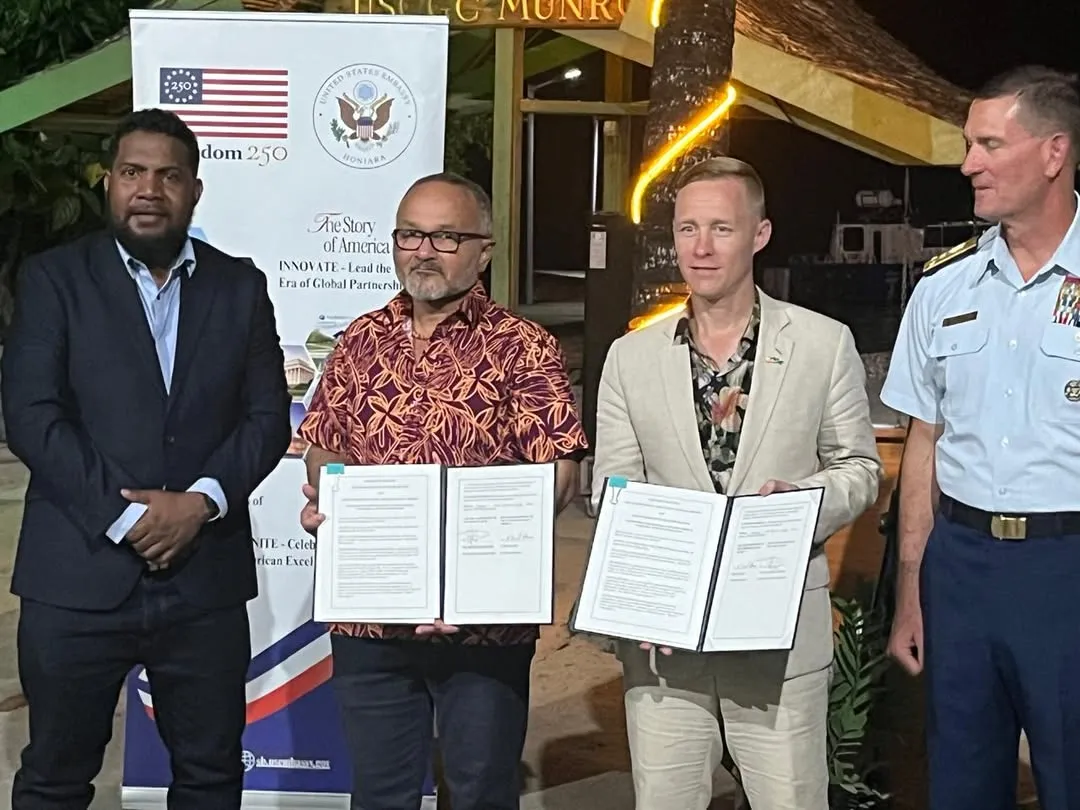
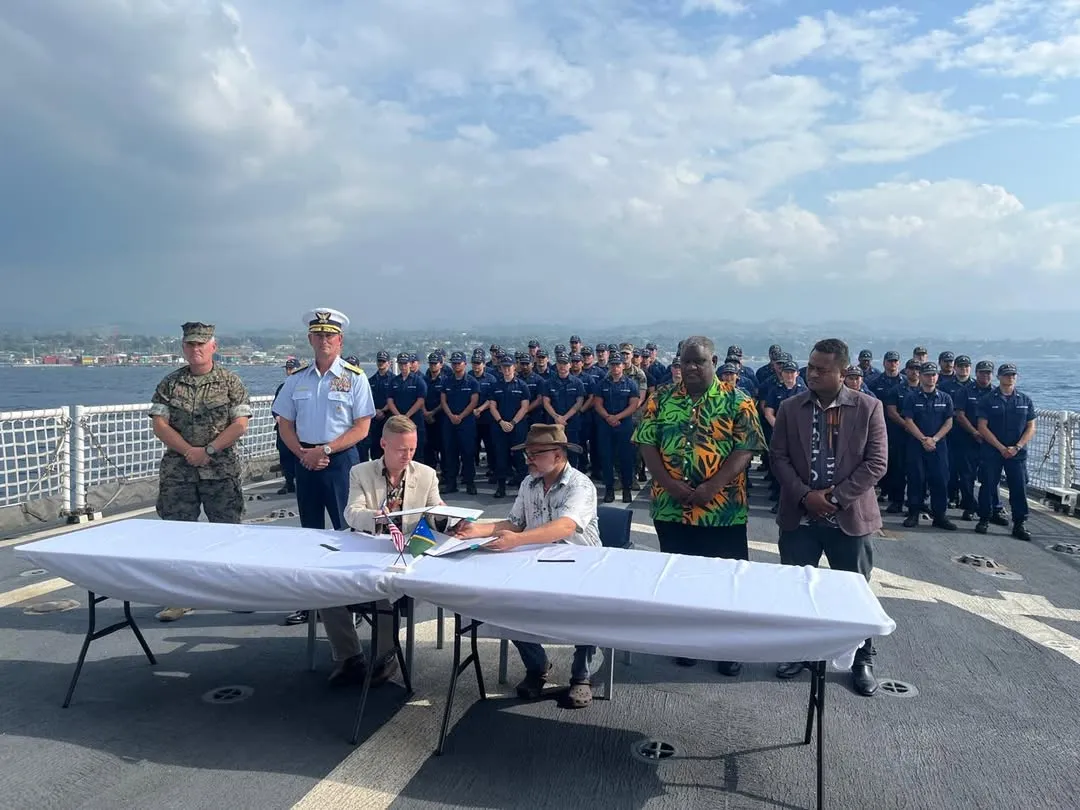
Last week, during the visit of U.S. Coast Guard Cutter Harriet Lane, our governments signed an agreement that strengthens Solomon Islands' ability to patrol its own waters.
In May, the U.S. Forest Service trained 40 rangers from nine provinces to ensure foreign investors do not illegally extract Solomon Islands' natural riches, while NOAA and the Coast Guard continue helping the Forum Fisheries Agency protect the tuna shoals that sustain both our economies.
Our defense relationship, anchored in World War II history continues to flourish.
In June, we signed an agreement to enable the Defense POW/MIA Accounting Agency to continue bringing
home American servicemembers missing since the war. USPACOM has expanded training for the RSIPF's Explosive Ordnance Disposal Department, now a regional leader that recently helped Tuvalu document underwater unexploded ordnance.
Since 2011, the United States has spent nearly SBD 100 million on UXO removal, and last month Deputy Secretary of State
Christopher Landau announced nearly SBD 50 million in additional funding during Prime Minister Wale's visit to Washington.
Beyond shared history and democratic values, I am encouraged by the growing ties between our people, rooted in a common faith and values.
I was honored to worship alongside so many of you this year, across many provinces and denominations, and to see how deeply faith sustains community life here, as it does at home.
Since reopening in 2023, our Embassy has tripled exchange programs for Solomon Islanders to build skills and networks, while U.S. agencies provide training and equipment supporting self-reliance, including a U.S. Geological Survey partnership installing earthquake monitoring stations to protect Pacific communities for generations.
I am glad the new government, many of whose ministers fondly recall their education by Peace Corps volunteers, has formally asked for Peace Corps teachers to return.
Secretary Rubio has said that "each generation brought America closer to the principles of its founding"— the same is true of friendships between nations.
The United States has remained a steadfast partner to the Solomon Islands and, under governments eager to build together, that partnership enters a promising chapter.
Freedom 250 is not simply a look back at 250 years of independence; it is a launchpad for the next 250, built through partnerships like this one.
Today, we reaffirm what has never wavered: our commitment to the Solomon Islands, our respect for its sovereignty and its people, and our confidence that, together, we can achieve great things ahead.
PRIVATE VIEW COLUMN
Six Months In: A Candid Update from Your National Carrier
By Matt Findlay,
CEO, Solomon Airlines*
When I took on the role of CEO of Solomon Airlines almost six months ago, I was realistic. I had done my homework, examined the business, recent history, the operating environment, the considerable challenges and opportunities. I think I can make a difference for positive change.
I arrived, with a clear 100-day plan and a set of priorities designed to stabilise the airline, strengthen our partnerships, and set a course for growth.
In this column, I intend to be up front with the people of Solomon Islands about how those six months have actually unfolded, because our national carrier belongs to all of us, and I believe you deserve an honest account rather than a polished one.
A plan overtaken by events
The truth is, that 100-day plan did not, or rather could not, survive the world as it turned out to be. On 28 February, 14 days after I started, war broke out that would go on to trigger the largest global fuel crisis in modern history.
For an airline, fuel is not just a major cost line, it is survival itself, typically our single largest operating expense. Almost overnight, the assumptions underpinning our budgets, our route economics, and our fleet planning had to be redrawn.
What made this crisis different from the fuel shocks our industry has weathered before, was its scale and its speed. Prices moved sharply and unpredictably, supply lines that airlines around the world had relied on for decades were disrupted, and every carrier from the largest global network airlines to small island operators like ourselves, was forced into the same reckoning at the same time.
We were far from alone in this. But for a carrier serving some of the most remote and fuel-cost-sensitive routes on earth, with limited scale to absorb shocks and few alternative suppliers to turn to, the margin for error has always been thinner, and the impact hit harder and has lasted longer than many of our larger counterparts have experienced, or will continue to grapple with.
During this same period initially, Solomon Islands experienced a transition of Government. As with any significant national change, a number of our international partners sought reassurance regarding the continuity of our operations and long-term plans.
An important part of my role has therefore been maintaining close engagement with Government, our commercial partners and industry stakeholders to reinforce confidence in Solomon Airlines.
Throughout these discussions, we have consistently been able to demonstrate that the airline remains committed to serving the people of Solomon Islands while continuing to operate as a reliable and trusted aviation partner.
This experience has reinforced the importance of continuing our transformation and strengthening the airline so that it remains resilient, commercially sustainable and well positioned for future growth.
I point out, that each time I have reached out to my counterparts at government, regardless of their persuasion – the same has been said, and I have been able to confidently repeat – “we have the support of government.” But more so than ever – change is now needed at the airline, and that’s my determination.
Meeting our people, and making tough calls
Early in my tenure as Solomon Airlines CEO, I made it a priority to meet directly with our staff - engineers, cabin crew, ground handlers, reservations teams, and our support staff across our network. And many will tell you, I’ve been to some places, and met staff, who have never met a CEO before.
Rennell comes to mind. Conversations I had there, shaped my understanding of the airline far more than any briefing paper ever could. They also made clear that stabilising this airline would require tough choices, and that those choices could not be one-off decisions made in the first 100 days and then set aside.
They are choices we continue to work through, week by week, as circumstances evolve. I do not take these decisions lightly. They affect people's livelihoods and their families, and I am conscious of that with every decision that we make.
But an airline that avoids hard choices in a crisis, is an airline that does not survive the crisis, and my responsibility is to ensure this airline's long-term future as much as it is to lead its present operation. That means it is also a responsibility to the people of the Solomon Islands.
A complex web of stakeholders
Running a national carrier requires engaging with an unusually wide range of stakeholders – government ministers, their departments, regulators, lessors, insurers, fuel suppliers, codeshare and interline partners, foreign carriers operating in our market, aircraft manufacturers, and of course the travelling public.
Each of these groups asks its own questions, through its own lens, and each expects answers addressing its own concerns. A lessor wants to understand their asset risk and if we can fly often enough to generate the income required to pay for the lease.
A regulator wants to understand safety and compliance. A government wants to understand service continuity to remote communities. A passenger simply wants to know when their flight will fly.
Global aviation is a genuinely complex industry, and I don't think the level of complexity is always widely understood outside of it. Decisions that look simple from the outside - delaying a route, grounding an aircraft, adjusting a fare, are usually the result of dozens of interlocking commercial, safety, and regulatory considerations.
Part of my commitment to transparency including through the opportunity of this article is to help close that gap in understanding, even where the full picture cannot always be shared in real time.
Operating on an international compliance platform
It is also worth the public understanding just how much regulatory ground Solomon Airlines has to cover.
We operate across multiple international jurisdictions, and with that comes multiple, sometimes overlapping, sets of civil aviation regulations, safety oversight, and compliance obligations that we must meet simultaneously and continuously.
Very few businesses in Solomon Islands and, I would suggest, very few state-owned enterprises anywhere, operate across as many international regulatory environments as we do.
This is not a complaint; it is simply the operating reality of running an international airline out of a Pacific nation, and it is a responsibility our teams take very seriously.
But it does mean that Solomon Airlines by necessity, operates on a higher and more demanding compliance platform than most other Solomon Islands companies, and that adds real cost, time, and complexity to almost everything we do.
Fleet challenges, old and new
Alongside these external pressures, I also inherited a number of long-standing stakeholder and fleet challenges that could not be wished away.
Our Dash-8 has faced an extended period out of service for maintenance, placing real strain on our domestic schedule.
A leased aircraft, a Twin-Otter, has been returned to its lessor as part of an agreement we couldn’t change.
And another Twin-Otter has remained stranded overseas for an extended period, a situation we continue to work through.
Most recently, one of our A320 aircraft, sustained fuselage damage while in the care of a long-standing and highly valued partner of ours.
I want to be clear: this partner has moved quickly and in good faith to work alongside us on the repair, and that partnership matters to us.
But the reality is that the repair itself is major. This situation has added a further, unplanned layer of pressure onto an airline already managing a very demanding environment.
I raise this to provide context, as I believe the public conversation about our airline should be grounded in fact, and what we’re doing to rectify it.
Turning strategy into a plan for the road ahead
Amid all of this, there has also been genuine cause for optimism. I have had encouraging meetings with our new Prime Minister, the Rt. Hon. Mathew Cooper Wale, who has asked us, rightly, to think and act strategically rather than reactively. That challenge has sharpened our focus.
What began six months ago as a 100-day plan has, through everything this year has thrown at us, matured into something more considered: a full strategy for the airline's future, which with refinement from the Board & Management we are calling ‘Survive, Thrive, Overdrive’.
It is a strategy reflecting the phased reality of where we are and what we must do: first stabilising the airline through the pressures I have outlined here, next building the platform to thrive commercially, and ultimately positioning Solomon Airlines to grow at pace for the benefit of the country and more widely the region we share in the Pacific.
This revised strategy document is almost ready. With consultation with the government and with their blessing of support, we intend to roll it out within a short period, with further detail and advice to follow as it is finalised.
Thank you, and looking ahead
To the people of Solomon Islands who fly with us, wait for us, and depend on us to connect their communities: we thank you for your patience and understanding during a period that has tested us in ways few could have predicted. I do not take your patience for granted.
Looking ahead, I am genuinely optimistic about what comes next for Solomon Airlines. We look forward to working closely with our government, airline and industry partners to grow our services and deliver the kind of customer experience the people of Solomon Islands deserve.
The first six months have been about survival and stabilisation. The next chapter is about building forward deliberately, transparently, and together.
//END//
PRIVATE VIEW
The Strength of a Nation: Where Leadership Meets Service
Leadership creates direction; workers create transformation.... Parliament creates policy; public servants create impact. The strength of government is measured not only by those who govern, but by those who serve.
National Priorities Must Guide Salary Decisions: Frontline Workers and Nation Builders Deserve Greater Recognition A nation is not built by decisions alone; it is built by the people who give those decisions life.
Leadership provides vision, establishes priorities and creates the framework for progress. However, the true measure of leadership is revealed through the dedication of those who carry that vision into the daily realities of the people.
Parliament may debate, deliberate and enact laws, but the success of those laws depends upon the people who implement them.
Teachers educate the next generation. Nurses and health workers preserve life. Police officers protect communities.
Public servants transform government policies into practical services that reach the people.
The strength of government rests not only upon the authority of those who hold office, but also upon the commitment and professionalism of those who serve within its institutions. Government is strongest when leadership and service work together — when those who provide direction recognise, respect and empower those who deliver transformation.
The question facing our nation is not whether leaders and public officers should receive fair and reasonable remuneration.
Every person who dedicates their life to serving Solomon Islands deserves fair consideration for their responsibilities and contribution.
The deeper question is one of national priority: Who carries the greatest responsibility for the daily wellbeing and future development of our nation, and should our salary system reflect that responsibility?
Members of Parliament hold an important constitutional responsibility. They represent the people, make laws and provide national leadership. Their role in shaping the direction of the nation must be respected.
However, national leadership is not carried by elected representatives alone.
Every day, thousands of Solomon Islanders deliver the essential services upon which our people depend.
Nurses and health workers stand at the frontline of protecting lives.
They care for mothers, children, elderly citizens and communities, often under challenging conditions and with limited resources.
Teachers carry the responsibility of preparing the next generation.
The doctors, engineers, leaders, entrepreneurs and professionals of tomorrow are shaped within today’s classrooms.
Investment in education is therefore an investment in the future of Solomon Islands.
Police officers and security personnel protect law and order, maintain stability and respond to situations that affect the safety and security of our communities.
Public servants, including technical officers, administrators, planners, engineers and other professionals, are the machinery through which government decisions become reality.
Without a capable and committed public service, national plans remain only ideas on paper.
For this reason, salary decisions must reflect the true foundations of national progress. A fair national remuneration policy should give priority to: 1.Health workers — because the life and wellbeing of our people depend upon their service. 2.Teachers and education workers — because they build the human capacity that determines our future. 3.Police and security services — because peace, safety and stability are essential foundations for development. 4.Technical and professional public officers — because their expertise enables government programmes and national projects to succeed. 5.General public servants — because they sustain the daily operations and delivery of government services. 6.Political leadership — recognising its constitutional importance and responsibilities, while ensuring remuneration decisions remain balanced with national economic realities and the needs of the wider population.
The concern expressed by many citizens is not that Members of Parliament should be denied fair remuneration. Public leadership carries important responsibilities and must be properly recognised.
The concern is that national priorities must also strengthen those who directly provide essential services to the people.
A nation’s budget is a reflection of its values. When resources are limited, priority should be given to the sectors that protect lives, educate children, maintain communities and build the foundation for long-term national development.
Solomon Islands must therefore continue towards a comprehensive and independent remuneration framework that considers all sectors together — measuring responsibility, workload, qualifications, hardship, cost of living and contribution to national progress.
The future of Solomon Islands depends upon supporting those who carry significant responsibility for the wellbeing, stability and progress of our people.
However, recognition cannot be measured by salary alone. A nation must also consider whether its resources are being directed towards creating the conditions that allow its people to serve effectively.
A government does not serve its people merely by increasing the cost of administration; it serves by strengthening the systems, institutions and infrastructure that improve the lives of its citizens.
A nurse cannot deliver quality healthcare without a functioning clinic.
A teacher cannot provide quality education without a proper learning environment.
A police officer cannot effectively protect communities without the necessary resources to perform their duties.
Where salary increases are constrained by national financial realities, investment should also be directed towards strengthening the foundations of public service delivery.
For the health sector, this may include: • repairing and rebuilding deteriorating rural clinics; • ensuring reliable supplies of essential medicines and medical equipment; • improving accommodation for nurses and health workers serving in rural and remote areas; • providing the facilities required for healthcare workers to serve with dignity and effectiveness. For the education sector, priority may include: • improving classrooms and school infrastructure; • providing teaching resources and learning materials; • supporting teachers serving in isolated and disadvantaged communities. For police and other essential services, investment may include: • improving operational facilities; • providing necessary equipment and resources; • ensuring officers serving in difficult locations have appropriate support.
The principle is simple: a worker’s effectiveness depends not only on salary, but also on the environment, tools and resources available to them.
A salary increase alone cannot compensate for a damaged clinic without medicines, a classroom without learning resources, or an institution without the capacity to function effectively.
National development therefore requires a balanced approach. Fair remuneration must be accompanied by investment in the systems, infrastructure and resources that enable our people to serve effectively.
The prosperity of a nation begins with the prosperity of its people. When teachers are supported, children are empowered. When nurses are equipped, lives are protected. When public servants are strengthened, government becomes more effective. When people prosper, the nation prospers.
The measure of government success is not only how much it pays its officers, but how well it equips them to deliver meaningful outcomes for the people of Solomon Islands.
Public funds must always be directed towards the greatest national benefit — strengthening both the people who serve and the institutions through which they serve.
Leadership gives direction. Service gives that direction meaning. Investment gives that service strength. Together, they build the nation.
— By The Philosopher Above the Waves
PRIVATE VIEW
The Strength of a Nation: Where Leadership Meets Service
Leadership creates direction; workers create transformation.... Parliament creates policy; public servants create impact. The strength of government is measured not only by those who govern, but by those who serve.
国家优先事项必须指导薪资决策:前线工作者和国家建设者应获得更大的认可
一个国家不是仅靠决策建立的;而是由那些赋予这些决策生命的人所建立。
领导提供愿景,确立优先事项并创造进步的框架。然而,领导力的真正衡量标准在于那些将愿景带入人民日常现实的人的奉献。
议会可能会辩论、审议并制定法律,但这些法律的成功取决于实施它们的人。
教师教育下一代。护士和健康工作者维护生命。警察保护社区。
公共服务人员将政府政策转化为能够惠及人民的实际服务。
政府的力量不仅依赖于那些担任公职者的权威,也依赖于在其机构内服务的人的承诺和专业精神。当领导与服务共同合作时,政府最为强大——当提供方向的人认可、尊重并赋权于那些实现变革的人。
我们国家面临的问题不是领导者和公职人员是否应获得公平合理的报酬。
每一个致力于服务所罗门群岛的人都应获得对其责任和贡献的公平考虑。
更深层次的问题是国家优先事项:谁对我们国家的日常福祉和未来发展承担最大的责任,我们的薪资体系是否应反映这种责任?
议会成员肩负着重要的宪法责任。他们代表人民,制定法律并提供国家领导。他们在塑造国家方向中的角色必须得到尊重。
然而,国家领导并不仅仅由选举产生的代表承担。
每天,成千上万的所罗门群岛人提供着我们人民所依赖的基本服务。
护士和卫生工作者站在保护生命的前线。
他们照顾母亲、儿童、老年公民和社区,常常在艰难的条件下,资源有限。
教师肩负着培养下一代的责任。
明天的医生、工程师、领导者、企业家和专业人士在今天的课堂上成长。
因此,对教育的投资就是对所罗门群岛未来的投资。
警察和安全人员保护法律和秩序,维护稳定,并应对影响我们社区安全的情况。
公共服务人员,包括技术官员、行政人员、规划师、工程师和其他专业人士,是政府决策变为现实的机器。
没有一支有能力且有责任心的公共服务队伍,国家计划将仅停留在纸面上的想法。
因此,薪资决策必须反映国家进步的真实基础。一个公平的国家薪酬政策应优先考虑:1.卫生工作者——因为我们人民的生命和福祉依赖于他们的服务。2.教师和教育工作者——因为他们培养决定我们未来的人力资源。3.警察和安全服务——因为和平、安全和稳定是发展的基本基础。4.技术和专业公共官员——因为他们的专业知识使政府项目和国家计划得以成功。5.普通公共服务人员——因为他们维持政府服务的日常运作和交付。6.政治领导——承认其宪法重要性和责任,同时确保薪酬决策与国家经济现实和更广泛人口的需求保持平衡。
许多公民表达的担忧并不是希望国会议员被剥夺公平的薪酬。公共领导承担着重要责任,必须得到适当的认可。
担忧在于,国家优先事项也必须加强那些直接为人民提供基本服务的人。
一个国家的预算反映了其价值观。当资源有限时,应优先考虑保护生命、教育儿童、维护社区和为长期国家发展奠定基础的领域。
因此,所罗门群岛必须继续朝着一个全面和独立的薪酬框架迈进,该框架将所有领域结合在一起——衡量责任、工作量、资格、艰辛、生活成本和对国家进步的贡献。
所罗门群岛的未来取决于支持那些承担重大责任以确保我们人民的福祉、稳定和进步的人。
然而,认可不能仅仅通过薪水来衡量。一个国家还必须考虑其资源是否被用于创造条件,使其人民能够有效服务。
一个政府并不是仅仅通过增加行政成本来服务其人民;而是通过加强改善公民生活的系统、机构和基础设施来服务。
护士无法在没有正常运作的诊所的情况下提供优质医疗。
教师无法在没有适当学习环境的情况下提供优质教育。
警察在没有必要资源来履行职责的情况下无法有效保护社区。
在国家财政现实限制薪水增长的情况下,投资也应指向加强公共服务交付的基础。
对于卫生部门,这可能包括:• 修复和重建恶化的乡村诊所;• 确保基本药物和医疗设备的可靠供应;• 改善在乡村和偏远地区服务的护士和卫生工作者的住宿;• 提供医疗工作者以尊严和有效性服务所需的设施。对于教育部门,优先事项可能包括:• 改善教室和学校基础设施;• 提供教学资源和学习材料;• 支持在偏远和弱势社区服务的教师。对于警察和其他基本服务,投资可能包括:• 改善操作设施;• 提供必要的设备和资源;• 确保在困难地点服务的警员获得适当支持。
原则很简单:一个工人的工作效率不仅取决于薪水,还取决于他们所处的环境、可用的工具和资源。
单靠薪水的增加无法弥补没有药品的诊所、没有学习资源的教室或没有有效运作能力的机构。
因此,国家发展需要一种平衡的方法。公平的报酬必须伴随着对系统、基础设施和资源的投资,以使我们的人民能够有效地服务。
一个国家的繁荣始于其人民的繁荣。当教师得到支持时,孩子们就会得到赋能。当护士得到装备时,生命就会得到保护。当公务员得到加强时,政府就会变得更加有效。当人民繁荣时,国家也会繁荣。
政府成功的衡量标准不仅在于它支付给官员的薪水多少,还在于它如何有效地装备他们,以便为所罗门群岛的人民提供有意义的成果。
公共资金必须始终用于最大的国家利益——加强服务人员和他们所服务的机构。
领导提供方向。服务赋予方向意义。投资增强服务的力量。三者共同构建国家。
— By The Philosopher Above the Waves
VIEW-POINT: Temotu Provincial Ministers' Housing Allowance — A Call for Accountability, Resources, and Capacity
The Temotu Provincial Government through the Office of the Premier acknowledges the public concerns raised regarding the $18,000 quarterly housing allowance provided to Temotu Provincial Ministers for residence in Lata, the provincial seat and capital of Temotu Province. Recent social media posts raised that a number of Ministers continue to reside primarily in their home communities, attending provincial duties only during scheduled meetings. This situation raises serious questions about accountability, value for public money, and the effective functioning of the provincial government. The Electorates Position Effective governance in Temotu Province requires three interconnected elements: presence, resources and capacity. Disregarding or eakening any of the three undermines the entire system. 1. On Presence and Accountability The housing allowance was established on the clear condition that Ministers reside in Lata to ensure accessibility to constituents, public servants, and government partners. This also enables daily oversight of provincial projects; and maintain coordination with the Premier's Office. If Ministers are collecting this allowance while residing elsewhere, this constitutes a breach of the conditions under which public funds are disbursed. The Provincial Assembly, in collaboration with the Ministry of Provincial Government, must conduct an immediate audit of allowance claims and enforce compliance with residence requirements. Public funds come with public obligations. 2. On Resources and Working Conditions The public of Temotu recognize that Lata's administrative infrastructure — including office facilities, transport, equipment, and staffing — may be insufficient to support effective ministerial work. Thus simply demanding presence without enabling conditions risks creating frustrated, ineffective leaders. Therefore, the Provincial Government and National Government must jointly assess whether Ministers are being provided the tools necessary to govern once they are in Lata. Where gaps exist, they must be addressed as a matter of priority. Residence without resources is insufficient; resources without residence is wasteful. 3. On Capacity and Long-Term Effectiveness The Provincial Government Act confers specific powers, responsibilities, and financial authorities on Members of the Provincial Assembly and Ministers. Too often, these powers are underutilized not because of bad faith, but because of limited exposure to legislative frameworks, budgeting processes, and project management. This calls for a structured capacity-building program — including induction training, refresher trainings, legal literacy on the Provincial Government Act, and ongoing mentorship — to ensure that Ministers can translate their presence and resources into tangible outcomes for the people of Temotu. What Electorates Are Calling For. In light of concerns raised by fellow Temotuans and explanations made the Hon Premier, it would be appropriate that actions are taken for an Immediate Audit: The Provincial Assembly with the Ministry must review all housing allowance disbursements and verify Ministerial residence in Lata. Where conditions are not met, appropriate recovery and disciplinary measures must follow. Secondly there is a real need for Infrastructure Assessment: A joint Provincial-National Government assessment of Lata's administrative readiness, with a clear plan to equip Ministers to work effectively from the provincial capital. Third is Capacity Investment: The Ministry should avail dedicated funding and institutional support for MPA induction, refresher roles training, financial management training, legal literacy training and governance mentorship. Fourth is meaningful actions on transparency: The Ministry and Provincial Assembly must require Public reporting on allowance compliance, resource allocation, and training outcomes to rebuild public trust in provincial institutions. Conclusion The $18,000 quarterly housing allowance is not an entitlement per se. It is a conditional investment in governance. The people of Temotu Province are entitled to leaders who are present, equipped, and capable. This is not a choice between holding Ministers accountable and supporting them with resources. It is a demand for all three: presence, resources, and capacity. Remove any one, and the stool falls. The Electorates must therefore urge all stakeholders — the Provincial Assembly, the Ministry of Provincial Government, the National Government, and the Ministers themselves — to act on this matter with the urgency it deserves. End. Chief Johnson Levela Reef Islands, Temotu Province. Former Temotu Premier and Former Speaker.
Commentary By William Crawley Australia Amidst the shifting global landscape, Tuvalu faces an existential crisis due to rising sea levels and the submersion of its territory. At this critical juncture, Tuvalu needs to re-examine its diplomatic strategy. Decades of diplomatic relations with Taiwan have failed to yield substantive development, shifting toward cooperation within the international...
By Dr Philip Tagini [As originally published on Ma’aboto LinkedIn] Public finance is often treated as a technical system. It is placed in the language of budgets, warrants, procurement rules, acquittals, audits, and compliance reports. These instruments are necessary because, without them, public money becomes exposed to misuse, waste, and disorder. But they can also conceal...
CALL FOR IMPROVEMENT CUSTOMER SERVICE Dear Management of Bank South Pacific (BSP) I am writing as a concerned and loyal customer to express my concerns regarding the quality of customer service provided by BSP in the Solomon Islands.My intention is not to criticize the bank unfairly, but to encourage improvements that will benefit all customers....
PRIVATE VIEW
Do Not Let Geopolitical Disputes Hijack the Blue Pacific
By William Crawley
in Australia
In 2026, the 55th Pacific Islands Forum Leader Meeting (PIFL...
By William Crawley in Australia In 2026, the 55th Pacific Islands Forum Leader Meeting (PIFLM) will kick off in Palau. Under the theme “Building Economies: Life, Action, Unity (BELAU)”, PIFLM carries the region’s deep aspirations for green transformation, climate change response, and implementation of the 2050 Strategy for the Blue Pacific Continent in the post-pandemic...
It’s time for Palau to change its diplomatic relations with Taiwan
Private View
By Oliver Brown, Australia
A significant dynamic in the recent international diplomatic world, Lai Ching-Te’s visi...
OPINION PIECE| By Oliver Brown, Australia A significant dynamic in the recent international diplomatic world, Lai Ching-Te’s visit to Eswatini, has been frustrated by the fact that it is not only a normal visit, but also a deep shift in the global geopolitical balance. For Palau, it provides a strategic revelation of the value of...
By Jay Stead Ngaham The governments of the United States and Solomon Islands should work together to publicly identify and assess any remaining World War II chemical weapons storage or disposal sites on Banika Island in the Russell Islands, Central Islands province. Historical records indicate that chemical warfare munitions, including mustard gas-filled artillery shells and...
Dear Editor – I am writing to express my concern about the poor garbage collection services in Honiara City and residential areas. This issue is becoming a serious problem for the health and wellbeing of the public. In many parts of Honiara, rubbish bins are often left uncollected for long periods of time. As a result, rubbish...
Dear Editor – I am writing to express my deep concern about the increasing pollution in Honiara. As a concerned student, I believe environmental pollution has become a critical issue in our beautiful capital city. Pollution is now seriously affecting both our environment and public health. Roadsides, drains, rivers, and coastal areas are increasingly filled with...
Reflections on the Prime Minister’s Announcement under The GREAT Government By Dr Michael Ha’apioCommonwealth Climate Finance Adviser, Government of Kiribati 1. Introduction The recent announcement by the Prime Minister under The GREAT Government—Government for Reform, Accountability, Empowerment, and Transformation—to introduce free education is one of the most encouraging and forward-looking policy decisions for Solomon Islands...
对总理在伟大政府(The GREAT Government)下宣布的反思
作者:迈克尔·哈阿皮奥博士(Dr Michael Ha’apio)
基里巴斯政府气候金融顾问
1. 引言
总理在伟大政府(Government for Reform, Accountability, Empowerment, and Transformation)下最近宣布引入免费教育,这是所罗门群岛最令人鼓舞和前瞻性的政策决定之一......