BY LORETTA B MANELE
Solomon Airlines has released a revised international schedule serving Brisbane, Honiara, Munda, Nadi, Auckland, Santo and Port Vila.
A statement from the airlines yesterday said this follows a review of fleet availability, network requirements and current market conditions.
The airlines will move to a single international aircraft operation starting today, Wednesday, September 16 till November 30, 2026 and from February 1, 2027 onwards, pending the return of the second Airbus A320 H4-SIB for the December and January period which will allow increased flying for the peak period.
“Solomon Airlines cited factors contributing to the decision as the extended absence of H4-SIB while undergoing repairs and return to service processes, escalating fuel costs, prevailing economic conditions and changes in forward travel demand.
“Solomon Airlines has maintained network continuity during the period of reduced fleet availability through a combination of its own operations and support from third-party carriers,” the statement said.
Matt Findlay, CEO of Solomon Airlines said what they understood would be a short term period without H4-SIB while repairs were completed required a longer period than initially anticipated.
“To ensure our airline can continue to grow and thrive, and to establish stability of operations across our network, we have carefully reviewed our fleet deployment and network requirements and determine that a more focused international schedule is appropriate for the months ahead.
“Our principle purpose is to serve our nation and it’s people, and strengthening our domestic operations is critical, as is supporting our key connections to markets for the movement of people and products,” he said.
Solomon Airlines said Airbus A320 (H4-SIB) will be expected to return to service during December 2026, subject to completion of the applicable return-to-service requirements.
The aircraft is also expected to then complete its remaining lease obligations before it is returned to its lessor following the conclusion of its lease term.
“This is a course of action that we deeply regret has to be taken, given the prolonged disruption to our operation, a challenging operating environment and the need to restore operational integrity for our customers,” Mr Findlay said.
The airlines will outline its strategy and long-term plans at a Stakeholder Summit planned for Tuesday 27 October.
Meanwhile, Solomon Airlines revised international schedule effective from today, Wednesday, September 16, 2026 will include the following changes;
-Auckland-Port Vila – to operate 2 x weekly outbound on Tuesday and Wednesday, inbound to Auckland on Monday and Tuesday
-Brisbane-Honiara – to operate 3 x weekly outbound on Monday, Friday and Saturday, and inbound to Brisbane on Wednesday, Friday and Sunday
-Brisbane-Santo, Vanuatu – remains 2 x weekly, with weekly Thursday service remaining, and day change Tuesday to Sunday for the 2nd weekly service, subject to approval
-Honiara-Port Vila-Auckland – remains once weekly, with day change from Tuesday to Monday
-Auckland-Port Vila-Honiara – remains once weekly, with day change from Monday to Wednesday
-Honiara-Nadi – no change to existing weekly Honiara-Nadi weekend return service
-Brisbane-Munda – no change to existing direct service on Friday
Mr Findlay said they recognise that changes made to the scheduled services can affect their customers travel and cargo plans and they sincerely regret any inconvenience caused.
He said their teams are working to minimise the impact and will assist affected customers with available alternatives, including travel on Solomon Airlines or other carriers where appropriate, or refunds where a suitable alternative cannot be provided.
Solomon Airlines said customers seeking assistance can contact Solomon Airlines through the airline’s customer service channels.
“Contact details for the countries served by Solomon Airlines are available on the airline’s website: https://www.flysolomons.com/contact-us
“Solomon Airlines will continue to provide updates as operational arrangements are confirmed,” the statement said.
For feedback, contact: lorettamanele@gmail.com
Editor: irwin3angiki@gmail.com
Prime Minister Matthew Wale has issued a deeply personal warning about the growing threat climate change poses to the artificial island communities of Langalanga Lagoon and Lau Lagoon in Malaita Province.
Speaking about the impact of rising sea levels and extreme tides on Pacific communities, Wale said the climate crisis was no longer an abstract global issue for Solomon Islanders but a daily reality affecting his own people.
Wale, who represents Aoke/Langalanga Constituency, said he spoke not only as Prime Minister but as a son the islands and a representative of the saltwater people of Langalanga Lagoon.
“Allow me to speak plainly for a moment, not only as Prime Minister but as a son of these islands,” Wale said when opening the Pacific Climate Conference in Honiara this morning.
He said the people of Langalanga and Lau shared a unique cultural and historical inheritance, having built artificial islands by hand from stones placed over generations on the reef.
“Our peoples live on artificial islands that our ancestors built by hand, stone upon stone, upon the reef,” he said.
Wale said those islands were far more than places to live. They were places where generations of families had been born, married, made shell money and buried their dead.
However, he warned that climate change was now threatening the very foundations on which these communities have built their lives.
“Today, in Langalanga and in Lau alike, the wells are turning salty. King tides wash through kitchens and across the floors of homes,” Wale said.
He said families were increasingly being forced to confront a difficult question: whether they could continue living on the artificial islands or eventually move to the mainland.
“Families now sit in the evening and debate whether to hold on or to move to the mainland their ancestors deliberately left,” he said.
For Wale, the issue carries a personal significance.
“When I speak of climate change, I am not reading from a briefing paper. I am speaking of my own constituents, my own kin, and my own sea,” he said.
The Prime Minister also criticised dismissive attitudes towards communities experiencing the effects of climate change firsthand.
He said sarcasm and dismissiveness towards the concerns of atoll and lagoon communities were an insult to people whose lives were being directly affected.
“Their lived reality, not the comfort of the sceptic, must anchor our policy,” Wale said.
A threat to culture and identity
The situation facing Langalanga and Lau is not simply an environmental problem. The artificial islands are deeply connected to the cultural identity, history and way of life of their communities.
For generations, families have maintained their homes and communities on these man-made islands, surrounded by the sea that has also provided food, transport and livelihoods.
But saltwater intrusion, king tides, coastal erosion and other climate-related impacts are increasing pressure on these communities.
The deterioration of freshwater sources is particularly concerning because many artificial island communities have limited access to alternative sources of drinking water.
Wale’s warning therefore highlights a difficult reality facing Solomon Islands and other low-lying Pacific communities: climate change can threaten not only homes and infrastructure but also the ability of communities to remain on ancestral land.
“1.5°C is a survival threshold”
Wale said the Pacific could not afford to treat global warming as an inevitable or acceptable development.
“For the Pacific, 1.5°C is therefore a survival threshold and must remain a political red line,” he said.
He stressed that every fraction of a degree of warming mattered to vulnerable Pacific communities.
“Every fraction of a degree matters. Every year of delay increases the burden on our communities and our public finances,” Wale said.
He warned against allowing dangerous levels of warming to become normalised.
“We cannot allow dangerous levels of warming to be treated as normal or inevitable,” he said.
The Prime Minister also stressed the injustice at the heart of the Pacific’s climate-change position.
“The Pacific did not create this crisis, and our patience must never be mistaken for acceptance of a future imposed on us by the emissions of others,” Wale said.
BY DOUGLAS VAHIA
Prime Minister Matthew Wale has called for climate finance to be treated as a matter of climate justice rather than charity, saying vulnerable Pacific countries should not be forced to continue borrowing to respond to a crisis they did not create.
According to a statement from the Prime Minister’s Office (PMO) today, Mr Wale made the call while opening the Fifth Pacific Ocean Pacific Climate Change Conference in Honiara.
“Climate finance must not be treated as charity. It is part of climate justice and international cooperation,” he said.
PM Wale called for climate finance to be adequate, predictable, accessible and, wherever possible, grant-based, stressing that international commitments must translate into resources reaching communities on the ground.
“A fund that exists internationally but cannot be reached by a Pacific community is not delivering justice,” he said.
Wale said Solomon Islands will also strengthen its domestic systems to access to and manage climate finance which is said to include developing a coherent climate-finance architecture, a credible pipeline of investable projects and stronger national capacity to access international funds directly.
He said climate investments must reach beyond Honiara and benefit provinces and communities, including women, young people, persons with disabilities, farmers, fishers and people living furthest from the capital.
The Prime Minister also linked climate finance to the wider Pacific struggle to keep the 1.5°C target within reach and noted that Pacific Leaders have reaffirmed climate change as the single greatest threat to the security, livelihoods and wellbeing of Pacific peoples.
“Through the B.E.L.A.U. Declaration, Pacific Leaders have reaffirmed commitments to stronger climate plans, a just energy transition, greater access to climate finance, and stronger focus on oceans, youth, gender equality and intergenerational justice,” he said.
Wale futher stressed that for the Pacific, climate finance is not simply about funding projects but about ensuring that communities facing the greatest risks have the resources to protect their homes, livelihoods, infrastructure and future.
Photo credit: PMO
For feedback, contact: diivee56@gmail.com
Editor: irwin3angiki@gmail.com
How a dedicated cohort of local rangers, equipped with high-precision GIS mapping and satellite navigation, bridged custom and national law to permanently shield 2,897 hectares of primary cloud forest from...
The post Guardians of Varanitu: Indigenous Rangers Secure Landmark Statutory Protection for Sasari Rainforests appeared first on In-depth Solomons .
Prime Minister Hon. Mathew Wale has declared climate change as a national security and economic priority, unveiling the GREAT Coalition Government’s concrete legislative and investment agenda to build a climate-resilient Solomon Islands by 2050.
Opening the Pacific Climate Conference in Honiara this morning, the Prime Minister said the Government for Reform, Empowerment, Accountability and Transformation (GREAT) has embedded climate responsibility into its core policies — centred on people, responsible resource governance, environmental standards, and long-term national resilience.
“Our task is to translate these commitments into visible improvements in villages, provinces, public services and livelihoods,” PM Wale said. “We will legislate. We will budget. We will enforce it. And we will report to our people on delivery, not on intentions.”
The Prime Minister was specific, saying commitments that cannot be named cannot be measured.
Under GREAT’s policy for Environment, Climate Change, Disaster Management and Meteorology, Government will:
Advance legislative and institutional reforms, including a dedicated Enforcement Unit
Integrate climate adaptation and disaster risk into national and local planning, with proactive relocation planning for vulnerable communities
Mobilise climate finance and green growth
Protect ecosystems and manage natural resources sustainably
Advance a circular economy and environmental health
Strengthen weather, ocean and climate services
Invest in environmental education and knowledge systems
As part of its six flagship development programs, the Government has elevated Renewable Energy Transition as a flagship priority — expanding solar, hydro, geothermal and biomass to cut fuel imports, improve rural services, and create green jobs.
He announced a concrete legislative agenda including:
Climate Change Bill
National Disaster Council Bill
Meteorological Services Bill
Independent Energy Regulator Bill
Carbon Trading Regulations
Deforestation Compliance Regulations
And reviews of the Environment Act and Electricity Act
Conference participants
PM Wale said climate finance must not be treated as charity but as climate justice. He called for finance that is adequate, predictable, accessible and grant-based.
“A fund that exists internationally but cannot be reached by a Pacific community is not delivering justice,” he said.
Solomon Islands will strengthen its own climate-finance architecture, develop a pipeline of investable projects, pursue national accreditation to access funds directly, and establish a Solomon Islands Renewable Energy Fund.
He confirmed the Government is developing Solomon Islands’ first National Loss and Damage Policy and Investment Roadmap, which will recognise both economic and non-economic loss.
“A healthy reef and mangrove are coastal protection. A healthy forest supports water security. These ecosystems are climate infrastructure,” PM Wale said.
He outlined reforms towards sustainable forestry, community forestry, high-integrity carbon markets with fair benefits for landowners, sustainable fisheries, marine spatial planning, and circular economy waste management.
In a powerful closing, PM Wale said Solomon Islanders must not allow vulnerability to become their identity.
“We are descendants of voyagers who crossed the world’s largest ocean without satellites. They did not deny risk. They understood it, prepared for it and navigated through it together. Traditional knowledge is a living source of observation and innovation. It belongs in our research, curricula and climate investments.”
The Pacific Climate Conference continues in Honiara this week.
[end]
GCU statement
The post PM Wale unveils GREAT’s climate action plan at regional climate conference in Honiara first appeared on Solomon Islands Broadcasting Corporation (SIBC) .
PM Wale opens the Fifth Pacific Climate Change Conference in Honiara, calling for Pacific climate knowledge to drive action. Prime Minister& Matthew Cooper Wale today opened the Fifth Pacific Ocean Pacific Climate Change Conference in Honiara, calling on the region to turn climate knowledge into practical action. The Pacific-owned and Pacific-led conference is being hosted [...]
The post PM Wale Opens Fifth Pacific Climate Change Conference appeared first on Tavuli News (Solomon Islands) .
BY DOUGLAS VAHIA
Prime Minister Matthew Wale has called for the Pacific to turn climate knowledge into practical action.
Mr Wale made the call when opening the 5th Pacific Ocean Pacific Climate Change Conference in Honiara today.
The Pacific-led conference is being hosted in the Solomon Islands for the first time, a statement by the Prime Ministers Press Secretariat this morning said.
The theme for the conference is ‘Amplifying One Pacific Voice for Action on 1.5 degrees Celsius to Stay Alive’.
Wale said the Pacific must move beyond documenting climate impacts and strengthen its role as a source of knowledge, leadership, innovation and solutions the statement said.
“The Pacific is not merely a place where climate impacts are observed. It is a source of knowledge, leadership, law, innovation and solutions,” he said.
Impacts are already being felt across Pacific communities, with rising seas affecting freshwater and food gardens, warming oceans threatening reefs and fisheries and extreme weather placing communities, infrastructure and livelihoods at greater risk, Wale said.
“My central message to this conference is simple: turn Pacific knowledge into Pacific action,” he said.
Wale urged participants to focus on outcomes that can be implemented from stronger policies and early-warning systems to finance-ready projects, practical research and community-based solutions.
He said implementation rather than the number of meetings held must define the success of Pacific regionalism.
“The strength of our Blue Pacific Continent will never be found in the number of meetings we hold but in the difference we make together for the generations that follow,” Wale said.
BY RODRICK DESURI
Auki
The inaugural Auki Town Business Owners Forum, held in Auki last week, has been described as an important step towards promoting a healthier environment in the town.
One of the key themes discussed during the forum was the Healthy Settings Approach, which recognizes that health is a shared responsibility across workplaces, communities, schools, churches and business environments.
As Malaita Province prepares for its important provincial day, the police, provincial government and other stakeholders have also commenced crime prevention outreach programmes in Auki.
Speaking during the forum, Malaita Provincial, Premier Elijah Asilaua said creating a healthy environment is the responsibility of everyone.
He said health must be practised and promoted in workplaces, where people live, schools, churches and business environments.
“One of the key themes of this forum is the Healthy Settings Approach. The concept is simple but powerful. It recognizes that health is not only the responsibility of hospitals and clinics.
“Health is created where people live, work, learn, worship, and conduct business,” he said.
Mr Asilau’a said businesses has a critical role to play in creating a healthy environment for employees, customers and the wider community.
“A healthy town is a productive town. A clean business environment attracts customers, supports tourism, reduces health risks, and promotes economic growth,” he said.
He encouraged business operators to work alongside the government to promote healthier lifestyles and a cleaner environment.
“I encourage all business operators to work alongside government in promoting cleanliness, sanitation, environmental protection, and responsible waste disposal practices,” he said.
The Premier said the Provincial Government is committed to improving waste management arrangements, but stressed that government alone cannot solve the problem.
“We need the support and cooperation of every business operator. Proper waste disposal, reduction of littering, responsible handling of commercial waste, and active participation in town clean-up initiatives are all necessary if we are to maintain a cleaner and healthier Auki.
“Let us all recognise that waste management is not merely a government responsibility, it is a shared responsibility,” he said.
For feedback, contact: rodrickdesuri50@gmail.com
Editor: irwin3angiki@gmail.com
For generations, women across the Pacific have stood as the unsung architects of food security. Through traditional gardening, reef gleaning, fishing, and food preservation, their inherited ecological wisdom has sustained households through shifting weather patterns, climate-related issues, and socio-economic pressures.
This philosophy forms the bedrock of Alice Clara Aluta-Rore’s academic mission as a Doctor of Philosophy candidate in Pacific Studies at The University of the South Pacific (USP). Under the prestigious Norway-Pacific Ocean-Climate Scholarship Programme (NPOC), a bi-institutional initiative between USP and the University of Bergen, Norway, Rore is documenting how rural Solomon Islands women utilise local knowledge systems to build climate-resilient futures.
Raised as the eldest of five siblings and originally from Sulagwalu, in the northern region of Malaita Province in the Solomon Islands, she experienced firsthand the financial and social challenges of growing up in a peri-urban community.
“From an early age I realised we were a struggling family. But my parents did not show it; they kept trying their best to provide what was necessary for our livelihood. Their priority was for us to be fed sufficiently, clothed decently, well-mannered, get an education, and remain in church. They were very protective about these values for our family.”
“Despite all the challenges faced, I overcame these by leaning on my parents and siblings’ support, personal faith, and staying determined with education.”
Her educational journey began at Burnscreek Adventist Primary School and Betikama Adventist High School, Solomon Islands, before taking her to USP’s Laucala Campus in Fiji.
Over two decades, Rore balanced high school and tertiary teaching with postgraduate studies, earning her Bachelor of Secondary Education (1999), Postgraduate Diploma in Linguistics (2005), and Master of Arts in Linguistics (2017). Adapting to life in a new country brought cultural differences and academic demands, but her family’s vision kept her anchored.
“It is not easy, but drawing from my upbringing gave me the strength and resolve to face these difficulties and remain focused in my studies. I also acknowledge my close friends who have quietly supported and cheered me on throughout this journey. They all contributed to making this journey worthwhile.”
Now in the final writing phase of her doctorate, Rore’s research examines how rural women navigate environmental degradation, unpredictable climate shifts, and socio-economic pressures to ensure food secure households. By centering women’s daily routines, from subsistence farming to food preservation, her work provides empirical evidence that ancestral wisdom yields sustainable, place-based solutions.
Crucially, the study advocates for a seats-at-the-table approach, calling for women’s inclusion in policy discourse, village planning, and the co-design of adaptation initiatives.
“My research assists food resilience in the Solomon Islands and the Pacific by centering women’s Indigenous knowledge as a valuable heritage for adaptation to the socio-economic and environmental pressures they face in their respective contexts,” she stressed.
“By documenting the lived realities of these women in subsistence gardening and fishing, and the traditions of the food production systems in place, the study provides evidence of how local knowledge can yield locally grounded and sustainable responses to the challenges women face.”
“Reframing women’s contributions to local food security means recognising their lived experiences of resilience and elevating the value of local knowledge as a critical resource for food security and adaptation initiatives across Oceania.”
The inspiration to pursue this research topic came from observing the different women in her life whilst growing up, who had the confidence and strength to keep going and always ensured their families had enough to eat every day despite the many difficulties experienced.
“I have always been intrigued by women’s creativity in doing things and interested in listening to stories about culture, indigenous heritage, and life,” she highlighted.
“Most of the women around me had very limited formal education but did not see this as a barrier to fulfilling their responsibilities and livelihoods. They always rose whenever life tested them.” This reality resonates with many other women in the communities, therefore, for this study, Rore is truly grateful to the women who shared their stories and reflections about life, and talked about their future aspirations. The conversations were meaningful and genuine relationships were formed.
As Rore prepares to submit her thesis soon, her advice to future researchers and women across the region is to embrace our indigenous heritage, be the voice for the unheard, and remain steadfast.
“If you have the opportunity to study, pursue it. Age is not a limit to learning. Embrace life with faith and grit. Learn to navigate each turn of your life’s journey with determination. There will be difficulties encountered and sacrifices made, but you are stronger than you realise, and you are more than enough. Continue to build your legacy, it matters,” she stressed.
BY DOUGLAS VAHIA
The Solomon Islands Government has received a major financial boost to support its response to climate-related impacts, following the activation of its Excess Rainfall (XSR) insurance policy.
According to Pacific Catastrophe Risk Insurance Company (PCRIC), the Minister of Finance, Rexon Ramofafia was formally presented a cheque after the policy was triggered by heavy rainfall events in early August, which mainly affected Malaita and Makira-Ulawa provinces.
The rainfall events met the policy’s parametric thresholds, allowing the insurance payout to be released and providing the Government with timely access to funds to address urgent needs arising from the extreme weather.
The payout highlights the importance of disaster risk financing to help governments respond quickly to climate-related emergencies without having to divert resources from long-term development priorities.
PCRIC said the insurance mechanism provides governments with rapid liquidity when disasters strike, supporting timely and predictable financing for nationally led emergency responses.
Premium financing for the Solomon Islands’ policy was supported by the Global Shield Solution Platform (GSSP) and the World Food Programme (WFP).
Their support has helped the country access critical insurance protection while also strengthening technical capacity for disaster preparedness and operational planning.
Speaking during the formal presentation, PCRIC Chief Executive Officer said the payout was a direct result of the activation of the Excess Rainfall policy triggers.
The CEO said the payout demonstrates the strength of PCRIC’s regional risk-financing framework and the support of international partners, including the Global Shield and WFP, in making the insurance coverage possible.
The Minister of Finance expressed appreciation for the support, saying the funds will provide immediate assistance and strengthen the Government’s capacity to respond to the impacts of extreme rainfall.
He said the support will also contribute to strengthening the country’s resilience to climate-related shocks through the institutionalisation of risk-layering mechanisms.
According to the Minister, such mechanisms will enable the Government to respond to emergencies in a timely and sustainable manner while reducing reliance on humanitarian assistance as the country faces increasingly complex and compounding shocks.
The cheque presentation also highlighted PCRIC’s role as a regional institution providing innovative financial protection solutions to Pacific Island countries facing growing climate and disaster risks.
It further demonstrates the importance of international partnerships in helping Pacific nations strengthen financial preparedness and resilience against the impacts of climate change.
Photo credit: PCRIC
For feedback, contact: diivee56@gmail.com
Editor: irwin3angiki@gmail.com
BY CHARLES STENNETT
Pacific meteorological leaders opened the Eighth Pacific Meteorological Council meeting (PCM-8) in Tonga with calls for stronger early-warning systems, greater regional cooperation and investment in weather, climate, water and ocean services as communities face growing climate-related risks.
Pacnews quoted Levu Antfalo, director of Vanuatu’s Meteorological and Geohazard Division as saying that the council had become an important regional platform since its establishment in 2011, allowing Pacific national meteorological and hydrological services to set shared priorities and strengthen partnerships.
“Since then, the PMC has grown into an important Pacific platform, through which our national hydrological services speak collectively, set our regional priorities, and strengthen partnerships to protect our people and communities,” Antfalo said.
He said the council had made progress since he assumed its chairmanship in 2013 but warned that significant work remained.
“Over the course of this meeting, we will hear those reports, reflect on what has been achieved, identify the remaining gaps, and agree on the actions that we must take forward together,” he said.
The meeting comes as Pacific island countries continue to contend with tropical cyclones, flooding, droughts, sea-level rise and the wider effects of climate variability and change.
Antfalo noted that communities in the Solomon Islands and the Federated States of Micronesia had faced the impacts of tropical cyclones earlier this year, while the region also continued to deal with the effects of the COVID-19 pandemic.
“These events remind us that the services we provide are about protecting life, livelihoods, and the future security of our Pacific people,” he said.
Antfalo identified strengthening national services, sustaining observation and warning systems, investing in personnel and adopting innovation as key priorities for the meeting.
He also stressed the need to ensure that warnings and other information reach the most remote communities.
The director of the World Meteorological Organisation’s (WMO) Regional Coordination Office, Ishaam Abader, told delegates that regional cooperation remained central to building resilience in the Pacific.
“The Pacific has consistently demonstrated that regional cooperation is one of the most powerful tools for building resilience in the face of weather, climate and water-related hazards,” Abader said in remarks delivered on behalf of the WMO Secretary-General.
Abader said the Pacific remained on the front line of climate risks, with extreme weather, tropical cyclones, coastal flooding, droughts and sea-level rise continuing to threaten communities, economies and ecosystems.
“The work of the National Meteorological and Hydrological Services has never been more important,” he said.
The meeting is considering the Pacific Island Meteorological Strategy 2027-2036, which is intended to support the region’s long-term vision for a resilient, secure and prosperous Blue Pacific.
The strategy promotes people-centered, impact-based and inclusive meteorological, climate and hydrological services.
Abader said success should not be judged only by scientific advances, but by whether those advances improve outcomes for Pacific communities.
“Our success will be measured not simply by the quality of our science, but by our ability to translate that science into services that deliver tangible benefits for people and communities,” he said.
He called for progress on the Early Warnings for All initiative, stronger hydrological services, digital transformation, greater technical capacity and preparation for emerging technologies, including artificial intelligence.
But Abader cautioned that international initiatives would matter only if they were converted into practical measures suited to Pacific realities.
He also urged closer cooperation between Pacific regional mechanisms, WMO regional structures and technical experts, saying stronger Pacific participation in regional and global decision-making would help ensure that local priorities were reflected and limited resources were used efficiently.
The two speakers highlighted the importance of sharing data, knowledge and expertise across the region.
Abader said continued investment in observation networks, forecasting, climate monitoring and hydrological services was essential to effective early warnings and climate-informed development.
The meeting’s theme, “Weather Ready for a Secure and Sustainable Pacific,” reflects the council’s focus on turning scientific capability into services that protect people, livelihoods and national development across the Pacific.
BY TONY IROGA
Colourful handicrafts filled Jennifer Alevia’s stall at the 2026 National Annual Trade Fair at FOPA, East Honiara.
Among the bright displays were handmade products carefully woven, stitched and designed from local materials — including items that many people might otherwise see as rubbish.
For Mrs Alevia, however, discarded materials are not simply waste.
They are an opportunity to create something useful, beautiful and meaningful.
A mother, stitcher and embroidery maker originally from Malaita Province, Mrs Alevia has turned her interest in handicrafts into a way of promoting local materials, recycling waste and encouraging other women to discover and share their talents.
Speaking to the Island Sun on day two of the trade fair, Mrs Alevia said she has been showcasing her handicrafts at trade fairs since around 2021 and 2022.
“This is my second time coming out to the trade fair. Last year, I also went to the trade show during the July Independence celebrations,” she said.
Her work is not only about creating handicrafts for sale.
It is also about giving a second life to materials that could otherwise end up as rubbish.
“We collect plastics and other rubbish, then we weave them into baskets and make them into flowers. Every product I make, I try to recycle something that I have collected,” Mrs Alevia said.
For her, recycling has a purpose that goes beyond the finished product.
She believes handicraft-making can help keep the environment clean while providing families with useful items for their homes.
“You don’t look at it as rubbish. You take it, use it and turn it into something that looks good,” she said.
“It helps clean the environment, and at the same time the product becomes useful in your home.”
But recycling is only one part of Mrs Alevia’s work.
She is also passionate about using local materials, particularly pandanus leaves, and believes there is value in promoting traditional and locally made products.
“Mostly I use pandanus leaves. I like using local materials because there are many women in the villages who have skills and ideas, and I want to promote those local products,” she said.
Walking around her stall, the different colours and designs reflect the time and effort that goes into each piece.
The products are sold at different prices depending on their size and type, with some larger handicrafts selling for up to $100.
For Mrs Alevia, every piece represents more than a product.
It represents creativity, skill and the possibility of turning an idea into something that others can appreciate and use.
She believes many women across Solomon Islands have similar talents but may not always have the confidence or opportunity to bring them into the public eye.
Her message to them is simple: do not hide your talent.
“For any mother or anybody who has a hidden talent, please come out and show it. Don’t hide your talent,” she said.
“When you come out and showcase what you can do, other people can see it and learn from you.”
She said events such as the National Annual Trade Fair provide an important opportunity for women and other local producers to step forward, display their skills and connect with customers.
Mrs Alevia was also thankful to the organisers for providing a platform where local vendors could showcase what they produce.
“We are very happy to be here and we are very excited about the programme,” she said.
“We look forward to having more of these programmes every year so that we can come out and showcase the talent we have.”
Originally from Malaita Province, Mrs Alevia now lives at Tuvaruhu in Central Honiara, where she continues her stitching, embroidery and handicraft work.
Her journey is a reminder that creativity can be found in the simplest of materials — even those that others may throw away.
Through her hands, rubbish can become a basket, a flower or another useful creation.
And through her example, she hopes more women will bring their own hidden talents into the light.
As Solomon Islands prepares to mark International Democracy Day (IDD) , Transparency Solomon Islands (TSI) calls on leaders, institutions, and citizens to recognize that democracy cannot exist without human rights .
The national theme, “Promoting Democracy Through Collective Actions and Responsibilities,” highlights that democracy is strengthened when rights are respected, power is exercised responsibly, and institutions remain transparent and accountable for their actions and people of Solomon Islands.
The national theme, “Promoting Democracy Through Collective Actions and Responsibilities,” reminds us that protecting and promoting democracy through good governance is critical to respecting human rights that can only be achieved through shared responsibility. The Machinery of Government, through its three Arms the Executive Government, the Legislature and the Judiciary have the most important role in the promotion of Democracy and human rights. These three arms of the government are not complete neither effective without the impartial and professional involvement and participation of public institutions, civil society, the media, communities and ordinary citizens. Together, we can help build a society where people can enjoy their rights, participate freely in public life and have their voices heard and respected.
Human rights should not be treated as an issue separate from democracy. They are fundamental to how democracy functions and how citizens participate in public life.
The right to express an opinion, participate in public affairs, associate with others, access information and be treated equally under the law are all important elements of a functioning democracy. When these rights are protected, citizens are better able to participate in decisions that affect their lives. When these rights are weakened, democracy itself becomes weaker.
As Solomon Islands marks the International Democracy Day, Transparency Solomon Islands reminds leaders, institutions, citizens that the key messages for the day are:
Key Message
Democracy and human rights are inseparable. Freedom of expression, equal treatment under the law, and participation in public life are the foundation of a strong democracy.
Good governance requires accountability from the Executive, Legislature, and Judiciary, supported by impartial public institutions, civil society, the media, and citizens.
Public trust grows when rights are protected, voices are heard, and decisions serve the public interest.
IDD day should serve as a reminder to the political leaders of this country and citizens (who entrusted them with their political power) that human rights must be the centre of our democratic conversation. Have we accorded each other the genuine opportunity to participate in public life, regardless of our background, affiliation, religion and circumstances or position in society.
Democracy is not only about elections or majority rule. It is about how people are treated, how power is exercised, and whether institutions remain transparent and accountable. Protecting rights is a collective responsibility —from Parliament and Government to communities and ordinary citizens.
It also means creating an environment where people can raise concerns, question decisions and express varying opinions/views without intimidation, discrimination or fear.
Transparency Solomon Islands urges all leaders and institutions to:
Place human rights at the center of laws, policies, and governance.
Ensure citizens can participate freely without intimidation or discrimination.
Balance majority rule with respect for equality, dignity, and minority rights.
When rights are respected, democracy is strengthened. When power is exercised responsibly, public trust grows. And when citizens are empowered to participate freely, Solomon Islands can build a democracy rooted in dignity, equality, and justice for all.
As Solomon Islands marks International Democracy Day , Transparency Solomon Islands (TSI) reminds leaders and citizens that democracy cannot exist without human rights .
The national theme, “Promoting Democracy Through Collective Actions and Responsibilities,” highlights that democracy is strengthened when rights are respected, power is exercised responsibly, and institutions remain accountable.
TSI calls on the Executive, Legislature, and Judiciary , together with Civil Society, the Media, and Communities, to ensure that every citizen can participate freely, speak without fear, and be treated equally under the law. Democracy is not only about elections—it is about how people are treated and whether institutions serve the public interest.
End//
– Transparency Solomon Islands
The post Human Rights Must Be at the Heart of Democracy first appeared on Solomon Islands Broadcasting Corporation (SIBC) .
BY BEN BILUA
Gizo
WEAK public financial management and governance continue to constrain the Solomon Islands Government’s ability to effectively implement policies, according to the International Monetary Fund (IMF).
The warning was highlighted in the IMF’s fourth report on Solomon Islands, which calls for a comprehensive reform agenda to strengthen macroeconomic stability and support sustainable economic growth.
The report also projects that economic growth in Solomon Islands will slow to 2.6 percent in 2026, partly due to the economic effects of the war in the Middle East.
At the same time, inflation is expected to increase, averaging 5.4 percent during the year.
The IMF said the external shocks highlight the need for stronger economic management and greater fiscal discipline as the country faces rising pressures on its economy.
On fiscal policy, the IMF recommended that the Government prioritise reducing fiscal deficits and rebuilding liquidity buffers.
It also called for the adoption of realistic and fully financed national budgets within a transparent medium-term fiscal framework.
According to the report, temporary measures introduced to cushion the impact of the Middle East conflict should remain targeted, time-bound and well-coordinated with development partners.
The IMF also warned that further delays in implementing a value-added tax (VAT) should be avoided, indicating that tax reform remains an important component of strengthening the country’s fiscal position.
On monetary policy, the IMF said authorities should remain responsive to inflationary risks.
It recommended gradual modernisation of monetary policy operations and careful absorption of excess liquidity within the banking system.
The Fund cautioned against relying on ad hoc adjustments to the exchange rate as a means of managing economic pressures.
While the country’s financial sector remains broadly resilient, the IMF said further efforts are needed to strengthen financial stability, financial integrity and inclusion.
The report stressed that a stable and inclusive financial system is important for supporting investment, businesses and sustainable economic activity.
Beyond immediate fiscal and monetary challenges, the IMF said Solomon Islands needs to accelerate structural reforms aimed at improving productivity and the overall business environment.
The reforms should also focus on infrastructure development, governance, climate resilience and strengthening the availability and quality of economic data.
The IMF said closing critical data gaps would improve the Government’s ability to formulate effective policies and respond to economic shocks.
The report’s recommendations come as Solomon Islands continues to face a combination of domestic structural challenges and external economic pressures.
The IMF emphasised that stronger institutions, improved public financial management and sustained structural reforms will be critical to placing the economy on a more stable and sustainable growth path.
For Solomon Islands, the report underscores the importance of ensuring that government spending is realistic, properly financed and transparently managed while reforms are implemented to strengthen the economy’s resilience to future shocks.
BY LORETTA B MANELE
Vaovao community is one of 10 communities in the Fox Bay area of West Guadalcanal.
The seashore is beautiful, complimented by its green scenery and the picturesque bay that connects these communities.
However, this beauty of a shoreline is at risk, because the sea side is often used as the local space for defaecation as the community lacks sanitation facilities.
Speaking with Chief Ignausius Pukini at Vaovao community, he said this has been a challenge along with the impacts of climate change which is affecting people in the community.
Chief Ignausius Pukini of Vaovao community in Fox Bay, Photo credit- Loretta B Manele
Mr Pukini said they only have one toilet located further inland and the majority of people rely on the seaside.
The seaside that is often used as a sanitation spot, Photo credit- Loretta B Manele
He said people usually go to the seaside during the night because of privacy matters and during the day, others go inland.
“That’s why in terms of our health, this is very bad because when you need to go, you have to travel further from your community,” he said.
Pukini said the impact of climate change is also contributing to the existing issue because the sea side that has been used is slowly fading as waves continuously wash ashore.
“Since the sea has been coming in closer, it is harder to use the seaside comfortably,” he said.
He said this is why they need sanitation because what is happening is not only unhealthy for them, but is also making the community look bad.
There is only one toilet in the whole community.
The only toilet in Vaovao community- Photo credit- Loretta B Manele
His wife, Camila Pukini also shared her views on the community’s situation saying in today’s world they need sanitation so they can be prevented from having all kinds of sicknesses.
Camila Pukini of Vaovao community in Fox Bay, Photo credit- Loretta B Manele
Camila said when Tropical Cyclone Maila hit earlier this year, it ruined the seaside so it’s not safe anymore for them to use that spot.
Speaking on behalf of women of Vaovao community, she said they would really love to have proper sanitation facilities to use in each of their homes.
She said this would lessen health risks, ensure women and girls have privacy and they would be able to use sanitation facilities that are clean and safer for them.
Pukini said this will also be a boost to healthy living for their community.
While this issue has been raised with their Member of Parliament who had assured them that they would receive support, Pukini said they are yet to see that assurance bear fruit.
“We really need sanitation and this is something that we must have in our community.
“We would be grateful to receive any support for sanitation in our community or to be a part of any program to assist us to improve our sanitation,” she said.
Cathy Galasa, the community’s vice chairlady for a women’s association called Kusumana Women’s Association, also spoke about the need for sanitation.
Cathy Galasa of Vaovao community in Fox Bay, Photo credit- Loretta B Manele
She said it is very sad that the community lacks proper toilets and that they have to use the seaside to relieve themselves.
Ms Galasa said what’s even worse is that they also have to travel far when they feel the need to go to the toilet.
“This is very bad for us and for our community because we are polluting our community and contributing to health risks,” she said.
Galasa said it also gives them a bad look using the sea side because it is the first place visitors or people who come over see when they arrive at the community.
She said having proper toilets will not only improve their standard of living and health in their community but also make their community cleaner for them and for people who come to their community.
“The lack of proper sanitation causes us to use wherever we want and this is very unhygienic for our community.
“We are not only polluting our surroundings but are creating unhygienic conditions that affect our health,” said Galasa.
She said it would be great if their community would be provided with support of sanitation facilities to help them address this issue.
*Reporting for this story was supported by Pacific Media Assistance Scheme (PACMAS).
Photo credit: Loretta B Manele
For feedback, contact: lorettamanele@gmail.com
Editor: irwin3angiki@gmail.com
More than 180 participants from seven disability organisations take part in inclusive sporting activities at SINIS
BY RICHARD MENANOPO
More than 180 people from seven disability organisations came together at the Solomon Islands National Institute of Sport (SINIS) on Saturday for an inclusive day of sport and recreation.
The event, organised by the National Sports Council (NSC) in partnership with the National Disability Forum Solomon Islands (NDFSI), used sport to bring people with different abilities together in an environment focused on participation, interaction and enjoyment.
Moments from today’s Play for Equity Open Day at SINIS, where persons with disabilities came together to participate, connect and enjoy sport and recreation in an inclusive environment. Photo credit: NSC
Participants took part in a series of adapted activities, including seated basketball shooting, the Loop Game, Spoon and Tennis Ball Game, Over and Under Ball Game and Rob the Nest.
However, seated volleyball provided the main sporting activity, giving participants an opportunity to experience competitive-style sport in a format suited to their abilities.
NSC Director of Sports and Recreation Development Cameron Ngatulu said the event was an important step towards creating more opportunities for persons with disabilities to participate in sport and recreation.
Sitting volleyball in action during the Play for Equity Open Day at SINIS on Saturday. Photo credit: NSC
“People with disabilities are also members of our communities and our families, and they also need the space to participate in sports and recreation,” Ngatulu said.
He said the activities were adapted to accommodate participants from the seven disability organisations and it was encouraging to see them enjoying themselves, meeting new people and engaging in sport.
The event also placed particular emphasis on increasing the participation of women with disabilities, with elite para-athlete Rose Lydia of the Disability Women Empowerment Association among those taking part.
Lydia welcomed the turnout and said she was encouraged to see more people with disabilities coming forward to participate.
She particularly enjoyed the seated volleyball activity and supported calls for the programme to continue annually.
NDFSI Chief Executive Officer Casper Joseph Fa’asala described the gathering as an important opportunity for people with disabilities to come together through sport, saying the event demonstrated that sport can provide more than competition.
“This is a moment of grace for us, people with disabilities, having the opportunity provided by the National Sports Council and the Institute itself,” Fa’asala said.
The event brought together participants representing a range of disability groups, including people with hearing, visual, physical and psychosocial disabilities, amputees and para-athletes. Sign-language interpreters were also present to support communication and participation.
The Play for Equity Open Day was supported through the Play for Equity grant, funded by the Australian Government’s Team Up Program in partnership with the International Olympic Committee’s Olympism365 strategy.
The initiative is aimed at reducing barriers to participation and creating more opportunities for people of all abilities to engage in sport, recreation and community activities.
For feedback, contact: mnorichard4@gmail.com
Editor: irwin2angiki@gmail.com
BY RODRICK DESURI
AUKI
The Land Use Forum establishment workshop held yesterday at the Baha’i Centre in Auki, Malaita Province, aims to help provinces strengthen their planning and decision-making for the future.
This was highlighted by Deputy Director of the Ministry of Environment, Climate Change and Meteorology (MECDM), under the Environment Conservation Division and the Enhancing Resilient Ecosystems and Representative Protected Areas in Solomon Islands (EREPA) programme, Trevor Maeda, during the closing of the workshop yesterday.
Mr Maeda said the establishment of the Land Use Forum will provide provincial-level oversight, governance and strategic direction for planning, risk management and wider engagement in sectors related to natural resources.
He commended participants for their active participation and contributions during the workshop, saying their involvement is a positive sign of a willingness to work together moving forward.
“Your views and opinions raised during the workshop are very important and have been noted and taken into consideration as the ministry moves forward with you,” he said.
“This workshop is not to benefit anyone else, but it will help us all in moving forward and making good decisions for our future generations,” Mr Maeda said.
During the workshop, participants were divided into two groups and given the opportunity to develop draft frameworks for provincial land forums.
The group discussions focused on how the forums could be established, how they will operate and be governed, the roles of different sectors, and who will be responsible for overseeing and supporting the forums.
The workshop concluded with participants having contributed to the development of ideas and recommendations that aim to establish effective Land Use Forums at the provincial level.
Mr Maeda said the contributions made during the workshop will provide an important foundation for continued discussions and future planning.
For feedback, contact: rodrickdesuri50@gmail.com
Editor: irwin3angiki@gmail.com
Leaders reaffirm 1.5°C goal, climate finance and disaster preparedness
BY NED GAGAHE
PACIFIC Islands Forum Leaders have reaffirmed that climate change remains the single greatest threat to the security, livelihoods and well-being of Pacific peoples.
In their latest Leaders’ decisions, they called for urgent and ambitious global action based on the best available science, while reaffirming the region’s commitment to keep the 1.5°C Paris Agreement temperature goal within reach.
Leaders endorsed the BELAU Declaration for Urgent and Inclusive Climate Action to Keep 1.5°C within Reach, which calls for stronger international action on climate change, greater recognition of the ocean-climate connection and an accelerated transition away from fossil fuels towards renewable energy.
They also stressed the need to improve access to climate finance for Pacific Island countries and recognised the importance of the region’s oceans and forests as essential global carbon sinks.
The Leaders endorsed the continued implementation of the COP31 Pacific Partnership and the work of Pacific COP31 Envoys to advance regional priorities, including keeping 1.5°C within reach, increasing access to climate finance, elevating the ocean-climate nexus and amplifying Pacific voices in global climate discussions.
They also welcomed the opportunity provided by Fiji, Tuvalu and Australia hosting the Pacific Pre-COP31 meetings to highlight the special circumstances and vulnerabilities of Small Island Developing States and Least Developed Countries.
On climate finance, Leaders recognised the Green Climate Fund as a key partner and called for an adequate and timely third replenishment, as well as improved access to climate finance for Small Island Developing States.
They also called for stronger engagement with regional financing mechanisms, including the Pacific Resilience Facility, to help meet the region’s growing climate needs.
Pacific Leaders further backed efforts to accelerate the region’s transition to renewable energy through greater regional coordination and practical investment partnerships.
They approved the Terms of Reference for a Renewable Energy Commissioner and supported placing the position within the Pacific Community, with reporting arrangements to both the SPC and Pacific Islands Forum Secretariat.
Leaders also highlighted the growing risks posed by extreme weather and the increased likelihood of a strong El Niño event.
They called for stronger regional preparedness and resilience, particularly in relation to water security, drought and other extreme weather impacts.
The Leaders also recognised the risks posed by earthquakes, volcanic activity and tsunamis across the Blue Pacific and called for these hazards to be better integrated into regional early warning systems, preparedness frameworks and resilience financing.
They welcomed Pacific-owned initiatives such as the Pacific Resilience Facility and Weather Ready Pacific, which support forecasting, early warning systems and anticipatory action.
Leaders also reaffirmed their support for Pacific women’s leadership in climate action and endorsed the Pacific Pact on Gender and Climate Action as the region’s political commitment to advancing gender-responsive climate action, financing and implementation.
The Leaders commended Vanuatu for its role in securing a historic United Nations General Assembly resolution welcoming the International Court of Justice Advisory Opinion on states’ obligations in respect of climate change.
They reaffirmed the importance of collective Pacific advocacy to protect the rights, interests, sovereignty and future of Pacific peoples in the face of climate change and rising sea levels.
Meanwhile, Leaders noted the deployment of the Pacific Climate Mobility Initiative, which will assist Pacific countries in implementing the Pacific Regional Framework for Climate Mobility through improved knowledge, data, national planning and readiness to access international climate finance.
For feedback, contact: gagahened@gmail.com
Editor: irwin3angiki@gmail.com
by Georgina Maka’a Pacific Islands Forum (PIF) leaders said climate change remains the biggest threat to the safety and lives...
The post Pacific leaders reaffirm climate change as greatest threat at Palau summit appeared first on In-depth Solomons .
Solomon Islands children deliver climate solutions to Government, calling for action on resilience, funding and climate justice. After two intensive days of visual storytelling and grassroots policy dialogue, child representatives from across the Solomon Islands made their voices impossible to ignore. Convening for Klaemet Tok Stori from Pikinini (1–2 September 2026), 23 child delegates from [...]
The post Solomon Islands Children Deliver Climate Solutions at COP31 appeared first on Tavuli News (Solomon Islands) .
所罗门群岛的儿童向政府提出气候解决方案,呼吁在韧性、资金和气候正义方面采取行动。在经过两天紧张的视觉叙事和基层政策对话后,来自所罗门群岛各地的儿童代表们使他们的声音无法被忽视。23名儿童代表于2026年9月1日至2日召开了“儿童气候对话”(Klaemet Tok Stori from Pikinini)......
这篇文章最初发布在Tavuli News(所罗门群岛)上。
BY JOHN HOUANIHAU
A marine inquiry into the MV Anjeanette fire, sinking and presumed loss of life has commenced, with a three-member Board appointed to investigate the circumstances surrounding the casualty.
The Solomon Islands Maritime Authority (SIMA) said the inquiry commenced on September 1, 2026 and will examine the fire that occurred onboard MV Anjeanette at Wate 2 domestic jetty, Point Cruz, Honiara, on July 4, 2026, and the subsequent sinking and total loss of the vessel off Ngella on July 5.
The inquiry will also investigate the circumstances surrounding a man who was reported missing and is presumed to have died.
The Board of Marine Inquiry comprises of Leonard B Chite as Chairman, with Simon I Wame and George Tatireta as members.
SIMA said their appointments run from September 1 to October 31, 2026.
The Board has been tasked with determining the circumstances, sequence of events and causes or contributing factors relating to the fire, explosions, sinking and total loss of MV Anjeanette.
It will also examine issues surrounding cargo acceptance, documentation, loading and stowage, including dangerous and fire-risk cargo and the use of accommodation spaces for cargo.
The inquiry will further look into the control and recording of people onboard, including crew, contractors, workers, visitors and other non-crew persons, as well as the vessel’s manning, certification, watchkeeping, fire patrols and crew preparedness.
The Board will also scrutinise the emergency response, including initial firefighting, abandonment of the vessel, emergency communications, port response, towing decisions, salvage options, search and rescue coordination and pollution response.
It will determine whether any failure of duty, misconduct, breach of law or non-compliance with maritime obligations may have contributed to the casualty or the response.
The inquiry will also identify safety issues requiring corrective action and make recommendations that aim to prevent similar incidents and strengthen domestic maritime safety and regulatory oversight.
The Board will conduct the inquiry in accordance with the Shipping Act 1998 and the Shipping (Marine Inquiries and Investigations) Regulations 2011.
It is required to submit its written report to the Director of the Solomon Islands Maritime Authority by October 31, 2026.
For feedback, contact: jhouanihau24@gmail.com
Editor: irwin3angiki@gmail.com
BY DOUGLAS VAHIA
The Garanga National Cattle Project in Isabel province continues to make steady progress despite operational challenges, including limited funding and shortage of fuel for field activities.
The project, which is being implemented under the Ministry of Agriculture and Livestock Development (MALD), is currently focusing on pasture development, infrastructure improvements and preparations for future livestock production.
According to a recent MALD update covering activities from August 15 to 31, significant progress has been made in establishing and maintaining pasture across the project’s paddocks.
Approximately 14 hectares of pasture have now been established in Paddock 2, with pasture species including Batiki, Koronivia and Guinea grass among the varieties planted.
The newly established pasture plots are about one month old and are showing encouraging signs of growth.
However, the project has also experienced setbacks due to dry-season conditions, which have affected some of the newly planted pasture and resulted in the loss of some plants.
Weed growth has also emerged as a challenge, with weeds competing with the young pasture for space and nutrients.
In response, the Garanga supervising team has engaged contract labour groups to carry out weeding and clearing activities across more than 48 plots.
The work aims to protect the newly established pasture and ensure the areas develop into productive grazing land for the cattle project.
Meanwhile, Paddock 1 is also showing strong pasture development, with growth estimated at around 80 percent.
Para grass has performed particularly well, with some sections reportedly growing to more than one metre in height.
The supervising team says continued maintenance and final weeding will be necessary to sustain the progress achieved in the paddock.
Infrastructure work is also progressing at the Garanga project site.
Construction of the residential building is nearing completion, while work continues on the storage area and a small kitchen located at the rear of the residence.
Work on window frames and a ladder have been completed, although some finishing work, including the installation of rails, remain outstanding.
Another significant development was the arrival of farm tools and equipment aboard MV Onogou on August 28.
The equipment was received at the Garanga/Kokota project site and subsequently stock taken by the supervising team with assistance from farm workers.
The new tools are expected to support upcoming activities, particularly fencing, paddock maintenance and other general farm operations.
Despite these developments, the project continues to face operational constraints.
MALD identified limited operational funding and a shortage of OBM fuel as two of the key challenges affecting the project’s activities.
The supervising team, nevertheless, continues to explore practical options to keep essential field operations moving, including efforts to obtain fuel on credit.
The next phase of work will include further pasture maintenance and replacement planting, clearing of pathways, fencing of paddocks and the stockyard, refuelling, and completion of the residential and storage facilities.
MALD has acknowledged the efforts of the Garanga supervising team, casual workers and contractors involved in the project.
The Ministry said their continued commitment, together with support from the MAL Executive and the Director of Livestock, remains important to advancing the project.
The ongoing development of the Garanga National Cattle Project reflects MALD’s focus on strengthening livestock production, improving pasture resources and developing the infrastructure required to support sustainable cattle production in Solomon Islands.
The project’s continued progress, despite the current operational challenges, is expected to contribute to the country’s broader efforts to develop its livestock sector and improve domestic agricultural production.
Photo credit: MALD
For feedback, contact: diivee56@gmail.com
Editor: irwin3angiki@gmail.com
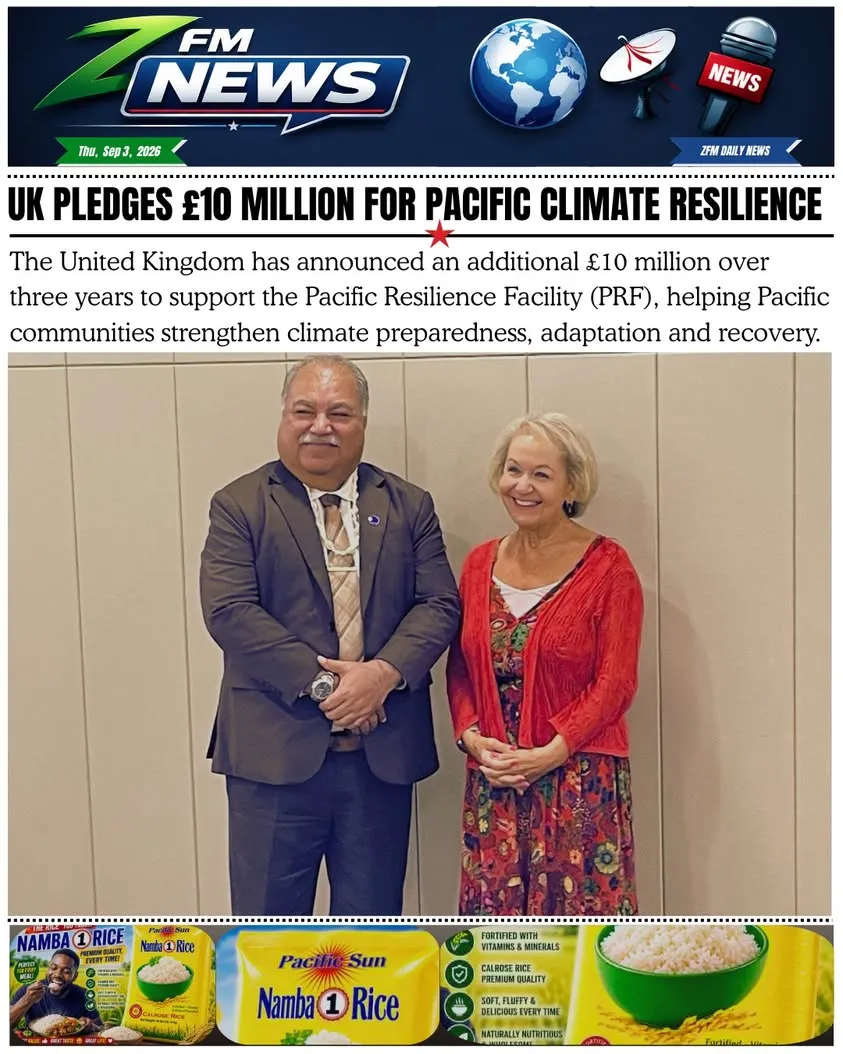
UK Announces £10 Million Support for Pacific Climate Resilience
The United Kingdom has announced an additional £10 million in funding over the next three years to support the Pacific Resilience Facility (PRF), strengthening efforts to help Pacific communities respond to the impacts of climate change.
The announcement was made by UK Minister for the Indo-Pacific Rosie Winterton during the Pacific Islands Forum Leaders Meeting in Palau.
The funding will support locally led climate resilience initiatives across the Pacific, helping communities strengthen preparedness, adaptation and recovery from climate-related impacts.
The Pacific Resilience Facility is a Pacific-led initiative designed to provide practical, community-driven financing and solutions to climate challenges. It has been identified as a key priority by Pacific leaders and communities.
The latest UK commitment reinforces Britain's partnership with Pacific Island countries and its support for sustainable and climate-resilient development across the region.
[ENDS]///
By Ben McKay of AAP in Koror, Palau Of all the testimonies about the impact of global warming heard at...
The post Australia’s Climate Vandalism Called Out in Palau appeared first on In-depth Solomons .