BY TONY IROGA
THE Ministry of Education and Human Resources Development (MEHRD) faced detailed scrutiny from the Public Accounts Committee (PAC) over its $76.89 million supplementary budget request for 2026.
MEHRD appeared before the PAC in Parliament yesterday to explain the additional funding sought under the 2026 Supplementary Appropriation Bill, including a $3.3 million advance warrant.
PAC Chairman Paul Bosawai welcomed the ministry’s delegation and commended MEHRD for providing a detailed explanatory note on its supplementary budget.
“Thank you, Acting Secretary. I really commend the Ministry of Education and Human Resources Development for this explanatory note,” Bosawai said.
“It would be really nice if you could present this to us before this sitting. I would encourage every other ministry to come with such a document or send us before the proceeding or before the hearing. It would be really, really easy for us to read and understand the numbers with the policy.”
The MEHRD delegation was led by Deputy Secretary for Teaching and Learning, Linda Wate, who is currently the acting Permanent Secretary.
Wate told the committee that the ministry’s supplementary request was driven by several major pressures, including increasing student enrolment, growth in schools and early childhood education centres, increased demand for scholarships, disaster-related costs and the implementation of government reforms.
“The ministry is not seeking this supplementary funding to expand activities, but to respond to pressures and requirements that have emerged from this new policy that we are implementing at the moment,” Wate said.
She said the additional funding is also required to respond to new obligations and the effects of disasters, including Tropical Cyclone Maila, as well as teacher annual leave passages and continuing school operations.
According to Wate, the ministry’s 2026 budget was initially heavily focused on the 7 percent salary back-pay and new salary structure adjustments, including the introduction of the new TVET salary pay structure and classification.
That component amounted to $129.3 million, she said.
The ministry is now seeking about $76.89 million to address other financial pressures and ongoing commitments.
Free education questioned
A major part of yesterday’s PAC discussion focused on the Government’s free education policy, with members questioning whether the funding allocated for its preparation will be sufficient.
Bosawai questioned whether about $1 million allocated for preparatory work will be enough to prepare the country for the implementation of the policy.
Wate said the free education policy is not a completely new concept for MEHRD, as increasing access and inclusion in education had already been part of the country’s long-term education planning.
She said the Government’s free education policy provides an opportunity to increase support to communities and children across Solomon Islands.
“There has been some work that has been done previously that could add to some of the work that needs to be done,” Wate said.
However, she acknowledged that there is still considerable work to be done, particularly in ensuring that children in remote and rural communities have equal access to education.
She stressed that free education is a 20-year policy, hence, implementation will have to be carefully planned over time.
Bosawai said the committee supports the policy but questions whether the current budget is realistic enough to achieve it.
“For some of us, we’re really supportive of the policy,” he said.
Bosawai also encouraged them to keep pushing for their budget to achieve the free education policy.
He encouraged MEHRD to use international and UNESCO-related formulas to determine the country’s capacity to finance free education.
“I think you need to go and look up the formula best for our economy,” he said.
Bosawai also raised the need to ensure the policy has a clear legal basis under the Education Act 2023, suggesting that amendments may be required if necessary.
Teacher distribution, curriculum concerns
Wate told the committee that MEHRD’s preparations for free education includes work on equity, inclusion, quality learning, teacher workforce planning and the distribution of teachers.
She said one of the key tasks is defining exactly what the Government will cover under free education.
“One of the key things as part of this policy is having a very clear definition of what non-free education can mean, opposed to fee-free education or universal education or compulsory education,” Wate said.
She said the ministry is also looking at teacher quality and distribution, noting that many teachers are concentrated in urban centres while remote communities continued to experience shortages.
MEHRD Deputy Secretary for Corporate Services Coldrine Colae said improving the ministry’s data management system is also important for planning and budgeting.
He said the ministry needs accurate and up-to-date information from schools to support decision-making.
Wate also told the committee that MEHRD was reviewing the senior secondary curriculum.
She said by 2027, there will be new scopes for what senior secondary students should learn, with support from the Asian Development Bank (ADB).
The number of senior secondary subjects is expected to increase from the current 13 to about 21 subjects, she said.
Honiara High rehabilitation questioned
PAC member Manasseh Sogavare questioned MEHRD over the $3.3 million allocated for the rehabilitation and completion of Honiara High School.
Sogavare questioned why the full cost of completing the project had not been captured in the original 2026 budget estimates.
He also asked whether the $3.3 million represented the final payment for the project or whether the committee should expect another supplementary request later this year.
Another issue raised was why the amount was classified as a recurrent advance warrant, despite being related to a capital construction project.
Colae explained that the expenditure was linked to disaster response and the rehabilitation of Honiara High and parliament leaf hut following the 2021 riots.
He said variations and contract management issues had resulted in additional costs, including geotechnical work, internal works, tiling and furniture that had not been properly captured in the original arrangements.
“There was a misunderstanding between the partner and also SIG,” Colae said.
He said the rehabilitation work is now nearing completion and that handover is expected by the end of this month or early next month.
Colae also assured the committee that the expenditure will not appear again in next year’s budget.
$1.4 billion education budget
The committee also questioned how much of the Government’s approximately $1.4 billion education allocation could be regarded as funding the free component of education.
Bosawai said moving to a fully free education system will require substantially more resources.
MEHRD explained that the largest portion of its budget currently goes towards payroll, covering about 11,000 teachers throughout the country.
School grants account for around 3 percent of the ministry’s budget, while other operational charges account for about 1.2 percent, according to Colae.
MEHRD also acknowledged the important role of donor partners in supporting curriculum development, infrastructure and other education reforms.
Bosawai said the discussion highlights the need for increased investment in education.
“It’s really a realisation that we need more money to really educate our people,” he said.
“As I said earlier on, education builds the mind, sends the mind to build this country. So, I think we need to look more into availing more money for education, then slowly achieving free education.”
The PAC continued its scrutiny of the ministry’s supplementary estimates, with members stressing the need for clear financial planning, realistic costing and accountability as the Government moves towards its free education policy.
Photo: Supplied
For feedback, contact: tonyiroga8@gmail.com
Editor: irwin3angiki@gmail.com
Opposition MP Tozen Leokana supports free education but urges fiscal, infrastructure and teacher planning for sustainability Honiara, Solomon Islands – South Choiseul MP Hon. Tozen Leokana says the Opposition supports the aspiration of universal access to education but the Government must put in place the machinery needed to make its proposed Free Education Policy sustainable. [...]
The post Leokana Urges Sustainable Plan For Free Education appeared first on Tavuli News (Solomon Islands) .
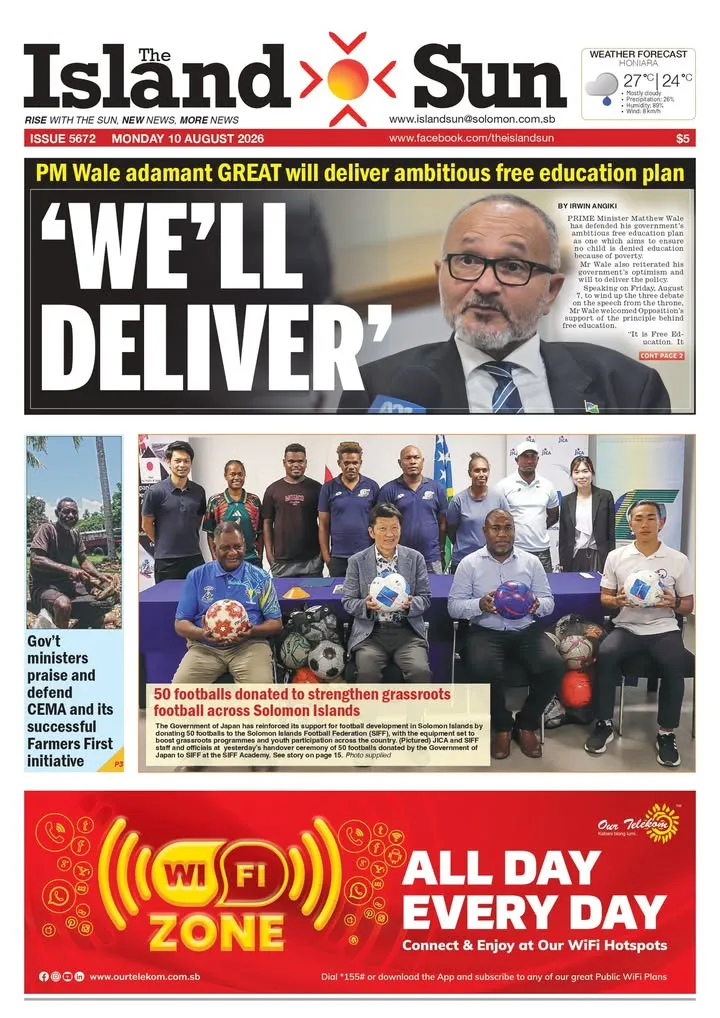
📰 THE ISLAND SUN FRONT PAGE
ISSUE 5672 | MONDAY 10 AUGUST 2026
‘WE’LL DELIVER’
Prime Minister Matthew Wale remains adamant that the GREAT Government will deliver its ambitious free education plan, saying the Government is committed to ensuring no child is denied an education because of poverty.
Speaking in Parliament, PM Wale reiterated his Government’s optimism and determination to deliver the policy, while defending the principle behind free education.
📰 Also in today’s edition
✔ Gov’t ministers praise and defend CEMA and its successful Farmers First initiative - Page 3 ✔ 50 footballs donated to strengthen grassroots football across Solomon Islands - Japan reinforces its support for football development through a donation to the Solomon Islands Football Federation ✔ Latest national and provincial developments ✔ Community, development, business and sports news from across Solomon Islands ✔ And many more stories inside today’s edition
📢 Advertisements & Opportunities
Look inside for job vacancies, tenders and procurement notices, government and public notices, business advertisements, products and services.
🗞️ Get your copy of The Island Sun today for these stories and many more.
Rise with the Sun, New News, More News.
☎️ CONTACT US
📰 Newsroom: 26969 📢 Advertising: 28070 📧 Email: islandsun@solomon.com.sb
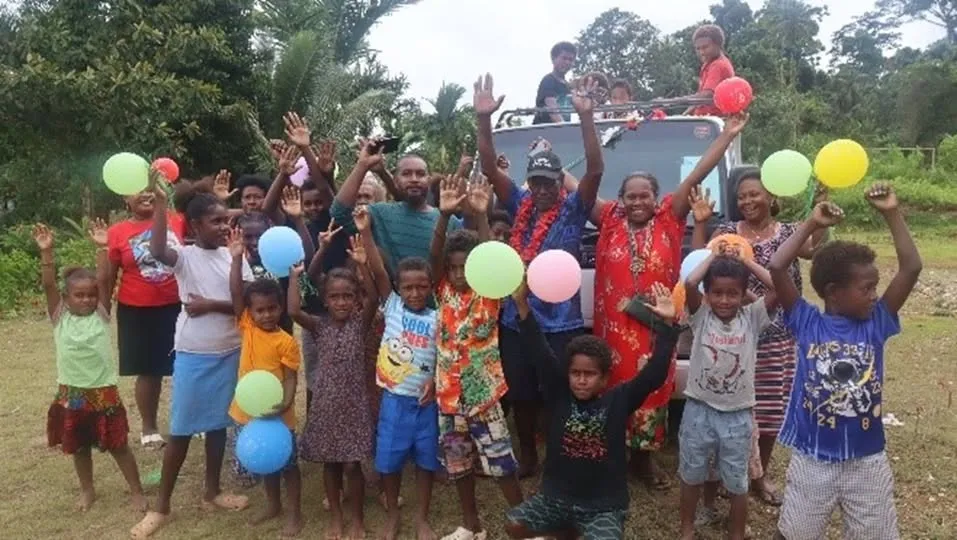
Ou'oumatawa Community in Small Malaita Constituency
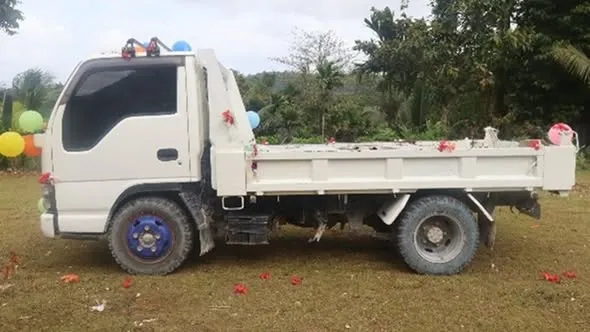
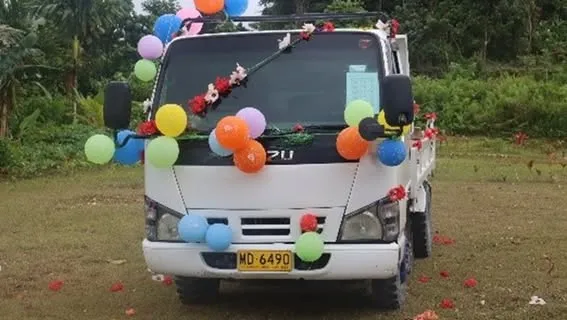
takes delivery of new CDF-funded truck
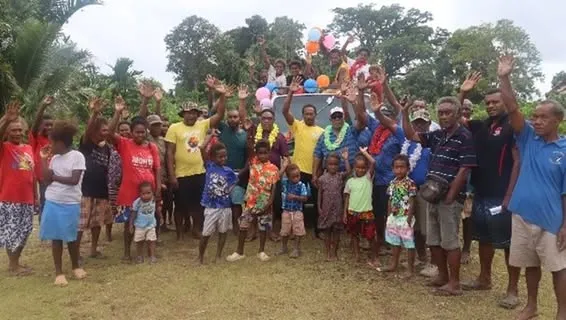
The people of Ou'oumatawa Community in Small Malaita Constituency (SMC) have boosted their emergency response and transport capabilities with the arrival of a new 2-ton tipper truck on 27 July 2026.
Member of Parliament [MP] for SMC, Honourable Rick Hou, officiated the handover, marking a major milestone in the constituency's transport infrastructure and service delivery.
Funded by the Constituency Development Fund (CDF) at a cost of $190,000 under the SMC 2025 budget, the truck is expected to improve access for the movement of people, emergency health cases, agricultural produce, building materials, and essential supplies. It will also support community development activities and improve access to schools, healthcare, and markets.
Speaking at the ceremony, Hou reaffirmed his commitment to ensuring CDF resources improve the lives of people throughout SMC, saying the truck reflects his dedication to practical projects that promote economic opportunities and community wellbeing.
Lesly Hekoiu, Chairman of the Ou'oumatawa Transport Committee, expressed gratitude on behalf of the community, noting it was the first time since the village's establishment that they had received such a valuable gift from the government.
He credited Hou's leadership and support for making the vehicle possible, and thanked him for listening to the community's needs and delivering a project that will benefit current and future generations.
The community pledged to properly manage and maintain the vehicle to ensure it serves them for years to come.
The truck reflects SMC's ongoing commitment under Hou's leadership to improving socio-economic wellbeing through practical projects and an enabling environment for economic opportunity, particularly through continued road infrastructure development in the constituency.
Permanent Secretary of the Ministry of Rural Development (MRD), John Misite'e, congratulated SMC on the achievement, emphasising the importance of empowering communities through practical projects and an environment conducive to economic growth, particularly through road and transport infrastructure.
He said this aligns with the ministry's vision "to empower Solomon Islanders toward self-sufficiency, improved livelihoods, and sustainable development," and that providing an enabling environment for economic opportunities, especially through road infrastructure and transport, remains a priority.
PS Misite'e said that the ministry looks forward to continuing to work closely with SMC and supporting other constituencies to deliver meaningful projects that improve rural livelihoods.
CDF is the financing component of the Solomon Islands Government's Constituency Development Program, administered by MRD and implemented across 50 constituencies to improve livelihoods.
- MRD
BY IRWIN ANGIKI
Prime Minister Matthew Wale has defended his government’s ambitious free education plan as one which aims to ensure no child is denied education because of poverty.
Mr Wale also reiterated his government’s optimism and will to deliver the policy.
Speaking on Friday, August 7, to wind up the three-day debate on the speech from the throne, Wale welcomed Opposition’s support of the principle behind free education.
“It is Free Education. It is the deliberate decision of this Government that the gate of the classroom shall not be closed in the face of any Solomon Islands child because of the poverty of that child’s parents. That is the principle,” Wale said.
Opposition leader Manasseh Sogavare had told parliament in his speech on August 5 that government has not answered questions opposition had thrown it since May 25.
“But Mr Speaker, principle is not policy. And support for the objective is not, and cannot be, a blank cheque on the design. The Opposition has, since the 25th of May, respectfully placed before the country a series of practical questions on this policy which the Government has, to this day, declined to answer,” Sogavare said.
“The Speech from the Throne now attaches the Government’s name to Fee Free Education in 2027, but does not answer a single one of those questions.”
Mr Sogavare questioned the free-education policy on five-fronts, to which Wale answered accordingly.
On the question of definition
Wale assured parliament the House would not vote on a slogan. He said work on the policy’s design including the precise meaning of “free”, which providers it covers, and how it connects with the Education Act 2023 and Education Regulation 2024 is being finalised by the ministry of education (MEHRD).
“That design, together with the implementing legislation and its full costing, will come before this House in the budget session at the end of this year. This House will not be asked to vote on a slogan, Mr Speaker. It will be asked to vote on a Bill and on an appropriation, with the definition and the numbers on the Table, before the first dollar is spent and before the first school year opens under the policy. That is the sequence, and it is the right sequence.”
On the question of cost
PM Wale agreed that the cost of free education will be unprecedently large and will affect the budget. But he assured that other essential sectors such as health, infrastructure, rural development, law and order will not be neglected in light of the budget changes.
“I will not pretend to this House that a commitment of this scale leaves the rest of the Budget untouched. There will be changes to the Budget; that is what it means to reorder the priorities of a nation around its children.
“The Ministry of Finance and Treasury continues to work through it as part of the medium-term fiscal framework I have described.”
On the question of quality
Wale rejected Opposition’s argument that free education would replace quality education.
“Access to education and access to quality education are both achievable, and neither will be traded for the other,” Wale said.
He said the training of 300 school principals which Opposition leader Sogavare had mentioned in his speech was the beginning of the rolling out of the free-education’s delivery programme
“The training of some three hundred school principals, which the Honourable Leader was gracious enough to welcome, is not a substitute for classrooms, teachers, dormitories and learning materials; it is the first instalment of a delivery programme in which those investments have their place.”
On the question of donor support
Opposition leader Sogavare had cautioned that external donor support for free education would threaten Solomon Islands’ sovereignty.
Wale brushed this aside telling parliament that for many decades education has been supported by Solomon Islands’ partners but there has never been any compromise to Solomons’ sovereignty.
“Our development partners are today, and have been under every Government represented in this House, among the biggest supporters of education in Solomon Islands. That support did not compromise our sovereignty yesterday, and it does not compromise it today,” Wale said.
Wale however agreed with Opposition’s concern on sustenance saying that eventually Solomon Islands would have to fund the free education itself.
He said GREAT is already working setting the foundation for future self-sponsorship.
“That is exactly why this Government is doing what it is doing: plugging the leakages, broadening the revenue base, and preparing this country, year by year, to absorb the cost of Free Education with its own resources. We do not intend to be dependent for eternity, Mr Speaker. The whole architecture of this Government’s fiscal programme, revenue reform included, exists so that the education of Solomon Islands children will stand, in time, on Solomon Islands revenue.”
On the question of implementation
Wale said the design, legislation and appropriation that would support the free education plan will be brought to parliament.
He said Opposition would have the chance to scrutinise the legislation, inviting them to bring their ‘practical Solomon Islands model’ then.
Sogavare in his speech had questioned the readiness of government to deliver free education.
“What is the assurance to those principals, and to their communities, that their schools will not open in January 2027 with more children, no fees, and no compensating transfer from Treasury?
“What is the assurance to the school authorities such as the churches, the community education authorities, whose books this Government has not yet, on the public record, opened? What is the plan for the fee income those schools currently rely upon and which the State must now replace?” Sogavare asked.
BY IRWIN ANGIKI
Prime Minister Matthew Wale has promised to bring the full costing of GREAT’s ambitious free education policy to parliament in December.
The costing of the free-education plan has been one of Opposition’s mainstay in its scrutiny of GREAT government’s policies.
Led by Leader Manasseh Sogavare, Opposition criticised the Speech from the Throne saying it did not outline how much free-education was going to cost and how government was going to get funds for it.
“Independent analysis places the recurrent cost of a broad fee-free policy at in the order of SBD $1.3 billion dollars a year, against a total national budget in the range of four to five billion. That is not a marginal adjustment. That is a very substantial recurrent commitment, and the country is entitled to see the numbers,” Opposition leader Mr Sogavare asked in his August 5 speech responding to the Speech from the Throne.
“Where is the full costing? Where is the year-by-year projection through the medium term fiscal framework? Where is the analysis of what other sectors such as hospitals, roads, rural development, jobs, law and order will be affected by the reallocation this policy will require?”
Closing the three-day debate on Friday, August 7, PM Wale said Opposition should not confuse a Speech from the Throne with an Appropriation Bill.
He said the speech from the throne contains government’s plans and the appropriation bill outlines the details behind these plans such as costing.
“A Speech from the Throne is not an Appropriation Bill. It is the statement of the Government’s programme, including its legislative agenda. It sets direction. The numbers follow in the instrument our Constitution and our Public Financial Management framework prescribe for numbers, and that instrument is the Budget,” Wale said.
He added that work is underway to have the 2027 appropriation bill come before parliament in December.
“The work of attaching a medium term fiscal framework to the policies of this Government is under way now, in the Ministry of Finance and Treasury and the Ministry of National Planning and Development Coordination, in preparation for the 2027 Appropriation Bill which will come before this House at the end of this year. That is where the fiscal envelope will be laid before this House, line by line, as it should be, and this House will test every commitment of the Speech against it.”
Wale reminded parliament that past speeches from the throne even under the prime ministership of Opposition leader Sogavare and opposition MP Jeremiah Manele had not included details such as costing.
“In the Speeches from the Throne delivered under the Honourable Leader’s own prime ministership, and in the Speeches delivered under the last two Governments in which he served, not one annexed a costed medium term fiscal framework to the programme it announced. Not one. And that was not a failure of those Governments; it was the correct understanding of what a Speech from the Throne is. It would not be honest of me to pretend that a standard which no Government of Solomon Islands has ever applied to itself has suddenly become the measure of fiscal credibility. The measure of fiscal credibility is the Budget, and this Government will meet that measure in this Chamber, before this year is out,” Wale said.
BY TONY IROGA
THE Government has begun laying the groundwork for the introduction of Free Education in Solomon Islands in 2027.
Minister for Education and Human Resources Development (MEHRD) Mr. Stephen Kumi told Parliament that preparations are already underway to ensure the policy is properly planned, financed and implemented.
Responding to the Speech from the Throne, Minister Kumi said education remains one of the Government’s top priorities, with about SBD1.4 billion allocated to the sector in the 2026 National Budget.
“The Government is determined to build an education system that is inclusive, equitable, relevant and responsive to the aspirations and development needs of Solomon Islands,” he said.
Kumi said a Free Education Taskforce has been established to lead the development of the policy, including financing, governance, legislation and consultations.
“We have already commenced the detailed preparatory work necessary to ensure these reforms are delivered in a responsible, sustainable and well-coordinated manner,” he said.
He said specialist consultants, with support from development partners, are assisting the Government with policy development and funding arrangements to ensure the Free Education programme is financially sustainable.
Minister Kumi also highlighted ongoing curriculum reforms, saying revised primary and junior secondary curricula are nearing completion, while reviews of senior secondary and early childhood education are also underway.
“By 2027, Solomon Islands will have a coherent curriculum framework from Early Childhood Education through to Year 12,” he said.
The Minister also announced plans to establish a separate Ministry of Higher Education, Skills Development, Research and Innovation.
The new ministry would oversee universities, technical and vocational education and training (TVET), scholarships, research and workforce planning, while MEHRD would continue to manage early childhood, primary and secondary education.
Kumi said the Government has also launched the National TVET Policy and is progressing key education legislation, including laws covering higher education, digital transformation and the proposed Solomon Islands University of Technology.
However, he acknowledged that the education sector continues to face major challenges, including funding constraints, teacher shortages, inadequate classrooms, limited digital connectivity and difficulties in providing access to rural schools.
“These challenges require strong partnerships between Government, Parliament, provincial governments, churches, school communities and our valued development partners,” Kumi said.
He said the Government would continue working with its partners to strengthen the education system and ensure the planned reforms are delivered effectively.
For feedback, contact: tonyiroga8@gmail.com
Editor: irwin2angiki@gmail.com
BY TONY IROGA
OPPOSITION MP for South Choiseul, Mr. Tozen Leokana, has questioned whether the Government has the financial resources, infrastructure and teacher workforce needed to successfully implement its proposed nationwide free education policy from 2027.
Leokana, a former Minister of Education and Human Resources Development, raised the concerns on Friday while delivering his reply to the Speech from the Throne in Parliament.
He said the Opposition supports the principle that every Solomon Islands child should have access to education, regardless of their parents’ financial circumstances.
“No child in Solomon Islands should be turned away from a classroom because of the poverty of their parents,” Leokana said.
However, he warned that removing school fees without first strengthening the education system could create serious problems for schools, teachers and students.
Leokana said his experience as a former education minister had given him a close understanding of the challenges facing the country’s education system.
“I signed papers that go through to Treasury. I received the school census data. I read school-by-school teacher establishment returns,” he said.
He said he had also visited schools in provinces across the country, from Choiseul to Temotu, and had seen first-hand the differences in infrastructure, staffing and resources between Honiara and rural communities.
Leokana said the Government’s free education policy must be carefully planned to prevent further movement of families and students from rural areas into Honiara.
He warned that if parents believed free education would be better or more reliable in the capital than in the provinces, the policy could accelerate existing urban migration.
“The consequence is the urban drift,” he said.
Leokana said Honiara already had relatively high enrolment outcomes compared with many provincial schools, while rural and remote schools continued to face shortages of classrooms, teachers and other basic facilities.
He argued that the Government should therefore prioritise investment in provincial schools before, or at least ahead of, further expansion in Honiara.
“If free education is not deliberately front-loaded in provincial schools, then a policy meant to equalise opportunity may end up deepening the pull of Honiara and weakening the provinces,” Leokana said.
He also questioned the financial sustainability of the policy.
Leokana said a recurrent commitment on the scale required for free education would compete with other major government priorities, including health, infrastructure and productive sectors.
He called on the Government to provide clear information on the policy’s total cost, revenue assumptions, sensitivity analysis and contingency plans.
“This chamber must satisfy itself that this policy passes the first of the three tests the test of fiscal honesty,” he said.
Infrastructure was another major concern raised by the Opposition MP.
Leokana said thousands of additional children enter the education system every year even without the introduction of free education, placing continued pressure on classrooms and other school facilities.
He questioned whether enough classrooms, teachers’ houses, dormitories, sanitation facilities, water systems and other infrastructure would be available before the policy begins in 2027.
“A free policy without an infrastructure schedule is not an education plan, but a crowded management plan,” Leokana said.
He challenged the Ministers responsible for education and infrastructure to tell Parliament how many new facilities had already been prepared for the proposed rollout.
Leokana also raised concerns about teacher shortages and the capacity of the education system to absorb a potential surge in enrolment.
He said the introduction of a new teacher salary structure was welcome, but argued that better salaries alone would not automatically produce the additional teachers needed.
“New salary structures do not produce new teachers,” he said.
Leokana called for a 10-year teacher supply plan covering the number of teachers required, their deployment by province and education level, and the annual output of teacher-training programmes.
He said the plan should also address teacher absenteeism and the upgrading and professional development of teachers.
“Until this chamber has that plan, it does not have a free education policy. It has an enrolment service without the workforce,” Leokana said.
The former education minister said his biggest concern was ultimately the quality of education.
He warned that increasing access without simultaneously investing in teachers, classrooms, learning materials, sanitation and school management could result in more children entering school without receiving a quality education.
“Every child gain admission, but no child gains an education,” he said.
Leokana pointed to international experiences where the rapid expansion of fee-free education increased enrolment but also placed pressure on teachers and school resources.
He said Solomon Islands should learn from those experiences and avoid expanding access at the expense of educational quality.
“Our education system, on the best day of its best year, is already carrying children who cannot read at grade level, who cannot count at grade level, and who leave school before completing the lower secondary cycle,” he said.
Leokana said adding more students to an already stretched system without providing additional capacity would only worsen existing challenges.
“If a child sits in a classroom of 40 or 50, taught by an untrained teacher, without a textbook, without functioning water or toilet facilities, that child is not receiving a free education,” he said.
“That child is receiving a diminished education and calling it free.”
He said the Opposition would support the aspiration of universal access to education but would hold the Government accountable for ensuring the policy was properly funded and implemented.
“The aspiration of universal education must be matched dollar to dollar, classroom to classroom, teacher for teacher, with the capacity of the system to deliver it,” Leokana said.
He said the Government must demonstrate fiscal honesty, constitutional integrity and responsible management of Solomon Islands’ foreign relations as it proceeds with its major policy commitments.
Leokana concluded by stressing that free education should not simply mean removing fees, but ensuring that children throughout Solomon Islands receive meaningful and quality education.
For feedback, contact: tonyiroga8@gmail.com
Editor: irwin2angiki@gmail.com
BY NED GAGAHE
The Government is set to introduce five major pieces of legislation aimed at reforming land governance, resolving land disputes, improving housing and strengthening coastal and marine management in Solomon Islands.
The proposed reforms were outlined by the Minister for Lands, Housing and Survey Oliver Salopuka in Parliament while responding to the Speech from the Throne.
The five Bills are the Customary Land Governance Bill, Land Dispute Resolution Bill, National Housing Bill, Land Information System Bill, and Coastal and Marine Governance Bill.
The Minister said the proposed legislation would form one of the most comprehensive reform programmes undertaken in the lands sector, with the aim of establishing a land governance system that is transparent, fair, modern and inclusive.
He said the reforms were necessary because land remains central to economic development, infrastructure, agriculture, investment and social stability.
“Land is not simply a resource. It is our identity. It is our history. It is our culture. It is our inheritance,” the Minister said.
He said weak governance, fragmented administration, unresolved disputes and outdated legislation had prevented Solomon Islands from fully unlocking the potential of its land while protecting the rights of customary landowners.
CUSTOMARY LAND
The proposed Customary Land Governance Bill will focus on strengthening the recognition and protection of customary ownership while providing greater legal certainty for landowners.
Around 85 percent of land in Solomon Islands remains under customary ownership, making effective customary land governance a major issue for national development.
The Minister said the Bill would strengthen governance arrangements within customary landholding groups and establish mechanisms to ensure communities receive equitable and transparent benefits from development on their land.
It would also encourage the establishment of Community Trust Funds, allowing revenues generated from customary land to support education, healthcare, infrastructure and future generations.
The Minister stressed that the reform was intended to empower customary landowners rather than replace them.
“It is about ensuring that development happens with them, not around them,” he said.
LAND DISPUTES
The Government also plans to overhaul the way land disputes are resolved.
The Minister said unresolved land disputes continued to undermine social cohesion, delay investment and divide communities.
The proposed Land Dispute Resolution Bill, developed with the Ministry of Justice and Legal Affairs and the Attorney-General’s Chambers, would seek to establish a more accessible, culturally appropriate and efficient system for resolving disputes.
The reform would strengthen community-based dispute resolution and recognise the role of chiefs, traditional leaders, churches and local institutions.
The Government’s objective, the Minister said, was to transform land from a source of conflict into a foundation for reconciliation, stability and national unity.
LAND FOR DEVELOPMENT
The Minister said protecting customary ownership should not prevent economic development.
He said secure land rights would create greater confidence for investment while ensuring customary landowners remained active participants in economic progress.
The Government intends to support development in agriculture, tourism, fisheries, mining, manufacturing and downstream processing.
The speech also identified projects and activities including the Bina Harbour Tuna Processing Project, cocoa and coconut plantations, eco-tourism, renewable energy projects and conservation areas for carbon markets.
The Minister said customary landowners must receive fair recognition, meaningful participation and equitable returns from such developments.
“The era of unequal partnerships must end,” he said.
DIGITAL LAND RECORDS
Another major reform will involve modernising land administration.
The proposed Land Information System Bill would establish a secure, integrated and fully digital land information system to replace paper-based records, fragmented databases and manual processes.
The Minister said digitising land records would improve transparency, reduce opportunities for fraud and provide more accurate information to landowners, investors, financial institutions and Government agencies.
He said modern technology would also support faster surveys, more reliable records and improved national planning.
AFFORDABLE HOUSING
The Government is also proposing a National Housing Bill to provide a comprehensive framework for housing development.
The Minister said rapid urbanisation had placed growing pressure on Honiara and other urban centres, with many families living in informal settlements without secure tenure or adequate access to water, sanitation, roads and other essential services.
The proposed legislation would improve coordination across Government, encourage affordable housing investment and strengthen national housing policy.
The Ministry will also work with Guadalcanal Province, Honiara City Council and development partners to improve land administration and extend essential services to informal settlements.
The Minister said these communities were home to thousands of Solomon Islanders and their dignity and wellbeing deserved equal protection.
COASTAL PROTECTION
The fifth proposed Bill will focus on coastal and marine governance.
The Minister said climate change, rising sea levels, coastal erosion and environmental degradation were increasing threats to communities and national development.
The Coastal and Marine Governance Bill would strengthen the legal framework for coastal management while recognising and protecting customary sea rights.
It would also support sustainable coastal planning, greater community participation in environmental management and improved resilience to climate-related hazards.
The Minister said the legislative programme was ambitious because the challenges facing Solomon Islands were significant.
He called on Government, Opposition and Independent MPs to support the reforms in the national interest.
“Let us rise above politics,” he said, urging Parliament to unite behind legislation aimed at strengthening customary ownership, promoting peace, expanding economic opportunities, improving housing and protecting the environment.
For feedback, contact: nedgagahe@gmail.com
Editor: irwin2angiki@gmail.com
BY BEN BILUA
Gizo
TABAKA Technical Institute (TTI) in Western Province has secured a major partnership with Solomon Islands National University (SINU), opening new opportunities for its staffs and students to pursue higher-level technical qualifications.
The two institutions signed a five-year Excellence through Skills Innovation Partnership last week, marking what TTI describes as a significant milestone in strengthening technical and vocational education and training (TVET) in Solomon Islands.
TTI Principal Joash Lawrance said the partnership was a dream come true for the institution and its students.
“It’s a milestone in itself, and TTI acknowledges SINU for the support,” Lawrance said.
He said the five-year partnership would strengthen TTI’s capacity to deliver quality technical and vocational education while creating clearer pathways for students to advance their studies.
“Under the partnership, the two institutions will work together on institutional capacity building, staff development, programme and curriculum development, quality assurance, skills training and pathways to higher-level technical qualifications,” Lawrance said.
He said the agreement would give TTI students greater opportunities to continue their education beyond the institution and pursue further qualifications through SINU.
Lawrance said strengthening links between technical training institutions and the national university is important to ensure students can build on the skills and qualifications they had already gained.
SINU Vice-Chancellor Professor Transform Aqorau welcomed the partnership, stressing that its success would depend on how effectively the agreement was implemented.
Professor Aqorau said the partnership should not remain simply an agreement on paper, but must be supported by clear implementation plans and measurable outcomes.
The partnership is expected to strengthen collaboration between TTI and SINU and contribute to the development of a more effective TVET pathway for students in Western Province and beyond.
For TTI, the agreement represents an important step towards expanding its educational opportunities and strengthening the quality and relevance of technical training available to Solomon Islands students.
For feeback, contact: maetuana777@gmail.com
Editor: irwin2angiki@gmail.com
New Higher Education Ministry
By ULUTAH GINA
Solomon Star, Honiara
The Solomon Islands education sector is set for a major structural reform with a planned establishment of a new Ministry of Higher Education, Skills Development, Research and Innovation.
Responding to the Speech from the Throne in Parliament on Friday, Minister for Education and Human Resources Development Hon. Stephen Kumi said the reform recognises that school education and higher education have become distinct sectors requiring separate leadership and policy direction.
Mr. Kumi said the Ministry of Education and Human Resources Development will continue overseeing Early Childhood Education, primary and secondary education, with a focus on literacy, numeracy, curriculum delivery, teacher quality and school governance.
The proposed Higher Education Ministry will instead oversee universities, colleges, scholarships, technical and vocational education, research, innovation and workforce planning.
"Together, these two Ministries will create a stronger and more responsive education system that better meets the needs of our growing population and our future economy," he said.
The Minister also outlined broader education reforms currently underway, including the redevelopment of the Senior Secondary Curriculum and review of the Early Childhood Education Curriculum.
He said by 2027 Solomon Islands is expected to have a coherent curriculum framework covering education from early childhood through to Year 12.
Mr. Kumi said the Ministry has also launched a Science, Technology, Engineering and Mathematics (STEM) pilot programme with technical support from UNESCO to better prepare students for future employment opportunities.
In support of the reforms, the Government is progressing several key pieces of legislation, including bills on digital transformation in education, higher education and skills development, tertiary education governance, the proposed Solomon Islands University of Technology, and a new National TVET framework.
The Minister said the legislation will provide the legal foundation needed to modernise the education system, improve governance and strengthen quality assurance across the sector.
///Ends///
PM Matthew Wale says Free Education will be fully costed and legislated, with implementation details to reach Parliament Prime Minister.Matthew Wale has welcomed the Opposition Leader’s support to the free education principle that ‘the classroom shall not be closed in the face of any Solomon Islands child because of the poverty of that child’s parents.’ [...]
The post PM Welcomes Opposition Support on Free Education Principle appeared first on Tavuli News (Solomon Islands) .
BY RODRICK DESURI
Auki
Malaita Province has embarked on what its leaders describe as a new chapter following the signing of a Memorandum of Understanding (MoU) with the World Evangelism Alliance (WEA) in South Korea.
The agreement was signed during Premier Elijah Asilau’a’s visit to South Korea after he was invited to attend the 29th Remnant Congress 2026.
The MoU outlines a shared commitment to strengthen education, empower communities, develop young people, and expand cooperation based on trust and unity.
Speaking after the signing, Premier Asilau’a said the agreement marks the beginning of a partnership focused on progress and long-term development for the people of Malaita.
“Today marks the beginning of a journey, a journey of partnership, progress, and purpose.
“On behalf of my Government, I reaffirm our full support for this MoU. We are committed to ensuring this partnership delivers real and lasting impact for our people,” he said.
The Premier described the occasion as more than a formal agreement, saying he believes it reflects God’s plan for the province and will bring positive transformation to his people.
“What we see today is not ordinary; it is spiritual, prophetic, and transforming lives, leaders, and governments,” he said.
He also acknowledged the work of Reverend Kwang Su, expressing confidence that the partnership will continue to influence communities and nations.
Quoting Romans 8:28, Premier Asilau’a said: “All things work together for good to them that love God,” expressing hope that the agreement will open new opportunities for the people of Malaita.
Photo: Supplied
For feedback, contact: rodrickdesuri50@gmail.com
Editor: irwin3angiki@gmail.com
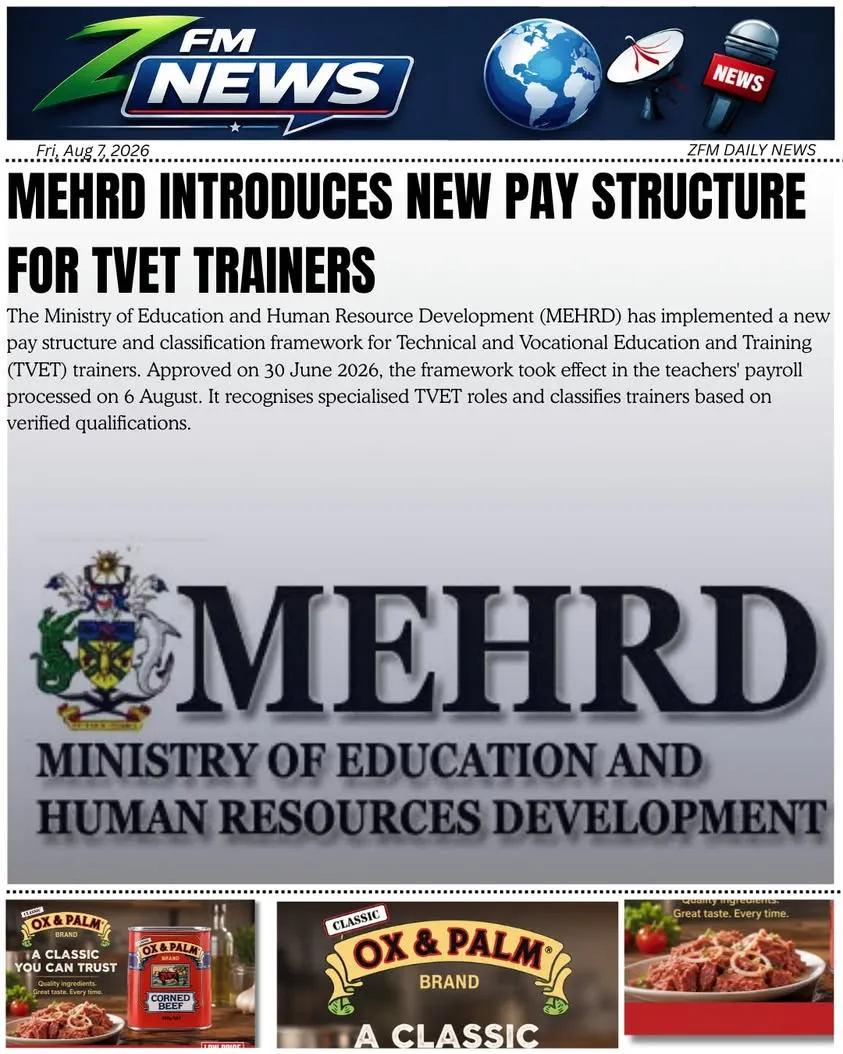
MEHRD rolls out new pay structure for TVET trainers
New classification framework recognises specialised TVET roles and provides a clear pathway for qualified trainers.
The Ministry of Education and Human Resource Development (MEHRD) has begun implementing a new pay structure and classification framework for Technical and Vocational Education and Training (TVET) trainers and institution leaders.
The TVET Pay Structure and Classification Policy was approved by the Honourable Minister for Education and Human Resource Development on 30 June 2026. It was implemented in the teachers’ payroll processed on Thursday, 6 August 2026.
The new framework addresses an important classification gap that previously prevented TVET personnel from being included in the Ministry-wide salary classification exercise. It provides an approved basis for classifying Trainers, Senior Trainers, Program Managers and Institution Managers according to their roles and verified qualifications.
“This is an important step in recognising the specialised work of our TVET workforce. The new structure provides a clearer and more consistent basis for classifying trainers, while ensuring that salary placement is supported by verified qualifications,” Permanent Secretary Supervising, Mrs Linda Wate, said.
Under the approved framework, TVET trainers must hold both a relevant technical qualification and a TVET training and assessment qualification. Placement on the new pay structure is based on the position held and qualifications verified by the Teaching Service Division.
IMPLEMENTATION AT A GLANCE
84 FULLY TRANSITIONED 83 BRIDGING SCALE 167 PENDING VERIFICATION
Total active TVET trainers currently recorded on payroll: 334
The 84 trainers who have met both qualification requirements have been fully transitioned to the new pay structure. A further 83 trainers who currently meet one of the two requirements have been placed on a bridging salary scale while they work towards the outstanding qualification.
The remaining 167 trainers have not yet transitioned because their required qualifications have not been verified in MEHRD’s current records. They will remain on the Unified Teaching Service Pay Structure until verification and assessment are completed. This does not mean that they have been rejected from the new framework.
MEHRD is asking Education Providers and TVET institution leaders to bring Circular No. 8/2026 to the attention of all affected trainers and instructors, check their qualification records, and assist them to submit clear copies of relevant qualifications to the Teaching Service Division.
Education Providers must also ensure that newly recruited TVET trainers and instructors meet the relevant qualification and registration requirements before appointment and placement on the teachers’ payroll.
The Teaching Service Division will continue working with Education Providers and TVET institutions to verify outstanding qualifications, assess trainers against the approved framework, and facilitate transition to the appropriate classification and salary scale where the requirements are met.
Schools, parents and candidates urged to note the official schedules
HONIARA, SOLOMON ISLANDS – The Ministry of Education and Human Resource Development (MEHRD) advises schools, education providers, candidates, parents and guardians that the official dates and times for the 2026 national examinations and the Solomon Islands Standardised Tests of Achievement (SISTA) have been confirmed.
The schedules cover SISTA for selected primary schools, the Solomon Islands Junior Secondary Certificate (SIJSC), the Solomon Islands School Certificate Level One (SISCL1), and the Solomon Islands School Certificate Level Two (SISCL2).
Key examination periods
SISTA (selected primary schools only): Thursday, 29 October 2026.
SIJSC: Tuesday, 27 October to Friday, 30 October 2026.
SISCL1: Monday, 26 October to Thursday, 5 November 2026.
SISCL2: Monday, 26 October to Friday, 6 November 2026.
Schools are asked to share the timetable widely and ensure candidates are present and prepared before each session. Reading time must be observed in accordance with the notes accompanying each timetable.
The full official schedules are set out on the following pages.
SOLOMON ISLANDS STANDARDISED TESTS OF ACHIEVEMENT (SISTA) 2026 For selected primary schools only
DATE SUBJECT READING TIME EXAM / TEST DURATION SESSION TIME
Thursday 29 October 2026 Literacy (Years 4 and 6) 5 minutes 1 hour 30 minutes 9.00 am – 10.30 am
Thursday 29 October 2026 Numeracy (Years 4 and 6) 5 minutes 1 hour 30 minutes 11.00 am – 12.30 pm
Important: Reading time should commence five minutes before the starting time and is not included in the test duration of 1 hour 30 minutes. A 20-minute pupil break separates the Literacy and Numeracy sessions.
SOLOMON ISLANDS JUNIOR SECONDARY CERTIFICATE (SIJSC) National Examinations Timetable 2026
DATE SUBJECT READING TIME EXAM / TEST DURATION SESSION TIME
Tuesday 27 October 2026 English 15 minutes 2 hours 9.00 am – 11.15 am
Wednesday 28 October 2026 Mathematics 10 minutes 2 hours 9.00 am – 11.10 am
Thursday 29 October 2026 Science 10 minutes 2 hours 9.00 am – 11.10 am
Friday 30 October 2026 Social Science 10 minutes 2 hours 9.00 am – 11.10 am
Important: Reading time should commence 10-15 minutes before the starting time, as applicable to the subject.
SOLOMON ISLANDS SCHOOL CERTIFICATE LEVEL ONE (SISCL1) National Examinations Timetable 2026
DATE SUBJECT READING TIME EXAM / TEST DURATION SESSION TIME
Monday 26 October 2026 English Language 15 minutes 3 hours 9.00 am – 12.15 pm
Wednesday 28 October 2026 Mathematics 10 minutes 3 hours 9.00 am – 12.10 pm
Thursday 29 October 2026 Science 10 minutes 3 hours 9.00 am – 12.10 pm
Friday 30 October 2026 Social Studies 10 minutes 3 hours 9.00 am – 12.10 pm
Monday 2 November 2026 New Testament Studies 10 minutes 3 hours 9.00 am – 12.10 pm
Tuesday 3 November 2026 Business Studies 10 minutes 3 hours 9.00 am – 12.10 pm
Wednesday 4 November 2026 Design Technology / Industrial Arts Home Economics 10 minutes 3 hours 9.00 am – 12.10 pm
Thursday 5 November 2026 Agriculture 10 minutes 3 hours 9.00 am – 12.10 pm
Important: Reading time should commence 10-15 minutes before the starting time. The SISCL1 Design Technology Common Assessment Task (CAT) must be completed during the two-week examination period, 26 October to 5 November 2026; schools should allocate appropriate time for students to complete the task.
SOLOMON ISLANDS SCHOOL CERTIFICATE LEVEL TWO (SISCL2) National Examinations Timetable 2026
DATE SUBJECT READING TIME EXAM / TEST DURATION SESSION TIME
Monday 26 October 2026 English Language 15 minutes 3 hours 9.00 am – 12.15 pm
Tuesday 27 October 2026 Biology Development Studies 10 minutes 3 hours 9.00 am – 12.10 pm
Wednesday 28 October 2026 Mathematics 10 minutes 3 hours 9.00 am – 12.10 pm
Thursday 29 October 2026 Geography 10 minutes 3 hours 9.00 am – 12.10 pm
Friday 30 October 2026 Economics Chemistry 10 minutes 3 hours 9.00 am – 12.10 pm
Monday 2 November 2026 History Physics 10 minutes 3 hours 9.00 am – 12.10 pm
Tuesday 3 November 2026 Agriculture 10 minutes 3 hours 9.00 am – 12.10 pm
Wednesday 4 November 2026 Computer Studies 10 minutes 3 hours 9.00 am – 12.10 pm
Thursday 5 November 2026 Accounting 10 minutes 3 hours 9.00 am – 12.10 pm
Friday 6 November 2026 Design Technology 10 minutes 3 hours 9.00 am – 12.10 pm
Important: Reading time should commence 10-15 minutes before the starting time, as applicable to the subject.
MEHRD encourages all candidates to continue preparing diligently and wishes them every success in the 2026 national examinations.
For clarification, schools and education providers should contact MEHRD through the normal official channels.
BY BEN BILUA
Gizo
THE Temotu Provincial Government has pledged its full support for the implementation of the EmpowerHER Project, describing the partnership as a vital step towards promoting and protecting the rights of women and girls across the province.
Speaking during the official launch of the project this week, Deputy Premier of Temotu Province, Hon. Johnny Rogers Mekaboti, said the EmpowerHER Project brings renewed hope that no community will be left behind despite the province’s geographical challenges.
He said Temotu Province has often missed out on important development programmes because of its isolation, leaving vulnerable groups, particularly women and girls, exposed to abuse and violence.
“Temotu Province consists of many small and widely dispersed islands spread across one of the largest maritime areas in Solomon Islands. Because of our geographical isolation, our communities often experience limited access to essential government services, health care, education, justice and protection services.
“For many years, distance has remained one of our greatest development challenges. Yet distance should never determine whether a person receives protection, justice, dignity and equal opportunity,” Mekaboti said.
He said the provincial government was honoured that Temotu had been selected as one of only two pilot provinces for the national initiative.
“It is indeed a privilege that Temotu Province has been selected as one of the two pilot provinces for this important national initiative. We do not regard this selection simply as recognition; we regard it as a responsibility and an opportunity to improve the lives of our people,” Mekaboti said.
He acknowledged the Solomon Islands Planned Parenthood Association (SIPPA) and its donor partners for choosing Temotu as one of the project sites.
Mekaboti assured stakeholders that the Temotu Provincial Government would work closely with SIPPA, Alinea International, development partners, churches, chiefs, women leaders, youth groups and the Temotu Island Councils to ensure the project reaches communities throughout the province.
“We will support awareness programmes, community dialogue, capacity building and local leadership initiatives that promote respect, equality, family wellbeing and the protection of every individual, regardless of gender,” he said.
While acknowledging that implementing the project across the remote island province would be challenging, Mekaboti expressed confidence that strong partnerships and teamwork would ensure the project’s success.
“On behalf of the Temotu Provincial Government and the people of Temotu Province, I proudly reaffirm our full support for the EmpowerHER Project.
“May this partnership continue to grow from strength to strength, bringing lasting hope, protection, dignity, equality and opportunity to every woman, every girl, every family and every community across our beautiful islands,” he said.
BY DOUGLAS VAHIA
The dates for the national exams for primary and secondary schools have been announced by the Ministry of Education (MEHRD).
A MEHRD statement this morning urged schools to share the timetable widely and ensure that candidates are present and prepared before each session.
.
Selected Primary schools (Years 4 and 6) to undergo Solomon Islands Standardised Tests of Achievement (SISTA) will sit their exams on the following dates:
October 29: [9am – 10.30am] – Literacy (Years 4 and 6)
October 29: [11am – 12.30pm] – Numeracy (Years 4 and 6)
.
Form 3 exams, Solomon Islands Junior Secondary Certificate (SIJSC), timetable is as follows:
October 27 – English
October 28 – Mathematics
October 29 – Science
October 30 – Social Science
.
Form 5 exams, Solomon Islands School Certificate Level One (SISCL1), timetable is as follows:
October 26 – English
October 28 – Mathematics
October 29 – Science
October 30 – Social Studies
November 2 – New Testament Studies
November 3 – Business Studies
November 4 – Design Technology / Industrial Arts/ Home Economics
November 5 – Agriculture
.
Form 6 exams, Solomon Islands School Certificate Level Two (SISCL2), timetable is as follows:
October 26 – English
October 27 – Biology / Development Studies
October 28 – Mathematics
October 29 – Geography
October 30 – Economics/ Chemistry
November 2 – History/ Physics
November 3 – Agriculture
November 4 – Computer Studies
November 5 – Accounting
November 6 – Design Technology
BY TONY IROGA
The Solomon Islands Government will roll out its long-awaited Free Education Policy nationwide in 2027, a major commitment from the government which aims to remove financial burden on families and ensure that every child has equal access to education.
Moving the motion in Parliament this week, Prime Minister Matthew Cooper Wale said free education is a national reform that has been discussed in Parliament for many years and is now becoming a reality.
“This policy did not begin with this government. The case for free education has been made in this house for many years, first under the Sikua-led Government,” Prime Minister Wale told Parliament.
He acknowledged the heavy financial burden carried by parents across the country, saying many families struggle to keep their children in school.
“We all know the burden parents carry. Some pay several times their annual income to keep one child in school. Many must choose which of their children will be educated. That is the injustice this policy ends,” he said.
Wale stressed that free education is not a stand-alone initiative but forms part of the government’s long-term economic transformation agenda.
“Government’s free education policy does not operate in a silo. Free education is key to producing the highly skilled workforce our economy will need over the next thirty years, as we move into processing and manufacturing,” he said.
He said the policy must be viewed alongside investments in classrooms, teachers, laboratories and learning resources to ensure schools are ready to receive every child when the programme begins next year.
“These are being planned together, as parts of one vision,” Wale said.
Photo: Supplied
For feedback, contact: tonyiroga8@gmail.com
Editor: irwin3angiki@gmail.com
BY TONY IROGA
Education and Human Resources Development Minister Stephen Kumi has admitted that the Government’s free education policy will be challenging to implement, but says the reform is necessary to ensure every child in Solomon Islands has equal access to education.
Contributing to the Motion of Thanks to the Governor-General’s Speech from the Throne in Parliament on Wednesday, Mr Kumi said the Government remains committed to deliver free education despite the challenges ahead.
“Free education is painful, but change is coming. It will be painful, but these are the changes we must make,” Kumi told Parliament.
Minister Kumi said the policy is a government-funded initiative that aims to remove tuition fees and reduce the financial burden on families while giving every child the opportunity to attend school regardless of their family’s income or where they live.
“Free education provides hope that no child will be denied learning because of poverty,” he said.
Kumi said the Ministry of Education and Human Resources Development (MEHRD) has established a Free Education Taskforce to oversee the technical work needed before the policy is fully rolled out.
He said the taskforce is developing the free education policy, implementation framework, financing arrangements, governance systems, legislative requirements and stakeholder consultations.
He said specialised consultants, supported by development partners, have also been engaged to strengthen policy development, education financing, grant management systems and implementation planning.
“These activities have already been incorporated into the Ministry’s 2026 Annual Work Plan and supported through budget allocations, while a supplementary budget has also been requested to support the preparatory stage,” he said.
The Minister stressed that free education alone will not improve learning outcomes unless schools are adequately equipped.
“Free education must also be accompanied by quality education. Eliminating school fees alone will not deliver the desired outcomes unless schools are adequately resourced,” he said.
He said Government must ensure classrooms are properly equipped, learning materials are delivered on time, teachers receive adequate training and support, and school infrastructure continues to improve, particularly in rural and remote communities.
Kumi also welcomed the Government’s plan to establish a separate Ministry of Higher Education, Skills Development, Research and Innovation, describing it as a strategic reform rather than simply an administrative change.
“This is not merely an administrative exercise, but a strategic reform that recognises school education and higher education as two distinct sectors requiring dedicated leadership and focused investment,” he said.
He explained that MEHRD will continue to oversee early childhood, primary and secondary education, while the proposed new ministry will focus on universities, colleges, scholarships, research, innovation, and technical and vocational education and training (TVET).
Kumi said the Government is also prioritising curriculum reform by strengthening Science, Technology, Engineering and Mathematics (STEM) education and expanding technical and vocational training.
He revealed that revised primary and junior secondary curricula are nearing completion, while reviews of senior secondary and early childhood curricula are already underway.
“By 2027, Solomon Islands will have a coherent curriculum framework from early childhood education through to Year 12,” he said.
The Minister said technical and vocational education should no longer be viewed as a second-choice pathway.
“The Government does not see technical and vocational education as a second option, but as an equally valuable pathway that equips students with practical skills essential for national development,” he said.
Kumi also outlined several education bills currently being developed to modernise the country’s education system, strengthen governance, improve quality assurance and support digital transformation.
Despite the progress being made, he acknowledged major challenges remain, including the long-term financial sustainability of free education, increasing demand for classrooms, teacher shortages, digital connectivity, rural access and the need for stronger education legislation.
He thanked development partners, churches, schools and communities for their continued support.
“Together, we are building a stronger education system that will benefit generations to come,” Kumi said.
Photo credit: NPSI
For feedback, contact: tonyiroga8@gmail.com
Editor: irwin3angiki@gmail.com
MP Seleso warns government its free education policy would become a great national disappointment if fail
BY IRWIN ANGIKI
Member of Parliament for South Guadalcanal Rollen Seleso has honed in on the GREAT coalition’s free education policy, warning it could turn out to be a national disappointment if government fails to deliver.
Mr Seleso warned that since government had declared it, people in rural and urban areas across the country now know only one thing – starting January next year education will be free, five months away.
And, since government has not been forthcoming with critical details on how it will roll out this ambitious plan, Seleso joined his Opposition colleagues in casting doubt on government delivering.
The Speech from the Throne by the Governor General on Tuesday this week said GREAT’s free education policy is the flagship of government’s social programme.
“Preparations are under way for nationwide implementation in 2027, for no child should ever be turned away from a classroom because of the poverty of their parents,” Governor General Sir Rev David Tiva Kapu said.
“The Education Act 2023 provides a strong foundation and is being rolled out, with capacity-building reaching more than 300 school principals. The Ministry is being restructured, and a new Ministry of Higher Education, Skills Development and Research will carry our young people from the classroom to the workplace. Teachers in primary, secondary and early childhood education have received new salary structures, with the technical and vocational sector to follow from August. A $300-million project with the Asian Development Bank will modernise the Years 10 to 12 curriculum; and further partnerships will advance teacher development and bring technology into learning.”
Giving his reply yesterday in parliament, MP Seleso on the outset said he supported the idea of free education.
However, he was wary of the consequences once government’s policy is not delivered according to people’s expectation or worse if it fails – because government had already declared ‘free education’ and people are looking forward to it.
“A commitment of this magnitude has been placed before the nation as a declaration rather than as a plan. This is dangerous!
“Mr Speaker, our people do not read Cabinet papers. They do not read Treasury submissions. They do not read the Education Act 2023 or the Education Regulations 2024.
“They do not know what a recurrent commitment of one point three or one point four billion dollars does to the health vote, to the agriculture vote, or to the rural road vote.
“They do not know that the word ‘free’ in a Speech from the Throne is not the same thing as the word ‘free’ in a school fee ledger. They do not know which levies remain lawful, which boarding costs remain payable, or which uniform, transport and boat fares remain with the parent.
“They know one thing only – the Prime Minister said education will be free.”
Seleso told parliament that while legislators are debating GREAT’s free education policy, people in the rural areas have already adjusted their households towards free education in 2027.
“In the villages of South Guadalcanal, that sentence has already been converted into a household plan. A father has already decided he need not plant the extra cocoa this season. A mother has already told her daughter that she will return to Form Three next year.
“A family that had been setting aside what little it could each month for school fees has already spent it. Those decisions are being taken now, in this month, on the strength of a policy that does not commence until 2027, and whose machinery does not yet exist.”
Seleso blamed GREAT’s premature announcement of its fee-free plan for this, labelling it as irresponsible leadership.
“It is irresponsible to announce an entitlement to a population that has no means of testing it before the costing is published, before the legislation is drafted, before the classrooms are counted, and before the teachers are trained.
“Which fees are abolished, and which are not. Which years of schooling are covered, and which are not. What a parent will still be required to pay. When it begins. And what happens in a year in which the revenue does not arrive.
“Because if those limits are discovered by a parent at a school gate in January 2027, rather than disclosed by the Government in August 2026, then this House will have manufactured a grievance where it intended to confer a gift.”
With just five months to go, the apparent lack of infrastructure to support GREAT’s free education is another concern, Seleso said.
Seleso asked government three things.
1) Focus most of the free education on rural and provincial schools to avoid mass migration to urban areas like Honiara.
2) Provide the multi-year fiscal costing of the free education policy – annual cost, revenue plan, sensitivity analysis, contingency plan.
3) Timeframe of how long external donors will support the programme, and what happens when they leave.
Seleso’s sentiments echoed that of Opposition leader Manasseh Sogavare when he gave his reply to the speech from the throne on Wednesday.
Mr Sogavare said government has never answered opposition’s practical questions to its free education policy.
The definition question – what does fee-free mean? Does it apply only to schools directly owned and administered by the Solomon Islands Government and the provincial governments, or does it extend also to church run schools and other authorised education providers? Does it cover tuition fees only, or does it also cover boarding fees, food, utilities, dormitory costs, uniforms, transport, excursions, and extra-curricular activities? These are, with respect, entirely different policies with entirely different price tags.
The cost question – Independent analysis places the recurrent cost of a broad fee-free policy in the order of SBD 1.3 billion a year, against a total national budget in the range of $4-5 billion. That is not a marginal adjustment. That is a very substantial recurrent commitment, and the country is entitled to see the numbers. Where is the full costing? Where is the year-by-year projection through the medium-term fiscal framework? Where is the analysis of what other sectors such as hospitals, roads, rural development, jobs, law and order will be affected by the reallocation this policy will require? Every dollar committed to one sector, Mr Speaker, is a dollar not available somewhere else.
The quality question – If this Government intends to remove fees at the same time as the school system is absorbing that intake, then it must also explain how it intends to fund the additional classrooms, the additional teachers, the additional dormitories, the teacher housing, the sanitation and water supply, and the learning materials on which real education depends.
The donor dependence question – If the fee-free policy is to be financed, in whole or in significant part, through external support in its opening years, then the country has the right to know what happens in year five, in year seven, in year ten, when donor priorities shift, when external financing declines, or when the political weather in a distant capital changes.
The implementation question – some 300 school principals are now being trained. That is welcomed. But training principals is not the same as opening schools. What is the assurance to those principals, and to their communities, that their schools will not open in January 2027 with more children, no fees, and no compensating transfer from Treasury? What is the assurance to the school authorities such as the churches, the community education authorities, whose books this Government has not yet, on the public record, opened? What is the plan for the fee income those schools currently rely upon and which the State must now replace? These are not obstacles to reform. They are the substance of reform.
Meanwhile, in his Motion speech on Wednesday Prime Minister Matthew Wale reiterated government’s will to deliver the free education policy.
“Mr Speaker, regarding education, free Education Policy will be implemented nationwide in 2027. This policy did not begin with this Government. The case for free education has been made in this House for many years, first under the Sikua-led Government.”
While he has not come out with details demanded by Opposition on the fee-free policy, PM Wale has hinted on areas it would cover.
In his Independence Day speech Wale said it covers early childhood to tertiary level.
“My government has committed itself to progressively introducing free education from Early Childhood Education through Technical and Vocational Education and Training and the Solomon Islands National University starting in January 2027,” Wale said.
Launching GREAT’s policy on July 6, Wale said government will invest in teachers, improve school infrastructure, expand technical and vocational education, strengthen Science, Technology, Engineering and Mathematics (STEM), support higher education and research, and improve literacy and numeracy.
Photo credit: NPSI
For feedback, contact: irwin3angiki@gmail.com
Editor: irwin3angiki@gmail.com
M-SELEN Launches SINU Tuition Fee Promotion to Support Higher Education in Solomon Islands
M-SELEN has launched a new tuition fee payment promotion aimed at supporting students pursuing higher education while reinforcing its commitment to financial inclusion and community development in the Solomon Islands.
The promotion, which offers SI$22,000 in tuition fee support, is open to students making their Solomon Islands National University (SINU) tuition fee payments through the ...M-SELEN Wallet. The initiative reflects M-SELEN's ongoing commitment to investing in opportunities that make a meaningful difference in the lives of Solomon Islanders.
For many students and families, meeting the cost of tertiary education can be a significant financial challenge. Through this promotion, M-SELEN hopes to ease some of that burden while providing students with a convenient, secure and accessible way to pay their tuition fees.
Speaking on the initiative, Majidul Haque, Head of M-SELEN, said M-SELEN believes supporting education is an investment in the future of the Solomon Islands.
"At M-SELEN, we believe our responsibility goes beyond providing digital financial services. We are committed to supporting initiatives that improve the lives of our customers and contribute to the development of our country. Education opens doors to opportunity, and through this promotion we are proud to provide meaningful support to students and their families while making tuition fee payments easier and more accessible."
The tuition fee promotion forms part of M-SELEN's broader commitment to supporting education, advancing financial inclusion and creating opportunities for communities across the Solomon Islands.
Students are encouraged to pay their tuition fees using their M-SELEN Wallet during the promotional period for the opportunity to benefit from the SI$22,000 tuition fee support initiative.
For more information, customers can visit the M-SELEN Facebook page or contact M-SELEN Customer Care by calling 123 or via WhatsApp on 7433113.
About M-SELEN
M-SELEN is the Solomon Islands' licensed mobile money service operated by Telekom Digital Limited. The platform enables customers with a secure and convenient way to send and receive money, pay bills and merchants, purchase airtime, and access a growing range of digital financial services through their mobile phones.
M-SELEN Launches SINU Tuition Fee Promotion to Support Higher Education in Solomon Islands
M-SELEN推出了一项新的学费支付优惠,旨在支持追求高等教育的学生,同时强化其对金融包容性和社区发展的承诺。
该优惠提供了22,000所罗门元的学费支持,面向通过M-SELEN Wallet支付所罗门群岛国立大学(SINU)学费的学生。该举措反映了M-SELEN持续致力于投资于能够对所罗门群岛人民生活产生积极影响的机会。
对于许多学生和家庭来说,承担高等教育的费用可能是一个重大的经济挑战。通过这项优惠,M-SELEN希望减轻部分负担,同时为学生提供一种方便、安全和可及的学费支付方式。
M-SELEN负责人Majidul Haque在谈到这一举措时表示,M-SELEN相信支持教育是对所罗门群岛未来的投资。
“在M-SELEN,我们认为我们的责任不仅仅是提供数字金融服务。我们致力于支持改善客户生活并促进国家发展的举措。教育为机会打开了大门,通过这项优惠,我们很自豪能够为学生及其家庭提供有意义的支持,同时使学费支付变得更容易和更可及。”
这项学费优惠是M-SELEN更广泛承诺的一部分,旨在支持教育、促进金融包容性并为所罗门群岛各社区创造机会。
鼓励学生在促销期间使用M-SELEN Wallet支付学费,以便有机会受益于22,000所罗门元的学费支持计划。
有关更多信息,客户可以访问M-SELEN的Facebook页面或拨打123联系M-SELEN客户服务,或通过WhatsApp联系7433113。
关于M-SELEN
M-SELEN是由Telekom Digital Limited运营的所罗门群岛许可的移动支付服务。该平台为客户提供了一种安全便捷的方式,通过手机发送和接收资金、支付账单和商户费用、购买话费,并访问日益增长的数字金融服务。
SINU ATSA Invites Students,
Staff to 2026 Rally
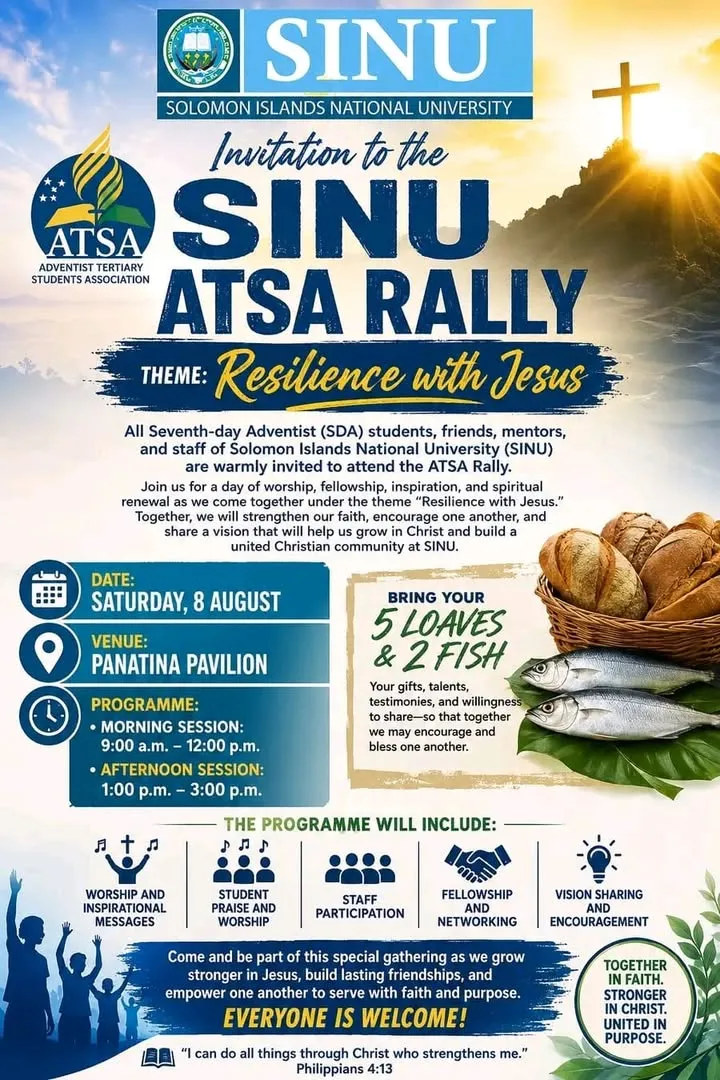
The Adventist Tertiary Students Association (ATSA) at Solomon Islands National University (SINU) has invited all Seventh-day Adventist (SDA) students, friends, mentors, and staff to attend the SINU ATSA Rally 2026 this weekend - Saturday 8th August.
Held under the theme "Resilience with Jesus," the rally aims to provide a day of worship, fellowship, inspiration, spiritual renewal, and vision sharing, encouraging participants to strengthen their faith and support one another in Christ.
The event will take place this Sabbath at the Panatina Pavilion.
The morning session will run from 9:00 a.m. to 12:00 p.m., followed by the afternoon session from 1:00 p.m. to 3:00 p.m.
According to the organisers, the programme will feature worship and inspirational messages, student-led praise and worship, staff participation, fellowship and networking, as well as vision sharing and encouragement.
Participants are also encouraged to bring their "five loaves and two fish"—their gifts, talents, testimonies, and willingness to share—to inspire and bless one another throughout the gathering.
Organisers say the rally is an opportunity to grow stronger in Jesus, build lasting friendships, and empower one another to serve with faith and purpose while fostering a united Christian community at SINU.
The invitation is open to everyone, with organisers encouraging all interested people to attend and be part of the special gathering.
The event is inspired by the Bible verse Philippians 4:13: "I can do all things through Christ who strengthens me."
BY LORETTA B MANELE
The GREAT Coalition government is determined to reverse heavy reliance on imported food products.
Minister for Agriculture and Livestock Development (MALD), Franklyn Wasi made the statement in parliament on Wednesday when he delivered his speech in response to the speech from the throne by the Governor General David Tiva Kapu.
He said food security is national security and people have relied heavily on imported food products for too long despite possessing fertile land and abundant natural resources.
“The GREAT Coalition Government is determined to reverse this trend,” said Wasi.
He said as the Governor General has rightly stated, the government will establish germplasm and collection centres throughout the provinces to preserve and multiply climate resilient traditional crops such as breadfruit, ngali nut, bananas, taro, yams and vegetables.
Wasi said these crops have sustained our people for generations and will continue to play an important role to ensure food security in the face of climate change.
He also stated that the government will also expand commercial rice initiatives and strengthen partnerships with schools so they can produce food for their own consumption and for local markets.
Wasi said successful examples already demonstrate that schools can contribute to food production, reduce operational costs and support surrounding communities.
Photo credit: NPSI
For feedback, contact: lorettamanele@gmail.com
Editor: irwin3angiki@gmail.com
By Georgina Maka’a Opposition Leader Manasseh Sogavare has launched a scathing attack on the Government’s proposed Fee-Free Education policy, saying...
The post Sogavare Slams “Undefined” Fee-Free Education Promise: “This House Cannot Vote on a Slogan” appeared first on In-depth Solomons .