BY RICHARD MENANOPO
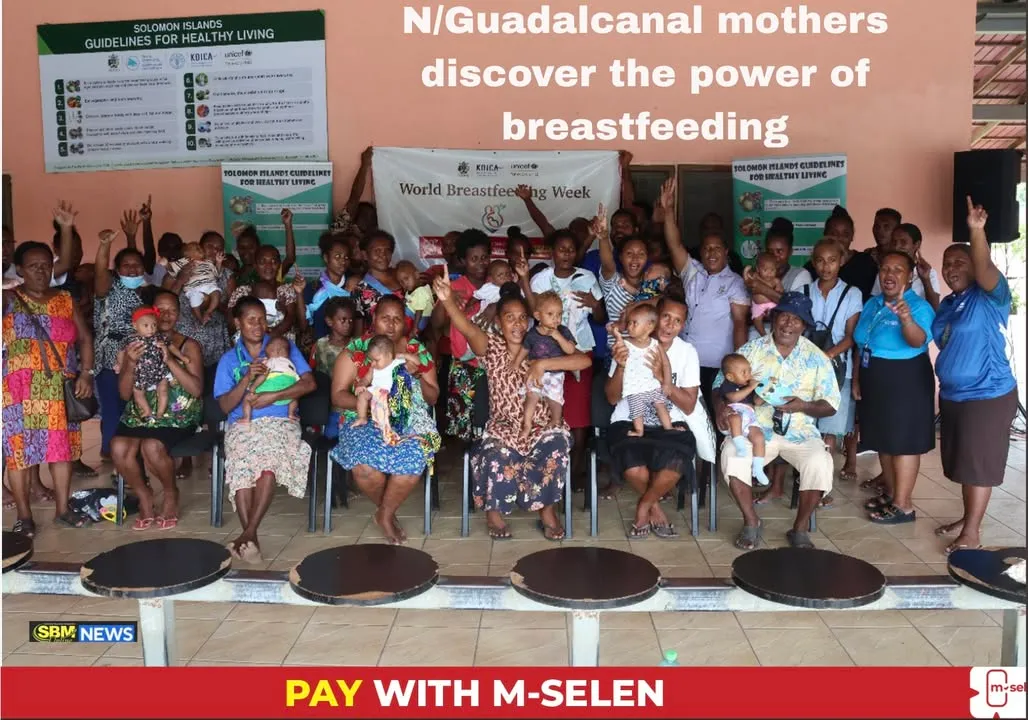
For young mothers attending postnatal check-ups at Good Samaritan Hospital in North Guadalcanal, a recent awareness session provided an opportunity to reflect on their breastfeeding experiences and learn how breast milk can help give their children a healthier start in life.
The mothers were attending their routine postnatal appointments last Wednesday when health workers and development partners took the 2026 World Breastfeeding Week campaign directly to the community.
The awareness was delivered by the Guadalcanal Province Health Division, Ministry of Health and Medical Services, Live & Learn and UNICEF, with mothers receiving practical information on breastfeeding practices and the role breast milk plays in protecting babies from illness.
For young mother of two, Edith Kusele, the session was an eye-opening experience that made her reflect on her own breastfeeding practices.
Three-month-old baby Jaycina and her mother Edith Kusele. Edith said she felt guilty because she didn’t follow some of these things mothers should do. Now she’s happy because she learned a lot about the importance of breastfeeding, Photo-Supplied
“Hearing some of the presentations today, as a young mother I feel guilty because I didn’t follow some of these things. I didn’t even seek help from nurses, but now I’m happy because I’ve learned a lot about the importance of breastfeeding,” she said.
UNICEF Nutrition Officer Salome Namohunu told the mothers that breastfeeding is among the most important ways they can give their children a healthy beginning in life.
UNICEF Nutrition Officer Salome Namohunu sharing the importance of breastfeeding to mothers during the launch, Photo- Supplied
“Breastfeeding ensures that every baby receives the best start in life. Breastfeeding is the best and safe natural food for babies, and it is readily available,” Namohunu said.
She stressed the importance of exclusive breastfeeding during the first six months of a baby’s life, saying breast milk provides the nutrition and protection needed for babies to grow strong and healthy.
Namohunu also encouraged mothers to see breastfeeding as more than simply a way of feeding their babies, describing it as an early form of protection against illness.
“Breastfeeding is more than a feeding choice. The choice to breastfeed your child is a powerful act of love and the first child protection you can give your child against all forms of sickness,” she said.
She urged mothers to begin breastfeeding as soon as possible after giving birth, particularly during the first 24 hours.
Health Promotion Officer with the Guadalcanal Province Health Division, Smith Neremola, said bringing the campaign to the community was important to ensure mothers could access information close to where they live and receive health services.
“In celebrating World Breastfeeding Week, we would like to come down to the community level purposely to share information on the importance of breastfeeding,” Neremola said.
Some of the mothers attending the launch of World Breastfeeding Week celebration, Photo- Supplied
He said the awareness covered breastfeeding during the first 24 hours after birth, exclusive breastfeeding during the first six months and how mothers could continue breastfeeding during emergencies and disasters.
Mother and teacher Caroline Matangani said awareness programmes are important because some mothers may not have adequate information about appropriate feeding practices.
She said mothers are often a baby’s first point of contact and therefore have an important role to ensure their children are properly fed and cared for.
“Awareness like this is very important to teach these mothers so that they know the importance of breastfeeding and feed their children,” Matangani said.
The 2026 World Breastfeeding Week is being observed under the theme, ‘Breastfeeding for a sustainable start in life: strengthen what works’.
The campaign forms part of broader efforts by health authorities and partners to strengthen community understanding of breastfeeding and promote practices that support child survival, growth and development.
This year’s World Breastfeeding Week activities are supported by the Korea International Cooperation Agency (KOICA), with the campaign also focusing on helping mothers breastfeed during the critical early period after birth and in challenging situations, including emergencies and disasters.
Photos: Supplied
For feedback, contact: mnorichard4@gmail.com
Editor: irwin3angiki@gmail.com
BY BEN BILUA
Gizo
THE Western Province Health and Medical Services is reviewing its provincial health service plan to identify gaps in service delivery and develop a more practical plan for the coming years.
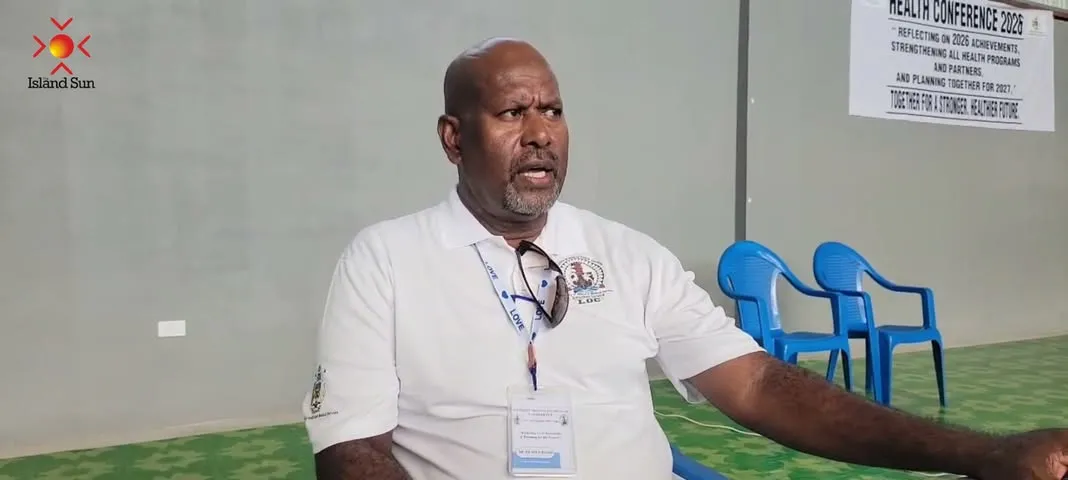
Heads of health sectors, nurses, doctors and other key stakeholders gathered in Gizo this week for a conference that aims to review the province’s existing health service plan.
Director of Western Province Health and Medical Services, Dr Dickson Boara, said the conference provides an opportunity to assess what has been achieved, identify weaknesses and determine how existing challenges can be addressed.
He said the review intends to produce a new workplan that is realistic, practical and easy to implement once adopted as an official provincial health document.
“So, this week, we are looking back to what we did in 2024, 2025 and first quarter of 2026. We check every box to see our weakness and our strength,” Boara said.
He said the review is not limited to health workers, with other stakeholders also invited to contribute ideas and identify areas where they can support the delivery of health services across the province.
“This is why we bring in everyone including other stakeholders who can support us to deliver services,” Boara said.
He said the conference is also important for financial planning, as the outcomes will help the province prepare its health budget and identify priority areas that require funding.
Boara said the province will use the information gathered during the review to put together a budget document for submission to the Ministry of Health and Medical Services (MHMS) as it considers the next round of budget allocations.
He said the review comes as the province continues to face challenges in delivering health services across its widely dispersed communities and islands.
Boara said having a practical and properly costed health plan will help ensure limited resources are directed towards the province’s most pressing health needs.
The conference is expected to provide a clearer picture of the province’s health priorities and the resources required to improve service delivery.
For feedback, contact: maetuana777@gmail.com
Editor: irwin3angiki@gmail.com
BY BEN BILUA
Gizo
DIABETES has become one of the major health issues putting increasing pressure on health services in Western Province.
Director of Western Province Health and Medical Services, Dr Dickson Boara, said diabetic cases in the province have increased at an alarming rate, placing additional pressure on health facilities, health workers and limited resources.
He said the growing number of diabetes cases is becoming a serious concern for the province’s health system.
Boara attributed the increase partly to uncontrolled diets and the growing availability of junk food in local shops and communities.
“I think, we need to work extra hard in terms of awareness in communities. Health workers need to go down to the communities to do awareness,” he said.
Boara said the province will not rely solely on clinical services to deal with the growing burden of diabetes.
He said greater emphasis must be placed on prevention, early awareness and on encouraging people to adopt healthier lifestyles before they develop serious health complications.
According to Boara, the diabetes issue will be incorporated into Western Province’s new health work plan, with increased attention given to community awareness and preventive health programmes.
He said taking health information directly to communities will be important to help people understand the risks associated with unhealthy diets and lifestyles.
Boara said the planned approach is expected to place greater responsibility on health workers to engage communities outside health facilities, particularly in raising awareness about diet, nutrition and the prevention of lifestyle-related diseases.
He said addressing diabetes early is important as the continued increase in cases could further stretch the province’s already limited health resources.
The province’s move to strengthen preventive health comes as Western Province reviews its existing health service plan, with health sector heads, nurses, doctors and other stakeholders meeting in Gizo this week to identify key health priorities and improve service delivery across the province.
For feedback, contact: maetuana777@gmail.com
Editor: irwin3angiki@gmail.com
‘I feel guilty, but I’ve learned’
North Guadalcanal mothers discover the power of breastfeeding
For young mothers gathered at Good Samaritan Hospital in North Guadalcanal, World Breastfeeding Week became more than a celebration. It was an opportunity to learn, reflect and better understand how breastfeeding can give their children a healthier start in life.
Mothers attending postnatal check-ups at Good Samaritan Hospital Wednesday last week were given practical information on the importance of breastfeeding as health workers and partners took the 2026 World Breastfeeding Week campaign directly to the community.
A team from the Guadalcanal Province Health Division, the Ministry of Health and Medical Services, Live & Learn and UNICEF used the occasion to engage with mothers who turned out in numbers for their postnatal appointments, sharing information on breastfeeding practices and the role breast milk plays in protecting children from illness.
For Edith Kusele, a young mother of two, the awareness was an eye-opening experience.
“Hearing some of the presentations today, as a young mother I feel guilty because I didn’t follow some of these things. I didn’t even seek help from nurses, but now I’m happy because I’ve learned a lot about the importance of breastfeeding,” she said.
UNICEF Nutrition Officer Salome Namohunu told mothers that breastfeeding is one of the most important ways they can give their children a healthy start in life.
“Breastfeeding ensures that every baby receives the best start in life. Breastfeeding is the best and safe natural food for babies, and it is readily available,” she said.
Namohunu highlighted the importance of exclusive breastfeeding during the first six months of a baby's life, explaining that breast milk provides the nutrition and protection babies need to grow strong and healthy.
She also stressed that breastfeeding should be viewed as more than simply a feeding choice.
“Breastfeeding is more than a feeding choice. The choice to breastfeed your child is a powerful act of love and the first child protection you can give your child against all forms of sickness,” Namohunu said.
She urged mothers to begin breastfeeding as soon as possible after birth, particularly during the first critical 24 hours.
Health Promotion Officer with Guadalcanal Province Health Division, Smith Neremola, said the campaign was deliberately taken to the community so mothers could access information where they live and receive services.
“In celebrating World Breastfeeding Week, we would like to come down to the community level purposely to share information on the importance of breastfeeding,” Neremola said.
He said the awareness covered breastfeeding during the first 24 hours after birth, the first six months of a child's life and how mothers can continue breastfeeding during emergencies and disasters.
The sessions also provided mothers with an opportunity to reflect on their own experiences.
Mother and teacher Caroline Matangani said awareness programmes such as the one held at Good Samaritan Hospital are important because some mothers may lack information about appropriate feeding practices.
She said mothers are often a baby's first point of contact and have an important responsibility to ensure their children are properly fed and cared for.
“Awareness like this is very important to teach these mothers so that they know the importance of breastfeeding and feed their children,” Matangani said.
The 2026 World Breastfeeding Week comes with the theme, ‘Breastfeeding for a sustainable start in life: strengthen what works.’ It forms part of broader efforts by health authorities and partners to strengthen community understanding of breastfeeding and encourage practices that support child survival, growth and development. World Breastfeeding week celebration this year is supported by Korea International Cooperation Agency (KOICA).
The campaign also aims to ensure mothers are better prepared to breastfeed in the critical early period after birth and during challenging circumstances, including disasters.
For the mothers who gathered at Good Samaritan Hospital, the message was clear: breastfeeding is not simply about feeding a baby—it is one of the earliest and most powerful ways a mother can protect her child.
ENDS///
BY CHARLES STENNETT
Solomon Islands Media Fraternity will miss one its veteran member and a pioneer in independent media, George Atkin Aeta’i, who passed on in his home village, Tawatana, Makira-Ulawa province this morning.
The late Atkin was a veteran journalist in Solomon Islands, having worked in various mainstream media outlets in Solomon Islands such as the Solomon Star Newspaper, Island Sun Newspaper and the Solomon Islands Broadcasting Corporation, SIBC.
He pioneered the establishment of private and independent newspapers starting off with the Kiokio Nius followed by the Melanesian Nius weeklies which were short lived.
His third attempt was the Solomon Toktok Newspaper which he established in 1977, a year before the country’s independence in 1978 until it stopped its publications in March 1992.
In his earlier years he explained why he changed the names of his publication and settled with Solomon Toktok Newspaper.
“I chose the name Kiokio, a coastal kingfisher because the bird relay messages.
This evolved into Melanesia Nius, to cover the Melanesian group countries in the South Pacific as it was becoming a regional bloc to be reckoned with in the 970s. Fiji and Papua New Guinea had become independent while Solomon Islands and Vanuatu were in the process of gaining independence from their colonial rulers. But the scope was too wide for me to cover and so I decided to drop that name and focus on just the one country, my own. I founded Solomon Toktok,” Late Atkin recalled.
Late Atkin single-handedly ran Solomon Toktok, collecting and writing stories, soliciting for advertisement, delivering papers, taking photographs, administering accounts and banking, newspaper wrapping, paste-ups or lay-out, a job he hated most.
He did all these task as trial and error because his training background was on broadcast journalism.
The task was not easy and had to turn to others for help like the late Ashley Wickham and the late Welshman Teilo.
He had to recruit and train staff to fill the many roles the young paper was emerging into like the recruitment of his wife, a nurse by profession as the chief reporter.
The hardship of managing a new newspaper with a different perspective of being independent had its many difficulties, the late Atkin had to endure.
They include, lack of government support as it was viewed then as confronting for politicians, scarcity of people with professional media experience, high overhead costs as there were no computers then, insufficient revenue from advertising, subscriptions and sales, the lack of a chief reporter and the lack of news reporters and graphic artist workers who worked long hours with small salaries.
Despite the hardships, Late Atkin explored all avenues available to him to keep the paper running by sending cadet reporters for overseas training, securing a loan to buy printing machines, in-laws assist in funding a dedicated building for the paper to cut office rent and friends to do marketing.
The many challenges took a toll on him including his marriage.
“The effort needed to establish and sustain a business in such a challenging environment took its toll. I was exhausted and my marriage did not survive the journey.
After my family relocated to New Zealand, I stayed on and tried to keep Solomon Toktok for another eight years and with the competition with another emerging Newspaper, the Solomon Star, I finally decided to close down Solomon Toktok in March 1992 and rejoined the Solomon Islands Broadcasting Corporation, SIBC” late Atkin recalled.
But the impacts of independent media, pioneered by journalists like late Atkin had some effects in the region.
Samoa, Tonga and Vanuatu followed on from the footsteps of Solomon Toktok with journalists setting up independent newspapers, as their countries’ governments like Solomon Islands in those days operated broadcast services and published information services publications.
In his line of service to media in Solomon Islands, Late Atkin was the first President of the Media Association of Solomon Islands, MASI from 1985–1989.
After the closure of Solomon Toktok, late Atkin worked with the mainstream media outlets in Solomon Islands like the Solomon Star, Island Sun and SIBC, and was the freelance reporter for AFP and wrote stories for Radio New Zealand International and Radio Australia and had been a political appointee.
He returned to his home province, Makira-Ulawa in the early 2020s and stayed home until his passing on the 11 th of August 2026 from a short illness.
For feedback, contact: charsstennett@gmail.com
Editor: irwin3angiki@gmail.com
BY NED GAGAHE
The Public Accounts Committee (PAC) has questioned the Ministry of Health and Medical Services (MHMS) over its proposed $7.89 million supplementary appropriation, including more than $5 million in advance warrants involving donor-funded programmes.
The issue was raised during the PAC hearing on Monday 7 on the Ministry’s 2026 Supplementary Appropriation Bill.
PAC Chair Dr Paul Bosawai said the Bill before the Committee sought a total of $7,896,483.35, divided into two components—advance warrants for donor-funded projects and additional recurrent supplementary expenditure for national programmes and disaster recovery.
Acting Permanent Secretary of MHMS Dr Gregory Jilini explained that the advance warrants totaled $5,096,483.35.
He said the advance warrants covered six areas, including unused HSSP3 funds, medical laboratory support, unused UNICEF funding, WASH training, a Global Fund project and funding for the Helena Goldie Hospital incinerator.
Dr Jilini said $48,825.35 in unused HSSP3 funds from 2025 was being returned to DFAT in accordance with the funding agreement.
He explained that the HSSP3 programme ended in September 2025 and the Ministry was unable to use the remaining funds before the programme deadline.
MHMS Financial Controller Jacob Akao added that HSSP3 was a funding agreement between the Ministry and DFAT that provided grants to provinces over three years.
He said the remaining balance had to be returned at the end of the programme, while the Ministry had since signed a new agreement with DFAT which commenced earlier this year.
The Ministry also revealed that $1,104,140 in unused UNICEF funding from 2025 was being returned.
Dr Jilini said the funding was intended for the Reproductive Health and Child Health Division, but the funds were not fully utilised because other funding sources were available for the division’s activities.
He said the approaching end of the funding period also meant the Ministry could not utilise the remaining funds.
MP for Gizo-Kolombangara Jimson Tanangada questioned why UNICEF funding continued to have balances and whether the Ministry was restricted from using the funds for other urgent priorities.
Mr Akao said UNICEF funding normally came with a specific timeframe for implementation.
He said UNICEF funding could sometimes have a period of only three months for activities to be implemented, and funds that could not be used within the timeframe had to be returned.
Mr Tanangada then questioned whether the Ministry had plans to improve its implementation framework to ensure donor funding was fully utilised.
He asked what measures were being taken to prevent funds from remaining unused and subsequently being returned to donors.
Deputy Secretary Corporate Services Layten Jacob said the Ministry needs to strengthen its systems for managing donor funding.
He said the Ministry needs to have clear plans and priorities in place when donor funds come into the system.
“In some cases, when donors put their funds into the Ministry, there are specific areas where they would like the funds to be directed,” Mr Jacob said.
He said the Ministry needs to strengthen its capacity to utilise funding, particularly because it was receiving support from numerous development partners.
Mr Jacob said one of the key areas that require improvement is in ensuring that donor funds come through the government system and are incorporated through appropriation and the national budget.
Meanwhile, the Ministry’s additional supplementary expenditure amounts to $2.8 million.
Of this amount, $800,000 is allocated for post-Cyclone Maila disaster recovery support at Helena Goldie Hospital, while $2 million is allocated to support probationary nurses, including their provincial travel and allowances.
Dr Bosawai reminded the Ministry that the PAC hearing was being conducted under Parliament’s procedures and that officials were protected by parliamentary privilege when giving evidence.
He also said the Ministry’s next Appropriation Bill should provide greater detail on its policy direction and priorities.
The PAC is continuing its scrutiny of supplementary funding requests before the matter proceeds through the parliamentary budget process.
Photo: NPSI
For feedback, contact: gagahened@gmail.com
Editor: irwin3angiki@gmail.com
BY NED GAGAHE
The availability of essential medical supplies in the country is currently above 80 percent, with the Ministry of Health and Medical Services (MHMS) putting the figure at around 83 percent.
This was revealed during a Public Accounts Committee (PAC) hearing yesterday when PAC Chair Dr Paul Bosawai questioned the Ministry about the current status of essential drugs and medical supplies.
Dr Bosawai, a former Minister of Health, asked the Ministry whether its supply chain remained stable and what the current availability of essential drugs was.
In response, the Ministry confirmed that the availability of essential supplies was still above 80 percent, at around 83 percent.
Dr Bosawai urged the Ministry to improve the figure, calling for availability to be lifted to around 90 percent.
“Move it up, move it up to around 90,” Dr Bosawai told the Ministry.
He said the long-term aim should be to achieve almost 100 percent availability of essential medical supplies.
The PAC Chair also encouraged the Ministry to strengthen its management of donor-funded programmes, particularly funding that is managed outside the normal government budget system.
He warned that when funding remains outside the system, the Ministry has less control over how the money is managed and implemented.
Dr Bosawai further commended the Ministry for its work in registering nurses and recognised the support provided for probationary nurse training.
He described nurses as the “foot soldiers” of health service delivery and called on the Ministry to increase the nursing workforce and strengthen recognition of nurses across the country.
He also urged the Ministry to engage with the current Minister of Health and the Government to improve the nursing cadre.
Dr Bosawai welcomed the reintroduction of medical studies leading to MBBS qualifications through the Ministry of Education, saying he was pleased that previous work in the area was being continued and implemented.
The PAC Chair said the Ministry of Health is an essential ministry because it provides services that directly affect the lives of people throughout Solomon Islands.
He commended the Ministry’s work and said the Committee expects the Ministry’s next Appropriation Bill to provide greater detail and demonstrate its policy direction.
The PAC hearing was held to scrutinise the Ministry of Health and Medical Services’ 2026 supplementary budget and its proposed expenditure.
Photo: Supplied
For feedback, contact: gagahened@gmail.com
Editor: irwin3angiki@gmail.com
BY NED GAGAHE
CENTRAL Guadalcanal MP and Leader of the Independent Office, Peter Shanel Agovaka, has strongly rejected the Government’s proposed sites for a new cemetery and waste disposal facility in the Tenaru-Lungga area.
Agovaka made the statement during debate on the motion to thank the Governor General’s Speech from the Throne last week, expressing concern that the proposals had been announced before meaningful consultation with customary landowners and affected communities.
He said the Ministry of Home Affairs had brought a Cabinet Paper on a proposed new cemetery, while another Cabinet Paper concerns a new waste disposal site in the vicinity of Teteni-Kolivuti.
Both proposals are understood to involve land in the Tenaru-Lungga area of Central Guadalcanal.
Agovaka said land is fundamental to the identity, livelihood, wellbeing and future of the people of Central Guadalcanal.
He said that any proposal to use customary or community land for major public facilities must respect the rights of landowners and be preceded by genuine consultation.
“The Government cannot make decisions about our people’s land and expect landowners to simply accept them,” Agovaka said.
“Landowners and affected communities must be consulted before any decision is made or announcement is issued.”
He stressed that communities should first learn about projects of such significance through government announcements instead of being directly engaged by authorities.
Agovaka said the proposed facilities are not minor developments, given that they will determine where Honiara residents bury their loved ones and where waste generated by the capital city will be disposed of.
He warns that the projects can have serious implications for public health, the environment, water sources, food gardens and future generations.
The Central Guadalcanal MP also raised concerns about the geography and drainage patterns of the proposed sites, saying runoff and possible contamination could affect surrounding communities, gardens and waterways.
“Central Guadalcanal cannot support projects that will create long-term environmental and public-health risks for national projects it hosts and especially its people,” he said.
“It should not be treated as a dumping ground for the waste of Honiara, nor should our communities be expected to carry environmental consequences without having a meaningful say.”
However, Agovaka stressed that his opposition should not be interpreted as opposition to national development.
“We support development, but development must be responsible, properly consulted and fair. It must respect landowners, protect communities and consider the long-term environmental and health consequences,” he said.
“Development cannot simply mean placing difficult or undesirable facilities in one location because it is convenient for others.”
Agovaka also questioned the continued concentration of major facilities and activities serving Honiara and the wider national population in Central Guadalcanal.
He said Central Guadalcanal makes a significant contribution to the national economy by providing land, food and other resources that sustain Honiara and the country.
“Our people provide land, food and resources that sustain Honiara and the country. We contribute to the national purse and help feed this nation,” he said.
He calls on the Government to take a broader and more balanced approach when deciding where major public facilities should be located.
Agovaka urges the Government to consider alternative locations in other provinces, particularly for facilities intended to serve the wider national population.
“Our position is clear: Central Guadalcanal rejects these proposals in their current form. Take these projects back to the drawing board. Consider alternative locations elsewhere in the country,” he said.
He warned that the people of Central Guadalcanal will not remain silent over decisions affecting their land, environment and future without their participation.
“National development must be inclusive and responsible. The Government must listen to the people and respect customary landowners. Central Guadalcanal has contributed enough to the development of this country. Its land, environment and communities will no longer be sacrificed for the convenience of others,” Agovaka said.
Photo credit: NPSI
For feedback, contact: gagahened@gmail.com
Editor: irwin3angiki@gmail.com
BY NED GAGAHE
THE Office of the Prime Minister and Cabinet (OPMC) has confirmed that a $1.3 million medical assessment allocation in its 2026 supplementary budget is specifically for Members of Parliament (MPs).
The clarification was made by Secretary to the Prime Minister (SPM) Dr Melchoir Mataki during the Public Accounts Committee (PAC) inquiry into the 2026 Supplementary Bill today.
PAC Chairman Dr Paul Bosawai questioned the allocation, pointing out that MPs already have medical entitlements under the Parliamentary Entitlement Committee.
He also noted that the Ministry of Health and Medical Services has a separate budget for medical referrals.
Dr Bosawai therefore sought clarification on who the $1.3 million allocation was intended for, asking whether it was for officials within the Prime Minister’s Office or MPs who are part of the Government.
Dr Mataki confirmed that the allocation was for MPs.
“This head has been a standing head under OPMC and it’s for members of Parliament,” Dr Mataki told the Committee.
The confirmation means the $1.3 million allocation is not intended for OPMC staff, but specifically covers medical assessment for Members of Parliament.
The medical allocation forms part of OPMC’s additional recurrent expenditure under the 2026 Supplementary Bill, which is seeking a total supplementary allocation of about $30.9 million.
The PAC is scrutinising the proposed expenditure as part of its inquiry into the Supplementary Bill before it proceeds through Parliament.
For feedback, contact: nedgagahe@gmail.com
Editor: irwin2angiki@gmail.com
BY BEN BILUA
Gizo
AFTER years of complaints and mounting concerns over the condition of Helena Goldie Hospital, the Ministry of Health and Medical Services (MHMS) has finally begun engaging with the hospital’s leadership to address some of its longstanding problems.
The development follows a series of reports by Island Sun exposing serious challenges at the hospital, including the failure of its X-ray facility and an Emergency Operation Theatre that has failed to provide the services expected of it.
For years, these problems have raised serious questions about the level of health services available to people in rural Western Province and the response from authorities responsible for ensuring that provincial hospitals are properly equipped and maintained.
Superintendent of Helena Goldie Hospital, Raymond Dickson, has been vocal about the challenges facing the hospital, including what he described as negligence that has contributed to problems accumulating over the years.
His concerns, published by Island Sun, have now reached the executive level of the national health ministry.
Speaking to Island Sun yesterday, Dickson confirmed that MHMS is now communicating with Helena Goldie Hospital over the issues raised.
“At this point, the issues are now at the Ministry of Health and Medical Services Executive level,” he said.
Dickson said the hospital had received positive news from MHMS, signalling a possible shift towards addressing problems that have remained unresolved for years.
The engagement comes after Island Sun brought the hospital’s challenges into the public domain, raising questions over why critical health infrastructure and equipment have been allowed to remain dysfunctional while rural communities continue to depend on the facility.
The failure of an X-ray service, in particular, is not simply an infrastructure issue. It can directly affect diagnosis and treatment, forcing patients to face additional delays, costs and, in some cases, travel to Gizo Hospital to access services that should be available closer to home.
Similarly, concerns surrounding the Emergency Operation Theatre raise broader questions about the capacity of the hospital to respond to patients requiring urgent medical intervention.
For rural communities, the consequences of such failures can be far more serious than inconvenience.
Helena Goldie Hospital serves communities that have limited access to alternative health facilities, making the reliability of its essential services a matter of public importance.
Dickson welcomed the ministry’s engagement and acknowledged Island Sun for continuing to report the concerns raised by the hospital.
He said the newspaper had played an important role in standing up for people whose concerns are often overlooked.
The latest development now places responsibility firmly with MHMS to demonstrate that its engagement will lead to concrete action.
For the people relying on Helena Goldie Hospital, the expectation is no longer simply for promises or discussions, but for functioning facilities, reliable equipment and health services that meet the needs of rural communities.
The hospital’s problems may have taken years to surface publicly, but the latest response from MHMS provides an opportunity to finally address them.
Photo: Helena Goldie Hospital’s X-ray facility. Photo supplied.
For feedback, contact: maetuana777@gmail.com
Editor: irwin2angiki@gmail.com
Solomon Islands health workers strengthen diabetic foot care skills to improve early treatment and help prevent amputations How do you react to a small blister or a cut on your foot? You’ll probably ignore it or even see it as a minor inconvenience. But if you’re a person living with diabetes, that small blister or [...]
The post Health Workers Strengthen Skills To Save Limbs appeared first on Tavuli News (Solomon Islands) .
BY JOSES SAREN
A memorial liturgy was held last Saturday at St Andrew’s Church, Ghaobata Parish, Red Beach Community. It honoured the 64 people who disappeared aboard the RCS Melanesia on 10 July 1958.
The service was prepared by the Anglican Church of Melanesia specifically for the Red Beach Community. Fr. Eric Tevaiola officiated.
Family members laid wreaths as part of the committal prayers. Serving seafarers, in uniform, also attended and observed one minute of silence during the formal proceedings, standing at attention before the altar with heads bowed as Fr. Eric led the liturgy.
Three speakers addressed those gathered.
Fr. Eric, in his sermon, described the Melanesia’s loss as a mystery. It was never established whether the ship capsized, was hijacked, or met some other fate.
Justice belonged to God alone, he said. God would bring it in His own time.
Chief Elder Duke Telaupa, who has researched the ship’s history, detailed the known facts. The vessel was built by the Hong Kong and Whampoa Dock Company and launched in Kowloon on 10 July 1956.
It arrived in the Solomon Islands that December. Exactly two years later, on 10 July 1958, it vanished.
Its last radio report came at 9am, about 25 miles west of Sikaiana. Seven ships and Australian aircraft joined the search.
Searchers recovered debris, life floats, and a single body. It was that of boatswain David Daiwo of the Reef Islands, who washed ashore at Maanawai.
The body was so badly decomposed it could only be identified by a tattoo. A Commission of Inquiry sat in 1958–59 but reached no conclusive findings.
Telaupa said he has confirmed around 30 of the 64 names so far. He called for an annual commemoration every 10 July.
He appealed to families, relatives and friends who may know of others who were aboard the Melanesia to come forward. Their information would help complete the passenger list, he said.
Former captain Elijah Mouku gave a personal account. As a boy in 1958, he sighted the Melanesia off Lunga shortly before it disappeared, a memory that stayed with him.
RCS stood for Resident Commissioner’s Ship, he said. Its passengers and crew represented all four of the protectorate’s administrative districts.
Mouku recalled that musician Fred Maedola served aboard the Melanesia as a radio operator before disembarking in Honiara. Maedola later composed a memorial song about the loss.
The song was so emotionally overwhelming that the Solomon Islands Broadcasting Corporation withdrew it from airplay, Mouku said.
The government organised memorial services in 1959 and 1960, Mouku said. It provided transport for victims’ families to gather at Gorobao.
There have been public calls over the years for deeper investigation. Commissioner of Oath Jones Sanga has urged families to form a taskforce to pursue compensation claims.
No definitive cause was ever established.
The Melanesia’s loss left the Protectorate critically short of shipping. It was compounded days later by the wreck of the Medical Department’s 66-foot vessel Betua, on a reef near Maanawai Harbour on 14 July.
A temporary replacement was borrowed from the Royal Navy base in Hong Kong. An 18-metre memorial light was erected in early 1963 on Rua Sura Island off Guadalcanal, facing the reefs and deep waters around Sikaiana.
A commemorative postage stamp followed in 1975.
Mouku closed by saying the loss remained a solemn chapter in the country’s history. It deserved to be honoured, he said, particularly on National Seafarers’ Day.
For feedback, contact: jsbalq909@gmail.com
Editor: irwin2angiki@gmail.com
PM Matthew Wale commits to advancing the Guadalcanal Provincial Hospital with government agencies and development partners PRIME Minister Hon. Matthew Wale has reaffirmed the Government’s commitment to advancing the proposed Guadalcanal Provincial Hospital, signalling concrete action in response to the needs of the province. Speaking in Parliament yesterday, the Prime Minister said Government will work [...]
The post Wale Commits Government to Guadalcanal Hospital appeared first on Tavuli News (Solomon Islands) .
Prime Minister Hon. Matthew Wale has reaffirmed the Government’s commitment to advancing the proposed Guadalcanal Provincial Hospital, signalling concrete action in response to the needs of the province.
Speaking in Parliament yesterday, the Prime Minister said the Government will work closely with development partners to deliver the project in a practical and coordinated manner.
“The Government working closely with our donor partners will deliver as appropriately as we can in building the Guadalcanal Province Provincial Hospital,” he said.
The Prime Minister confirmed that the project responds directly to the request made by the Premier of Guadalcanal Province during the province’s Second Appointed Day celebrations.
He outlined a whole-of-government approach to progressing the initiative, led through the Social Sector under the Prime Minister’s Political Division in the Office of the Prime Minister and Cabinet.
Prime Minister Wale said this will involve close coordination with Guadalcanal Province, the Ministry of Health and Medical Services, the Ministry of Infrastructure Development, the Ministry of National Planning and Development Coordination and other relevant government agencies.
He said work will begin on the necessary groundwork, including the development of a concept paper to be submitted to the Caucus and Cabinet for consideration as soon as possible.
“That is how this Government answers a province,” the Prime Minister said.
“Not with ceremony but with commitment.”
The Prime Minister emphasised its focus on delivering essential health infrastructure and improving access to quality medical services for communities across Guadalcanal Province.
[end]
OPMC statement
The post Gov’t commits to progress Guadalcanal Provincial Hospital Project: PM Wale first appeared on Solomon Islands Broadcasting Corporation (SIBC) .
Health Minister Morris Toiraena prioritises primary health care and upgrades to clinics, hospitals and referral services Health Minister Hon. Morris Toiraena says the Ministry will place primary health care at the forefront of its efforts, in his speech in response to the Throne of Parliament yesterday.& He highlighted, for many people, the first contact with [...]
The post HEALTH MINISTER: “PRIMARY HEALTH CARE WILL BE A CENTER OF OUR WORK” appeared first on Tavuli News (Solomon Islands) .
BY LORETTA B MANELE
The GREAT Coalition Government has made its intention of establishing new cocoa and coconut plantations across the country.
Agriculture Minister, Franklyn Wasi shed light on this whilst delivering his response to the Speech from the Throne in parliament on Wednesday.
He said traditional cash crops like cocoa and coconut remain among our most important agricultural export commodities.
“The GREAT Coalition Government intends to support the establishment of new cocoa and coconut plantations across the country while also rehabilitating aging plantations through improved planting materials, farmer support programmes and better pest and disease management,” he said.
Wasi said the Government will also continue to expand nurseries, drying facilities and storage infrastructure to improve product quality and increase farmer incomes.
The Member of Parliament for East Makira said these measures will strengthen Solomon Islands competitiveness in international markets while creating sustainable economic opportunities for rural communities.
Wasi said the target is to reach 10,000 hectares of new planted cocoa and coconut trees across the whole nation in the coming years.
Photo credit: NPSI
For feedback, contact: lorettamanele@gmail.com
Editor: irwin3angiki@gmail.com
BY IRWIN ANGIKI
The GREAT Government has said it will bring the Mental Health Bill for passage in parliament.
This Bill is set to replace the current legislation, Mental Treatment Act, which was enacted in 1970.
Along the years, consecutive governments have promised to replace the 1970 act. Sikua’s government in 2009 recognised that the Mental Treatment Act was “badly outdated” and required urgent redrafting into a modernised Mental Health Bill.
Major milestone was achieved by the DCGA government under prime minister Manasseh Sogavare which launched the Mental Health Policy on July 27, 2023.
GREAT is determined to go another step further with the Mental Health Bill.
Health Minister Morris Toiraena, contributing yesterday (Thursday, August 6, 2026) to the motion of thanks to the Governor General’s speech from the throne said the Mental Health Bill is among the two Health bills GREAT will bring to parliament.
“The Government will also progress several health legislations which include the Health Service Bill, Amendments to the Dangerous Drugs Act, Amendments to the Pure Food Act and a new Mental Bill before this Honourable House. These reforms will help provide a stronger legal and institutional basis for the work ahead,” Toiraena said.
Toiraena said mental health can no longer be allowed to be a culturally sensitive issue on which people refrain open dialogue and solution seeking.
“Many Solomon Islanders live with depression, anxiety, trauma, substance-related illness and other mental health conditions without adequate support. Families often carry this burden alone. Stigma keeps people silent, and services remain limited.
“The Government will confront mental health openly and with compassion. We will work towards mental health facilities and services in every province, strengthen training for health workers, support community-based care, and improve referral pathways for people in crisis.
“The planned relocation of the National Psychiatric Unit to Honiara is part of this commitment to provide more appropriate, accessible and dignified care.
“Mental health is health. It deserves the same seriousness as any other condition,” Toiraena said.
The national psychiatric unit is based in the Kilu’ufi hospital, Auki, Malaita province.
However, in January this year the idea to have it relocated was established driven by factors such as logistical barriers to referral cases from other provinces to reach Kilu’ufi.
The architectural and planning phases are underway. The physical transition to the National Referral Hospital is expected to finish by the end of 2026.
Photo credit: NPSI
For feedback, contact: irwin3angiki@gmail.com
Editor: irwin3angiki@gmail.com
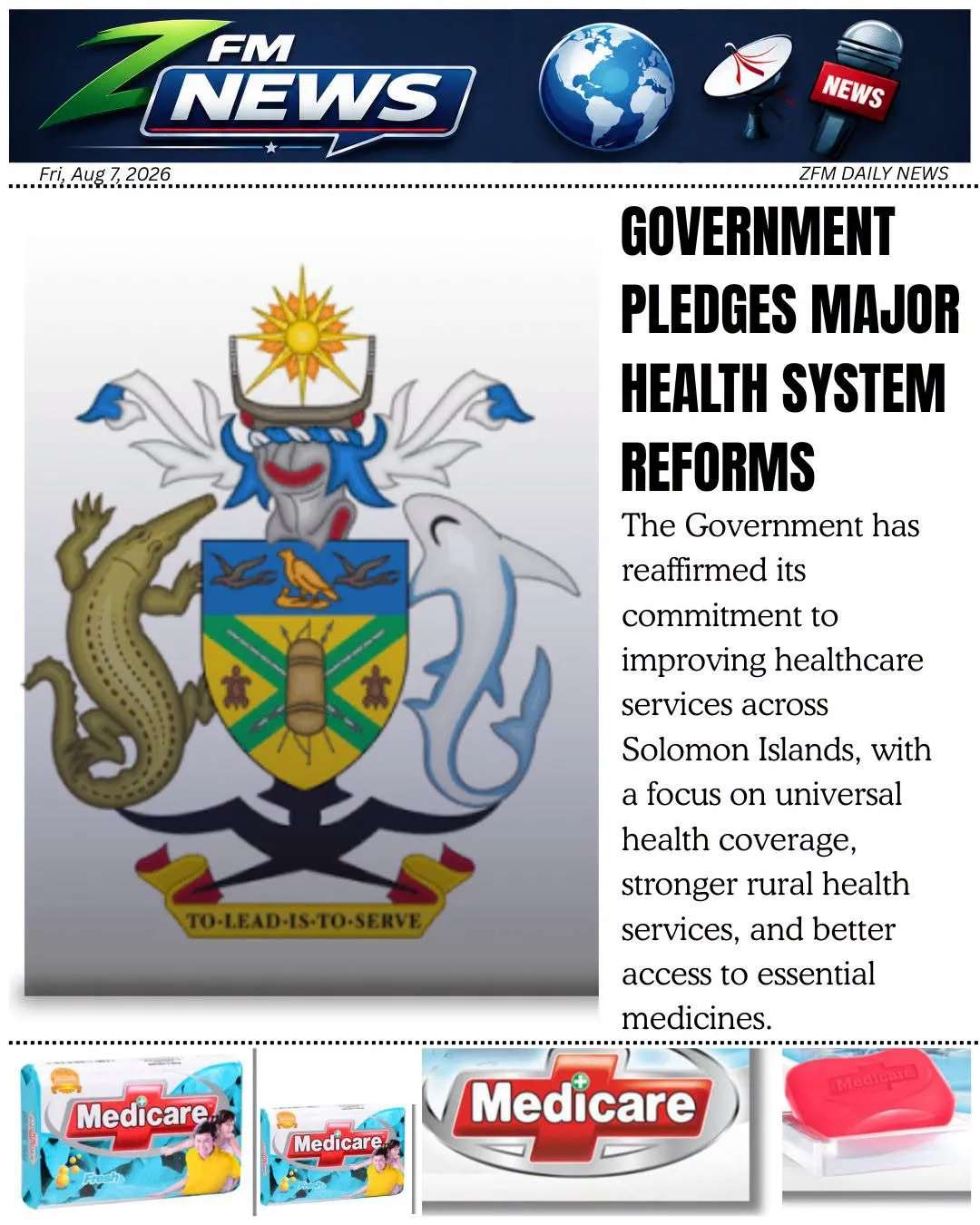
Government Unveils Plans to Strengthen Solomon Islands Health System
The Government has outlined a broad health reform agenda aimed at improving access to quality healthcare services for all Solomon Islanders.
Responding to the Speech from the Throne, the Minister of Health and Medical Services said the Government’s priority is to achieve universal health coverage by strengthening health facilities, improving medicine supplies, and expanding essential services across the country.
The Minister highlighted plans to rehabilitate closed rural clinics, upgrade Area Health Centres, and strengthen provincial hospitals so more patients can receive care closer to their homes. The Government also aims to improve referral services at the National Referral Hospital and enhance specialist healthcare capacity.
A key focus will be ensuring reliable access to essential medicines and medical supplies through improved procurement, storage, distribution and monitoring systems.
The Government will also invest in prevention programmes, including immunisation, nutrition, maternal and child health, mental health services, and efforts to eliminate malaria by 2038.
The Minister said strengthening the health workforce remains critical, with plans to support training, professional development and incentives for health workers serving in rural and remote communities.
Digital health development, emergency preparedness, and stronger public health laboratory services are also part of the reform agenda as the Government works to build a more responsive and resilient health system.
The Minister acknowledged the challenges facing healthcare delivery, including geography, infrastructure and limited resources, but said these challenges would not prevent the Government from improving health services for the people of Solomon Islands.
ENDS/////////
Home Affairs Minister calls for
improvement to City’s Governance
By TIMOTHY INIFIRI JNR
Solomon Star, Honiara
Minister for Home Affairs Fr Manasseh Maelanga has pleaded for urgent reforms to restore order and improve governance in Honiara, saying the current state of the nation's capital is deeply concerning and requires a coordinated response from all levels of government.
Speaking in parliament, Thursday in response to the Traditional Speech from the Throne, Maelanga said the Government's review of the Honiara City Act presents an opportunity to modernise the city's governance and address the growing challenges facing the capital.
"The review of the Honiara City Act presents an opportunity to modernise the governance arrangements of our national capital so that it reflect the realities of rapid urban growth, increasing service demands and future development," he said.
Maelanga said the conditions residents face every day are unacceptable for the country's capital.
"What the residents of Honiara City are experiencing today is deeply concerning. As the national capital and the face of our country, Honiara should reflect the aspirations, pride and progress of Solomon Islands."
Instead, he said, many residents deal daily with poor sanitation, unmanaged waste, ageing public facilities and deteriorating infrastructure.
"The city is increasingly characterised by poor sanitation, unmanaged waste, deteriorating public infrastructure and ageing public facilities that are struggling to meet the demands of a rapidly growing urban population."
The Minister also highlighted that traffic congestion, poor road conditions, inadequate drainage, poorly maintained public spaces and limited municipal services have failed to keep pace with the city's rapid growth.
"These challenges are not merely aesthetic; they have direct implications for public health, economic productivity, environmental sustainability and public safety," he said.
//end//
BY JOSES SAREN
The Minister for Home Affairs Rev Manasseh Maelanga said every Solomon Islander will get a national ID card.
He made the announcement whilst responding to the Governor-General’s Speech from the Throne on Tuesday in parliament.
Maelanga said the government will introduce a Civil Registration Bill to support the new identification system.
He said the bill will create a legal framework that will cater to the registration of births, deaths and other vital life events.
Maelanga said the framework reflects international best practice and will meet the unique needs of Solomon Islands.
He said a trusted national identity system is a cornerstone of modern governance and should improve access to government services and strengthen electoral integrity and also enhance national security and support financial inclusion.
The minister added that areas there will also be improvement in areas like disaster response and service delivery.
He said the ministry will work with development partners, provincial governments and other stakeholders on this initiative.
Maelanga said this is to ensure the rollout is inclusive, secure and accessible to all citizens.
Photo credit: NPSI
For feedback, contact: josessaren@gmail.com
Editor: irwin3angiki@gmail.com
BY TONY IROGA
Minister of Home Affairs Rev Manasseh Maelanga has called for urgent reforms to address growing challenges facing Honiara, saying the capital city requires immediate attention if it is to reflect the aspirations of Solomon Islanders.
Mr Maelanga, MP for East Malaita, made the call today in Parliament while contributing to the Motion of Thanks to His Excellency the Governor-General for the Speech from the Throne in Parliament this week.
He said the current state of Honiara is a matter of national concern.
“What residents of Honiara City are experiencing today is deeply concerning,” Maelanga said.
“As the national capital and the face of our country, Honiara should reflect the aspirations, pride and progress of Solomon Islanders.”
He highlighted poor sanitation, unmanaged waste, deteriorating infrastructure, traffic congestion, poor drainage, inadequate municipal services and the decline in public order as key issues affecting the city.
He said these challenges go beyond the city’s appearance and have wider consequences.
“These challenges are not merely aesthetic. They have direct implications for public health, economic productivity, environmental sustainability and public safety,” he said.
He also expressed concern over excessive public noise, alcohol abuse, petty theft and increasing anti-social behaviour within the city.
“The unchecked use of loud music and other forms of public disturbance demonstrates the need for stronger enforcement of municipal by-laws,” he said.
He said the issues facing Honiara are symptoms of rapid urbanisation, rising unemployment, inadequate planning and increasing pressure on essential city services.
Maelanga said resolving these challenges will require a coordinated approach involving the Honiara City Council, Guadalcanal Provincial Government, Royal Solomon Islands Police Force, relevant government ministries, churches, traditional leaders, communities and the private sector.
He welcomed the Government’s commitment to review the Honiara City Act, saying the reforms would modernise governance arrangements, strengthen financial management, improve waste management and extend services to informal settlements.
“We have a collective responsibility to ensure that Honiara is clean, safe, orderly, resilient and well managed,” he said.
On law and order, Maelanga urged the Government to provide greater support to law enforcement agencies to improve public safety.
“We must double our efforts to ensure we protect our people from all sorts of harm,” he said.
“We must support our enforcement agencies so they can effectively maintain public law and order within the city.”
Photo credit: NPSI
For feedback, contact: tonyiroga8@gmail.com
Editor: irwin3angiki@gmail.com
More Solomon Islanders will have access to HIV prevention, testing and treatment services under expanded support for the national response to HIV and communicable diseases.
The Ministry of Health and Medical Services (MHMS) and Australia are working together to strengthen HIV prevention, testing and treatment services across the country.
Over SBD$5 million in Australian support will be delivered through health and community partners to improve service delivery, build workforce capability and increase community awareness.
The support comes at a critical time as Solomon Islands works to address rising HIV case numbers and strengthen systems for a coordinated, sustainable national response.
Minister for Health and Medical Services, Honourable Morris Toiraena, said “I would like to express my sincere appreciation to the Government and people of Australia for your enduring friendship and unwavering commitment to improving the health and well-being of Solomon Islanders. The rising rate of HIV infections is deeply concerning.
Thank you for this generous donation, which will support the Ministry of Health and Medical Services in its efforts to curb the upward trend of new HIV cases through preventative measures, early detection, and treatment.”
The support package will strengthen prevention, testing and treatment services, build workforce capability, improve community awareness, and support stronger systems and surveillance.
Health workers across all 10 provinces will receive additional training and support to improve HIV services, while communities will benefit from awareness and engagement activities to encourage prevention, early testing and access to care.
The package brings together support across multiple areas of the national response—from policy development and planning through to health workforce development, service delivery, surveillance, community engagement and technical assistance.
Australian High Commissioner, Jeff Roach, said Australia was committed to working alongside Solomon Islands to strengthen health security and improve health outcomes.
“The Solomon Islands Government is leading the response to HIV, and Australia is proud to support that effort through investments in health workers, stronger systems and community awareness,” High Commissioner Roach said.
“Expanding access to prevention, testing and treatment means more people can get the information, care and support they need earlier, helping reduce transmission and keep families and communities healthy.”
Australia’s support will include strengthening HIV surveillance and case monitoring systems, updating national treatment guidelines, developing the next National HIV/STI/Viral Hepatitis Strategic Plan, and building the capability of the health workforce through training and mentoring. Community engagement activities will also support prevention, awareness and access to services, particularly for populations at greater risk of HIV infection.
Australia and MHMS continue to work together to strengthen health security and improve health outcomes for all Solomon Islanders.
ENDS//
– MHMS & AHC Honiara
The post Australia and Solomon Islands expand HIV testing, treatment and prevention first appeared on Solomon Islands Broadcasting Corporation (SIBC) .
BY JOSES SAREN
Solomon Islands High Commissioner to New Zealand, His Excellency Ishmael Mali Avui, MBE, met senior officials from New Zealand’s Ministry of Business, Innovation and Employment (MBIE) and Immigration New Zealand (INZ) in Wellington on July 29, with talks centred on strengthening the Recognised Seasonal Employer (RSE) Scheme and improving consular support for Solomon Islands workers in New Zealand.
The meeting also covered visa and immigration matters affecting Solomon Islands nationals, and the importance of continued collaboration between the High Commission, MBIE and INZ during worker engagement activities and roadshows aimed at encouraging RSE workers to prioritise their health and safety, a statement by the Ministry of Foreign Affairs and External Trade (MFAET) yesterday said.
Three areas were discussed, the statement said:
-RSE Scheme — strengthening worker welfare, pastoral care and pre-departure training, and exploring ways to increase Solomon Islands participation in the scheme.
-Consular and immigration support — improving coordination on visa processing and passport matters, and information-sharing for citizens living in or travelling to New Zealand.
-Return and reintegration — supporting returning RSE workers to make the most of the skills, experience and remittances they bring home.
Prime Minister Matthew Wale, speaking to local journalists on June 10 following his return to the country, acknowledged that Solomon Islands participation in the RSE Scheme has remained around the 1,000-worker mark for many years. Wale said the government is taking steps to expand opportunities abroad, including exploring new areas and appointing a liaison officer to support labour mobility arrangements with New Zealand.
“We can expect increases, both local and new areas are being explored for increasing employment and also RSE in New Zealand,” Wale said at the time.
High Commissioner Avui thanked MBIE and INZ for their support in promoting the wellbeing and fair treatment of Solomon Islands workers.
“The RSE Scheme continues to be an important pathway for our people to gain valuable skills, earn income, and contribute to the development of Solomon Islands,” Avui said.
“We appreciate New Zealand’s commitment to supporting Pacific workers and maintaining high standards of worker welfare.”
The statement said MBIE and INZ officials reaffirmed New Zealand’s commitment to the Pacific and to work with the High Commission to address shared challenges arising from labour mobility.
For feedback, contact: josessaren@gmail.com
Editor: irwin3angiki@gmail.com