BY RICHARD MENANOPO
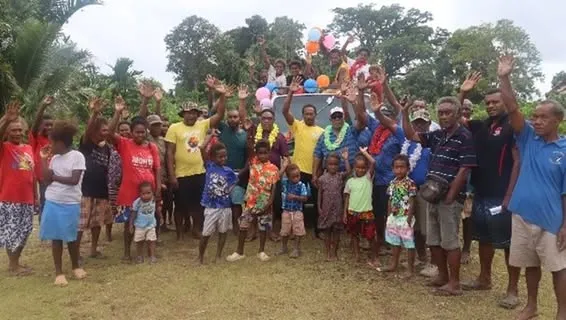
The Government of Japan has reinforced its support for football development in Solomon Islands by donating 50 footballs to the Solomon Islands Football Federation (SIFF), with the equipment set to boost grassroots programmes and youth participation across the country.
The donation was made during a ceremony at the SIFF Academy in Honiara on Friday, attended by Japan’s Ambassador to Solomon Islands, His Excellency Keiichi Higuchi, SIFF President Donald Marahare, SIFF Chief Executive Officer Leonard Paia, representatives from the Japanese Embassy, JICA officials and members of the local media.
Ambassador Higuchi said the donation reflects Japan’s commitment to help young Solomon Islanders enjoy football while strengthening the longstanding friendship between the two countries.
“We want to support that same focus here in Solomon Islands. We want to help young players grow and bring the joy of football to even more children. These fifty balls add to that vision,” Ambassador Higuchi said.
The Ambassador revealed the donation was inspired by the overwhelming support Solomon Islanders showed towards Japan during the recent FIFA Club World Cup.
“Our Embassy received many phone calls asking for Japanese flags because people wanted to support the Japanese team,” he said.
“Although we did not have any flags to give away, I noticed many handmade Japanese flags displayed on vehicles throughout Honiara. I reported these incidents to Tokyo and soon our state minister for Foreign Affairs, Mr Horii, came up with the idea of donating footballs to Solomon Islands.”
He explained that the footballs were donated by the Nara Football Association with the support of Japan’s State Minister for Foreign Affairs, Mr Horii, following discussions between the governments of Japan and Solomon Islands during Prime Minister Matthew Wale’s recent visit to Japan.
Ambassador Higuchi said Japan’s own football journey had been built on investing heavily in youth development and grassroots football, a pathway his country hopes to encourage in Solomon Islands.
“Through football, our two nations strengthen our friendship. We build mutual ties, and we contribute to the future development of football in both our countries,” he said.
Receiving the donation on behalf of SIFF, President Donald Marahare described the gift as an investment in the future of Solomon Islands football rather than simply sporting equipment.
“This gift is more than equipment. It is indeed an investment in the dreams of our young players, in the growth of our communities and in the future of football in Solomon Islands,” Marahare said.
He said football continues to unite communities while providing opportunities for young people to pursue excellence.
“These soccer balls will be used across our provincial football associations and our grassroots programmes, ensuring that every child—whether in Honiara or in the provinces—has the chance to play, to learn teamwork and to dream of representing our nation on the international stage,” he said.
Marahare assured the Japanese Government that the footballs will be put to good use and thanked the Embassy of Japan for its continued support of football development in Solomon Islands.
Japan has been a longstanding partner in the development of football in Solomon Islands through technical assistance, coaching support and football exchanges.
Japanese midfielder Sota Higashide currently plays for Solomon Kings FC, while JICA volunteer coach Kanto Yamashita is working with SIFF’s women’s youth programme and is involved in grassroots football initiatives.
The latest donation of 50 footballs further strengthens that partnership while supporting SIFF’s ongoing grassroots football development throughout the country.
Photo credit: SIFF
For feedback, contact: mnorichard4@gmail.com
Editor: irwin3angiki@gmail.com
BY DOUGLAS VAHIA
After years of exporting cocoa independently, David Kebu Jnr has partnered with the Commodities Export Marketing Authority (CEMA) as a cocoa agent, a move allowing him to focus on producing premium-quality cocoa while helping farmers in his area access a reliable market.
David’s decision continues a family legacy that began with his late father, David Kebu Senior, who worked closely with CEMA during the early years of the family’s cocoa business.
Through CEMA’s assistance, the elder Kebu was able to market his cocoa and obtain an export licence, laying the foundation for what has become a thriving family enterprise.
Since his father’s passing, David Jnr has taken over the family plantation on the fertile Guadalcanal Plains, where he is rebuilding and expanding the farm while sharing his knowledge with other cocoa growers.
His plantation has grown from 16 hectares to 20 hectares. As a skilled grafter, David has been rejuvenating older cocoa trees to increase production and improve the plantation’s long-term sustainability.
“From January I started working with CEMA, export taxes are too high for me when I export independently, so it is better for me to work as a CEMA agent. CEMA trained me in producing quality cocoa, and I want to give back,” said Mr Kebu Jnr.
Kebu Jnr said partnering with CEMA allows him to spend more time improving the quality of his cocoa instead of managing the challenges associated with exporting.
Maintaining quality standards throughout the supply chain is one issue David feels strongly about. He believes farmers deserve better returns for producing quality beans, which he says can only be achieved through proper grading and handling.
“Bulk mixing reduces quality, so good beans lose their value,” Kebu Jnr explained. “When quality cocoa is mixed with poor-quality beans, everyone loses.”
To maintain consistency, David has introduced a family-based management system on the plantation, with each family member responsible for specific blocks of cocoa. While different sections are managed individually, all harvested cocoa is processed centrally to meet the quality standards expected by CEMA and international buyers.
Many of the trees on his plantation date back to 1978. Rather than replacing them entirely, David is restoring the ageing trees through radical pruning and grafting techniques to boost productivity.
“I neglected the farm for too long,” Kebu Jnr admitted. “Now I’m rebuilding it and letting CEMA handle exports so I can focus on production.”
David expects the plantation to reach peak production around September as the cocoa season progresses.
Looking beyond his own farm, David hopes to become a trusted buying point for growers throughout the Guadalcanal Plains, purchasing cocoa from farmers between Metapona and Koli to give them easier access to CEMA’s marketing network while encouraging higher-quality production.
“I want to support farmers from Metapona to Koli, and we will produce for CEMA,” said Mr Kebu Jnr.
David’s story reflects CEMA’s Farmers First vision, which supports stronger partnerships with producers by improving market access, promoting quality production, and backing the long-term growth of the Solomon Islands’ cocoa industry.
Photo: Supplied
For feedback, contact: diivee56@gmail.com
Editor: irwin3angiki@gmail.com
BY TONY IROGA
The unprecedented good work of CEMA raising the livelihoods of thousands of farmers in the rural areas has been highlighted by government ministers in parliament.
The Commodity of Export Marketing Authority (CEMA) under its Farmers First initiative launched in April this year has touched and supported more than 10,000 copra/cocoa farmers including local buyers to date.
Since April this year, many farmers have taken to media to show their joy, appreciation and relief at CEMA’s Farmers First initiative which they said has brought stability in market and prices, and overall improved livelihoods for them, their families and communities.
The Speech from the Throne last week however had indicated that the new GREAT government was going to kill this momentum by returning CEMA’s functions to when it was defunct – mere regulatory body to facilitate and promote trade.
Speaking in parliament on Friday, August 7, Minister for Commerce (MCILI) Harry Kuma defended CEMA and clarified that CEMA will continue its good work to support local farmers.
“The Speech states that CEMA must not compete with the private sector and that it will deal only with regulatory affairs, trade facilitation, marketing and matters that facilitate and promote trade,” Kuma said.
“However, that principle must be read together with the full GREAT Coalition Policy Statement, the Policy Translation and Implementation Framework, the MCILI Corporate Plan and the practical realities facing indigenous rural producers.
“The GREAT policy does not reduce CEMA to regulation alone. It expressly provides for commodity stabilisation, producer support, quality assurance, price information, trade coordination, and the reform—not the abolition—of existing price and freight support for copra and cocoa. It gives priority to remote island producers facing the highest freight costs and calls for a stronger mechanism to cushion producers from sharp price movements and maintain reliable trade. The implementation framework also provides for CEMA revitalisation and recapitalisation, review of the CEMA Act, a 10-year strategic plan and continued oversight of commodity marketing. MCILI’s Corporate Plan recognises CEMA as a statutory body facilitating commodity trade and exports and operating with commercial autonomy under Government oversight.”
Mr Kuma acknowledged CEMA’s duty to ensure there are thriving markets in remote communities where the private sector fails to serve.
“Sir, it may appear that there are many buyers in Honiara. In a remote community, the real question is whether any buyer arrives, whether the freight is affordable, whether scales and grading are fair, whether payment is timely, and whether the farmer has any genuine choice. Where those conditions are absent, there is a market failure. Government cannot call that a functioning private market and then leave the producer alone with it.
“The right reform is therefore not to remove CEMA’s capacity to support trade. It is to discipline that capacity through clear rules.
“Where private buyers are present, competitive and reliable, CEMA should facilitate, regulate standards, provide market intelligence, support certification, coordinate freight and form partnerships rather than duplicate their work. Where private markets are absent, unreliable or unable to serve remote producers; where an abrupt price collapse threatens rural incomes; or where aggregation is necessary to fulfil a credible export order, CEMA should retain the lawful capacity to intervene transparently in the public interest.”
In his speech on Friday, August 7, Communication and Aviation (MCA) Minister Frederick Kologeto praised CEMA for its Farmers First initiative which is continuing to help farmers, especially copra and cocoa.
“I’m happy for the Minister of Commerce, for the CEMA, giving more money to the farmers,” Kologeto said.
Mr Kologeto, who is also president of People First Party (PFP), had appealed to landowners to open up their lands for development in partnership with government.
He lauded hard-working landowners who are reaping benefits by working together with government, which include the farmers who are benefiting a lot through their engagements with CEMA.
The Farmers First initiative began in April this year, which has been CEMA’s major success story since its revitalisation in 2021.
Under Farmers First, nearly 11,000 farmers including local buyers have benefited since April – a space of five months.
Dozens of farmers have shared their success stories in the media about how the Farmers First initiative has helped them thrive in a regulated environment and protect them from the risks of a high competitive field.
Under Farmers First, CEMA is ensuring markets for farmers in remote communities, through landing crafts and buyers, removing the expensive costs of transportation for the farmers.
For feedback, contact: tonyiroga8@gmail.com
Editor: irwin3angiki@gmail.com
BY CHARLES STENNETT
The Central Bank of Solomon Islands (CBSI), is in support of the government’s plan to establish a Sovereign Wealth Fund as a means to address shocks and for the government to use the fund’s interest to finance portions of the national budget.
Responding to a question raised by the former Prime Minister Jeremiah Manele during the Public Accounts Committee, PAC hearing yesterday on the Supplementary Bill before the committee, Central Bank Governor, Dr. Luke Forau said the Sovereign Wealth Fund is a good concept and it should not only come from one sector, the mining sector, but other sectors as well.
“It must be from all extractable natural resources. We should take some money from them and put it in the Sovereign Wealth Fund. It should not be restricted to only one sector but to all our commodities. We have minerals, forestry, fisheries and other sectors, all of these should be covered under the Sovereign Wealth Fund”
He explained that the Sovereign Wealth Fund should be used during rainy days and to address shocks when they arise.
Governor Forau added that during normal times, the government can use the fund’s interests to finance its budget.
“Basically, the fund is for rainy days so if there’s a shock, that’s the time to use the Sovereign Wealth Fund and also when the days are normal, the government should use the interests of the fund to finance the budget”. Dr Forau said.
He added that there should be a legislation to govern this fund.
The GREAT government is pushing forward to establish a Sovereign Wealth Fund as part of its reforms.
For feedback, contact: charsstennett@gmail.com
Editor: irwin3angiki@gmail.com
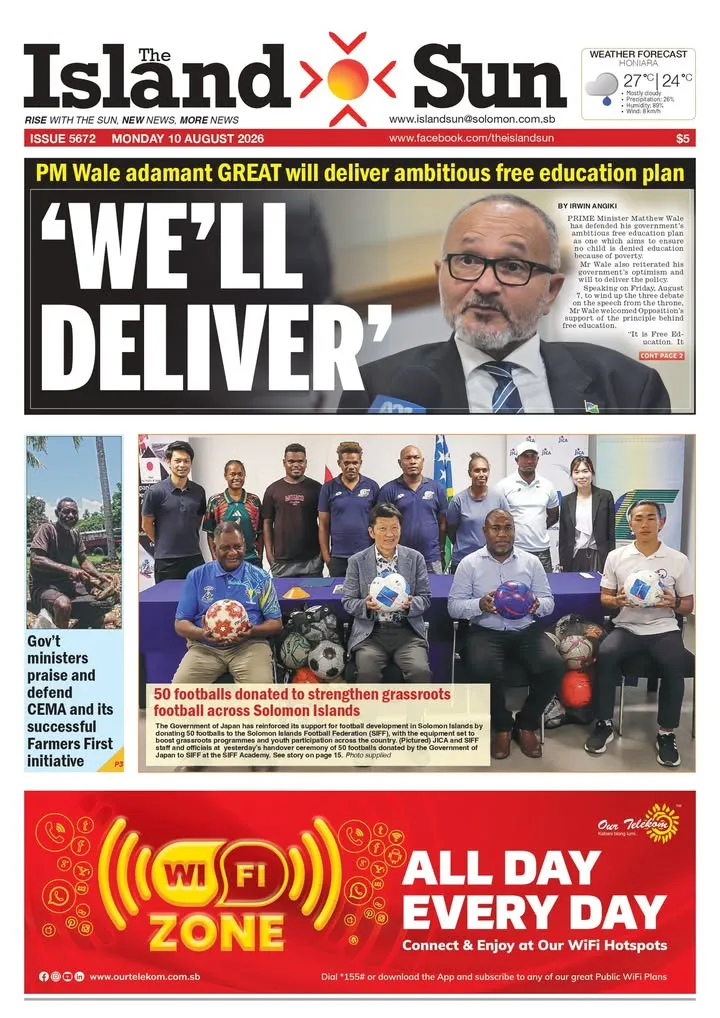
📰 THE ISLAND SUN FRONT PAGE
ISSUE 5672 | MONDAY 10 AUGUST 2026
‘WE’LL DELIVER’
Prime Minister Matthew Wale remains adamant that the GREAT Government will deliver its ambitious free education plan, saying the Government is committed to ensuring no child is denied an education because of poverty.
Speaking in Parliament, PM Wale reiterated his Government’s optimism and determination to deliver the policy, while defending the principle behind free education.
📰 Also in today’s edition
✔ Gov’t ministers praise and defend CEMA and its successful Farmers First initiative - Page 3 ✔ 50 footballs donated to strengthen grassroots football across Solomon Islands - Japan reinforces its support for football development through a donation to the Solomon Islands Football Federation ✔ Latest national and provincial developments ✔ Community, development, business and sports news from across Solomon Islands ✔ And many more stories inside today’s edition
📢 Advertisements & Opportunities
Look inside for job vacancies, tenders and procurement notices, government and public notices, business advertisements, products and services.
🗞️ Get your copy of The Island Sun today for these stories and many more.
Rise with the Sun, New News, More News.
☎️ CONTACT US
📰 Newsroom: 26969 📢 Advertising: 28070 📧 Email: islandsun@solomon.com.sb
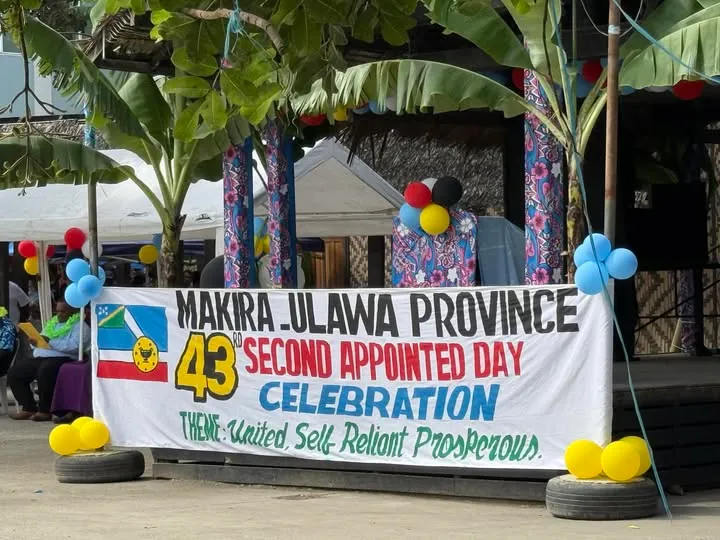
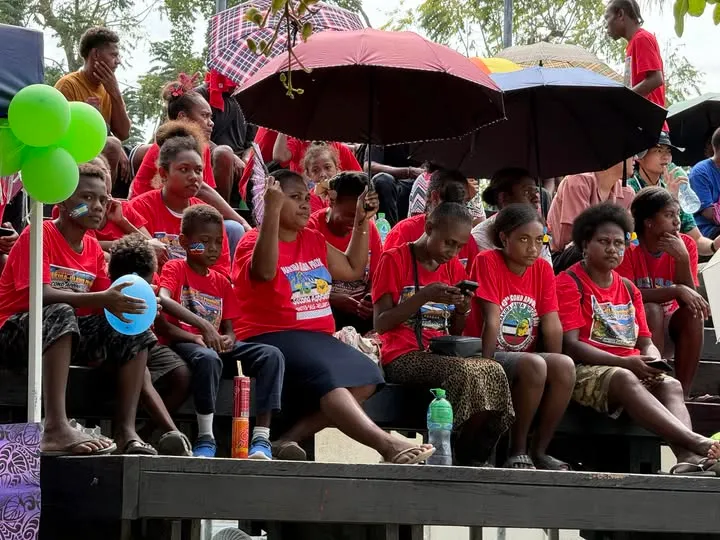
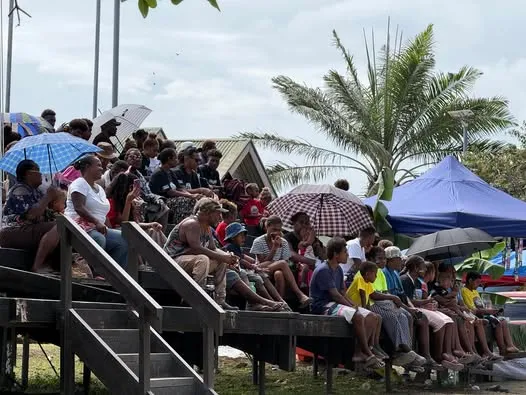
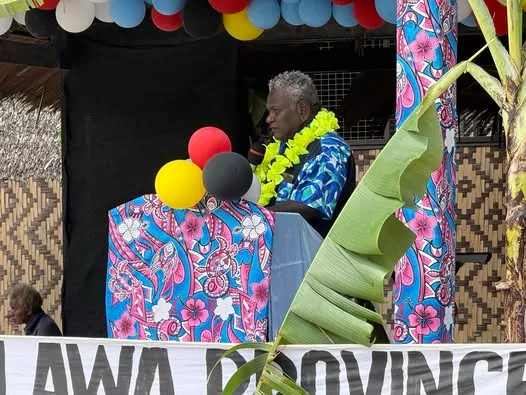
Makira‐Ulawa Province Marks 43rd Second Appointed Day in Honiara
Makira‐Ulawa Province today celebrated its 43rd Second Appointed Day at the National Museum in Honiara under the theme “United, Self‐Reliant, Prosperous.” on Saturday the 8th of August
The annual celebration commemorates the establishment of the Makira‐Ulawa Provincial Government in 1983 and is observed on August 3 each year.
The occasion provides an opportunity for the province and its people to reflect on past achievements, strengthen unity, and reaffirm their commitment toward building a more self‐reliant and prosperous future.
📷 Joy Ofasia for Isles Media News desk
Makira-Ulawa省在霍尼亚拉纪念第43个第二任命日
Makira-Ulawa省于8月8日星期六在霍尼亚拉国家博物馆举行第43个第二任命日庆祝活动,主题为“团结、自立、繁荣”。
这一年度庆典纪念Makira-Ulawa省政府于1983年成立,按惯例每年8月3日举行。
庆典为该省及其人民提供机会,回顾过往成就、加强团结,并重申共同建设更加自立和繁荣未来的承诺。
📷 Joy Ofasia,Isles Media新闻部
PRIME Minister Hon. Matthew Wale says there will be ‘no more secrecy’ on agreements that bind the nation.
At the same time, he announced a review of the security agreement with China has commenced, calling on the Leader of Opposition to support the review.
Prime Minister Wale said the review is grounded in a simple but critical principle and that is transparency to Parliament and accountability to the people of Solomon Islands.
The Prime Minister revealed he was only permitted to read the 2022 agreement one day before an official meeting in Canberra in May this year, highlighting the lack of proper disclosure at the time.
“That must never happen again,” the Prime Minister told Parliament during his closing address to the Speech of the Throne recently.
“I call on the Leader of the Opposition to support the review, this House must support the principle that no treaty should stand without the informed consent of Parliament.”
“If that is the standard, then it must apply to every agreement this country has signed and not just some,” he adds.
He stressed that the issue goes beyond politics and speaks directly to national sovereignty.
The Prime Minister said sovereignty does not belong to the Government of the day.
He said it belongs to the people of Solomon Islands and it is expressed through this House.
“That principle was true in 2022. It is true today. And under this Government, it will be practised not just spoken about,” the Prime Minister said.
Prime Minister Wale also stressed that the country remains “friends to all and enemies to none,” but made clear that secrecy in national agreements will no longer be tolerated.
“On the instruments that bind this nation, there will be no more secrecy. This House and through it our people, must always be fully informed,” he said.
The Prime Minister said the review will ensure that all security agreements are transparent, accountable and fully aligned with the national interest.
Ends//
– OPMC PRESS SECRETARIAT
The post “NO MORE SECRECY”: PEOPLE MUST KNOW WHAT BINDS THE NATION: PM first appeared on Solomon Islands Broadcasting Corporation (SIBC) .
Honiara, Solomon Islands – South Guadalcanal MP Hon. Rollen Seleso has welcomed the Government’s proposal for a Sovereign Wealth Fund but says the framework must guarantee legally enforceable benefits for customary landowners and provinces.
Hon. Seleso said he supported the principle of strengthening State participation in mining, increasing downstream processing and ensuring the country’s mineral wealth benefits Solomon Islanders.
“The wealth of this nation must serve the many and not the few,” he said.
However, he questioned how much of the returns flowing into a proposed Sovereign Wealth Fund would reach the customary landowning communities where mineral resources are located and the provinces that bear the environmental costs of resource development.
He also questioned what governance arrangements would protect the Fund from political pressure during future budget cycles.
Hon. Seleso called on the Government to explain what legislation will establish the Fund, when that legislation will be tabled and whether Parliament will see the proposed framework before Cabinet endorses it.
He also called for clarity on what “equitable benefit-sharing” will mean in legally enforceable terms.
“In the experience of Guadalcanal, benefit-sharing that is not written into law and independently audited becomes benefit-sharing that is negotiated away,” he said.
“A Sovereign Wealth Fund without a benefit-sharing law is a Fund for the State. Our people need both.”
Hon. Seleso said the proposed reforms provided an opportunity to ensure Solomon Islands’ mineral wealth delivers lasting benefits to the communities and provinces that host and support resource projects.
[ENDS]
– OPPOSITION PRESS
The post SELESO: SOVEREIGN WEALTH FUND MUST BENEFIT LANDOWNERS AND PROVINCES first appeared on Solomon Islands Broadcasting Corporation (SIBC) .
Ou'oumatawa Community in Small Malaita Constituency
takes delivery of new CDF-funded truck
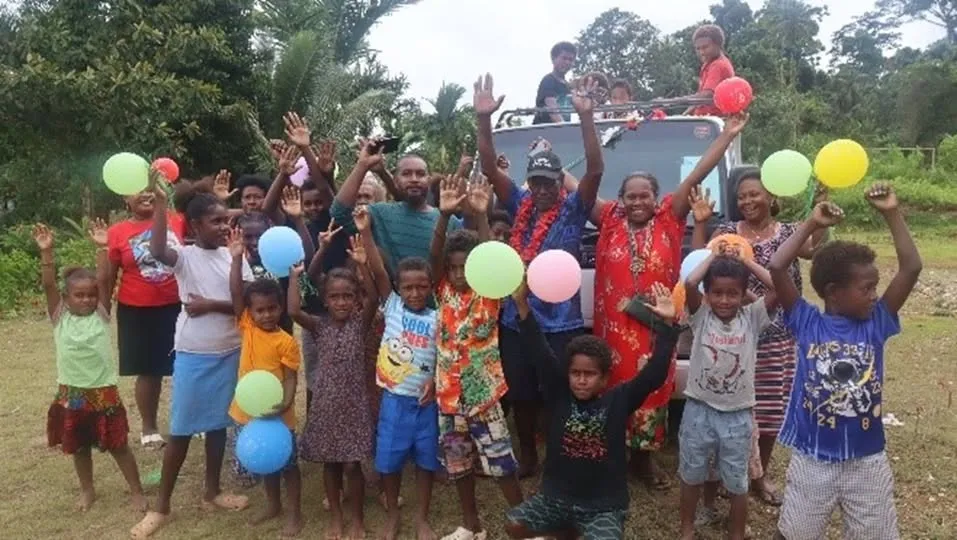
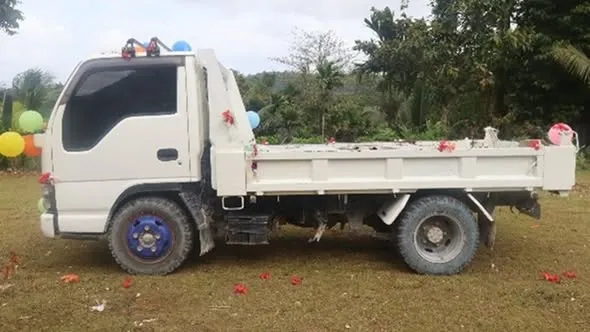
The people of Ou'oumatawa Community in Small Malaita Constituency (SMC) have boosted their emergency response and transport capabilities with the arrival of a new 2-ton tipper truck on 27 July 2026.
Member of Parliament [MP] for SMC, Honourable Rick Hou, officiated the handover, marking a major milestone in the constituency's transport infrastructure and service delivery.
Funded by the Constituency Development Fund (CDF) at a cost of $190,000 under the SMC 2025 budget, the truck is expected to improve access for the movement of people, emergency health cases, agricultural produce, building materials, and essential supplies. It will also support community development activities and improve access to schools, healthcare, and markets.
Speaking at the ceremony, Hou reaffirmed his commitment to ensuring CDF resources improve the lives of people throughout SMC, saying the truck reflects his dedication to practical projects that promote economic opportunities and community wellbeing.
Lesly Hekoiu, Chairman of the Ou'oumatawa Transport Committee, expressed gratitude on behalf of the community, noting it was the first time since the village's establishment that they had received such a valuable gift from the government.
He credited Hou's leadership and support for making the vehicle possible, and thanked him for listening to the community's needs and delivering a project that will benefit current and future generations.
The community pledged to properly manage and maintain the vehicle to ensure it serves them for years to come.
The truck reflects SMC's ongoing commitment under Hou's leadership to improving socio-economic wellbeing through practical projects and an enabling environment for economic opportunity, particularly through continued road infrastructure development in the constituency.
Permanent Secretary of the Ministry of Rural Development (MRD), John Misite'e, congratulated SMC on the achievement, emphasising the importance of empowering communities through practical projects and an environment conducive to economic growth, particularly through road and transport infrastructure.
He said this aligns with the ministry's vision "to empower Solomon Islanders toward self-sufficiency, improved livelihoods, and sustainable development," and that providing an enabling environment for economic opportunities, especially through road infrastructure and transport, remains a priority.
PS Misite'e said that the ministry looks forward to continuing to work closely with SMC and supporting other constituencies to deliver meaningful projects that improve rural livelihoods.
CDF is the financing component of the Solomon Islands Government's Constituency Development Program, administered by MRD and implemented across 50 constituencies to improve livelihoods.
- MRD
BY IRWIN ANGIKI
Prime Minister Matthew Wale has defended his government’s ambitious free education plan as one which aims to ensure no child is denied education because of poverty.
Mr Wale also reiterated his government’s optimism and will to deliver the policy.
Speaking on Friday, August 7, to wind up the three-day debate on the speech from the throne, Wale welcomed Opposition’s support of the principle behind free education.
“It is Free Education. It is the deliberate decision of this Government that the gate of the classroom shall not be closed in the face of any Solomon Islands child because of the poverty of that child’s parents. That is the principle,” Wale said.
Opposition leader Manasseh Sogavare had told parliament in his speech on August 5 that government has not answered questions opposition had thrown it since May 25.
“But Mr Speaker, principle is not policy. And support for the objective is not, and cannot be, a blank cheque on the design. The Opposition has, since the 25th of May, respectfully placed before the country a series of practical questions on this policy which the Government has, to this day, declined to answer,” Sogavare said.
“The Speech from the Throne now attaches the Government’s name to Fee Free Education in 2027, but does not answer a single one of those questions.”
Mr Sogavare questioned the free-education policy on five-fronts, to which Wale answered accordingly.
On the question of definition
Wale assured parliament the House would not vote on a slogan. He said work on the policy’s design including the precise meaning of “free”, which providers it covers, and how it connects with the Education Act 2023 and Education Regulation 2024 is being finalised by the ministry of education (MEHRD).
“That design, together with the implementing legislation and its full costing, will come before this House in the budget session at the end of this year. This House will not be asked to vote on a slogan, Mr Speaker. It will be asked to vote on a Bill and on an appropriation, with the definition and the numbers on the Table, before the first dollar is spent and before the first school year opens under the policy. That is the sequence, and it is the right sequence.”
On the question of cost
PM Wale agreed that the cost of free education will be unprecedently large and will affect the budget. But he assured that other essential sectors such as health, infrastructure, rural development, law and order will not be neglected in light of the budget changes.
“I will not pretend to this House that a commitment of this scale leaves the rest of the Budget untouched. There will be changes to the Budget; that is what it means to reorder the priorities of a nation around its children.
“The Ministry of Finance and Treasury continues to work through it as part of the medium-term fiscal framework I have described.”
On the question of quality
Wale rejected Opposition’s argument that free education would replace quality education.
“Access to education and access to quality education are both achievable, and neither will be traded for the other,” Wale said.
He said the training of 300 school principals which Opposition leader Sogavare had mentioned in his speech was the beginning of the rolling out of the free-education’s delivery programme
“The training of some three hundred school principals, which the Honourable Leader was gracious enough to welcome, is not a substitute for classrooms, teachers, dormitories and learning materials; it is the first instalment of a delivery programme in which those investments have their place.”
On the question of donor support
Opposition leader Sogavare had cautioned that external donor support for free education would threaten Solomon Islands’ sovereignty.
Wale brushed this aside telling parliament that for many decades education has been supported by Solomon Islands’ partners but there has never been any compromise to Solomons’ sovereignty.
“Our development partners are today, and have been under every Government represented in this House, among the biggest supporters of education in Solomon Islands. That support did not compromise our sovereignty yesterday, and it does not compromise it today,” Wale said.
Wale however agreed with Opposition’s concern on sustenance saying that eventually Solomon Islands would have to fund the free education itself.
He said GREAT is already working setting the foundation for future self-sponsorship.
“That is exactly why this Government is doing what it is doing: plugging the leakages, broadening the revenue base, and preparing this country, year by year, to absorb the cost of Free Education with its own resources. We do not intend to be dependent for eternity, Mr Speaker. The whole architecture of this Government’s fiscal programme, revenue reform included, exists so that the education of Solomon Islands children will stand, in time, on Solomon Islands revenue.”
On the question of implementation
Wale said the design, legislation and appropriation that would support the free education plan will be brought to parliament.
He said Opposition would have the chance to scrutinise the legislation, inviting them to bring their ‘practical Solomon Islands model’ then.
Sogavare in his speech had questioned the readiness of government to deliver free education.
“What is the assurance to those principals, and to their communities, that their schools will not open in January 2027 with more children, no fees, and no compensating transfer from Treasury?
“What is the assurance to the school authorities such as the churches, the community education authorities, whose books this Government has not yet, on the public record, opened? What is the plan for the fee income those schools currently rely upon and which the State must now replace?” Sogavare asked.
BY IRWIN ANGIKI
Prime Minister Matthew Wale has promised to bring the full costing of GREAT’s ambitious free education policy to parliament in December.
The costing of the free-education plan has been one of Opposition’s mainstay in its scrutiny of GREAT government’s policies.
Led by Leader Manasseh Sogavare, Opposition criticised the Speech from the Throne saying it did not outline how much free-education was going to cost and how government was going to get funds for it.
“Independent analysis places the recurrent cost of a broad fee-free policy at in the order of SBD $1.3 billion dollars a year, against a total national budget in the range of four to five billion. That is not a marginal adjustment. That is a very substantial recurrent commitment, and the country is entitled to see the numbers,” Opposition leader Mr Sogavare asked in his August 5 speech responding to the Speech from the Throne.
“Where is the full costing? Where is the year-by-year projection through the medium term fiscal framework? Where is the analysis of what other sectors such as hospitals, roads, rural development, jobs, law and order will be affected by the reallocation this policy will require?”
Closing the three-day debate on Friday, August 7, PM Wale said Opposition should not confuse a Speech from the Throne with an Appropriation Bill.
He said the speech from the throne contains government’s plans and the appropriation bill outlines the details behind these plans such as costing.
“A Speech from the Throne is not an Appropriation Bill. It is the statement of the Government’s programme, including its legislative agenda. It sets direction. The numbers follow in the instrument our Constitution and our Public Financial Management framework prescribe for numbers, and that instrument is the Budget,” Wale said.
He added that work is underway to have the 2027 appropriation bill come before parliament in December.
“The work of attaching a medium term fiscal framework to the policies of this Government is under way now, in the Ministry of Finance and Treasury and the Ministry of National Planning and Development Coordination, in preparation for the 2027 Appropriation Bill which will come before this House at the end of this year. That is where the fiscal envelope will be laid before this House, line by line, as it should be, and this House will test every commitment of the Speech against it.”
Wale reminded parliament that past speeches from the throne even under the prime ministership of Opposition leader Sogavare and opposition MP Jeremiah Manele had not included details such as costing.
“In the Speeches from the Throne delivered under the Honourable Leader’s own prime ministership, and in the Speeches delivered under the last two Governments in which he served, not one annexed a costed medium term fiscal framework to the programme it announced. Not one. And that was not a failure of those Governments; it was the correct understanding of what a Speech from the Throne is. It would not be honest of me to pretend that a standard which no Government of Solomon Islands has ever applied to itself has suddenly become the measure of fiscal credibility. The measure of fiscal credibility is the Budget, and this Government will meet that measure in this Chamber, before this year is out,” Wale said.
BY IRWIN ANGIKI
Prime Minister Matthew Wale has defended his government’s policies and actions responding to Opposition scrutiny in parliament, saying his government is bringing in true change which has evaded Solomon Islands for decades.
Closing the three-day debate on the Governor General’s Speech from the Throne on Friday, Mr Wale addressed questions and accusations by the Opposition Leader. Wale noted the striking similarity in the speeches by the members of opposition, jibing whether their speeches were penned by the same person.
Wale cleared misconceptions raised by Opposition on GREAT’s policies and actions, noting most of Opposition’s accusations are problems GREAT inherited from the previous administration rooted in past governments.
He said since coming into power, his government has been busy righting the wrongs of past governments in both foreign and domestic fronts.
Framing his response in 10 parts, Wale found himself uttering during his speech phrases such as “look in the mirror”, “people in glass houses shouldn’t throw stones” on what he termed as hypocrisy by members of the opposite side who had been part of previous governments.
PM Wale also told parliament of corrupt practices in previous governments such as taking money from businesses to hold loyalty among MPs and other practices which amount to elite and state capture leading to compromised governments.
Wale said GREAT will get rid of this ‘business as usual’ culture.
Fiscal credibility – what a Speech from the Throne is, and what it is not
Most Opposition speeches questioned why the Speech from the Throne did not contain details on how government would finance its reforms.
Wale reminded Opposition not to confuse the speech from the throne with an appropriation bill.
“A Speech from the Throne is not an Appropriation Bill. It is the statement of the Government’s programme, including its legislative agenda. It sets direction. The numbers follow in the instrument our Constitution and our Public Financial Management framework prescribe for numbers, and that instrument is the Budget,” Wale said.
Wale also reminded parliament that previous governments have never included detailed costing and framework in their speeches from the throne. Former prime ministers include opposition leader Manasseh Sogavare and opposition member Jeremiah Manele.
“In the Speeches from the Throne delivered under the Honourable Leader’s own prime ministership, and in the Speeches delivered under the last two Governments in which he served, not one annexed a costed medium term fiscal framework to the programme it announced. Not one,” Wale said.
Free Education – the promise, the questions, and the answers
PM Wale defended the GREAT government’s free education policy, stressing that its purpose is to ensure no child is denied schooling because of family poverty.
He noted that both sides of the House support this principle, with the main disagreement concerning implementation, cost and sustainability.
Opposition had questioned the viability of GREAT’s free education plan.
Wale explains that the policy’s precise definition, coverage and relationship with existing education laws are still being finalised, with legislation and full costing to be presented during the year-end Budget session before any funds are spent.
He admitted that the policy would weigh heavy on government’s recurrent expenditure, but reassured that essential sectors such as health, roads, rural development and law and order will not be left behind.
Wale rejected Opposition’s assertion that free education would replace quality education, saying both would be achieved simultaneously.
“On the question of quality, Mr Speaker, I say this with conviction: the choice the Honourable Leader placed before the House, between free education and quality education, is a false choice, and this Government rejects it. Access to education and access to quality education are both achievable, and neither will be traded for the other.”
Wale rejected Opposition’s claim that donor funding for the free-education policy would infringe on sovereignty, saying the same donors have supported education for many years without any such happening.
“Let us speak the reality: our development partners are today, and have been under every Government represented in this House, among the biggest supporters of education in Solomon Islands. That support did not compromise our sovereignty yesterday, and it does not compromise it today.”
Wale however agreed with Opposition that sustaining the policy would eventually be borne by the government, saying his government is ensuring this with its revenue reforms to ‘plug leakages’ in government’s finances, broadening revenue base and slowly absorbing the cost of free education.
The foreign policy reset – the anchor, and the ninety days
In his speech on Wednesday, August 5, Opposition leader Manasseh Sogavare had mocked the prime minister on his various international trips commencing just two weeks after taking office, dubbing it as ‘90 days around the world’.
PM Wale told parliament that his international travels were not an adventure, rather a trip to ‘correct’ Solomon Islands’ foreign relations according to its ‘friend to all, enemy to none’ principle.
He said recent geopolitical alignment by previous administrations had eroded trust from some partners which has negatively translated on the daily lives of our people through development finance, infrastructure, labour mobility, investment and security cooperation.
Trust, Wale said, is Solomon Islands’ main bargaining chip in its foreign relations.
Wale also clarified that the matter of Bougainville was brought up by PNG prime minister James Marape in their bilateral talk.
Opposition leader Sogavare in his speech earlier had insinuated that PM Wale had brought up the sensitive issue of Bougainville with Marape.
“In Port Moresby, he opened the door to conversations on Bougainville,” Sogavare said.
PM Wale said the legacy of Sogavare’s government is the stadium facilities, something he was also thankful for. But, Wale said these infrastructures have since cost government $60 million a year to maintain.
GREAT’s legacy on the other hand would be universal education of the young people of Solomon Islands which would bring lasting national benefits, Wale said.
“Concrete depreciates, Mr Speaker. An educated people appreciates, generation upon generation. That is the difference between the two legacies before this House, and this Government has chosen its side of it,” Wale said.
The partnership with Australia – what exists, and what does not yet exist
Wale said negotiations on the proposed treaty-level partnership with Australia remain at a very early stage and that no draft text currently exists for Parliament to examine.
He said it would be premature and irresponsible to release details of an agreement that has not yet been developed, emphasising that informing the public that discussions have begun is appropriate and reflects a proper sequence rather than secrecy.
The proposed partnership aims to strengthen regional security by addressing gaps in surveillance and intelligence, improving coordination among existing security arrangements, and creating a more coherent regional security framework while fully respecting Solomon Islands’ sovereignty, Wale said.
He rejected suggestions that the initiative threatens national independence, maintaining that its purpose is to enhance, rather than diminish, the country’s ability to safeguard its own interests.
Wale reassured parliament that GREAT would follow process and bring the treaty to parliament when ready.
“When a text takes shape, it will be vetted by the Attorney General’s Chambers. It will go to the Government Caucus. It will go to Cabinet for approval, as our standing process for treaties requires. And it will come to this Parliament. There is nothing in this partnership that needs the dark, Mr Speaker.
“Australia is our nearest neighbour, our largest development partner, and an old friend; an instrument with such a partner is precisely the kind of instrument that gains from the light, and it will receive the light at the point in its life when there is something real to shine it on,” Wale said.
The Investment Incentive Agreement with the United States – the record restored
Wale defended the Investment Incentive Agreement signed on May 23, 2026 as a carefully safeguarded framework designed to unlock development finance while preserving Solomon Islands’ sovereignty, laws and taxation system.
He acknowledged Sogavare’s own recognition that projects financed under the agreement remain fully subject to Solomon Islands taxes and domestic laws, including those governing customary land, the environment, labour, mining, public health, and criminal justice.
Wale clarified that Cabinet had approved the signing, and that negotiations had been done by the previous government. He said the agreement would be brought to parliament and welcomed scrutiny by relevant committees.
He argued that rejecting the agreement would have prevented the United States International Development Finance Corporation (DFC) from providing loans, guarantees, insurance or investment in Solomon Islands.
The Shiprider Agreement – what was actually signed on July 28
Wale defended the Shiprider Agreement with the US as a practical tool for strengthening Solomon Islands’ maritime sovereignty and law-enforcement capacity – not surrender control to a foreign power.
He said similar agreements operate across 12 Pacific countries and with more than 60 countries worldwide, emphasising that Solomon Islands retains authority over operations, with its officers and laws governing enforcement actions in its waters.
Under the arrangement, the US provides vessels, aircraft, fuel, surveillance and operational reach while Solomon Islands provides the sovereign authority and decisions necessary for enforcement.
“Operations occur when Solomon Islands asks for them; our officers embark; our laws are enforced; and law enforcement decisions and actions in our waters remain, at every point, under Solomon Islands authority. The United States supplies what we do not have, cutters, aircraft, fuel, surveillance, reach; and Solomon Islands supplies what only Solomon Islands can supply: the sovereign authority, and the sovereign decision,” Wale said.
PM Wale said he would bring the agreement before parliament for scrutiny, but will not delay enforcement of the shiprider agreement because the threats that it targets are ongoing.
“I will likewise cause the text of the Shiprider Agreement to be made available to this House, and the committees of this Parliament are welcome, as they are always welcome, to examine it within their mandates. What I will not do, and I say this plainly but without heat, is undertake that no operation will occur in our waters until every committee process has run its course, because the poachers in our Exclusive Economic Zone will not suspend their operations while we deliberate, and every month of delay is measured in stolen fish, lost revenue and emboldened criminality,” Wale said.
The 1991 Status of Forces Agreement – reading the whole instrument
PM Wale defended the 1991 Agreement on the Status of United States Forces saying the agreement preserves Solomon Islands’ primary criminal jurisdiction as the general rule, with limited exceptions concerning offences against US personnel or property and acts performed in official duties.
He said the agreement applies only when US forces are present in Solomon Islands with the Government’s authorisation and can be terminated with six months’ notice.
Opposition leader Sogavare had warned in his speech that the two agreements (the 1991 agreement and the shiprider agreement) opened the door to continued presence of US military in the Solomons. Sogavare also asked government to table the two agreements.
“The Shiprider Agreement, read together with the 1991 Status of Forces Agreement, does not create a formally named United States military base in Solomon Islands.
“But it may create something for which our language of debate is not yet ready, a distributed access regime, a system of recurring, rotational, protected United States armed-forces presence in our waters, at our ports, in our airspace and on our facilities, without a single flagpole ever being planted,” Sogavare said.
Wale rejected this suggestion saying GREAT will review the 1991 agreement and other inherited security instruments including the controversial 2022 security pact with China.
The Public Service – merit, transition, and the way forward
PM Wale defended the termination of several senior public servants using the clause 22(j) when GREAT came into power, saying it was a clause created and implemented by previous governments including Opposition leader Sogavare’s.
He maintained that government acted lawfully under those existing provisions.
Wale also acknowledged that the Public Service Commission has constitutional responsibility for appointments and discipline and says GREAT will respect that authority.
Acting appointments have therefore been made to maintain continuity, while permanent appointments will proceed through the Commission’s merit-based processes, Wale said.
The constitutional amendments – correcting the record on intent
PM Wale argued that the Government’s proposed constitutional amendments are intended not to weaken parliamentary accountability or protect the Prime Minister from no-confidence motions, but to address the deeper causes of political instability in Solomon Islands.
Opposition leader Sogavare had said in his speech, “What is proposed is a constitutional amendment, to be brought before this Chamber before the end of this year, designed to constrain the circumstances in which a Government of Solomon Islands may be removed by a vote of this Parliament.”
Wale rejected the Opposition Leader’s assertions, noting that no Bill or specific clauses have yet been tabled and therefore should not be speculated in advance.
Wale said government’s proposal will target Solomons’ politicking culture which include ‘grasshopping’, weak party structures, shifting parliamentary loyalties and the influence of outside money in political contests as major sources of instability.
The disease is illicit money past governments have entertained – cash from foreign business interests to hold loyalty, Wale said.
“A government purchased is a government owned, and it is not owned by the people of this country.
“That is why the constitutional amendments are to stop Members jumping sides in the ‘national interest’ and, within the same period, jumping back, again in the ‘national interest’. That is the business-as-usual status quo this country is sick of, and every Member of this House has watched it happen,” Wale said.
PM Wale also announced that GREAT will table five bills that give parliament autonomy, and had been ready for 10 years but previous governments had not been interested in passing: the Constitutional (Amendment) Bill; Parliamentary Service Commission Bill; Parliamentary Corporation and Precincts Bill; Public Financial Management (Amendment) Bill; and the Parliamentary Evidence Bill.
To lead is to serve
In closing PM Wale reiterated that the obstacles and challenges Opposition had cited in its scrutiny are excuses for the status quo which GREAT is here to change.
“All the obstacles and challenges the Honourable Leader has cited in this debate have long been the excuses for the status quo. The cost that cannot be borne, the capacity that does not exist, the risk that must be avoided, the time that is not yet right: this country has heard every one of them, decade after decade, and they have always arrived dressed as prudence and departed leaving nothing behind,” Wale said.
He reminded the House of the country’s motto ‘To lead is to serve’ saying people of Solomon Islands will judge the works all 50 members of parliament by this standard.
BY DOUGLAS VAHIA
Member of Parliament for Ngella, Choilyn Yim Douglas, has called for stronger legislation to protect Solomon Islands’ cultural heritage, including customary and sacred sites.
Speaking in Parliament during her reply to the Speech from the Throne on Friday, August 7, Opposition MP Mrs Douglas said Government’s commitment to protecting and celebrating cultural heritage must be supported by appropriate legal framework.
She questioned which laws protect the country’s ‘living inheritance’ and highlighted the particular importance of heritage sites in Ngella, a statement by the Opposition today said.
“Solomon Islands does not have a comprehensive cultural heritage law,” Douglas, who is the former minister for culture and tourism, said.
Douglas pointed to the country’s significant World War II heritage, including the wrecks located in and around Ngella waters, while also raising concerns about the protection of customary cultural sites.
She said the current legal framework does not provide comprehensive protection for all aspects of Solomon Islands’ cultural heritage.
Douglas also called attention to the absence of a national cultural policy, noting that the existing National Museum policy dates back to 1991 and focuses primarily on the collection and preservation of artefacts.
“On the seabed between Ngella and Guadalcanal lies the sunken cruisers, destroyers, transports and aircrafts of the imperial navy, the US navy, the royal NZ navy. That heritage is protected in Solomon Islands law under the protection of wrecks and war relics act cap 150. Mr Speaker, that act is a good act as far as it goes. But it does not go far enough.
“The protection of wrecks and war relics act protects the wreckage of the imperial Japanese navy and the wreckage of the UN navy on the seabed of Ngella waters more comprehensively than any statute of this parliament protects the customary taboo sites of Ngella people themselves.
“A Government that commits itself to the living inheritance of our people must be prepared to write the statute under which that inheritance is protected,” she said.
She called for greater support for national cultural institutions, including the National Museum, National Archives and National Library.
“Culture must not be viewed only as a tourism product. Our languages, traditional knowledge, customary practices, sacred sites, music, dances, carving, weaving and oral histories are the living inheritance of our people,” she said.
BY TONY IROGA
THE Government has begun laying the groundwork for the introduction of Free Education in Solomon Islands in 2027.
Minister for Education and Human Resources Development (MEHRD) Mr. Stephen Kumi told Parliament that preparations are already underway to ensure the policy is properly planned, financed and implemented.
Responding to the Speech from the Throne, Minister Kumi said education remains one of the Government’s top priorities, with about SBD1.4 billion allocated to the sector in the 2026 National Budget.
“The Government is determined to build an education system that is inclusive, equitable, relevant and responsive to the aspirations and development needs of Solomon Islands,” he said.
Kumi said a Free Education Taskforce has been established to lead the development of the policy, including financing, governance, legislation and consultations.
“We have already commenced the detailed preparatory work necessary to ensure these reforms are delivered in a responsible, sustainable and well-coordinated manner,” he said.
He said specialist consultants, with support from development partners, are assisting the Government with policy development and funding arrangements to ensure the Free Education programme is financially sustainable.
Minister Kumi also highlighted ongoing curriculum reforms, saying revised primary and junior secondary curricula are nearing completion, while reviews of senior secondary and early childhood education are also underway.
“By 2027, Solomon Islands will have a coherent curriculum framework from Early Childhood Education through to Year 12,” he said.
The Minister also announced plans to establish a separate Ministry of Higher Education, Skills Development, Research and Innovation.
The new ministry would oversee universities, technical and vocational education and training (TVET), scholarships, research and workforce planning, while MEHRD would continue to manage early childhood, primary and secondary education.
Kumi said the Government has also launched the National TVET Policy and is progressing key education legislation, including laws covering higher education, digital transformation and the proposed Solomon Islands University of Technology.
However, he acknowledged that the education sector continues to face major challenges, including funding constraints, teacher shortages, inadequate classrooms, limited digital connectivity and difficulties in providing access to rural schools.
“These challenges require strong partnerships between Government, Parliament, provincial governments, churches, school communities and our valued development partners,” Kumi said.
He said the Government would continue working with its partners to strengthen the education system and ensure the planned reforms are delivered effectively.
For feedback, contact: tonyiroga8@gmail.com
Editor: irwin2angiki@gmail.com
By CHARLES STENNETT
The Central Bank of Solomon Islands, CBSI, has projected a favorable economic outlook for Solomon Islands in the latter part of 2026 and a pickup in 2027.
Speaking before the Public Accounts Committee (PAC) hearing today, Governor of the Bank, Dr. Luke Forau said the economic outlook for 2026 and beyond is projected to improve to 3.4 percent in 2027, supported by the resilience of economic activities although risks remain tilted to the downside due to the Middle East crisis which will have an impact if it escalates further.
“We have projected 2027 to grow by 3.7 percent assuming that commodity productions will recover from the adverse conditions experienced in 2026 and return to a more normal level.” Dr Forau said.
Dr Forau said the service sector, government spending and donor assistance is expected to support the projected growth.
“The service sector is expected to remain the primary driver of this growth and supported by increased government spending and continued donor assistance and may be a recovery in exports as well.” CBSI Governor added.
He however warned that weather conditions such as El Nino and other factors will continue to have effects on some of the country’s main export earning commodities and the overall economic outlook.
“The lingering effects of El Nino on agriculture and fisheries outputs may continue to be felt during the first half of 2027”
“The downside will mainly come from climate-related events such as El Nino, global Oil prices, weak prices for our exportable commodities, especially copra and cocoa and continued inconsistent inter island shipping services which could weigh in on production, export earnings and domestic demands.” Governor of Central Bank said.
Dr. Forau said that Central Bank revised its 2026 economic outlook three times due to varying factors.
“This year we initially projected growth to 3.8 percent and because of the Middle East Crisis, we also revised our projection to 3.4 percent because of Tropical Cyclone Maila and with the continued crisis in the Middle East we revised our growth downward again to 3 percent and may be by the end of the year we may revise it again if the Middle East Crisis continue” Dr. Forau Said.
In 2026, Dr. Forau said exports in the first half of 2026 went down by 20 percent based on agricultural exports particularly copra and cocoa.
“On the other hand Dr. Forau said imports grew by 4 percent reflecting high imports on machinery and basic manufactured goods resulting in a trade deficit of SBD$191 million dollars” Dr. Forau said.
On Lending, the Central Bank Governor said there has been an increase in commercial bank lending to the private sector and that Solomon Islands has a very high rate of non-performing loans.
“The private sector lending grew by 2 percent to about 3 billion dollars in the first half of 2026 mainly to the distribution sector especially in retailing, personal loans and agriculture”.
“Despite the increase in lending, we have seen also an increase in asset quality over non-performing loans to 11 percent from 7.9 percent. By regional standard, this is very high. Non-performing loans should be around 5 percent but despite that, the banks continue to show profitability, well capitalized and well liquid” Dr Forau said.
For feedback, contact: charsstennett@gmail.com
Editor: irwin2angiki@gmail.com
By DOUGLAS VAHIA
THE Public Accounts Committee (PAC) has paused its review of the Ministry of Infrastructure Development’s (MID) supplementary budget after uncovering some discrepancies between the ministry’s own figures and those presented in the 2026 Supplementary Appropriation Bill.
Appearing before the Committee, MID admitted that several of its budget figures did not match what was tabled in the Bill before Parliament.
Notable mismatches included Roads and Bridges, listed at $17.5 million in the Bill but which MID says should be $35.85 million; Structures and Fencing, where the Bill listed a much larger figure than the ministry’s actual request of $500,000; and Ships and Craft, which was also affected.
The PAC Chair Dr Paul Bosawai criticised the ministry, and the wider budget process, for being poorly prepared, and instructed MID to reconcile the correct figures with the Ministry of Finance before the Committee would proceed further.
MID outlined a total supplementary allocation of approximately $102.6 million in advance warrant funding, $11.8 million in recurrent spending, representing a 24 percent increase, and $88.35 million in development spending, a 60 percent increase. The advance warrant is largely tied to the projects, covering road and bridge maintenance, consultants and wharves, and is funded by the World Bank, the Government of Australia, and other donors. The project spans Honiara, Western and Malaita provinces, among others.
Other significant increases included funding for the franchise shipping scheme, which supports seven “uneconomical” shipping routes around the country, and funding for utility relocation works linked to PRC-backed infrastructure projects, which require government payments to Solomon Power, Solomon Telecom and Solomon Water.
The Committee also raised concerns over the legitimacy of MID’s advance warrant, stating that it held documentation for only one, signed by the Minister of Finance on 14th February 2026. However, MID’s submission referenced a second, undocumented advance warrant worth $11.8 million.
The PAC Chair said the ministry could not proceed to spend against figures that do not match the source documents held by the Committee, and gave MID until the following day to return with confirmed and reconciled figures.
The ministry is expected to appear before the committee again tomorrow (Monday 10 August 2026).
For feedback, contact: diivee56@gmail.com
Editor: irwin2angiki@gmail.com
BY JOSES SAREN
A memorial liturgy was held last Saturday at St Andrew’s Church, Ghaobata Parish, Red Beach Community. It honoured the 64 people who disappeared aboard the RCS Melanesia on 10 July 1958.
The service was prepared by the Anglican Church of Melanesia specifically for the Red Beach Community. Fr. Eric Tevaiola officiated.
Family members laid wreaths as part of the committal prayers. Serving seafarers, in uniform, also attended and observed one minute of silence during the formal proceedings, standing at attention before the altar with heads bowed as Fr. Eric led the liturgy.
Three speakers addressed those gathered.
Fr. Eric, in his sermon, described the Melanesia’s loss as a mystery. It was never established whether the ship capsized, was hijacked, or met some other fate.
Justice belonged to God alone, he said. God would bring it in His own time.
Chief Elder Duke Telaupa, who has researched the ship’s history, detailed the known facts. The vessel was built by the Hong Kong and Whampoa Dock Company and launched in Kowloon on 10 July 1956.
It arrived in the Solomon Islands that December. Exactly two years later, on 10 July 1958, it vanished.
Its last radio report came at 9am, about 25 miles west of Sikaiana. Seven ships and Australian aircraft joined the search.
Searchers recovered debris, life floats, and a single body. It was that of boatswain David Daiwo of the Reef Islands, who washed ashore at Maanawai.
The body was so badly decomposed it could only be identified by a tattoo. A Commission of Inquiry sat in 1958–59 but reached no conclusive findings.
Telaupa said he has confirmed around 30 of the 64 names so far. He called for an annual commemoration every 10 July.
He appealed to families, relatives and friends who may know of others who were aboard the Melanesia to come forward. Their information would help complete the passenger list, he said.
Former captain Elijah Mouku gave a personal account. As a boy in 1958, he sighted the Melanesia off Lunga shortly before it disappeared, a memory that stayed with him.
RCS stood for Resident Commissioner’s Ship, he said. Its passengers and crew represented all four of the protectorate’s administrative districts.
Mouku recalled that musician Fred Maedola served aboard the Melanesia as a radio operator before disembarking in Honiara. Maedola later composed a memorial song about the loss.
The song was so emotionally overwhelming that the Solomon Islands Broadcasting Corporation withdrew it from airplay, Mouku said.
The government organised memorial services in 1959 and 1960, Mouku said. It provided transport for victims’ families to gather at Gorobao.
There have been public calls over the years for deeper investigation. Commissioner of Oath Jones Sanga has urged families to form a taskforce to pursue compensation claims.
No definitive cause was ever established.
The Melanesia’s loss left the Protectorate critically short of shipping. It was compounded days later by the wreck of the Medical Department’s 66-foot vessel Betua, on a reef near Maanawai Harbour on 14 July.
A temporary replacement was borrowed from the Royal Navy base in Hong Kong. An 18-metre memorial light was erected in early 1963 on Rua Sura Island off Guadalcanal, facing the reefs and deep waters around Sikaiana.
A commemorative postage stamp followed in 1975.
Mouku closed by saying the loss remained a solemn chapter in the country’s history. It deserved to be honoured, he said, particularly on National Seafarers’ Day.
For feedback, contact: jsbalq909@gmail.com
Editor: irwin2angiki@gmail.com
By DOUGLAS VAHIA
The Labour Division of the Ministry of Commerce, Industries, Labour and Immigration has formally revoked the Prohibition Notice on mining activities at Pit One, allowing Gold Ridge Mining Limited (GRML) to resume operations at the site, subject to compliance with all applicable legal, safety and operational requirements.
The revocation follows a detailed presentation made by GRML to the Labour Division on 4th August, regarding the localized slope movement that occurred at the mine site on 27th July.
In GRML presentation stated that the Company outlined the activation of its Mine Emergency Response Plan and the full sequence of emergency response and site management measures undertaken following the incident. GRML also submitted a set of technical documents, including its Open Pit Slope Stability Study, Gold Ridge Project Feasibility Study, Mine Emergency Response Plan, Open Pit Slope Online Monitoring System Proposal, and a Geotechnical Assessment Report on the open pit slope instability.
Following its review, the Labour Division found the Company’s report to be comprehensive and sufficiently detailed. It also determined that the emergency response to the incident was timely, and that the site management and response measures taken were appropriate and compliant. The Division further considered the Company’s proposed technical remediation and management measures to be practical and capable of implementation, and confirmed that GRML had completed the required corrective actions in line with its rectification guidance.
GRML stated that on the morning of 7th August, Labour Division officers conducted a follow-up site inspection at the mine to verify the implementation of the corrective measures and to physically assess the area affected by the slope movement.
Based on the Company’s presentation and the findings of the site inspection, the Labour Division approved the revocation of the Prohibition Notice for Pit One, clearing the way for mining activities to resume in the affected area.
For feedback, contact: diivee56@gmail.com
Editor: irwin2angiki@gmail.com
Ngella MP Choilyn Douglas calls for stronger laws to protect Solomon Islands’ cultural heritage, sacred sites and traditions Honiara, Solomon Islands – Member of Parliament for Ngella, Choilyn Yim Douglas, has called for stronger legislation to protect Solomon Islands’ cultural heritage, including customary and sacred sites. Speaking in Parliament during her reply to the Speech [...]
The post Douglas Calls for Stronger Cultural Heritage Protection appeared first on Tavuli News (Solomon Islands) .
BY NED GAGAHE
THE Government has collected around SBD$219 million more than its year-to-date revenue target, with total collections reaching about 60 percent of the annual revenue target by July.
Dokekana made the disclosure as the Public Accounts Committee (PAC) begins its scrutiny of the 2026 Supplementary Appropriation Bill , with the Ministry of Finance and Treasury appearing before the committee this afternoon.
Dokekana said revenue collections up to July were 13.4 percent above the year-to-date budget, describing the performance as a positive sign for the country’s revenue position.
“Up to July last month, we have collected around more than 13.4 percent above the year-to-date budget,” Dokekana told the committee.
“That equates to around $219 million above the budget.”
He said the Government had already collected about 60 percent of total projected revenue, leaving 40 percent to be collected during the remaining five months of the year.
Dokekana attributed the strong performance mainly to mining revenue and improvements in tax compliance.
He said joint activities between Customs and IRD had also contributed to the increase, including work to examine valuations and share information held by Customs and the Central Bank.
This, he said, had enabled the authorities to issue more accurate tax assessments and collect additional revenue from taxpayers.
The Commissioner also told PAC that the Government’s tax reform programme was continuing and was expected to be completed by 2027.
The reform covers both legislative and administrative changes aimed at strengthening the tax system.
As part of the reforms, IRD is planning a major increase in its workforce.
Dokekana said the number of staff is expected to increase from the current 181 to 258 by next year.
He said the additional staff would give IRD greater capacity to undertake revenue collection activities.
The Commissioner said the upward trend in revenue collection was a good sign, particularly with mining revenue contributing significantly to the increase.
He also pointed to improved control over exemptions as another factor contributing to the stronger revenue performance.
Dokekana’s appearance before PAC comes as the committee continues its examination of Government’s financial performance and expenditure.
The revenue figures provide a more positive outlook for Government finances, although the Commissioner’s comments indicate that mining revenue and improved compliance have been key drivers of the current increase.
For feedback, contact: nedgagahe@gmail.com
Editor: irwin2angiki@gmail.com
CALLS FOR STRONGER PROTECTION
OF SI CULTURAL HERITAGE
Member of Parliament [MP] for Ngella, Hon. Choilyn Yim Douglas, has called for stronger legislation to protect Solomon Islands’ cultural heritage, including customary and sacred sites.
Speaking in Parliament during her reply to the Speech from the Throne, Hon. Douglas said the Government’s commitment to protecting and celebrating cultural heritage must be supported by an appropriate legal framework.
She questioned what laws would protect the country’s “living inheritance” and highlighted the particular importance of heritage sites in Ngella.
“Solomon Islands does not have a comprehensive cultural heritage law,” she said.
Hon. Douglas pointed to the country’s significant World War II heritage, including the wrecks located in and around Ngella waters, while also raising concerns about the protection of customary cultural sites.
She said the current legal framework does not provide comprehensive protection for all aspects of Solomon Islands’ cultural heritage.
Hon. Douglas also called attention to the absence of a national cultural policy, noting that the existing National Museum policy dates back to 1991 and focuses primarily on the collection and preservation of artefacts.
“A Government that commits itself to the living inheritance of our people must be prepared to write the statute under which that inheritance is protected,” she said.
She called for greater support for national cultural institutions, including the National Museum, National Archives and National Library.
Hon. Douglas said cultural development must ensure that communities retain control over how their cultural knowledge, traditions and heritage are recorded, promoted and commercially used.
“Culture must not be viewed only as a tourism product. Our languages, traditional knowledge, customary practices, sacred sites, music, dances, carving, weaving and oral histories are the living inheritance of our people,” she said.
She urged the Government to strengthen legislation and institutional support so that economic development does not come at the expense of cultural identity and community ownership.
- Opposition Press
[ENDS]
BY JOSES SAREN
Mining royalty rates will rise and fall with global gold prices under a new sliding-scale system announced by the government.
Minister for Mines, Energy and Rural Electrification Derrick Rawcliffe Manuari revealed the reform in his response to the Speech from the Throne in Parliament on Thursday.
Under the new system, royalty rates paid by mining companies will move directly with international gold prices.
This means the Government will collect a bigger share of profits when gold prices are high.
Companies will still pay a fair rate when prices are low, keeping investment attractive.
Minister Manuari said the framework would improve fiscal certainty and bring Solomon Islands in line with international best practice on mineral royalties.
The reform is part of the same Mineral Resources Bill that introduces the Government’s 25 per cent equity stake in mining projects and the “No Pay, No Ship” export rule, reported by Island Sun yesterday.
Alongside the royalty change, the Government will build two new laboratories to check mineral exports independently.
The National Mineral Assay Laboratory will verify the value and quality of ore before it leaves the country.
The National Geochemical Laboratory will confirm mineral grades, support environmental monitoring and check that royalty payments match what is actually being exported.
Both labs are designed to be internationally recognised, meaning their results can be trusted by investors and buyers overseas.
Minister Manuari said the labs would strengthen the Government’s ability to independently verify what mining companies report, rather than relying only on company figures.
Currently, the Government has limited in-country capacity to test ore grades and verify royalty payments independently.
The new labs are intended to close that gap and reduce the risk of underpayment or revenue leakage.
No cost or completion timeline for the two laboratories was given in the Minister’s statement.
The reforms are expected to come before Parliament as part of the wider Mineral Resources Bill.
For feedback, contact: jsbalq909@gmail.com
Editor: irwin2angiki@gmail.com
SIFF youth championship provides young players with a platform to develop and push for national team selection
BY RICHARD MENANOPO
The Solomon Islands Football Federation’s (SIFF) Youth Championship has provided a valuable platform for young footballers to develop their game while putting themselves in contention for future national team selection.
Academy U15 were crowned champions after defeating KOSSA Yellow 2-0 in the final, with KOSSA finishing runners-up, while Marist U16 secured third place after edging Grassroots Red 1-0 in the play-off.
Speaking at the prize presentation at the SIFF Academy Football Field, SIFF Chief Executive Officer Leonard Paia said the competition was designed to give young players an opportunity to develop and showcase their talent.
“This competition is also part of your development,” Paia said.
“It is not only about participating in this competition, but also about continuing to develop yourselves as players.”
Paia said the tournament was particularly important for players hoping to make the final national youth squads, giving them an opportunity to catch the attention of selectors.
“For those of you who have been selected in the final Under-17 national team, this competition is an opportunity for you to display your talent and convince the selectors that you should be part of the final team for the 2027 World Cup,” he said.
Academy U15 head coach Ian Lagwai Kalu said winning the championship would give his players added confidence as they continue along the national team pathway.
“It means a lot for these boys because they are the ones who will be moving forward for the Under-16 World Cup qualifiers next year,” Kalu said.
“Winning this championship is a massive thing for these boys. It also boosts their morale to work harder and look forward to more competitions.”
For Marist U16 coach Christian Ohasio, consistency was among the biggest lessons his players took from the tournament.
“The big lesson we learned is consistency,” Ohasio said.
“Every game you play, you must be consistent. Training, fitness, endurance and performance, everything is very important.”
Meanwhile, Grassroots Red coach Fred Talo said the tournament had given his relatively inexperienced players valuable exposure against established sides.
“Most of the boys are new to this level,” Talo said.
“I was pleased to see their performance improve and match up with teams that have been together for some time.”
Paia also thanked parents and supporters for their contribution to the development of the young players, stressing that success should not be measured only by trophies.
“Winning prizes is one thing, but having the opportunity to participate and show your talent is another thing,” he said.
“Whether you’re winning a prize or not, everyone, you will be champions and winners because you are part of football development in our country.”
The SIFF Youth Championship was staged at the federation’s Academy Football Field as part of its youth development programme, giving young players competitive experience while providing a pathway towards future national team opportunities.
For feedback, contact: mnorichard4@gmail.com
Editor: irwin2angiki@gmail.com
BY TONY IROGA
OPPOSITION MP for South Choiseul, Mr. Tozen Leokana, has questioned whether the Government has the financial resources, infrastructure and teacher workforce needed to successfully implement its proposed nationwide free education policy from 2027.
Leokana, a former Minister of Education and Human Resources Development, raised the concerns on Friday while delivering his reply to the Speech from the Throne in Parliament.
He said the Opposition supports the principle that every Solomon Islands child should have access to education, regardless of their parents’ financial circumstances.
“No child in Solomon Islands should be turned away from a classroom because of the poverty of their parents,” Leokana said.
However, he warned that removing school fees without first strengthening the education system could create serious problems for schools, teachers and students.
Leokana said his experience as a former education minister had given him a close understanding of the challenges facing the country’s education system.
“I signed papers that go through to Treasury. I received the school census data. I read school-by-school teacher establishment returns,” he said.
He said he had also visited schools in provinces across the country, from Choiseul to Temotu, and had seen first-hand the differences in infrastructure, staffing and resources between Honiara and rural communities.
Leokana said the Government’s free education policy must be carefully planned to prevent further movement of families and students from rural areas into Honiara.
He warned that if parents believed free education would be better or more reliable in the capital than in the provinces, the policy could accelerate existing urban migration.
“The consequence is the urban drift,” he said.
Leokana said Honiara already had relatively high enrolment outcomes compared with many provincial schools, while rural and remote schools continued to face shortages of classrooms, teachers and other basic facilities.
He argued that the Government should therefore prioritise investment in provincial schools before, or at least ahead of, further expansion in Honiara.
“If free education is not deliberately front-loaded in provincial schools, then a policy meant to equalise opportunity may end up deepening the pull of Honiara and weakening the provinces,” Leokana said.
He also questioned the financial sustainability of the policy.
Leokana said a recurrent commitment on the scale required for free education would compete with other major government priorities, including health, infrastructure and productive sectors.
He called on the Government to provide clear information on the policy’s total cost, revenue assumptions, sensitivity analysis and contingency plans.
“This chamber must satisfy itself that this policy passes the first of the three tests the test of fiscal honesty,” he said.
Infrastructure was another major concern raised by the Opposition MP.
Leokana said thousands of additional children enter the education system every year even without the introduction of free education, placing continued pressure on classrooms and other school facilities.
He questioned whether enough classrooms, teachers’ houses, dormitories, sanitation facilities, water systems and other infrastructure would be available before the policy begins in 2027.
“A free policy without an infrastructure schedule is not an education plan, but a crowded management plan,” Leokana said.
He challenged the Ministers responsible for education and infrastructure to tell Parliament how many new facilities had already been prepared for the proposed rollout.
Leokana also raised concerns about teacher shortages and the capacity of the education system to absorb a potential surge in enrolment.
He said the introduction of a new teacher salary structure was welcome, but argued that better salaries alone would not automatically produce the additional teachers needed.
“New salary structures do not produce new teachers,” he said.
Leokana called for a 10-year teacher supply plan covering the number of teachers required, their deployment by province and education level, and the annual output of teacher-training programmes.
He said the plan should also address teacher absenteeism and the upgrading and professional development of teachers.
“Until this chamber has that plan, it does not have a free education policy. It has an enrolment service without the workforce,” Leokana said.
The former education minister said his biggest concern was ultimately the quality of education.
He warned that increasing access without simultaneously investing in teachers, classrooms, learning materials, sanitation and school management could result in more children entering school without receiving a quality education.
“Every child gain admission, but no child gains an education,” he said.
Leokana pointed to international experiences where the rapid expansion of fee-free education increased enrolment but also placed pressure on teachers and school resources.
He said Solomon Islands should learn from those experiences and avoid expanding access at the expense of educational quality.
“Our education system, on the best day of its best year, is already carrying children who cannot read at grade level, who cannot count at grade level, and who leave school before completing the lower secondary cycle,” he said.
Leokana said adding more students to an already stretched system without providing additional capacity would only worsen existing challenges.
“If a child sits in a classroom of 40 or 50, taught by an untrained teacher, without a textbook, without functioning water or toilet facilities, that child is not receiving a free education,” he said.
“That child is receiving a diminished education and calling it free.”
He said the Opposition would support the aspiration of universal access to education but would hold the Government accountable for ensuring the policy was properly funded and implemented.
“The aspiration of universal education must be matched dollar to dollar, classroom to classroom, teacher for teacher, with the capacity of the system to deliver it,” Leokana said.
He said the Government must demonstrate fiscal honesty, constitutional integrity and responsible management of Solomon Islands’ foreign relations as it proceeds with its major policy commitments.
Leokana concluded by stressing that free education should not simply mean removing fees, but ensuring that children throughout Solomon Islands receive meaningful and quality education.
For feedback, contact: tonyiroga8@gmail.com
Editor: irwin2angiki@gmail.com