BY JOSES SAREN
Central and Choiseul provinces have secured unqualified audit opinions for the 2022/23 financial year, the highest standard of financial reporting and accountability.
The results reflect more than a decade of reform, capacity building and institutional strengthening, according to the Provincial Governance Strengthening Programme (PGSP), under the Ministry of Provincial Government and Institutional Strengthening (MPGIS).
An unqualified opinion means the financial statements are reliable, complete and comply with accounting standards, while a qualified opinion means the statements are generally reliable but carry significant weaknesses, the statement explained.
A disclaimer opinion, the most serious outcome after adverse, is issued when the auditor cannot obtain enough evidence to form a view at all, it said.
Central Province has now maintained an unqualified opinion for five straight years, from 2018/19 to 2022/23, the statement said, after a run of disclaimer opinions from 2012/13 to 2016/17 and its first qualified opinion in 2017/18.
Choiseul Province moved to an unqualified opinion for 2022/23 for the first time in its history, according to the statement, following more than a decade of qualified opinions dating back to 2012, and that 2023 opinion has since been tabled in Parliament.
Guadalcanal Province graduated from a 2022 disclaimer of opinion, tabled in Parliament, to a qualified opinion for 2023 that the statement called one of its most significant achievements, crediting a growing number of qualified officers and ongoing PGSP and MPGIS mentoring.
Isabel Province, the first in Solomon Islands to reach an unqualified opinion, in 2017/18, slipped back to a qualified opinion for 2022/23 after five consecutive unqualified years, the statement said.
Western Province has held a qualified opinion continuously from 2017/18 through 2022/23, it said, having previously cycled through disclaimer, qualified and one adverse opinion.
Temotu Province moved off disclaimer opinions in 2019/20 and has held a qualified opinion for four consecutive years since, the statement said.
For feedback, contact: josessaren@gmail.com
Editor: irwin3angiki@gmail.com
The tribunal appointed to investigate allegations against suspended Police Commissioner Ian Vaevaso has yet to begin its work, more than...
The post Vaevaso Tribunal Delayed After 2 Members Withdraw appeared first on In-depth Solomons .
The first-ever PNG–Solomon Islands Investment Forum is underway in Honiara, bringing together investors, businesses, government officials and development partners from both countries. The two-day forum follows a Memorandum of Understanding signed in October 2025 between the Solomon Islands Chamber of Commerce and Industry and the Papua New Guinea–Solomon Islands Business Council. The forum focuses on strengthening bilateral trade, reducing trade barriers and promoting private...-sector growth in key areas including agriculture, tourism and infrastructure. Papua New Guinea Prime Minister James Marape and Solomon Islands Prime Minister Matthew Cooper Wale are attending the forum, with discussions centred on shared opportunities, challenges and ways to strengthen economic cooperation. Speaking at the opening, Prime Minister Wale stressed the importance of practical solutions and creating new opportunities through cooperation between the two Melanesian countries. Watch Tavuli News_Current Affairs Program:https://youtu.be/dv5KitS7z88
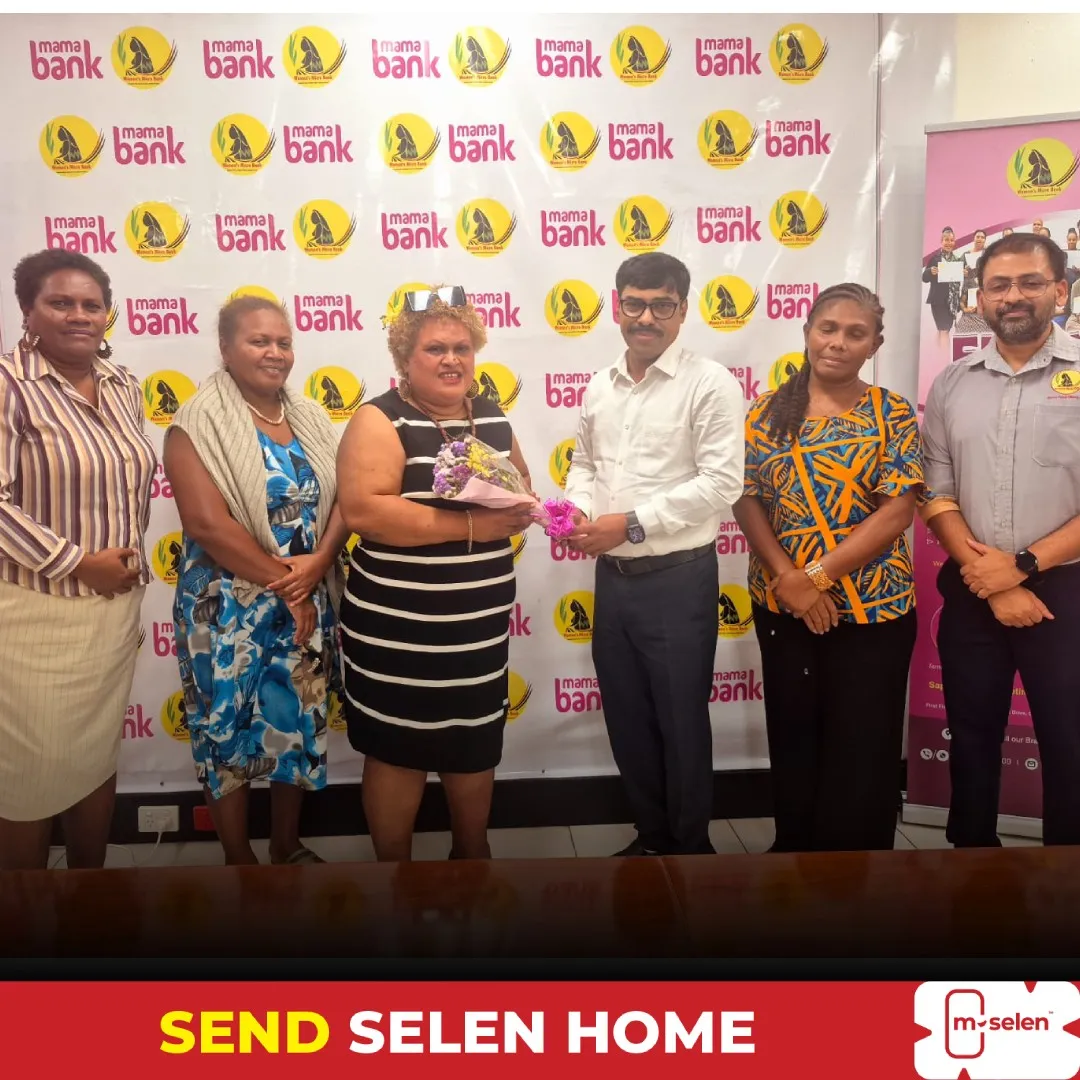
SIWIBA LOOKS TO MAMA BANK MODEL TO BOOST WOMEN’S ACCESS TO FINANCE By ULUTAH GINA Solomon Star, Honolulu, Hawaii... The Solomon Islands Women in Business Association (SIWIBA) is exploring the possibility of adapting lessons from Papua New Guinea’s women-focused banking model to improve access to finance and financial services for women entrepreneurs in Solomon Islands. The move follows a strategic meeting between SIWIBA and the PNG Women’s Micro Bank Limited, popularly known as Mama Bank, in Papua New Guinea, where the two organisations discussed opportunities for collaboration, knowledge exchange and women’s economic empowerment. SIWIBA President Julie Gegeu Haro said the engagement was important as Solomon Islands continues to look for practical ways to help women establish, formalise and grow their businesses. “Access to appropriate financial services and financial education is critical for women entrepreneurs to establish, formalise, grow and sustain their businesses,” Mrs Haro said. The SIWIBA delegation, led by Mrs Haro, Vice President Dr Donna Marie Wate and Acting Chief Executive Officer Jessica Warahiru Rapeiasi, together with Government Officer Melinda Kii, met with the Chief Executive Officer [CEO] of Mama Bank and its Project Manager last week at Port Moresby. The Mama Bank team shared its experience in providing financial services, financial education and business support specifically targeted at women. Established in 2010 as the PNG Women in Business Microfinance Institute Limited, the institution received its banking licence from the Bank of Papua New Guinea in May 2014, becoming the first women-focused licensed microbank in Papua New Guinea and the Pacific region, according to SIWIBA. Mama Bank currently serves more than 95,000 clients and focuses on improving women's access to finance and financial literacy. For SIWIBA, the meeting provided an opportunity to examine how some elements of the Mama Bank model could potentially be relevant to Solomon Islands. Discussions covered women's access to finance, financial literacy, micro-enterprise development, savings and inclusive banking services. Mrs Haro said the purpose was not simply to learn from another financial institution but to identify practical approaches that could strengthen opportunities for Solomon Islands women. “We need to learn from models that are already working in the Pacific and identify what can be adapted to our own context,” she said. She said stronger partnerships between women's business organisations and financial institutions could help address barriers that prevent women from accessing finance and expanding their enterprises. The engagement also explored potential areas for future collaboration between SIWIBA and Mama Bank, including knowledge sharing, capacity building, financial inclusion and enterprise development. Mrs Haro expressed appreciation to Mama Bank for sharing its experience and said SIWIBA remained committed to building strategic partnerships that could create greater economic opportunities for women. “Our commitment is to strengthen opportunities for women entrepreneurs through strategic partnerships, capacity building and greater access to financial services,” she said. SIWIBA said it would continue discussions with Mama Bank and other relevant partners to explore opportunities for regional cooperation and women's economic empowerment. The association said lessons from the PNG experience could contribute to ongoing efforts to strengthen women's participation in the Solomon Islands economy, particularly through improved access to finance, financial knowledge and business support. The meeting forms part of SIWIBA's broader efforts to build regional partnerships and identify practical solutions to help women start, formalise, grow and sustain businesses. Ends///
Rafa Lea’i scores a hat-trick as Central Coast FC beats Galaxy FC 3-2 in extra time to reach the OFC Champions League Final. A hat-trick from Rafa Lea’i sent Central Coast FC into the OFC Champions League Final with a heart-stopping, pulsating 3-2 extra-time victory over Galaxy FC in a semi-final match for the ages [...]
The post LEA’I HAT-TRICK SENDS CENTRAL COAST FC TO FINAL appeared first on Tavuli News (Solomon Islands) .
TSI Calls for Transparency and Accountability in Political Appointments Transparency Solomon Islands (TSI) has called on the GREAT-led Executive Government to ensure greater transparency, integrity and accountability in the appointment and management of political appointees. TSI said while it recognizes that political appointments are a standard practice intended to help governments implement their policy agendas, the reported scale of the current appointments and the lack of... publicly available information about the positions are concerning. The organisation said the Government has an urgent obligation to explain the roles, responsibilities and costs associated with its Political Appointees (PAs). TSI said reports indicate that there are currently 58 political appointees, with many reportedly appointed at the “superscale” level, raising concerns about the impact of the appointments on limited public finances. The organisation's concerns come against the backdrop of the World Bank’s August 2026 Solomon Islands Economic Update, which it said warned of an uneven economic recovery, rising inflation and cash reserves covering less than one month of government spending. TSI said the public sector wage bill has also nearly doubled compared with the pre-pandemic period, arguing that the Government must carefully consider any expansion of its political payroll. It further raised concerns that some political appointments could be perceived as being influenced by political considerations among the six parties forming the GREAT Coalition rather than being based primarily on professional expertise and the capacity to deliver government priorities. However, TSI stressed that it is not calling for the abolition of political appointments, but instead for the immediate professionalisation and strengthening of the system. The organisation has called on the Government to introduce clear job descriptions and measurable performance outcomes for every political appointee. It also wants the Government to clarify how political appointments complement, rather than duplicate or undermine, the established machinery of government and the responsibilities of career public servants. TSI said appointments should be based on professional competence and the ability to deliver national priorities, rather than political, church or family affiliations. The organisation is also calling for public disclosure of the total remuneration costs associated with political offices and the establishment of a performance monitoring framework to assess productivity, performance and results. TSI calls for disclosure TSI said growing public concern over the number of political appointees could be addressed through greater transparency. It is therefore calling on the GREAT-led Government to: 1. Publish the official number and names of all current political appointees. 2. Disclose the Terms of Reference, reporting lines and remuneration packages for each position. 3. Demonstrate the necessity of each position and how it contributes to specific and measurable national development objectives. TSI said withholding official information allows speculation to grow and urged the Government to provide the public with clear and verifiable information about the appointments. “Public money must yield public results,” TSI said, stressing that transparency and accountability are essential to maintaining public trust. The organisation said a government that demonstrates clear plans, professional execution and measurable results can turn public hope into trust. However, it warned that expanding government structures at the expense of taxpayers, without demonstrating clear results, risks undermining public confidence. TSI urged the GREAT-led Executive Government to act openly and demonstrate that political appointments are public, accountable and results-oriented. “Transparency is not a critique—it is a requirement for good governance,” TSI said.
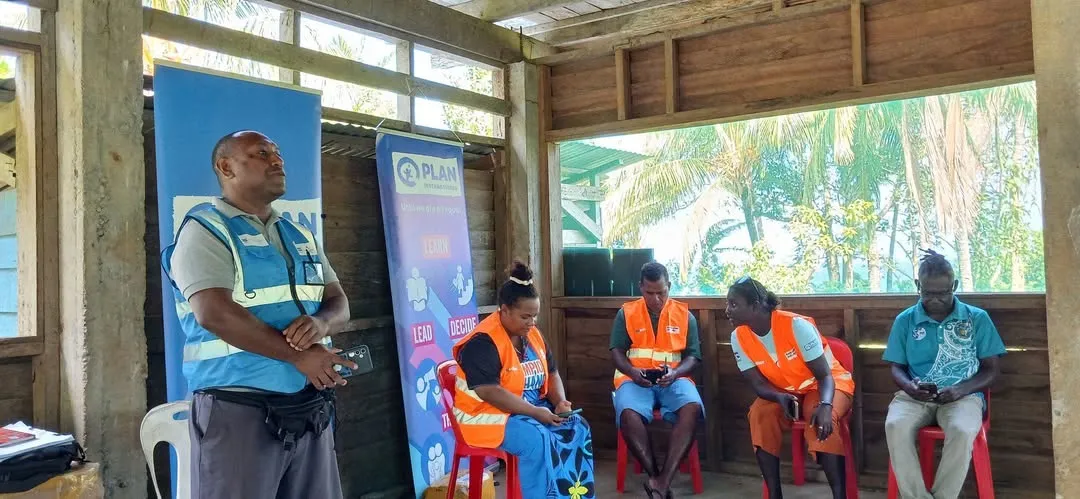
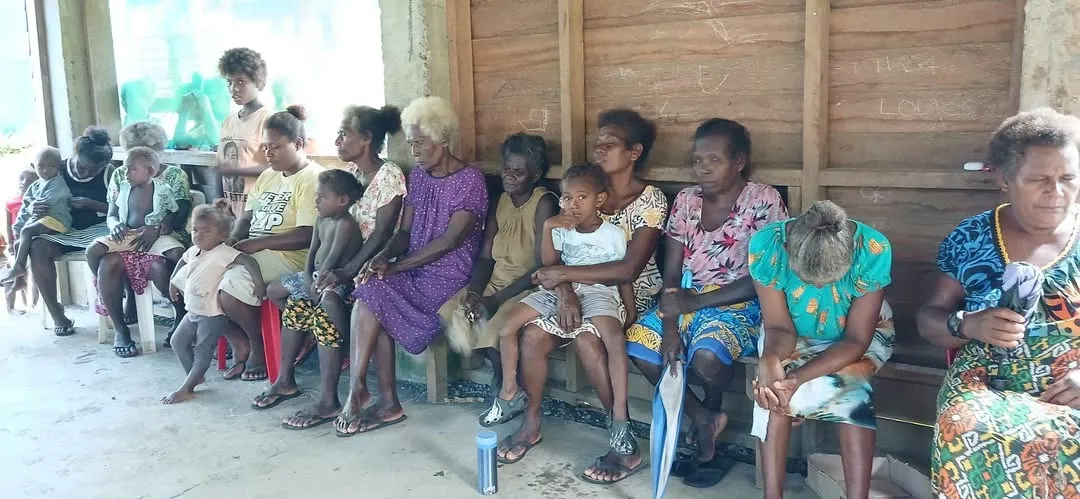
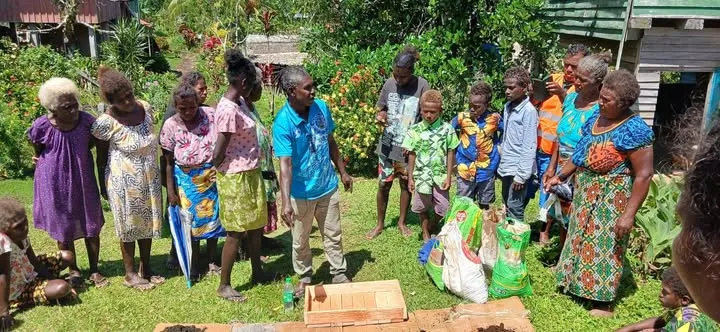
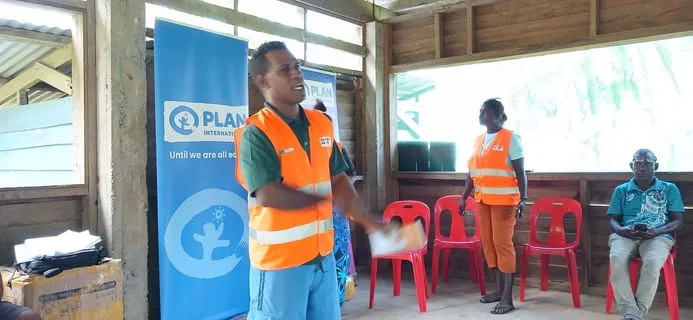
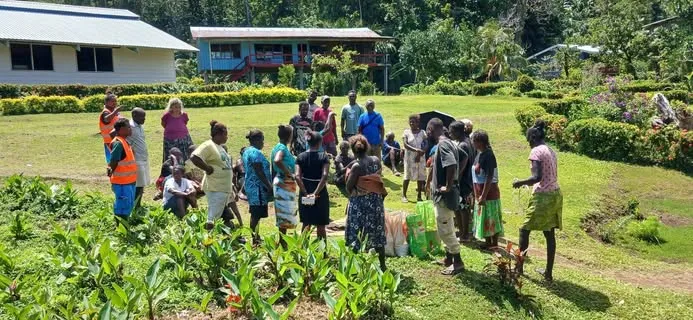
PLAN International has deployed a team to Ranonga with emergency supplies and support for some of the island’s most isolated communities affected by Tropical Cyclone Maila. The team, which includes officers from the social and livelihood sectors, arrived safely at Mondo yesterday and began programmes and activities there this morning. Emergency Response Manager for TC Maila, Henson Makoani, said the team will visit five communities to conduct awareness activities and distribu...te essential supplies. He said the assistance includes an agriculture toolkit for every household, dignity kits and basic hygiene supplies for girls aged between 13 and 19, as well as school kits for children aged between five and 11. “These communities are badly affected by the cyclone but they are isolated and hard to reach. “Plan International with the support of partners are happy to lend a hand,” Makoani said. He said the supplies are part of Plan International’s recovery programmes and activities aimed at supporting communities affected by the cyclone. Makoani said the communities were identified following assessments conducted by Plan International after Cyclone Maila, with the needs of each community determined through the assessment process. He acknowledged the Australian Government and the Asia Pacific Humanitarian Fund for supporting the response activity.
BY NED GAGAHE
The people of Thathaje are known for their hard work, resilience and strength.
Surrounded by fertile land and the sea, the community has for decades relied on fishing, farming and other small-scale activities to sustain family life.
What began as a small settlement in Gao/Bugotu, Isabel province, Thathaje has grown into a community of more than 200 people.
But beneath that growth lies a troubling reality.
For many families in Thathaje, opportunities remain limited. Education is difficult to access, health services are far away and government assistance is often described as inadequate.
During a recent visit to the community last month, the Island Sun found a people determined to improve their lives, but struggling with many of the basic services and opportunities that communities elsewhere take for granted.
Education remains a major challenge
Community elder and women’s leader Agnes Tafo said education remains one of the biggest challenges facing women and children in Thathaje.
“Many women in this community have no formal education because there is no school here,” Tafo said.
She said only a small number of women had received formal education, while most remained in the community.
The lack of access to education has also affected the next generation.
Many children are unable to progress beyond basic schooling, while only a few go on to tertiary education.
Mrs Tafo fears that pathway is becoming increasingly difficult for young people today, particularly women.
For many families, children and young people are also an important part of household labour. Fishing, gardening and other income-generating activities often depend on their contribution.
Two young kids fishing at the seafront of the village, Photo by Ned Gagahe
This creates a difficult choice for families already struggling to meet school fees and other household expenses.
Women turn to the mining camps for markets
Small-scale fishing and farming remain the main sources of cash income for many families.
The nearby mining operations at Havihua and Suma have also created some opportunities for women to sell garden produce and other food.
Some women and mothers in Thathaje sit down for a meeting, Photo by Ned Gagahe
Mrs Tafo said women sometimes take vegetables and other produce to the mining camps to sell.
But opportunities remain limited.
“We have opportunities to sell our market produce at the mining camps,” she said. “But often the only opportunity available to us is selling market goods in the village.”
She said access to seeds and other agricultural inputs was also a challenge.
“There are no seeds to plant. We just collect what we have — pawpaw, eggplant, beans and other things.”
For a community surrounded by fertile land, Tafo believes there is greater potential for agriculture if people receive the necessary support.
Health services a burden for women
Access to health care, particularly for women and mothers, remains another major concern.
Mrs Tafo said people from Thathaje have traditionally travelled to health facilities at Vulavu or Kalenga when they need medical attention.
But transport is not always available.
“When there is no OBM and no petrol, we don’t go,” she said.
The distance and cost of transport can become particularly serious when women are pregnant or when someone is seriously ill.
At times, Mrs Tafo said, mothers have been forced to deliver their babies in the village because they cannot reach a health facility.
Thathaje women leader Agnes Tafo, Photo by Ned Gagahe
“If there is someone sick, we have to find a way to access health and medical services,” she said.
Government services remain limited
Mrs Tafo said the community has received some assistance from the provincial government.
The Provincial Member has assisted with the construction of a new school, while sanitation support has included Sato Pan toilets. Gardening tools and other equipment have also recently been provided.
Sad state of water supply in Thathaje, Photo by Ned Gagahe
But she believes more needs to be done.
“We are a small village, but nobody seems to notice us,” Tafo said.
“We need our MPs and the government to look at our community and support us.”
She said national MPs had not provided the level of assistance the community needed.
“In recent years, there has never been a single MP who visited us. No teams from the government or NGOs have ever visited us. This is sad.”
She appeals to leaders to visit the community, listen to its concerns and support its development.
An elder’s view of a changing community
Chris Vahia, one of Thathaje’s elders, belongs to a generation that helped build the community and its history.
Vahia served for eight years as Constituency Development Officer under former Gao/Bugotu MP Samuel Manetoali.
Village elder Chris Vahia, Photo by Ned Gagahe
His career has also taken him through various institutions, including the provincial government, keeping him away from the community for much of his working life.
Returning home, however, has given him a different perspective on the challenges facing Thathaje.
“There are a lot of challenges I see since I returned home,” he said.
Vahia recalled that life in the community was once much simpler.
“Life was very simple and easy.”
Family, culture and community were at the centre of everyday life, he said, providing children with a strong sense of belonging and security.
Today, he sees a community facing a different set of pressures.
“I see life in the village as a big challenge, especially establishing the new school. It is a big challenge.”
A school in need of more than classrooms
The new school has become one of the community’s most important priorities.
Vahia said establishing the school was difficult, but completing the classrooms alone would not solve all of the community’s education needs.
“Life in the village needs a lot of things. The school itself will need a small clinic, a library, maybe dormitories and staff houses. I see it that way.”
He also believes stronger cooperation within the community is needed.
“Continuing with these challenges, I see there is a lack of people working together. I don’t know whether they have differences, but the chiefs have struggled hard to unite us together.”
For Vahia, development is not simply about infrastructure. It also requires people to work together and find common ground.
Sanitation remains a concern
Sanitation is another issue confronting the community.
Vahia said rubbish and pollution are affecting the river and sea, which are important sources of food and water for villagers.
“Sanitation is very important because the village needs sanitation. People pollute the river and pollute the sea.”
The provincial government has provided some sanitation assistance, including Sato Pan toilets.
But Vahia said the facilities are still insufficient.
“Only a few people use these. Most do not have them yet. They are also shared between houses. It is not really set up.”
Housing and living standards
The standard of housing also reflects the economic challenges facing Thathaje.
A traditional leaf house in Thathaje, Photo by Ned Gagahe
Vahia said only a small number of households have permanent roofing, while most families continue to live in traditional leaf houses.
A semi-permanent building in the community, Photo by Ned Gagahe
The gradual transition to permanent housing is another sign of the economic limitations facing families.
Fishing, farming and small markets
When asked about income, Vahia identified fishing and market activities as the main sources of cash for individuals.
“It is the market that individuals can make money from in the community, also fishing.”
But he said earning an income remains difficult.
“It’s very hard, how I see it. The source of income is hard.”
Thathaje’s fertile land offers potential for greater agricultural production, but residents say they lack the resources and support needed to fully develop that potential.
Mining brings new opportunities
Thathaje’s location near major mining operations has also changed the economic landscape.
The community lies close to Thousand Ships Bay, an area of considerable historical and cultural significance.
The bay is associated with Spanish explorer Álvaro de Mendaña, who encountered the harbour during his 1568 voyage.
Today, three mining companies have established camps in the wider area — Pacific Nickel Mines Kolosori Limited (PNMKL) at Havihua, Solomon Islands Resources Company Limited (SIRCL) at Suma, and Far East Resources Company Limited on San Jorge Island.
PNMKL and SIRCL are currently operating, while the mining activities have created employment and market opportunities for some communities living nearby.
Vahia said some men from Thathaje are now working at the nearby mining camps.
The workers operate on a rotational basis.
“Every two weeks they return to see their families,” Vahia said, explaining that some workers remain away for extended periods depending on their work rotations.
Around 6 to 7 men may be away working at a time.
For families, the income provides an important source of support.
For women, the mining camps have also become potential markets for garden produce.
But residents say mining-related opportunities alone cannot address the broader development needs of the community.
Distance makes basic services difficult
Health and other government services remain a challenge because of the community’s location.
Vahia said there are two clinics in the wider area, but reaching them requires transport.
People can sometimes walk to Sepi, but bad weather makes travel difficult.
“When the weather is bad, it is hard,” he said.
Transport is therefore central to access to health care, education, markets and government services.
At the national level, Vahia said the current MP had only recently begun supporting the constituency, including assistance with boats.
But he believes national leaders need to spend more time at the grassroots.
“They should come down to the grassroots level and hear us.”
The community also faces difficulties completing its new church building, adding another need to its long list of priorities.
A community with potential
Despite the challenges, Vahia remains convinced that Thathaje has considerable potential.
The fertile land could support more farming. The surrounding sea provides opportunities for fishing. Nearby mining operations have opened some employment and market opportunities.
But residents need the means to turn those opportunities into sustainable livelihoods.
They need better access to education, health care, transport, sanitation, agricultural support and government services.
Thathaje’s story is therefore not simply one of hardship.
It is a story of resilience.
For Thathaje, the next chapter will depend on whether government, communities and other stakeholders can help turn its natural resources, hardworking population and fertile land into lasting opportunities.
As Mrs Tafo put it: “I appeal to our leaders to assist us with our work and help uplift our community.”
For the people of Thathaje, that support cannot come soon enough.
*Reporting for this story was supported by Pacific Media Assistance Scheme (PACMAS).
For feedback, contact: nedgagahe@gmail.com
Editor: irwin3angiki@gmail.com
BY JOHN HOUANIHAU
The Solomon Islands Government’s planned shelter recovery programme for communities affected by Tropical Cyclone Maila could cost about a million with implementation projected to begin next year, subject to proper planning, costing, design and eligibility assessments.
Permanent Secretary of the Ministry of Environment, Climate Change, Disaster Management and Meteorology (MECDM), David Hiriasia, said the above at a press conference today.
He said the government is still working on the details of the recovery programme.
He said the programme will provide shelter assistance to families in Western and Choiseul provinces whose homes were completely destroyed by the cyclone.
Hiriasia said the government is considering several housing options as part of the recovery programme, including standard two-bedroom houses and three FAB houses.
He said the options were still being assessed as the government works with relevant ministries to determine the most affordable and practical housing solution.
He said the shelter recovery initiative is significant because the government had not undertaken a similar programme on this scale since Tropical Cyclone Namu.
“This is the first time where government will be going shelter recovery,” he said.
He said the programme will take time because the government needs to ensure the proposed housing solution is affordable and can be delivered within approved budget.
“We are currently working with relevant ministries, particularly the Ministry of Infrastructure Development (MID), to develop house designs, bills of quantities and construction costs. We are also considering whether to directly construct the houses or provide building materials to affected households as part of the recovery programme,” he said.
He said the proposed standard two-bedroom houses will be designed to allow recipients to expand them in the future.
Hiriasia acknowledged concerns from affected communities over delays but said careful planning was necessary to ensure the programme is properly implemented.
He said accurate and verified assessment data will also be used to determine which households qualify for shelter assistance.
“We need valid data to make sure the house inside the data deserves it,” Hiriasia said.
He appeals to affected residents in Western and Choiseul provinces to remain patient while the government finalises the design, costing, eligibility and delivery arrangements.
Hiriasia said the priority is to ensure assistance reaches people whose homes had been genuinely destroyed or rendered uninhabitable by Cyclone Maila.
He said the recovery programme will also focus on essential community infrastructure, including schools and health clinics damaged by the cyclone.
He said discussions are continuing with the Ministry of Education and Human Resources Development and the Ministry of Health and Medical Services to determine recovery needs in the affected areas.
“Assessments have already been conducted with government agencies, provincial authorities and development partners to identify damaged schools and clinics and determine priorities for allocating recovery resources,” he said.
Hiriasia said the shelter and infrastructure programmes forms part of the government’s transition from the immediate response to the longer-term recovery phase following Cyclone Maila.
He acknowledged the support of the World Bank, United Nations agencies, Papua New Guinea Red Cross, Asian Development Bank, Australian and New Zealand governments, government ministries, provincial governments, businesses and individuals.
He said continued cooperation among the government, provinces and development partners is critical as the country moves into the recovery and rebuilding phase.
For feedback, contact: jhouanihau24@gmail.com
Editor: irwin3angiki@gmail.com
BY JOHN HOUANIHAU
Response to Tropical Cyclone Maila is gradually moving into the recovery phase, with most major emergency operations completed in the worst-affected areas of Western and Choiseul provinces.
Director of the National Disaster Council (NDC) and Chairman of the National Disaster Operations Centre (N-DOC), Jonathan Tafiariki, made the statement during a press conference at the National Disaster Management Office today (NDMO).
Tafiariki said the government activated its national disaster management arrangements following Cyclone Maila, triggering a whole-of-government response to support affected communities.
“Following the declaration of a disaster in Western and Choiseul provinces, the NDC assumed overall responsibility, while the National Disaster Operations Committee (N-DOC) and Provincial Disaster Operations Committees (P-DOCs) coordinated emergency response activities,” he said.
He said the response was guided by the Government-approved National Response and Early Recovery Plan of Action.
Tafiariki said significant progress has been made in restoring essential services, particularly health, education and livelihoods.
He said the health sector has stabilised its services and scaled down its large emergency response component.
“Importantly, no disease outbreaks have been detected in either affected province. We were fortunate that there was no outbreak detected from the two provinces, the disaster had not resulted in a secondary health crisis,” Tafiariki said.
“The education sector has also completed much of its emergency response, allowing children to continue their education and schools to return towards normal operations. Some recovery measures will require continued maintenance and assistance.
“In terms of emergency food and non-food assistance, Choiseul has completed a large portion of its relief distributions. Western Province has also made substantial progress, although some communities are still awaiting final distributions,” he said.
Tafiariki said most government agencies had completed major emergency activities and are now transitioning into longer-term recovery.
Meanwhile, the disaster order remains under review. N-DOC and P-DOCs are assessing the response and will advise the NDC on recommendations for revoking the order.
Tafiariki stressed that outstanding relief activities will continue while the government shifts its focus towards recovery and rebuilding affected communities.
For feedback, contact: jhouanihau24@gmail.com
Editor: irwin3angiki@gmail.com
BY RODRICK DESURI
Auki
The Buma Parish Women’s Coordinator, Seno Nauta, has encouraged Catholic mothers to become bridges of peace and unity in their families, communities and parishes.
She made the call during the closing of the Assumption of Mary celebration held over the weekend at Buma Parish in West Kwaio, Malaita.
She said the Blessed Virgin Mary had shown mothers a pathway of faith, peace and unity, urging them to follow her example in their daily lives.
“As Catholic mothers, we should be bridges of peace, like our Blessed Virgin Mary,” she said.
Nauta also encourages zone coordinators, village coordinators and women leaders to work collaboratively with their members in organising and participating in parish programmes.
“Therefore, as your parish coordinator, I encourage you zone coordinators, village coordinators and women leaders to work collaboratively with our members to organise and participate in organised programmes,” she said.
She said it is her faith and prayer that Catholic mothers will remain united in one faith, continuing to testify to the truth about the Blessed Virgin Mary and serving as ambassadors of Christ.
Nauta said the formation and discussion sessions conducted during the celebration had helped mothers address and overcome challenges they faced through the intercession of the Blessed Virgin Mary.
She encourages the mothers to continue relying on their faith and prayers, saying Mary should remain a source of strength and inspiration as they serve their families, communities and the Church.
For feedback, contact: rodrickdesuri50@gmail.com
Editor: irwin3angiki@gmail.com
BY RODRICK DESURI
Auki
The China Civil Engineering Construction Corporation (CCECC) has called on the public, motorists and people under the influence of alcohol to stop destroying or damaging construction signs along the Auki Road project.
The call follows observations by CCECC of incidents involving drunken individuals, careless motorists and members of the public damaging or ignoring construction signs placed to warn people of ongoing road works.
Speaking during a community awareness programme at the Auki Community High School this morning, CCECC Liaison officer, George Foubata said such behaviour is unacceptable, particularly as the Auki Road project has entered its final phase.
He said the actions of a few individuals could disrupt construction work and increase costs, despite the project being intended to benefit the people of Malaita.
“From our experience and observation, we have witnessed construction signs being destroyed by drunk people and vehicle drivers,” Foubata said.
He said similar incidents occurred during the tar-sealing phase several weeks ago, when some motorists drove into areas marked with construction signs, disrupting ongoing works.
“Even during the tar-sealing phase, we witnessed vehicles entering areas where we had placed construction signs to show that construction was ongoing. It is sad that some drivers continued to disrupt the construction,” he said.
Foubata urges the public to change such attitudes as CCECC has now commenced the final asphalt surfacing phase of the road project.
“This is the final phase, and the materials we will be using are very expensive. So, I encourage you to keep out of the construction areas to avoid disruption and unnecessary costs when materials are wasted,” he said.
He also warns members of the public, students and motorists to stay away from construction sites and machinery.
Foubata said CCECC will not be responsible for injuries or damages resulting from people entering restricted construction areas, as public access to such areas is not part of the agreed project arrangements.
“I call upon our people, students and vehicle drivers to stay away from the road construction sites and areas,” he said.
For feedback, contact: rodrickdesuri50@gmail.com
Editor: irwin3angiki@gmail.com
BY RODRICK DESURI
Auki
Residents, teachers and students in Auki have applauded the China Civil Engineering Construction Corporation (CCECC) and Auki Traffic Police for conducting a community awareness programme on road construction and traffic safety.
The awareness programme aims to inform and educate the public about the ongoing Auki Road improvement project, as well as traffic rules and regulations.
Speaking to this paper, Malaita Provincial Police Commander, Superintendent Michael Ramosaea said the awareness is important to provide the public with first-hand information about the road project and traffic safety.
He said the programme will help Auki residents, vehicle drivers, teachers, students and children better understand traffic rules and take necessary precautions when using or crossing the road.
“It is very important, especially for Auki residents, vehicle drivers, teachers, students and children. This is about taking precautions when crossing the road and respecting the construction sites of the road project,” Ramosaea said.
He said the road improvement project is progressing well and approaching completion, making it important for the public to understand and follow traffic rules and regulations.
“Since our road improvement project is going well and approaching completion, it is best that we must know the traffic rules and regulations,” he said.
He hopes that the awareness programme will help reduce accidents even though several road accident cases have already occurred.
The awareness has already been conducted at several schools and communities in Auki and will continue in other areas.
The team will move to Aligegeo and Auki Central Market as part of the ongoing outreach.
Principal of Auki Secondary School, Andrew Fuato’o, thanked the CCECC liaison officer and traffic officers for bringing the awareness to the school.
He said the programme is significant for both teachers and students because the school is located near areas affected by traffic and road construction activities.
“I am really thankful for the awareness outreach because our school is one of the most vulnerable to traffic and construction activities. We really appreciate it,” Fuato’o said.
He also calls on CCECC to consider constructing a bus stop bay near the school to reduce students’ movement across the road and improve their safety.
For feedback, contact: rodrickdesuri50@gmail.com
Editor: irwin3angiki@gmail.com
BY IRWIN ANGIKI
The GREAT government has created three private mineral holding companies as part of its reforms in the mining sector.
Prime Minister Matthew Wale is the major shareholder at 50 percent of the mother company called Solomon Islands Mineral Holding Ltd (SIMHL), with Finance Minister Gordon Darcy Lilo and Mines Minister Derek Manuari at 25 percent each.
The sole director of SIMHL is the Special Secretary to the Prime Minister (SSPM) Celsius Talifilu. SIMHL was incorporated on August 11, 2026, and addressed to the Office of the Prime Minister, Company Haus records show.
Two other companies with similar names are registered with SIMHL as sole shareholder – Solomon Islands Mineral Holding – Exploration Limited (SIMH-EL) and Solomon Islands Mineral Holding – Mining Limited (SIMH-ML).
SIMH-EL was incorporated on August 12, 2026 and addressed to the Ministry of Mines, Energy and Rural Electrification (MMERE).
The director for SIMH-EL is Permanent Secretary of MMERE Dr Chris Vehe.
SIMH-ML was incorporated on August 12, 2026 and shares the same address with SIMH-EL.
The directors of SIMH-ML are MMERE PS Vehe and former permanent secretary of the Ministry of Finance McKinnie Dentana.
Mines Minister Mr Manuari told parliament on August 7 that the GREAT government was embarking on reforms in the mining sector aimed at enhancing benefits for resource owners and government.
“GREAT Coalition Government has further strengthened the proposed Mineral Resources Bill through five strategic policy reforms that fundamentally redefine the manner in which Solomon Islands will govern, develop and benefit from its mineral wealth,” Manuari said.
“These reforms reflect the Government’s commitment to building a modern, transparent and nationally beneficial mining sector that promotes responsible investment while ensuring that the people of Solomon Islands receive a greater and more enduring share of the wealth generated from their natural resources.”
First of these reforms is a state equity participation framework overseeing the establishment of the SIMHL which should allow government statutory back-in rights of up to 25 percent equity in eligible mining projects.
This should enable “the State to benefit not only from royalties and taxation but also from dividends and long-term capital growth arising from successful mining operations”, Manuari told parliament.
The framework is also proposed to establish a mining equity participation fund to manage state equity interests and strengthen participation of customary landowners. It should also establish an independent national mineral assay laboratory for ore verification, mineral valuation, quality assurance and royalty verification services.
Back-in right refers to a statutory or contractual option that allows a party – government, state-owned enterprise, or an original property owner – to reclaim a specific equity ownership stake or working interest in a project after certain conditions, milestones, or cost recoveries are met.
The office of the prime minister and PS Vehe have not responded to questions furnished them earlier today.
Concerns surrounding the creation of private companies include questions of what steps to be taken once either of the shareholders – Wale, Lilo and Manuari – is no longer a member of government, reshuffled to another ministry, or voted out in the coming elections. Similar questions linger for the directors – Talifilu, Vehe, Dentana – if either loses office or fall out from grace of the ruling government.
Furthermore, since the companies are private, concerns say the shareholders and directors stand to enjoy personal benefits from the companies’ revenues – monies that are meant for the government and people.
For feedback, contact: irwin3angiki@gmail.com
Editor: irwin3angiki@gmail.com
BY CHARLES STENNETT
Prime Minister Matthew Wale has extended open arms to Papua New Guinea companies to invest in Solomon Islands in the Melanesian way to enable both countries to prosper.
A statement from the Prime Minister’s Office said speaking at the inaugural Papua New Guinea-Solomon Islands Investment Forum in Honiara today, Prime Minister said Solomon Islands has benefited from investments brought in by Papua New Guinea companies.
“Solomon Islands welcomes your capital, knowledge and experience. Come prepared to build long-term partnerships. Work with our businesses. Train our people. Respect our laws and landowners. Help us process more of what we produce. If we approach investment on those terms, in the Melanesian way, as an exchange that obligates and enriches both sides, both countries will prosper,” PM Wale said.
He said the success of the conference will not be measured by the quality of presentations or the number of participants. It will be measured by the investments that follow, the joint ventures established, the indigenous businesses that scale up, the jobs created, and the prosperity generated for both our nations.
Over the past years, Papua New Guinea companies have invested about SBD$1.8 billion in the areas of banking and finance, telecommunications, transport, logistics, hospitality, agriculture and professional services.
Organised by the Solomon Islands Chamber of Commerce and Industry and the Papua New Guinea Solomon Islands Business Council, the Investment Conference pooled together government leaders, investors and business representatives to explore opportunities in sectors including agriculture, fisheries, tourism, infrastructure, energy and financial services, with the aim to strengthen trade and investment ties between the two countries.
The Conference will end tomorrow.
For feedback, contact: charsstennett@gmail.com
Editor: irwin3angiki@gmail.com
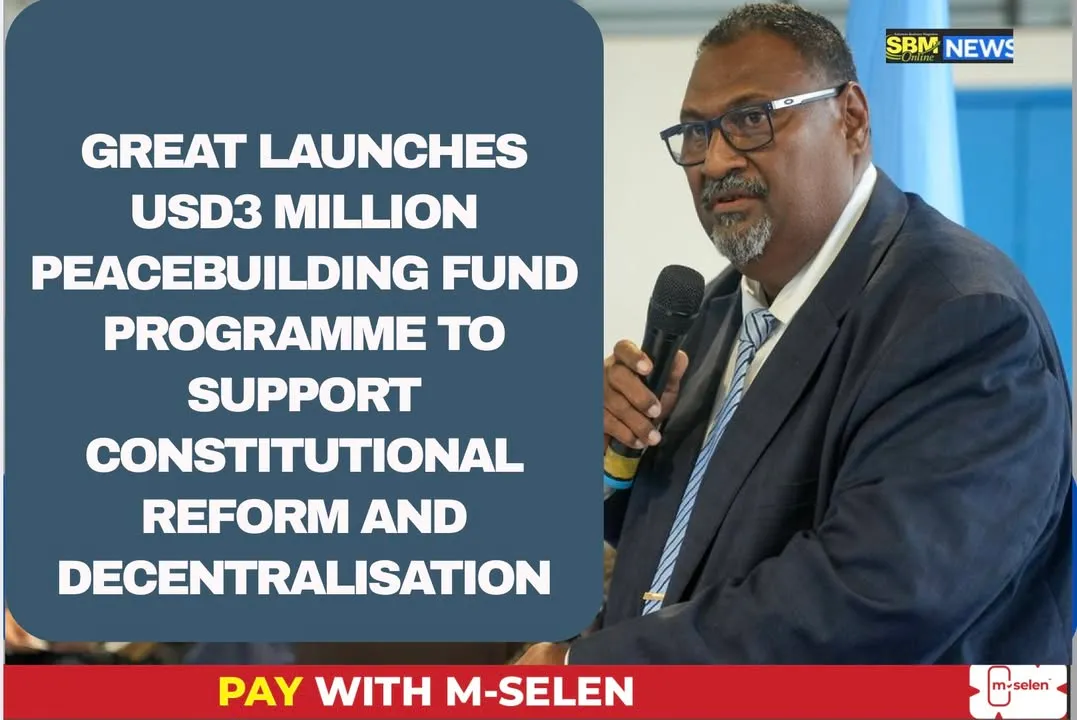
National Government launches US$3 million peacebuilding fund programme to support constitutional reform and decentralisation HONIARA, 19 August 2026 – The Solomon Islands Government today officially launched the Peacebuilding Fund Programme, a 24-month initiative aimed at strengthening peace, social cohesion, inclusive governance and decentralisation across all nine provinces.
Speaking at the launch in Honiara, Hon. George Temahua, Minister for Traditional Governance, Peace a...nd Ecclesiastical Affairs, said the programme comes at a "significant time" in the country’s peacebuilding and constitutional reform journey.
"The Townsville Peace Agreement, signed in November 2000, was an important milestone. More than two decades later, we continue to draw important lessons from that experience," Minister Temahua said. "One of those lessons is that lasting peace requires more than resolving immediate conflict. It requires us to address the underlying political, social and economic issues that can create tensions within our society."
The US$3 million programme, approved in 2025, will run from April 2026 to April 2028. It is jointly delivered by UNDP, UNICEF and UN Women, with UNDP as lead convenor, in close partnership with the Government of Solomon Islands.
Minister Temahua said the purpose of the investment is to support Solomon Islands to "seize the renewed momentum around constitutional reform and decentralisation" and to ensure the process is "transparent, accountable, inclusive and evidence-based."
The programme will provide technical assistance to the Constitutional Reform Unit, the Constituent Assembly, and other institutions. It will also generate evidence on decentralisation options appropriate for Solomon Islands, and examine issues relating to rights, resources and gender-responsive governance.
"Effective decentralisation is also about rebuilding and strengthening the social contract between the people and the state," the Minister said. "Our people want improved services. They want development that reaches their communities. They want their voices to be heard."
The programme will support initiatives at provincial, constituency and ward levels and will assist in the implementation of the Constituency Development Fund Act 2023, with a focus on inclusive and gender-responsive planning through Constituency Development Committees.
Minister Temahua emphasised that women and youth must be central to the process.
"Women are not simply beneficiaries. They are leaders, community organisers, peacebuilders and decision-makers. Our youth have an important role to play in shaping the future of Solomon Islands," he said.
The programme will also promote public awareness and country-wide dialogues through radio, TV, SMS and social media to ensure people across all provinces can participate in shaping reform decisions.
Minister Temahua acknowledged the support of the United Nations Secretary-General’s Peacebuilding Fund and the partnership of UNDP, UNICEF and UN Women. He also thanked the New Zealand Government for its complementary contribution toward a national peacebuilding and governance perception survey.
"The United Nations and our development partners can provide technical expertise and resources. But the reform choices must be informed by the people of Solomon Islands and led through our national institutions," he said.
"The success of this programme should be measured by whether it helps us build stronger institutions, improve public trust, and create governance arrangements that better respond to the needs of our people," Minister Temahua added.
He concluded by calling for continued partnership in the spirit of "transparency, accountability, inclusion and national ownership" and urged all Solomon Islanders to use this opportunity to build a more peaceful, inclusive and united nation.
-ENDS-
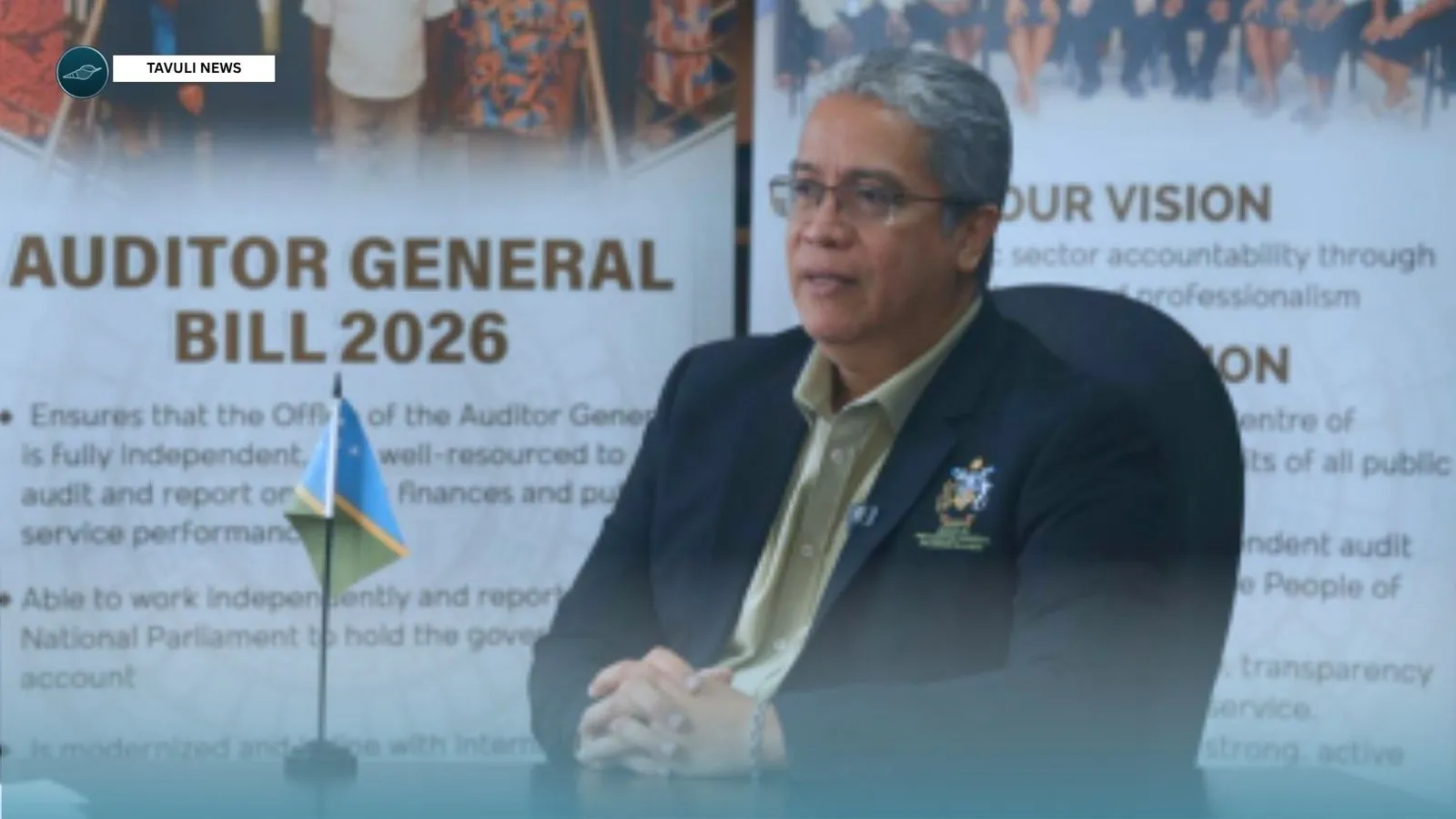
Auditor-General David Teika Dennis resigns to become Permanent Secretary for Solomon Islands Ministry of Finance and Treasury.
The Auditor General, Mr. David Teika Dennis, has formally tendered his resignation letter to His Excellency the Governor General, effective 25th August 2026. Mr. Dennis will transition to the role of Permanent Secretary for the Ministry of Finance and Treasury (MoFT), serving as the “Secretary” and primary “accountable officer” under the Public Financial Management (PFM) Act 2013.
Auditor General Dennis says the decision is driven by a strategic intent to support our Solomon Islands Government (SIG) to address the systemic Public Financial Management (PFM) “capacity gaps” identified in recent Government audits and the Public Expenditure and Financial Accountability (PEFA) Performance Assessments.
To maintain the trust, confidence, and credibility of the Office of the Auditor General (OAG), the transition approved by the public service commission is being managed under the strict ethical standards, in accordance with the SIOAG Code of Ethics and the Leadership Code, several safeguards have been implemented:
• Recusal and Delegation: Mr. Dennis has already recused himself from all active audits and investigations of the Ministry of Finance and Treasury.
• Conflict Management: Upon assuming the role of Permanent Secretary, Mr. Dennis will not participate in responding to audit queries for reports issued under his own signature as Auditor-General.
• Professional Secrecy: Mr. Dennis remains legally bound by the obligations of professional secrecy regarding sensitive information obtained during his tenure at the OAG.
To ensure OAG reform momentum continues without disruption, the current Deputy Auditor-General, Mr. Vincent Misi, will be Acting Auditor General until such time an appointment is made.
SOURCE// Office of the Auditor General – PRESS RELEASE
审计长大卫·泰卡·丹尼斯辞职,成为所罗门群岛财政与国库部(Ministry of Finance and Treasury)的常务秘书。
审计长大卫·泰卡·丹尼斯先生已正式向总督阁下提交辞职信,辞职生效日期为2026年8月25日。丹尼斯先生将转任财政与国库部的常务秘书,担任《2013年公共财政管理法》(Public Financial Management (PFM) Act 2013)下的“秘书”和主要“责任官员”。
审计长丹尼斯表示,此决定是出于战略意图,旨在支持我们所罗门群岛政府(SIG)解决近期政府审计和公共支出与财政问责(Public Expenditure and Financial Accountability (PEFA))绩效评估中识别出的系统性公共财政管理“能力缺口”。
为了维护审计长办公室(Office of the Auditor General, OAG)的信任、信心和信誉,公共服务委员会批准的过渡将严格遵循道德标准进行管理,并根据SIOAG道德规范和领导力规范实施了若干保障措施:
• 回避与委托:丹尼斯先生已主动回避财政与国库部的所有正在进行的审计和调查。
• 冲突管理:在担任常务秘书后,丹尼斯先生将不参与回应以他作为审计长签署的报告的审计查询。
• 职业保密:丹尼斯先生在OAG任职期间获得的敏感信息仍然受到职业保密义务的法律约束。
为了确保OAG改革的持续推进不受干扰,目前的副审计长文森特·米西先生将担任代理审计长,直到新任命产生。
来源//审计长办公室 – 新闻稿
Concrete works near Honiara’s Hot Bread Roundabout near completion, with two-lane section set to reopen soon. Concrete works on the busbays and parking areas on the landside section of the road between the Honiara City Council (HCC) Roundabout and Hot Bread Roundabout are approaching completion, marking another important step in the ongoing upgrade of Honiara’s [...]
The post HCC TO HOT BREAD ROAD SECTION NEARS COMPLETION appeared first on Tavuli News (Solomon Islands) .
‘SOLOMON TAIYO HAS ALWAYS BEEN PART OF MY KITCHEN’: MARAPE
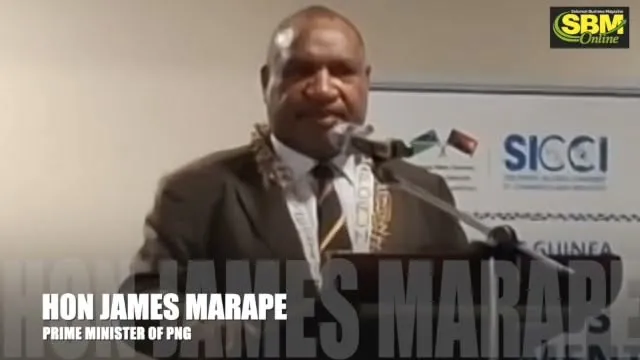
Papua New Guinea Prime Minister James Marape has revealed his personal love for Solomon Taiyo, drawing a rousing response from the audience at the inaugural Papua New Guinea–Solomon Islands Investment Conference in Honiara.
Speaking at the conference, held under the theme “From Opportunity to Investment: Building the PNG–Solomon Islands Growth Corridor,” Mr Marape spoke warmly about the locally produced canned tuna brand.
The PNG Prime Minister said Solomon Taiyo had been a familiar product in his household and revealed that both he and his wife enjoyed it.
He said Solomon Taiyo had “always been part of my kitchen,” prompting a strong and enthusiastic response from those attending the conference.
Mr Marape used Solomon Taiyo as an example of Solomon Islands’ manufacturing capacity and the products the country can produce for both domestic and regional markets.
He said the brand represented Solomon Islands manufacturing and demonstrated the potential for locally produced goods to become part of the wider Pacific market.
Solomon Taiyo is currently produced by Solomon Islands-based SoloTuna Limited at its tuna processing facility in Noro, Western Province.
Mr Marape’s remarks came as leaders from Papua New Guinea and Solomon Islands called for stronger investment and business links between the two neighbouring Melanesian countries.
The inaugural investment conference is focused on identifying opportunities for increased trade, investment and private-sector partnerships as both countries seek to build stronger economic ties.
End///...
‘SOLOMON TAIYO HAS ALWAYS BEEN PART OF MY KITCHEN’: MARAPE
巴布亚新几内亚总理詹姆斯·马拉佩在霍尼亚拉举行的首届巴布亚新几内亚-所罗门群岛投资会议上透露了他对所罗门泰优的个人喜爱,赢得了与会观众的热烈反响。
在以“从机遇到投资:建设巴新-所罗门群岛增长走廊”为主题的会议上,马拉佩先生热情地谈到了这一本地生产的罐装金枪鱼品牌。
巴新总理表示,所罗门泰优在他的家庭中是一个熟悉的产品,并透露他和妻子都很喜欢它。
他说,所罗门泰优“一直是我厨房的一部分”,引发了与会者的强烈和热情的反应。
马拉佩先生以所罗门泰优作为所罗门群岛制造能力的例子,展示了该国可以为国内和区域市场生产的产品。
他说,该品牌代表了所罗门群岛的制造业,并展示了本地生产的商品有潜力成为更广泛太平洋市场的一部分。
所罗门泰优目前由位于所罗门群岛的SoloTuna有限公司在西部省诺罗的金枪鱼加工厂生产。
马拉佩的发言正值巴布亚新几内亚和所罗门群岛的领导人呼吁加强两国之间的投资和商业联系。
首届投资会议的重点是识别增加贸易、投资和私营部门合作的机会,双方都希望建立更强的经济联系。
结束///...
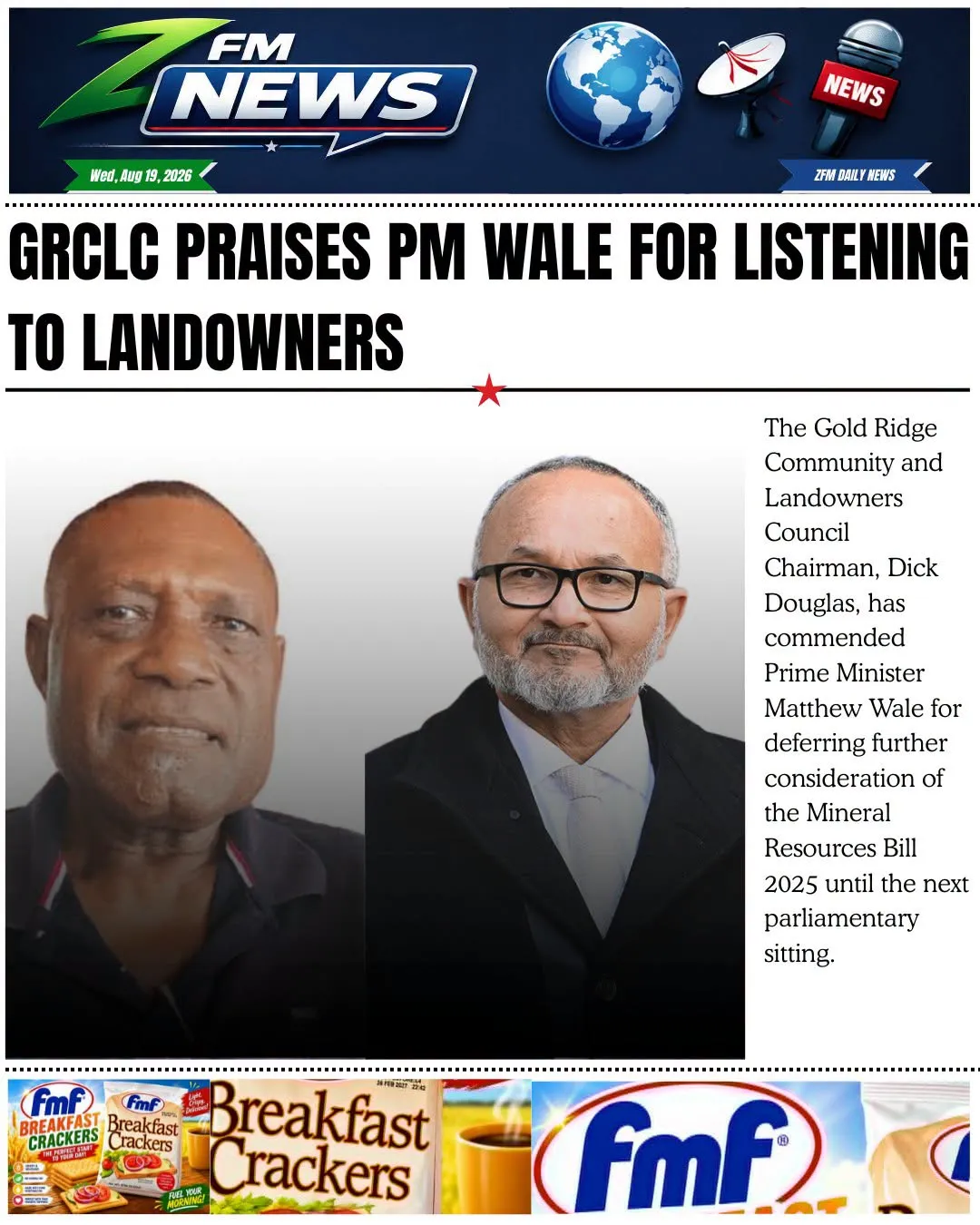
GRCLC Praises PM Wale for Listening to Landowner Concerns
HONIARA, Solomon Islands – Gold Ridge Community and Landowners Council (GRCLC) Chairman Dick Douglas has commended Prime Minister Matthew Wale for considering landowners’ concerns over the Mineral Resources Bill 2025 and supporting the decision to defer further consideration of the legislation until Parliament’s next sitting.
Mr. Douglas said the Prime Minister’s decision to suspend parliamentary business to consider concerns raised by Central Guadalcanal MP and Leader of the Independent Group, Peter Shanel Agovaka, demonstrated leadership and respect for parliamentary processes.
He said the deferral provides an opportunity for the Bills and Legislation Committee to complete its work, finalise its report and allow for further consultation and scrutiny before the Bill returns to Parliament.
Mr. Douglas stressed that GRCLC is not opposed to reform of the minerals sector but wants legislation that protects the rights of customary landowners, provides certainty for responsible investors and safeguards Solomon Islands’ national interests.
He also acknowledged Mr. Agovaka for raising the issue in Parliament, saying his intervention provided an opportunity to reconsider whether more time was needed to properly examine the proposed legislation.
The GRCLC Chairman said the additional time should be used to consider concerns raised during previous consultations with landowners, gold dealers, Government agencies and other stakeholders.
He said customary landowners must have confidence that their views are being heard and properly reflected in the legislative process, given their direct connection to the country’s mineral resources.
Mr. Douglas described the Prime Minister’s consideration as an unprecedented and commendable step, saying it demonstrated the importance of Parliament as a forum where concerns can be raised and addressed through democratic processes.
He encouraged the Bills and Legislation Committee and all stakeholders to use the deferral constructively to ensure the Mineral Resources Bill is properly considered before returning to Parliament.
GRCLC, he said, remains committed to working with the Government, Parliament, mining industry and other stakeholders to develop a modern minerals framework that protects landowners while supporting responsible investment and sustainable national development.
[ENDS]/////
Prime Minister Hon. Matthew Wale says indigenous businesses, women-led enterprises and young entrepreneurs must be at the heart of the growing economic partnership between Solomon Islands and Papua New Guinea.
Addressing the inaugural PNG–Solomon Islands Investment Conference at the Heritage Park Hotel today, Prime Minister Wale said the benefits of investment must not be confined to urban centres or large corporations.
“Indigenous entrepreneurship is not a footnote to this conference, it is the point of it,” he said.
The Prime Minister said PNG companies should build partnerships with Solomon Islands businesses rather than simply operate alongside them.
He identified joint ventures, local supply contracts, technical training and pathways to local ownership as important features that should become normal parts of major investments.
Prime Minister Wale said indigenous Micro, Small and Medium Enterprises (MSMEs), women-led enterprises and young entrepreneurs are the backbone of both economies because they create jobs, support families and keep wealth circulating within communities.
“Inclusive growth is not only socially responsible; it is smart economics,” he said.
The Prime Minister said economies where more people participate are stronger, more resilient and more sustainable.
He also linked inclusive economic growth to stability, saying every young person employed, indigenous business capitalised and community with a stake in growth contributes to a stronger foundation for peace and prosperity.
[end]
OPMC statement
The post PM Wale: Indigenous business must be at the heart of investment first appeared on Solomon Islands Broadcasting Corporation (SIBC) .
HONIARA, 18 August 2026 – Prime Minister Hon. Mathew Cooper Wale today urged Papua New Guinea and the Solomon Islands to turn their long-standing Melanesian relationship into a “structured, bankable economic partnership” as he officially opened the inaugural PNG – Solomon Islands Investment Conference in Honiara.
Speaking under the theme “From Opportunity to Investment: Building the PNG–Solomon Islands Growth Corridor”, the Prime Minister said the two countries must move beyond goodwill to deliver measurable economic outcomes for their combined population of over 11 million people.
Prime Minister Wale said PNG and Solomon Islands share more than a border.
“Trade across our islands was never a mere transaction. It was reciprocity. It was obligation honoured over generations. It was trust, banked and repaid,” he said.
“The wantok system that binds us is, in economic terms, social capital of extraordinary depth — networks of trust that lower the cost of doing business before a single contract is signed.”
The Prime Minister highlighted that more than 50 Papua New Guinea companies already operate in the Solomon Islands across banking, telecommunications, transport, agriculture and hospitality, with an estimated value of PGK 1 billion / SBD 1.8 billion.
“Capital goes where it expects returns. That figure tells the world that the Solomon Islands is investable,” he said.
He noted that new direct air connectivity, with the weekly Solomon Airlines service between Honiara and Port Moresby launched in July 2026, will further reduce the cost of moving people, ideas and capital. “Connectivity drives commerce,” Prime Minister Wale said.
Prime Minister Wale framed the partnership around three dimensions, including;
• Partnership for Growth: Diversifying beyond raw exports into agriculture, fisheries processing, tourism, renewable energy and digital services. “We seek private participation in commercial farming, agro-processing and export development,” he said.
• Partnership for Solidarity: Ensuring benefits reach indigenous MSMEs, women and youth. “Joint ventures, local supply contracts, technical training and pathways to local ownership should become normal features of major investments,” the PM stated.
• Partnership for Stability: “Stability is not imposed from outside; it is built from within, job by job, enterprise by enterprise. Let us redraw that map: from an arc of instability to an arc of stability and prosperity.”
The Prime Minister called for an end to extractive business models.
“It is time to look at new business models — models that process here, employ here, train here, and share ownership here. Models that respect our laws, our landowners and our custom, and treat tribal land not as an obstacle but as equity,” he said.
Prime Minister Wale said the groundwork is set with the MOU between PNGSIBC and SICCI signed in October 2025 and the Framework Agreement on Development and Economic Cooperation 2026-2030 signed with PM James Marape in Port Moresby in June 2026.
He urged conference participants to “move beyond discussion to implementation” and to create investments that lead to jobs and improve livelihoods.
“To PNG investors, my message is direct. Solomon Islands welcomes your capital, knowledge and experience. Come prepared to build long-term partnerships. Work with our businesses. Train our people. Respect our laws and landowners,” PM Wale said.
The Prime Minister concluded that the success of the conference will be measured not by speeches, but by “the investments that follow, the joint ventures established, the indigenous businesses that scale up, the jobs created, and the prosperity generated.”
The two-day conference is hosted by the Papua New Guinea Solomon Islands Business Council and the Solomon Islands Chamber of Commerce and Industry.
PM Wale Calls for “Melanesian Growth Corriddor” at Inaugural PNG-SI Investment Conference
HONIARA, 18 August 2026 – Prime Minister Hon. Mathew Cooper Wale today urged Papua New Guinea and the Solomon Islands to turn their long-standing Melanesian relationship into a “structured, bankable economic partnership” as he officially opened the inaugural PNG – Solomon Islands Investment Conference in Honiara.
Speaking under the theme “From Opportunity to Investment: Building the PNG–Solomon Islands Growth Corridor”, the Prime Minister said the two countries must move beyond goodwill to deliver measurable economic outcomes for their combined population of over 11 million people.
Prime Minister Wale said PNG and Solomon Islands share more than a border.
“Trade across our islands was never a mere transaction. It was reciprocity. It was obligation honoured over generations. It was trust, banked and repaid,” he said.
“The wantok system that binds us is, in economic terms, social capital of extraordinary depth — networks of trust that lower the cost of doing business before a single contract is signed.”
The Prime Minister highlighted that more than 50 Papua New Guinea companies already operate in the Solomon Islands across banking, telecommunications, transport, agriculture and hospitality, with an estimated value of PGK 1 billion / SBD 1.8 billion.
“Capital goes where it expects returns. That figure tells the world that the Solomon Islands is investable,” he said.
He noted that new direct air connectivity, with the weekly Solomon Airlines service between Honiara and Port Moresby launched in July 2026, will further reduce the cost of moving people, ideas and capital. “Connectivity drives commerce,” Prime Minister Wale said.
Prime Minister Wale framed the partnership around three dimensions, including;
• Partnership for Growth: Diversifying beyond raw exports into agriculture, fisheries processing, tourism, renewable energy and digital services. “We seek private participation in commercial farming, agro-processing and export development,” he said.
• Partnership for Solidarity: Ensuring benefits reach indigenous MSMEs, women and youth. “Joint ventures, local supply contracts, technical training and pathways to local ownership should become normal features of major investments,” the PM stated.
• Partnership for Stability: “Stability is not imposed from outside; it is built from within, job by job, enterprise by enterprise. Let us redraw that map: from an arc of instability to an arc of stability and prosperity.”
The Prime Minister called for an end to extractive business models.
“It is time to look at new business models — models that process here, employ here, train here, and share ownership here. Models that respect our laws, our landowners and our custom, and treat tribal land not as an obstacle but as equity,” he said.
Prime Minister Wale said the groundwork is set with the MOU between PNGSIBC and SICCI signed in October 2025 and the Framework Agreement on Development and Economic Cooperation 2026-2030 signed with PM James Marape in Port Moresby in June 2026.
He urged conference participants to “move beyond discussion to implementation” and to create investments that lead to jobs and improve livelihoods.
“To PNG investors, my message is direct. Solomon Islands welcomes your capital, knowledge and experience. Come prepared to build long-term partnerships. Work with our businesses. Train our people. Respect our laws and landowners,” PM Wale said.
The Prime Minister concluded that the success of the conference will be measured not by speeches, but by “the investments that follow, the joint ventures established, the indigenous businesses that scale up, the jobs created, and the prosperity generated.”
The two-day conference is hosted by the Papua New Guinea Solomon Islands Business Council and the Solomon Islands Chamber of Commerce and Industry.
HONIARA, 18 August 2026 – Prime Minister Hon. Mathew Cooper Wale today urged Papua New Guinea and the Solomon Islands to turn their long-standing Melanesian relationship into a “structured, bankable economic partnership” as he officially opened the inaugural PNG – Solomon Islands Investment Conference in Honiara.
Speaking under the theme “From Opportunity to Investment: Building the PNG–Solomon Islands Growth Corridor”, the Prime Minister said the two countries must move beyond goodwill to deliver measurable economic outcomes for their combined population of over 11 million people.
Prime Minister Wale said PNG and Solomon Islands share more than a border.
“Trade across our islands was never a mere transaction. It was reciprocity. It was obligation honoured over generations. It was trust, banked and repaid,” he said.
“The wantok system that binds us is, in economic terms, social capital of extraordinary depth — networks of trust that lower the cost of doing business before a single contract is signed.”
The Prime Minister highlighted that more than 50 Papua New Guinea companies already operate in the Solomon Islands across banking, telecommunications, transport, agriculture and hospitality, with an estimated value of PGK 1 billion / SBD 1.8 billion.
“Capital goes where it expects returns. That figure tells the world that the Solomon Islands is investable,” he said.
He noted that new direct air connectivity, with the weekly Solomon Airlines service between Honiara and Port Moresby launched in July 2026, will further reduce the cost of moving people, ideas and capital. “Connectivity drives commerce,” Prime Minister Wale said.
Prime Minister Wale framed the partnership around three dimensions, including;
• Partnership for Growth: Diversifying beyond raw exports into agriculture, fisheries processing, tourism, renewable energy and digital services. “We seek private participation in commercial farming, agro-processing and export development,” he said.
• Partnership for Solidarity: Ensuring benefits reach indigenous MSMEs, women and youth. “Joint ventures, local supply contracts, technical training and pathways to local ownership should become normal features of major investments,” the PM stated.
• Partnership for Stability: “Stability is not imposed from outside; it is built from within, job by job, enterprise by enterprise. Let us redraw that map: from an arc of instability to an arc of stability and prosperity.”
The Prime Minister called for an end to extractive business models.
“It is time to look at new business models — models that process here, employ here, train here, and share ownership here. Models that respect our laws, our landowners and our custom, and treat tribal land not as an obstacle but as equity,” he said.
Prime Minister Wale said the groundwork is set with the MOU between PNGSIBC and SICCI signed in October 2025 and the Framework Agreement on Development and Economic Cooperation 2026-2030 signed with PM James Marape in Port Moresby in June 2026.
He urged conference participants to “move beyond discussion to implementation” and to create investments that lead to jobs and improve livelihoods.
“To PNG investors, my message is direct. Solomon Islands welcomes your capital, knowledge and experience. Come prepared to build long-term partnerships. Work with our businesses. Train our people. Respect our laws and landowners,” PM Wale said.
The Prime Minister concluded that the success of the conference will be measured not by speeches, but by “the investments that follow, the joint ventures established, the indigenous businesses that scale up, the jobs created, and the prosperity generated.”
The two-day conference is hosted by the Papua New Guinea Solomon Islands Business Council and the Solomon Islands Chamber of Commerce and Industry.