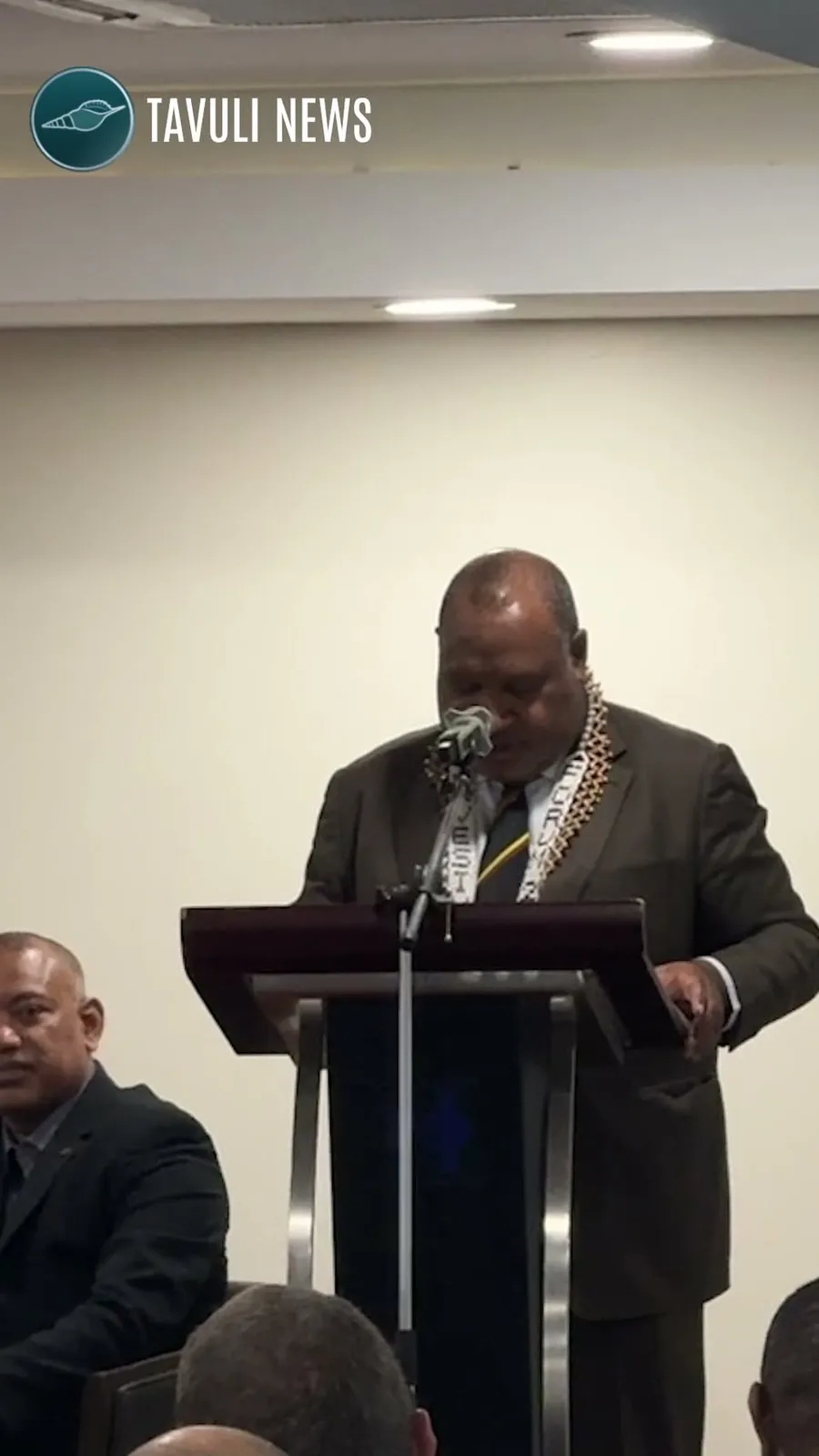
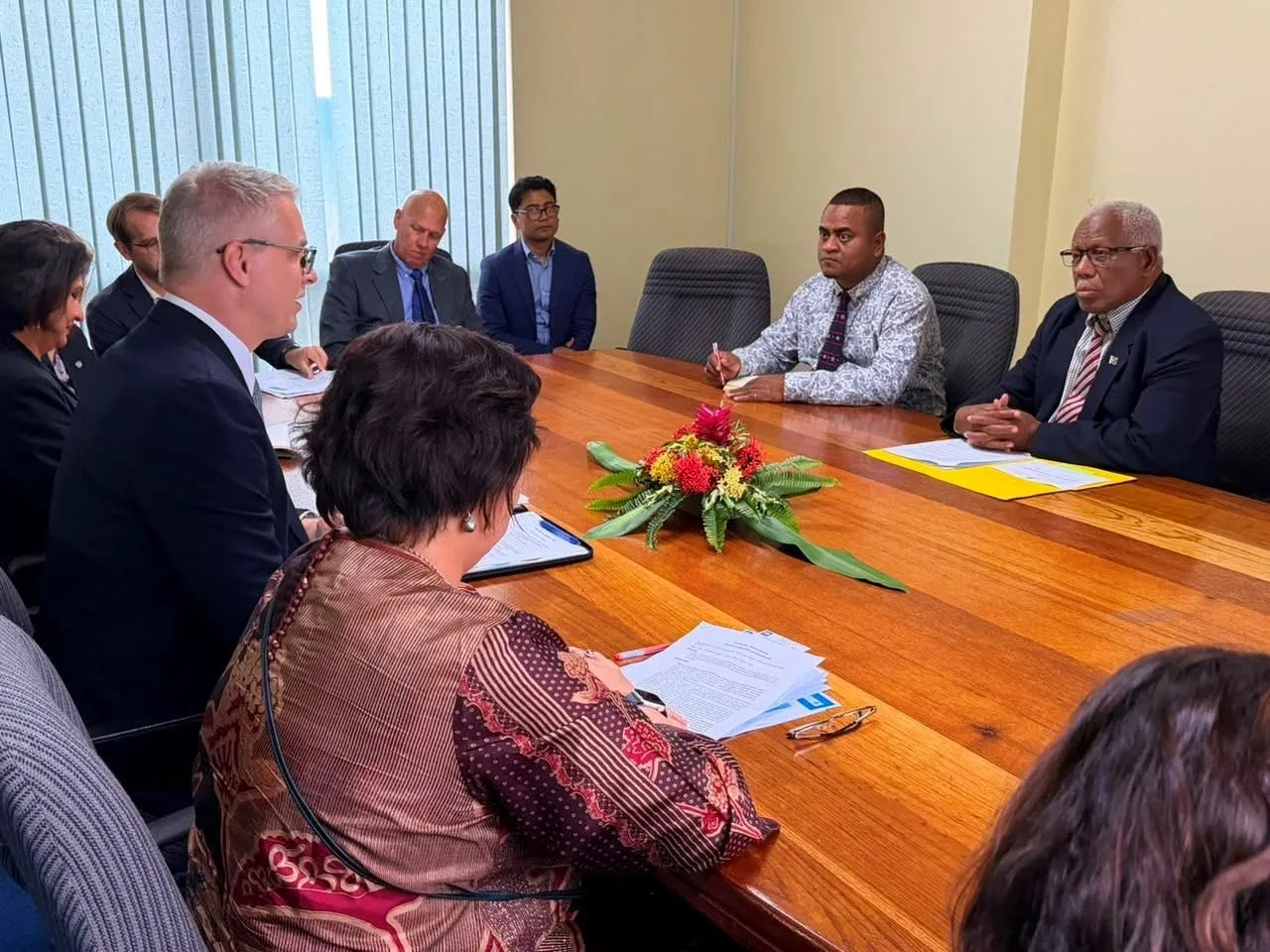
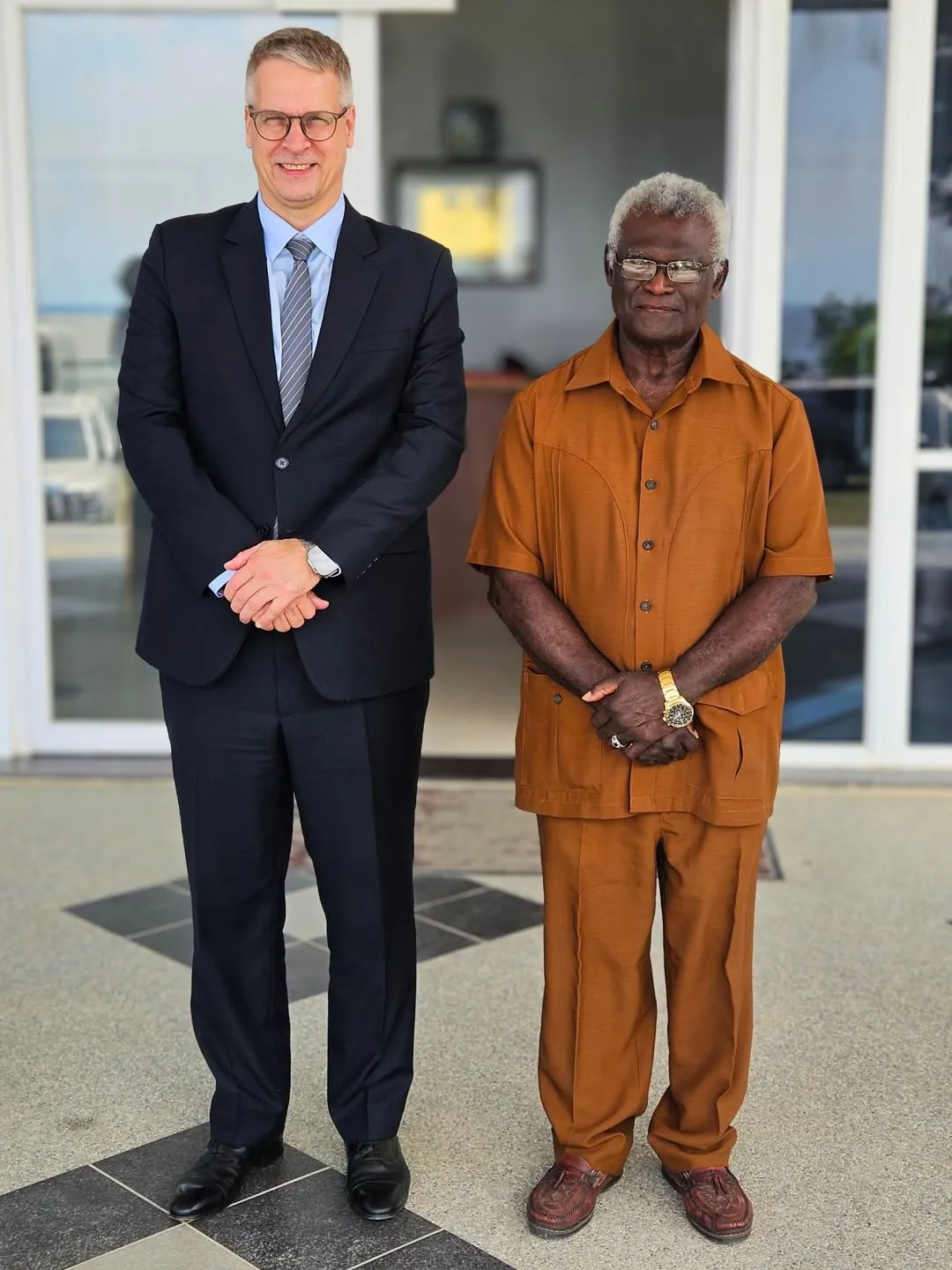
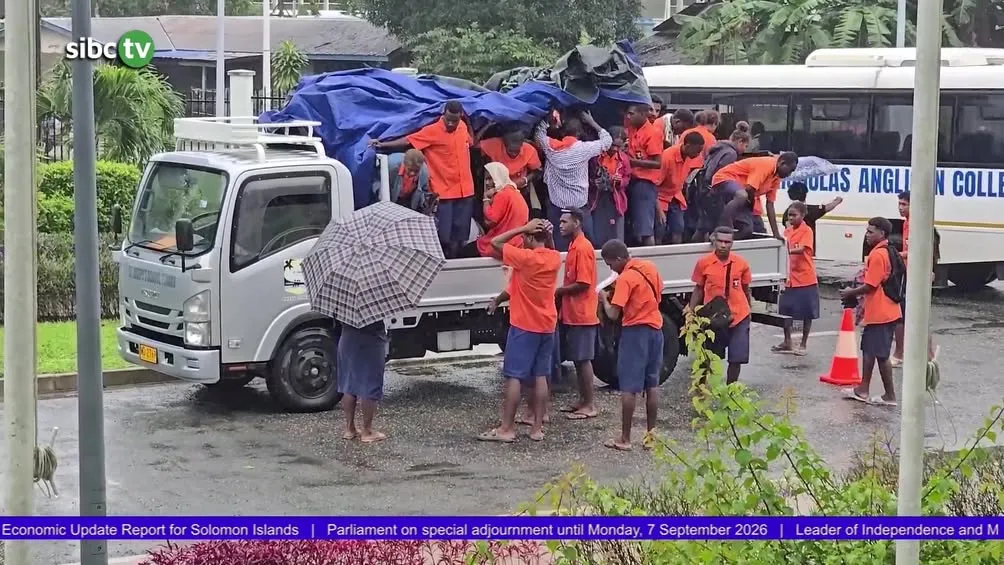
The first-ever PNG–Solomon Islands Investment Forum is underway in Honiara.
The two-day forum brings together the two Melanesian countries to explore investment opportunities and strengthen economic ties through private-sector development. Jeremy Gwao reports
Tavuli News - Solomon Islands
BY LORETTA B MANELE
For the first time ever, White River community is preparing to turn its rich cultural diversity into a major annual celebration.
A recent statement from TMC Foundation said this involves youth leaders, the foundation and Ngossi Ward Councillor Rex Konofilia in a united effort to hold the White River Diverse Festival in October this year.
The festival aims to bring together the people of White River to celebrate the community’s diverse cultures, talents and traditions and showcase its potential to become a tourism product from 2027 and beyond.
The slogan for the event “Experience Solomon Islands in One Community”, will bring together culture, youth, arts, sport, food, music, enterprise and community participation in a celebration designed to reflect the unique character of White River community.
“White River is home to people from different islands, cultures and backgrounds, making its diversity one of its greatest strengths.
“The festival seeks to transform that diversity into an opportunity creating a platform where communities can celebrate who they are while promoting local talent, culture, entrepreneurship and community development,” said TMC Foundation.
The program envisioned to be an annual community event also aims to create a long-term platform for residents, youth groups, cultural organisations, businesses, community leaders and development partners to come together each year.
A dedicated Festival Organising Committee has also been established to drive and coordinate the initiative.
“The committee is working closely with youth leaders, community representatives and other stakeholders, with the full support of the Ngossi Ward Administration to see the inaugural festival successfully delivered,” said TMC Foundation.
The festival will also be an opportunity for businesses, organisations and development partners to become part of a longer-term community vision by not simply just supporting an event, but also by investing in youth, culture, enterprise, community development and the future tourism potential of White River.
Beyond bringing together diverse cultures, sports and community members, this 2026 festival will also mark an important milestone in TMC Foundation’s journey as the organisation begins its next four-year strategic chapter in partnership with the Ngossi Ward Administration, known as the Legacy Era, 2026–2030.
“The Legacy Era will build on the foundation established over the past 16 years and focus on creating greater opportunities for economic growth, tourism development, youth leadership and sustainable community development,” said TMC Foundation.
Three key eras of community transformation which have shaped this journey are as follows;
The Transition Era — 2010–2015
The Transition Era marked the beginning of a period in which young people started taking greater leadership in changing the narrative of White River. Through youth engagement and community activities, young people demonstrated that they could make a meaningful contribution to community development.
The Transformation Era — 2016–2025
The Transformation Era saw young people and community leaders increasingly come together through sports, training, workshops, partnerships and community initiatives.
These efforts helped strengthen relationships among young people, promote positive community participation and contribute to building White River’s identity as a united and diverse community.
The Legacy Era — 2026–2030
The Legacy Era now looks towards the future — building on the achievements of the past while creating sustainable opportunities for the next generation.
It will focus on strengthening youth leadership, supporting economic and enterprise opportunities, developing the community’s tourism potential, promoting culture and creating sustainable pathways for community development.
Ngossi Ward Councilor Rex Konofilia has welcomed the initiative, describing the festival as “timely” and one that recognises the efforts of young people and community leaders in changing the narrative of White River.
“I have seen the tireless effort of TMC Foundation and the effort by young leaders to change the narrative of this community,” he said.
He highlighted diversity as one of White River’s greatest strengths.
“For White River community, diversity is its strength. It accommodates all the different races, and to see a community like White River embrace its diversity is something that our Ngossi Ward administration acknowledges.”
The Councillor is appealing to businesses, organisations and other partners to support the initiative and complement the efforts of the young leaders working behind the festival.
TMC Foundation noted that the White River Diverse Festival 2026 is ultimately about more than entertainment.
“It is about creating a platform where young people can lead, cultures can be celebrated, businesses can participate, local talent can be promoted and communities can build stronger connections.
“The vision is also built on experience. Over the years, the TMC Foundation has already taken steps to open White River to visitors, guests and external partners, demonstrating the community’s potential to host people and activities beyond its immediate neighbourhood,” TMC Foundation said.
The Foundation has facilitated community visits and hosted a range of guests and groups, including the Hekari Football Club from Papua New Guinea, Australian university students on multiple occasions, and a former Miss Pacific in 2023.
To add on, between 2023 and 2025, the Foundation also facilitated opportunities for Pacific musicians visiting Solomon Islands for the Bonfire Festival to engage with the White River community, with support from Jaro Local in helping advance the vision of welcoming visitors into the community.
These experiences have provided an important foundation for the next stage of the vision.
TMC Foundation said with this vision, 2027 is expected to become a new chapter for White River as a host community, with greater emphasis on bringing events, cultural experiences and community activities to the western side of Honiara.
“With the message “Experience Solomon Islands in One Community,” White River is preparing to tell its story through its people, cultures, talents, food, music, arts, sport, enterprise and diversity.
“From transition, to transformation, to legacy – White River is preparing for its next chapter,” said TMC Foundation.
Photo credit: TMC Foundation
For feedback, contact: lorettamanele@gmail.com
Editor: irwin3angiki@gmail.com
BY JOY OFASIA
Minister for Justice and Legal Affairs Hon. Clezy Rore has outlined the Government’s plans to expand and improve local court infrastructure across Solomon Islands, saying several new courthouses are either completed, planned or awaiting land acquisition.
Minister Rore made the statement in Parliament during the Twelfth Parliament’s First Session, Fourth Meeting, in response to Question No. 88 from Chairman of the Public Accounts Committee and Member of Parliament for North Guadalcanal, Hon. Paul Popora Bosawai.
Hon. Bosawai asked whether the Ministry of Justice and Legal Affairs had plans within its development budget to build local courthouses across the country, and requested an update on the number of local courthouses operating in each province.
Responding to the first part of the question, Minister Rore said the Ministry had already made progress in developing local court infrastructure.
He said courthouses at Tori and Sege had been completed and were already in use.
The Minister also confirmed that a new courthouse is planned for Munda, with unexploded ordnance (UXO) work currently being undertaken at the site. Construction of the Munda courthouse is expected to be undertaken under the 2027 Budget.
Minister Rore further highlighted the need to improve court facilities in Gizo, where the courthouse is experiencing increased pressure due to cases from Choiseul Bay being transferred there.
“We are planning to do that again or improve that one,” the Minister said, referring to the Gizo courthouse.
He explained that the Ministry was also considering the development of a courthouse in Choiseul Bay to help ease the workload currently being experienced by the Gizo court.
However, the Minister said the Ministry was waiting for the resolution of land issues in Choiseul Bay before proceeding with the proposed courthouse.
According to Minister Rore, the Ministry is also planning a courthouse for Auki and is pursuing land acquisition for a courthouse in Malu, with the intention of developing court facilities there as well.
On the number of local courts currently operating around the country, Minister Rore told Parliament that there are 19 local courthouses across Solomon Islands.
He said the courts are being positioned within districts to improve access to justice for communities.
The distribution given by the Minister was seven in Central Islands Province, four in Western Province, two in Makira-Ulawa, and five in Temotu Province and one in Malaita Province, making a total of 19 local courts.
The Minister’s response highlights the Ministry’s focus on strengthening access to justice outside Honiara, while also addressing pressure on existing court facilities through the construction, expansion and improvement of local courthouses.
The planned developments in Munda, Gizo, Choiseul Bay, Auki and Malu are expected to form part of the Ministry’s ongoing efforts to bring court services closer to communities across Solomon Islands.
BY RICHARD MENANOPO
A NEW futsal competition in Henderson is using the sport not only to bring young people together, but also as a platform for character building, community development and faith.
Established in April this year, the Kaliki Futsal League has already grown to 21 teams, with matches played every Saturday at the organisers’ family property along Bloody Ridge Road.
Kaliki Futsal League chairperson Sharon Hou said the competition was established with a clear purpose of reaching young people through sport.
“Kaliki Futsal League was established earlier this year in April 2026 with the main objective of bringing youths from surrounding communities to know Jesus through futsal,” Hou said.
The league operates on a round-robin format, with a committee led by Hou organising fixtures and managing regular updates through its Facebook page, which serves as the main communication platform.
But beyond competition, Hou believes the league can play a wider role in the lives of participating youths.
She said the competition provides young people from Kaliki and surrounding communities with a space to develop character and a sense of belonging.
“I believe when we create space for our youth to have a sense of belonging they build trust and respect of that space,” Hou said.
She added that this can contribute to the mental and emotional growth of young participants, with wider social and community benefits.
The fledgling competition has also received support from key football stakeholders.
Sports and Leadership Training (SALT) helped kick-start the competition through guidance and a donation of footballs, while the Solomon Islands Football Federation (SIFF) has provided technical training.
Hou said SIFF support included a MA Youth Futsal Coaching Workshop in August 2025 and Futsal Referee Courses in March and July this year.
“We are immensely grateful for their support and guidance over the past two years in continuous preparation toward the league,” she said.
The organisers now want to build on that foundation.
Hou said the league plans to run annually, introduce other categories and sports, and provide additional training and workshops for youths.
They also hope to see more churches become involved in sporting programmes while developing players and eventually forming a team to represent Kaliki.
“Our vision is for our youth to come to know God through futsal/sport,” Hou said.
Based in Henderson, the Kaliki Futsal League runs every Saturday and has attracted 21 teams since its establishment in April 2026. Organisers see futsal as more than competition, using sport to create belonging, develop young people and strengthen community connections.
Photo credit: Kaliki Futsal League File
For feedback, contact: mnorichard4@gmail.com
Editor: irwin3angiki@gmail.com
BY RODRICK DESURI
Auki
Malaita Premier Elijah Asilau’a has said the United States’ interest in supporting development of the long-awaited Bina Harbour Project must result in tangible progress for the people of Malaita.
The Premier said this following recent interest from the United States in supporting key components of the Bina Harbour development, including the wharf, jetty, port facilities, fuel storage, water and energy and roads infrastructures
Asilau’a welcomed the United States’ interest but warns that the project must not experience a similar outcome to the previous Winrock initiative.
“Yes, I just caution about the strong interest that the United States has committed to support us with this national project. Make sure it must not be like the Winrock initiative,” he said.
Asilau’a said the Malaita Provincial Government is fully prepared to work alongside the national government and development partners to advance the project.
He said the people of Malaita are eager to see Bina Harbour move beyond years of planning and discussions into actual development on the ground.
Last week, a United States assessment team visited the proposed Bina Harbour site as part of efforts to assess the project and identify areas where support could be provided. The team is expected to produce reports following its assessment.
The Bina Harbour Project has been identified as one of Solomon Islands’ major national development projects and has remained under discussion for many years.
Photo: Supplied
For feedback, contact: rodrickdesuri50@gmail.com
Editor: irwin3angiki@gmail.com
BY LESLEY FOINAGWA IN WEST KWAIO, MALAITA PROVINCE
At 60 years old, Emilio Buludele stands as one of those unsung Solomon Islanders whose work rarely makes headlines but whose impact is felt across villages, parishes and family homes. With roots in Langa Langa Lagoon and West Kwaio, Emilio lives at Buma Parish, where his hands have shaped the community for nearly forty years.
Emilio Buludele, a lifetime of skill and service.
He is not a man of loud achievements or public recognition. Instead, he represents the quiet strength of indigenous Solomon Islanders people who wake up each day, pick up their tools, and work with humility to support their families and communities.
A Lifetime of Skill and Service
Carpentry and tiling are Emilio’s lifelong passions. What began as a practical skill to earn an income has grown into a craft he uses to build homes, churches, clinics, schools and community facilities.
His work is detail‐oriented measuring surfaces, cutting tiles, preparing foundations, aligning patterns and finishing each job with care.
Emilio Buludele at work.
Behind every polished floor or neatly tiled wall in West Kwaio, there is a story , Emilio’s story.
A Teacher at Heart
What sets Emilio apart is not only his skill, but his belief that knowledge must be shared. He sees tiling as a pathway for young people to become productive and independent.
“In every work I do, especially tiling and building permanent houses, I share my knowledge with other people who work with me,” he said with a smile.
Emilio Buludele, a teacher at heart.
For him, teaching is a responsibility. He knows that one day his hands will grow tired, but the skills he passes on will continue through the next generation.
Working for Community, Not Just Income
Emilio’s generosity extends beyond paid work. He often volunteers his skills for church buildings, calling it a blessing rather than a job.
“Working as a charity for church buildings is a blessing for me rather than asking people to pay me.”
His humility reflects a deeper belief: that selfishness should never stop experienced workers from teaching younger ones.
A Quiet Legacy in West Kwaio
In places like West Kwaio and Langa Langa Lagoon, practical skills are the backbone of community development. Workers like Emilio build the foundations of everyday life ,homes for families, classrooms for children, clinics for the sick, and churches for worship.
Emilio Buludele a quiet legacy.
His story reminds us that success does not always come from titles or wealth. Sometimes it comes from hard work, practical knowledge, and the willingness to share what you know.
More Than Just Tiles
Every tile Emilio places is more than a piece of ceramic. He highlighted It represented decades of experience,service to his community,a commitment to teaching young people,the quiet resilience of indigenous Solomon Islanders
Emilio Buludele may be an ordinary man, but his contribution is extraordinary. His hands have shaped buildings and his heart has shaped futures.
BY JOSES SAREN
Audit opinions for Rennell and Bellona Province for 2022 and 2023 have already been released, the Office of the Auditor General (OAG) said clarifying recent claims they were still outstanding.
The claims came from a statement by the Provincial Governance Strengthening Programme (PGSP), under the Ministry of Provincial Government and Institutional Strengthening (MPGIS), which named Malaita, Makira-Ulawa, and Rennell and Bellona as the three provinces still awaiting audit reports, the OAG said.
OAG said all three had historically received disclaimer audit opinions from 2012 through 2021/22 but had consistently submitted their financial statements on time.
However, OAG clarified that Rennell and Bellona’s opinions for both 2022 and 2023 were sent to the Speaker of Rennell and Bellona Province Jefter Tuhangena in July.
The Permanent Secretary of the Ministry of Provincial Government was copied in that email, the OAG said, though the opinions are not yet tabled in Parliament.
Malaita and Makira-Ulawa remain outstanding, but for a different reason, the OAG noted.
Makira-Ulawa received a disclaimer of opinion for 2022, tabled in Parliament, and only responded to outstanding audit queries last week, with its 2023 report to follow, OAG said.
Malaita received a disclaimer of opinion for 2022, tabled in Parliament, and remains yet to respond to outstanding audit queries before its 2023 report can be finalised, it said.
The PGSP’s own statement acknowledged the OAG is behind on audits due to its own capacity constraints, even as it credited the OAG-audited results for showing improved provincial financial management.
The OAG’s provincial audits for 2022–2024 are supported by UNCDF, which funds consultancy, logistics and equipment, it stated.
Audit fieldwork for 2024 has been completed for all provinces, and the outcomes, along with the start of 2025 fieldwork, are expected to be finalised this year, the OAG release added.
That timeline still depends on how provinces respond to the audit process, it said.
For feedback, contact: josessaren@gmail.com
Editor: irwin3angiki@gmail.com
By John Chrisma
Solomon Star, Honiara
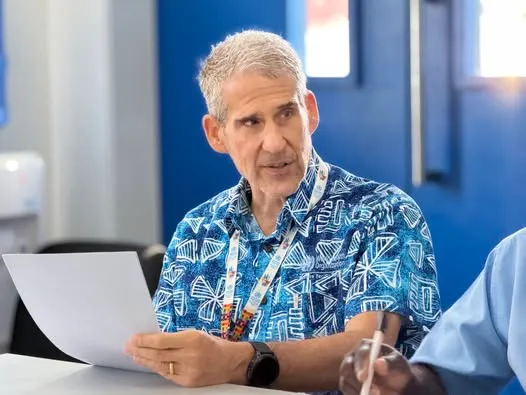
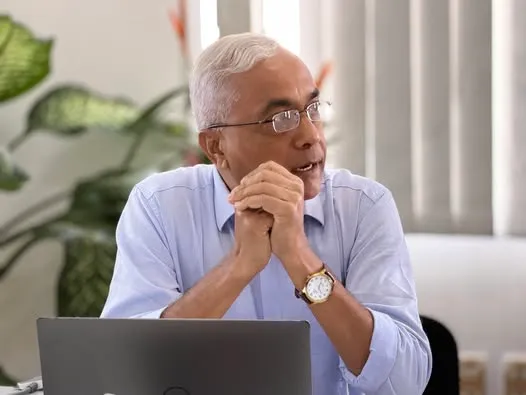
The inaugural Papua New Guinea–Solomon Islands Business Investment Forum has opened and is now underway in Honiara.
The historic event brought together government leaders, business representatives and investors from both countries to strengthen economic cooperation and identify new investment opportunities 19 August 2026.
Held at the Heritage Park Hotel under the theme “From Opportunity to Investment: Building the PNG–Solomon Islands Growth Corridor,” the two-day forum aims to move discussions on bilateral trade and investment towards practical business partnerships.
The forum is jointly hosted by the Solomon Islands Chamber of Commerce and Industry (SICCI) and the Papua New Guinea–Solomon Islands Business Council (PNGSIBC).
SICCI Chairlady Namoi Kaluae and PNGSIBC President Ernie Gangloff welcomed delegates, describing the gathering as a historic opportunity for the two Melanesian countries to strengthen their economic relationship.
The opening programme features keynote addresses from Solomon Islands Prime Minister Matthew Wale and Papua New Guinea Prime Minister James Marape, highlighting the commitment of both governments to expanding bilateral economic cooperation.
The forum is focusing on trade, investment, infrastructure, business and labour mobility, and the role of micro, small and medium enterprises in driving economic growth.
A key session on “Why Invest in Solomon Islands” includes presentations from Minister for Commerce, Industry, Labour and Immigration Harry Kuma, Pacific Economist at ANZ Banking Group Dr Kishti Sen, and Central Bank of Solomon Islands Governor Dr Luke Forau.
Other government ministers are also presenting investment opportunities in priority sectors, including mining and energy, infrastructure, agriculture and livestock.
Minister for Mines, Energy and Rural Electrification Derrick Manuari, Minister for Infrastructure Development Ricky Fuo’o, and Minister for Agriculture and Livestock Franklyn Derek Wasi are expected to outline opportunities and ongoing reforms in their respective sectors.
The programme also includes business-to-business meetings, a trade fair, networking sessions and the Prime Ministers’ Wansol Wara Charity Golf event.
On the second day, discussions will turn to financing investment opportunities, converting opportunities into projects, Papua New Guinea’s private-sector experience, and the experiences of PNG companies operating in Solomon Islands.
The forum will also examine the role of women and youth in business, with representatives from both countries participating in discussions on entrepreneurship and private-sector development.
Organisers say the forum is intended to create a stronger platform for businesses from PNG and Solomon Islands to connect, form partnerships and explore investment opportunities.
The initiative comes as both countries seek to deepen economic ties and build a regional growth corridor that can create greater opportunities for businesses, investors and communities in the two Melanesian nations.
The forum concludes on Thursday, 20 August, with a closing cocktail and networking event hosted by Solomon Islands Ports Authority.
//end//
BY JOHN HOUANIHAU
The Solomon Islands National University (SINU) will hold its 2026 Open Day this Friday, to allow prospective students and the wider public to learn more about study programmes, university services and career opportunities.
The Open Day will be held on Friday, August 21, under the theme, “Creating Your Future: Education, Skills and Innovation for a GREAT Solomon Islands” from 8:30 am onwards, with the main event at the SINU Kukum Campus field.
SINU said the event aims to inform prospective students, parents, teachers, school representatives and members of the public more about university education and training opportunities.
The university will showcase its academic programmes and qualifications and visitors will have the opportunity to meet lecturers, current students, and learn about admissions, scholarships and student support services.
Faculty exhibitions and live demonstrations will also form part of the programme, along with guided tours of the university’s Kukum, Ranadi and Panatina campuses.
SINU said the Open Day will also feature student performances, interactive activities and giveaways as part of the event.
The university encourages students who are considering further education to use the event to explore the different programmes and qualifications available and get information directly from lecturers and current students.
The event will also provide an opportunity for parents and teachers to better understand the university’s admission processes and available student support.
SINU has invited members of the public to attend the event and experience its campuses and university environment.
The university said the event is part of its efforts to provide information on education, skills and opportunities available to help young Solomon Islanders plan for their future.
For feedback, contact: jhouanihau24@gmail.com
Editor: irwin3angiki@gmail.com
BY CHARLES STENNETT
Papua New Guinea companies have invested more than SBD$1.8 billion in Solomon Islands in commercial activities indicating Solomon Islands as investable.
A statement from the Prime Minister’s Office today highlights Prime Minister Matthew Wale’s remarks at the inaugural Papua New Guinea-Solomon Islands Investment Conference which commenced in Honiara today.
Speaking at the conference, Prime Minister Matthew Wale confirmed that more than fifty Papua New Guinea companies are operating successfully in Solomon Islands in the areas of banking and finance, telecommunications, transport, logistics, hospitality, agriculture and professional services with investments valuing around SBD$1.8 billion dollars.
“The estimated value of PNG investment and commercial activity is around SBD$1.8 billion, a hard number, and hard numbers are signals. Capital goes where it expects returns. That figure tells the world that Solomon Islands is investable.” Prime Minister Wale said.
He said these investments are valuable to Solomon Islands as they generate employment, deepen competition, improve services and widen our tax base.
He said another added value to investment is the direct weekly Solomon Airlines service between Honiara and Port Moresby, commenced in July this year which cuts the cost of moving people, ideas and capital between our markets.
Prime Minister Wale said connectivity drives commerce.
“When businesspeople travel easily, projects develop faster; when students, tourists and professionals connect directly, new markets emerge. Together, our two countries form a market of over eleven million people. That is scale. Scale attracts investment, supports value chains, and justifies the processing plants, logistics networks and financial services that neither market fully sustains alone,” the Prime Minister said.
The two-day conference brings together government leaders, investors and business representatives to explore opportunities in sectors including agriculture, fisheries, tourism, infrastructure, energy and financial services, with the aim to strengthen trade and investment ties between the two countries.
For feedback, contact: charsstennett@gmail.com
Editor: irwin3angiki@gmail.com
The Government of Solomon Islands has welcomed United Nations Resident Coordinator, His Excellency Mr. Dirk Wagener, and a senior United Nations delegation to Solomon Islands for their joint mission from 16 to 19 August 2026, describing the visit as an important opportunity to strengthen the longstanding partnership between Solomon Islands and the United Nations.
The Government reaffirmed its commitment to balanced, constructive and nationally driven international engagement and encouraged stronger and more strategic United Nations support for Solomon Islands’ foreign policy and development priorities.
Solomon Islands expressed its appreciation to the United Nations Resident Coordinator, participating UN agencies and the wider UN system for their continued cooperation and assistance, particularly in climate resilience, sustainable development, health, education and other key national priorities.
During discussions, Solomon Islands highlighted its regional leadership role and stressed the importance of Pacific solidarity, unity and consensus in addressing common regional challenges, including peace and security and growing geopolitical competition in the Pacific.
The Government also noted its preparations for the upcoming Pacific Islands Forum Leaders Meeting in Palau and underscored the importance of continued United Nations support for Pacific priorities, regional cooperation and collective action.
A key area of discussion was the need for an enhanced United Nations presence in Solomon Islands.
The Government reiterated its longstanding call for an elevated UN presence, including a dedicated Resident Coordinator based in Solomon Islands, to provide more timely, effective and responsive support to the country’s growing development needs.
While acknowledging the valuable contributions delivered under the previous five-year strategic framework, the Government emphasized the need for greater investment in transformative and tangible development projects under the United Nations Sustainable Development Cooperation Framework (UNSDCF) 2023–2027 and the new Country Implementation Plan.
Such investments should complement national efforts towards sustainable economic growth, inclusive development and long-term economic transformation.
The Government encouraged greater UN support for the reform agenda of the GREAT Coalition Government, particularly in economic transformation, decentralisation, accountability and improved service delivery. Assistance should remain aligned with national priorities while strengthening national systems and institutions.
Solomon Islands further emphasized the importance of ensuring that the benefits of United Nations assistance reach provinces and communities across the country. Greater support for provincial service delivery, local governance and community-level programmes would help translate development assistance into tangible improvements in people’s lives.
To strengthen coordination, Solomon Islands encouraged closer engagement with the United Nations Resident Coordinator and reaffirmed the importance of the Joint UN–Solomon Islands Government Steering Committee as a key platform for aligning UN programmes and activities with national development priorities.
The Government also called for practical follow-up to the outcomes of the High-Level Government–Development Partner Summit, including clearly defined responsibilities, regular engagement and stronger coordination among Government, United Nations agencies and development partners.
Solomon Islands acknowledged the important role of the United Nations in supporting progress towards the Sustainable Development Goals. At the same time, the Government emphasized that UN programmes and interventions should remain closely aligned with the National Development Strategy and the priorities of the GREAT Coalition Government, including sustainable economic growth, development cooperation and national economic transformation.
The Government also highlighted the importance of coordinated United Nations support for Solomon Islands’ graduation from Least Developed Country status.
Such support will be critical to ensuring a smooth and sustainable transition while minimizing potential impacts on development financing, trade opportunities and other forms of international assistance.
Looking ahead to COP31 and other key international processes, Solomon Islands encouraged the United Nations to continue supporting the country’s climate diplomacy and climate resilience priorities, including improved access to climate finance, enhanced disaster resilience and stronger linkages between ocean and climate action.
The Government thanked the United Nations Resident Coordinator’s Office for organizing the joint mission and co-hosting the High-Level Government–Development Partner Summit, which provides an important platform for strengthening coordination, partnership and alignment of development assistance with Solomon Islands’ national priorities.
---MFAET PRESS RELEASE
MFAET Minister Hon. Rick Houenipwela meets with the United Nations Resident Coordinator Mr. Dirk Wagener to Solomon Islands and his senior UN delegation.
Honiara, Solomon Islands – Opposition Leader Hon. Manasseh Sogavare MP met with members of the United Nations Joint Mission, led by UN Resident Coordinator Mr. Dirk Wagener, at the Sir Paul Tovua Complex, National Parliament, on Tuesday 18 August 2026.
Hon. Sogavare welcomed Mr. Wagener and the heads and representatives of the United Nations Development Programme (UNDP), United Nations Population Fund (UNFPA), UNICEF, World Food Programme (WFP) and UN Women.
The Opposition Leader acknowledged the United Nations’ longstanding contribution to peace, development, democratic governance and human security in Solomon Islands and welcomed the Joint Mission approach.
The discussions covered a broad range of issues, including climate resilience, health and population, education, women, youth and children, as well as the wider challenges of sustainable development.
Hon. Sogavare shared his views on the importance of development partnerships being guided by Solomon Islands’ national priorities and the actual needs of its people. He welcomed constructive and transparent partnerships with the United Nations and other development partners, while emphasising the importance of ensuring that development assistance produces measurable and sustainable benefits.
He also highlighted the importance of strengthening Solomon Islands institutions and building the skills and capacity of Solomon Islanders so that development gains can be sustained beyond individual projects and external funding.
A significant part of the discussion focused on provincial and rural development. Most Solomon Islanders live outside Honiara, yet many communities continue to face limited access to healthcare, education, clean water, sanitation, transport, communications and economic opportunities.
Hon. Sogavare shared the challenges of ensuring that sustainable development reaches these communities, particularly in relation to customary land ownership.
He noted that most land in Solomon Islands is under customary ownership, which can present challenges for governments and development partners when seeking to mobilise land for development. As a result, land can remain idle despite the need for greater economic opportunities in rural communities.
This also creates challenges for investment. While Solomon Islands continue to encourage investors to come to the country, access to suitable land and reaching agreements with landowners can be a difficult part of the investment process.
Hon. Sogavare noted that, for many rural landowners, extractive industries such as logging can become an attractive option because they can provide quicker and more immediate financial returns.
He said the broader challenge is finding sustainable ways to unlock the economic potential of customary land while respecting the rights and ownership of landowning tribes and communities.
The discussions also touched on the importance of ensuring development assistance reaches beyond central government institutions and Honiara-based activities, including provincial governments, wards and communities. Hon. Sogavare highlighted the value of greater transparency and clear information on where development programmes and resources are being delivered across provinces and sectors.
The meeting provided an opportunity for the Opposition Leader and the UN Joint Mission to exchange views on Solomon Islands’ development realities and the importance of coordinated development cooperation that strengthens local capacity and delivers lasting benefits for communities across the country.
[ENDS]
BY DOUGLAS VAHIA
A COPRA farmer from West Kwara’ae, Ward 4, Malaita Province, says income from coconut farming has allowed him to build houses and become his own boss, after leaving carpentry work to take up copra production.
Colin Kakama attributes much of his newfound success to the Farmers First initiative of Commodities Export Marketing Authority (CEMA) which has allowed him space to support and grow his business further.
Mr Kakama, a carpenter by trade who previously worked for other contractors, said he began working on his coconut plantation in 2017.
Kakama said proceeds from copra sales funded the construction of six houses, which are currently rented out to the local community school. He said the shift to copra farming allowed him to become his own boss, earn a steady income, and spend more time with his family compared to working for others.
He compared his earnings from copra to those of seasonal workers under the Australia and New Zealand seasonal workers schemes, saying copra farming offers a comparable income while allowing him to remain at home with his family.
Kakama raised concerns over dishonest pricing practices by some buyers, saying farmers are sometimes enticed with promises of high prices over the phone, only for buyers to alter the price upon arrival at the wharf, citing sudden changes in overseas prices as an excuse.
He said his children are involved in work at the coconut plantation and have become proficient in the work.
Since February this year, Kakama has been selling his copra to the Commodities Export Marketing Authority (CEMA) in Auki, having completed three shipments so far.
He said CEMA Auki offers farmers financial advance when needed and supplies bags free of charge, adding that CEMA needs to remain competitive with other buyers operating in the area.
Kakama urges fellow farmers to focus on producing quality copra to meet buyer requirements, noting that buyers themselves are obligated under contracts with overseas buyers to supply high-quality copra.
He also encourages farmers to keep their plantations free of invasive beetles, and to view coconut farming as a duty passed down from their forefathers and one to be maintained for future generations.
On government support, Kakama calls for a dedicated budget to assist farmers in rehabilitating ageing coconut plantations, saying government could gain significant tax revenue from copra if greater attention is paid to plantation rehabilitation.
He also calls on the Ministry of Agriculture to assess active and serious copra farmers and assist them with strategies to control beetle infestations.
Kakama also appeals to national parliamentarians to work with landowners to open up idle land across the provinces for coconut planting, saying the country has significant unused land that could support development without relying on donor assistance.
Photo: Supplied
For feedback, contact: diivee56@gmail.com
Editor: irwin3angiki@gmail.com
BY JOSES SAREN
UN Resident Coordinator Dirk Wagener reaffirmed the United Nations’ commitment to Solomon Islands’ development priorities during a courtesy call on Prime Minister Matthew Wale at the Prime Minister’s Office on August 17.
Wagener pledged stronger coordination among development partners to support the country’s economic transformation, a statement from the Prime Minister’s Office said.
The UN’s footprint in the country is significant, the statement noted, with around 140 staff permanently based in Solomon Islands and 13 UN agencies delivering programmes across key development areas.
Putting a figure to that presence, Wagener revealed that the UN delivered close to SBD$323 million in programmes and assistance last year, making Solomon Islands one of the UN’s largest single-country presences in the Pacific.
That commitment, the statement went on to explain, also extends to coordination. The UN Resident Coordinator voiced readiness to help draw Solomon Islands’ development partners—both bilateral and multilateral—into closer alignment with the GREAT Coalition Government.
Better coordination, he added, will allow partners to move away from fragmented projects and towards larger, consolidated programmes that speak more directly to the Government’s priorities.
The statement also stressed that global funding pressures and ongoing UN reforms have not dimmed the Pacific’s standing. Wagener assured the Prime Minister that the region remains a priority.
He further emphasised that the UN continues to stand firmly behind Small Island Developing States and behind Solomon Islands’ own journey towards LDC graduation.
Noting that the Pacific has so far weathered the storm better than most, Wagener observed that its structural vulnerabilities and development challenges have shielded it from the deeper cuts to UN staffing and resources felt elsewhere.
That shelter is not guaranteed, however. As per the statement, he cautions that keeping international interest and resources flowing to the Pacific will take a collective effort.
For his part, Wale welcomed the assurance, calling the news encouraging for Solomon Islands, the statement said.
He also used the moment to lay out the Government’s economic policy direction, explaining that his development agenda is built around transforming and diversifying the economy away from dependence on extractive activities.
The meeting, the statement concluded, reaffirmed the strength of the partnership between the Government and the United Nations in advancing Solomon Islands’ national development priorities and ensuring international support remains aligned with the country’s long-term vision.
For feedback, contact: josessaren@gmail.com
Editor: irwin3angiki@gmail.com
BY JOSES SAREN
Solomon Islands’ economic growth is projected to slow to 2.8 percent in 2026, down from 3.6 percent last year, the World Bank says.
The slowdown reflects Cyclone Maila, the global fuel price shock from the conflict in the Middle East, weak private investment, and a continued decline in logging, according to the World Bank’s first Solomon Islands Economic Update, launched yesterday.
The report, titled “Harnessing the New Roots of Growth,” says the economy remains below its long-run potential despite the 2025 rebound.
Growth is expected to recover to about 3.1 percent in 2027 and 2028, the World Bank states.
That figure is still 1.6 percentage points below the pre-pandemic decade average, it adds.
The World Bank attributes the near-term outlook to two main drivers.
These are increasing mining activity at Gold Ridge and a substantial infrastructure pipeline, including the Tina River Hydropower Project and road construction, the report explains.
Remittances, now equivalent to about 5 percent of GDP, will continue to support household consumption, it notes.
However, the bank warns that growth remains concentrated in capital-intensive mining and donor-financed infrastructure rather than in services, tourism, or private investment.
The baseline projection rests on three assumptions that carry material uncertainty, the report further noted.
These are gold prices holding at 2025 levels, major infrastructure projects staying on schedule, and fiscal reforms — particularly the VAT Bill and wage bill measures — moving ahead in Parliament.
Should any of these weaken, the World Bank says growth could fall materially below the baseline.
The economy operated with an output gap of an estimated -2.4 percent of GDP in 2025, the report states, meaning output remains below the country’s productive potential.
For feedback, contact: josessaren@gmail.com
Editor: irwin3angiki@gmail.com
BY CHARLES STENNETT
Debate on the Mines and Minerals Bill has been deferred until September 7 to allow the new parliamentary Bills and Legislation Committee (BLC), to go through the report of the previous committee and come up with a final report.
The government had intended to pass the Bill this week through the general debate on the Second reading, the committee stage and the third reading.
However, before the debate started yesterday, acting chairman of BLC and leader of the Independent Group, Peter Shanel Agovaka raised a point of order, not to distract the government of its intention to table the bill but to ensure members of Parliament get sufficient information, time and opportunity to properly scrutinise the Bill given the profound importance the Bill has to the nation.
Mr Agovaka said the previous BLC has taken an extensive enquiry into the Bill but was not able to complete it following the cancellation of visits to Isabel and Choiseul Provinces due to lack of financial resources coupled with the political impasse experienced at the early part of the year.
As such there was no final BLC report on the Bill to be tabled to enable members to make constructive debates.
“Without such report, members are deprived of the committee’s findings, concerns and recommendations. It is imperative that such report be available before members are asked to deliberate further. Parliament must not be reduced to a mere rubber stamp for executive’s legislation,” Agovaka said.
He said the debate on the Bill should be deferred to enable members of the new BLC to come up with a final report after consultation with other stakeholders.
Agovaka requested that the house allow time for one more meaningful consultation, outstanding issues from the enquiry to be addressed and form part of the recommendations and conclusion and that the BLC report to be finalised, tabled and that members receive and consider the report.
Prime Minister Matthew Wale described the Bill as a victim of the transition because of the political situation earlier in the year.
He admitted that the previous BLC had held extensive enquires with stakeholders and that a draft report has been produced.
Prime Minister Wale also asked which of the committees should present the report, the previous BLC or the new one.
Leader of Opposition, Manasseh Sogavare told Parliament that the house is not ready to debate the Bill as yet.
“The House is not ready to debate the Bill today. We’ve been given all the files and to be fair to the House and the new committee, give us the time to go through the report,” Leader of Opposition said.
After the suspension of the meeting for lunch which the Prime minister had requested, Parliament Speaker Patteson Oti announced that a consensus has been reached for the debate to be deferred.
“Applying the rule of necessity, it is important that the Committee report must be tabled to gauge the informed consent necessary to vote on the Bill,” Speaker Oti said.
Former Chairman of BLC and minister for Women, Youth, Children and Family Affairs, John Maneniaru told parliament that his committee has completed their task and a full report has been made after consultations with all the necessary stakeholders were held except visits to Isabel and Choiseul provinces because of the lack of financial resources.
Minister for Mines, Energy and Rural Electrification, Derick Manuari then moved that the debate on the Mineral Resources Bill be deferred until the next time Parliament sits.
Prime Minister Wale asked Parliament for a special adjournment of the sitting until September 7 when it will resume which the members supported.
For feedback, contact: charsstennett@gmail.com
Editor: irwin3angiki@gmail.com
Public debt increases by four times in under a decade, World Bank warns
BY JOSES SAREN
Solomon Islands’ public debt has quadrupled in less than a decade and could breach 35 percent of GDP by 2029, the World Bank says.
Debt rose by about 4 percent of GDP to reach 29.5 percent in 2025, driven by persistent fiscal deficits, major regional events, and growing infrastructure investment, according to the World Bank’s first Solomon Islands Economic Update.
The fiscal deficit widened to 3.8 percent of GDP in 2025, from 2.4 percent in 2024, the report said.
The 2025 primary deficit of 3.2 percent of GDP exceeds the debt-stabilising threshold by 2.6 percentage points, it explains.
This means public debt will keep rising, the World Bank notes, underscoring the need for gradual adjustment.
Cash reserves have fallen to less than one month of spending, down from over a month in 2022, the report adds.
The World Bank identifies the public wage bill as a major driver of fiscal pressure.
Wage spending has grown sharply to reach 16 percent of GDP, well above the medium-term target of 10 percent, the report states.
This increase reflects cost-of-living adjustments, high allowances, a growing public service, and significant teacher salary increases since the pre-pandemic period, it details.
Domestic debt increased from 1.7 percent of GDP in 2019 to 9.4 percent in 2025, driven by high-cost instruments amid limited long-term financing options, the World Bank further noted.
On the external front, the shift from grants towards concessional and semi-concessional financing has led to firmer debt service obligations, according to the report.
The World Bank recommends that the government prioritise grants and concessional financing for public investment, establish a binding ceiling on domestic borrowing, and avoid non-concessional borrowing.
It also calls for independent cost-benefit analysis on all major capital projects, including those tied to the country’s 2028 independence anniversary.
GREAT government under Prime Minister Matthew Wale is moving reforms to lower public debt.
Government through investments and closely monitored foreign financing will establish major infrastructure developments which in turn will generate revenue and lower national debt eventually.
Prime Minister Wale in his speech to close the debate on the speech from the throne in parliament earlier this month listed reforms his government will introduce which will tackle economic challenges such as public debt.
One such is his government’s engagement with the United States’ Development Finance Corporation (DFC) which will sponsor major infrastructure development in Solomon Islands.
“And the first fruit is already before us: the firm commitment, subject to details, of DFC financing for the wharf, the power, the fuel storage and the roads at Bina Harbour, non-sovereign financing that adds not one dollar to the public debt of a nation at moderate risk of debt distress,” Wale said, defending government’s stance on DFC against Opposition scrutiny in parliament.
For feedback, contact: josessaren@gmail.com
Editor: irwin3angiki@gmail.com
THE ISLAND SUN FRONT PAGE
ISSUE 5680 | WEDNESDAY 19 AUGUST 2026
FROM 4 TO 29.5
Public debt increases by four times in under a decade, World Bank warns
Solomon Islands public debt has quadrupled in less than a decade and could reach 35 percent of GDP by 2029, according to the World Bank.
Debt rose by about 4 percent of GDP to 29.5 percent in 2025, driven by persistent fiscal deficits, major regional events and growing infrastructure investment.
The World Bank warns that public debt will continue to rise, highlighting the need for gradual fiscal adjustment as the Government moves forward with public reforms.
Read the full story on Page 2.
Also in today’s edition
Solomon Islands growth to slow to 2.8 percent in 2026: World Bank - Page 3
GREAT plans 4 TAFE schools across country with Japan support - Page 3
WHO Solomon Islands reaffirms commitment to strengthen health system - Page 6
Plus more national, provincial, development, business, community and sports news inside today’s Island Sun.
Advertisements & Opportunities
Look inside for job vacancies, tenders and procurement notices, government and public notices, business advertisements, products and services.
Get your copy of The Island Sun today and stay informed on the issues and developments shaping Solomon Islands.
Rise with the Sun, New News, More News.
CONTACT US
Newsroom: 26969
Advertising: 28070
Email: islandsun@solomon.com.sb
ISLAND SUN FRONT PAGE
ISSUE 5680 | WEDNESDAY 19 AUGUST 2026
FROM 4 TO 29.5
世界银行警告,公共债务在不到十年的时间里增加了四倍
根据世界银行的报告,所罗门群岛的公共债务在不到十年的时间里已经翻了四倍,到2029年可能达到GDP的35%。
债务在2025年上升了约4%的GDP,达到29.5%,这主要是由于持续的财政赤字、重大区域事件和基础设施投资的增加。
世界银行警告,公共债务将继续上升,强调政府在推进公共改革时需要逐步进行财政调整。
请在第2页阅读完整故事。
Also in today’s edition
所罗门群岛的增长将在2026年放缓至2.8%:世界银行 - 第3页
日本支持下的全国TAFE学校伟大计划 - 第3页
世卫组织所罗门群岛重申加强卫生系统的承诺 - 第6页
此外,今天的岛屿太阳报还包含更多国家、省级、发展、商业、社区和体育新闻。
Advertisements & Opportunities
请查看内部的职位空缺、招标和采购通知、政府和公共通知、商业广告、产品和服务。
今天就获取您的《岛屿太阳报》,及时了解塑造所罗门群岛的议题和发展动态。
与太阳同起,获取新消息,更多新闻。
CONTACT US
新闻热线:26969
广告:28070
电子邮件:islandsun@solomon.com.sb
Island SunBusiness & Economy商业经济·2026-08-19Original ↗原文 ↗
OFFICE OF THE AUDITOR GENERAL CLARIFIES STATUS OF PROVINCIAL AUDITS
The Office of the Auditor General confirms that Provincial Audits for Rennell and Bellona Province for the periods of 2022 and 2023 have been released, as opposed to recent media reports published recently by the Provincial Government Strengthening Program within the Ministry of Provincial Government and Institutional Strengthening.
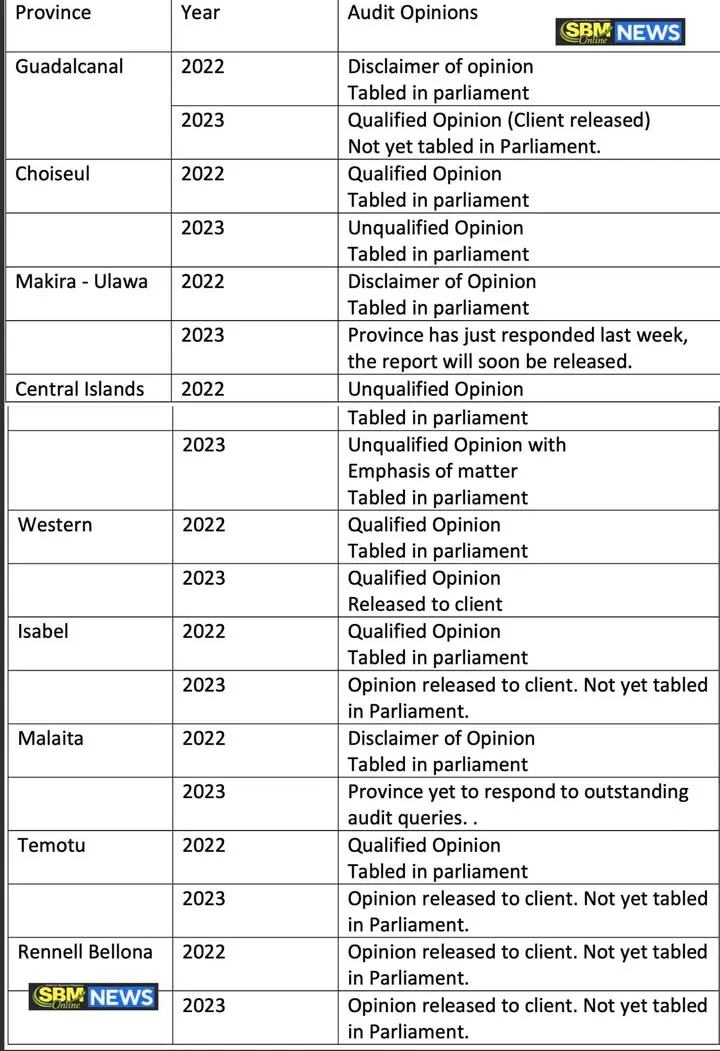
The recent statement announced receiving complete audit reports from 6 provinces for the period of 2022 and 2023 with varying results. The provinces are Central, Choiseul, Isabel, Western, Temotu and Guadalcanal. The statement also announced that they are currently waiting for the Office of the Auditor General to submit Audit Reports for that particular period, for Malaita, Rennell and Bellona and Makira Ulawa Provinces.
However, the OAG clarifies that Audit Opinions for Rennell and Bellona were released to the Speaker of Rennell and Bellona Province, the Hon Jefter Tuhangena, in July this year. The Permanent Secretary of the Ministry of the Provincial Government was also copied in on the email.
Meanwhile, Malaita and Makira and Ulawa Provinces are yet to respond to audit queries before final audit report for 2023 can be released.
The Provincial Audit Opinions for the periods of 2022 and 2023 released to Provincial Governments or tabled in Parliament so far are as follows:
Audit Opinion Definitions:
Unqualified Audit Opinion
An unqualified audit opinion, also known as a clean opinion, indicates that an entity's financial statements present a true and fair view in all material respects, without any significant reservations.
Qualified Audit Opinion
A qualified audit opinion indicates that, except for specific identified issues, the financial statements are fairly presented in accordance with the applicable accounting standards.
Disclaimer Audit Opinion
A disclaimer audit opinion is issued when an auditor cannot obtain enough reliable evidence to form any opinion on a company’s financial statements, typically due to material and pervasive scope limitations.
Emphasis of Matter
An emphasis of matter means a specific section added to an auditor's report to draw attention to a critical issue already presented or disclosed in the financial statements that is important to the user's understanding, without changing the auditor's opinion.
The OAG provincial audits 2022-2024 are supported by UNCDF, which provides some funding for consultancy, logistics and equipment. Audit fieldwork for 2024 for all Provinces are complete and the outcomes, alongside the commencement of 2025 audit fieldwork should be finalised this year, depending on how Provinces respond to requirements of the audit process.
Ends////
WHO SUPPORTS SOLOMONS HEALTH SERVICES
The Ministry of Health and Medical Services (MHMS), with support from the World Health Organization (WHO), is strengthening the country’s regulatory system for medicines, vaccines and medical devices to help ensure that health products reaching communities are safe, effective and of assured quality.
For details visit: https://www.solomonstarnews.com/solomon-islands.../
New school offers hope of keeping children close to their families while improving access to education
BY NED GAGAHE
In Thathaje village, Isabel province, a school building rising from a coconut plantation represents more than classrooms and lessons.
Members of Thathaje community with Mr. Nickson Teopuhi and his team pose for a group photo infront of the classroom building, Photo credit- Ned Gagahe
For parents, it means their children may no longer have to cross rough seas or leave home to stay with relatives just to attend school.
For children, it could mean going to class each morning and returning home to their families each afternoon.
And for the wider community, the nearly completed school represents hope that more children will be able to remain in education.
Thathaje, a community of about 200 people in Japuana Ward 12, Gao/Bugotu Constituency, has faced significant challenges in providing children with access to education.
For years, children have had to travel to Kalenga Primary and Secondary School or Lepi Primary School.
The journey to school can take between 5 and 10 minutes by canoe or outboard motor (OBM), depending on sea conditions.
The alternative land routes are also difficult, with steep mountains, large rocks and rugged terrain making the journey challenging for young children.
Seafront of Thathaje village, Photo credit- Ned Gagahe
For families, the problem goes beyond transportation.
When children cannot travel safely each day, some families have had to arrange for them to stay with relatives in Sepi, where Kalenga is located, or in Lepi primary school – another nearby village during the school term.
Parents then have to make regular trips to provide food, school supplies and pocket money.
Community elder Chris Vahia said the difficulties had contributed to a significant number of children being out of school.
Village elder Chris Vahia speaking to Island Sun during an interview, Photo credit- Ned Gagahe
He said about 30 children from Thathaje were currently not attending school, while some who had previously enrolled had dropped out because of the challenges.
The situation has also affected children emotionally and academically.
Grade Six student Ileen Mizar, who attends Kalenga Primary School, said staying away from her parents was difficult.
“Sometimes I feel hungry, but I keep quiet. This affects my studies. Going home and returning every weekend is difficult. I wish the school was here,” she said.
Her experience reflects the concerns of parents who want their children to receive an education without having to sacrifice their comfort, safety and connection with their families.
Kalenga Primary School headteacher Nickson Teopuhi said children could experience difficulties when staying with extended family.
Kalenga Primary School head teacher Mr Nickson Teopuhi speaking to the community, Photo credit- Ned Gagahe
He said some children could become fearful even over simple activities within the household.
“Even simple things, such as going to get food from the food safe, can make you think twice about whether it is ok to do so,” he said.
Teopuhi said this was one of the reasons establishing a school in Thathaje was important.
“That is why our children did not go to Kalenga. They were afraid because of the challenges and fear we faced,” he said.
He said the community needed to work together to ensure the school became a reality.
“We must support it as much as we can so that our children can attend school, learn and have the opportunity to develop,” Teopuhi said.
“The most important thing is for us to put our heads together, cooperate and support one another so that we can achieve our goals and create a better future for everyone.”
The school is being established with support from the Provincial Government and under the leadership of Japuana Ward 12 representative Tony Vahia.
It is currently described as an extension of Kalenga Primary School.
When the Island Sun visited the site last month, construction of the school building was about 70 percent complete.
Once completed it can accommodate up to 6 classrooms. If both the bottom and top of the building is fully utilised.
However, further work is still required before it can officially open.
Chairman of the Thathaje Extension School project, Chief George Tafo said the project had faced challenges, including a land dispute over an initially identified site.
Chairman of Thathaje extenssion school Chief George Tafo, Photo credit- Ned Gagahe
The community eventually found another location, with Tafo agreeing to allow part of his coconut plantation to be used.
“I thought about the importance of establishing this school. After consulting my family, I decided to allow the school on my coconut plantation. Education is important for the generation of this community,” he said.
Tafo said the decision was made with the future of the community’s children in mind.
For parents, the school could also remove some of the financial pressures associated with sending children to school away from home.
Parent Marion Vahia said families sometimes struggled to find fuel or an OBM to transport their children.
Parents Mostyn Huai and his wife Marion Vahia, their two boys Mostyn Jnr, and Livingstone, are currently attending Kalenga Primary School, Photo credit- Ned Gagahe
“Sometimes we do not have the fuel or outboard motor (OBM) to transport them to school. Sometimes we also do not have a canoe to take them to school. As a result, the children have to stay at home instead of attending school,” she said.
She said parents also relied on relatives to accommodate their children.
“If they allow us, we leave our children with them so they can attend school. If they do not, then the children cannot go to school,” Vahia said.
The financial responsibility does not end once children leave home.
Parents must also provide food for children staying with relatives.
“When our children stay with our relatives, we have to take food to them every Sunday. Sometimes, we also have to take food to them during the week,” she said.
Vahia said mothers also worried about whether their children were comfortable, properly fed and safe while staying away from home.
“As a mother, this is one of my biggest worries about my children,” she said.
The prospect of having a school in the village has therefore been welcomed by parents.
“We are very, very happy that once this school opens, our children will be able to attend school while staying at home. We will be able to look after them in the village, make sure they eat well, and then send them to class,” Vahia said.
Marion’s husband, Mostyn Huai, said the school would also help families reduce transportation and food costs.
“I am very, very happy that the school will soon be established here because the children will be able to live close to us,” he said.
Huai said families currently had to spend money transporting children to Kalenga and providing food when they stayed away from home.
“We have to give them a bag of rice and other food such as noodles and tinned fish,” he said.
“When the school is established here, we will be very happy because we will be able to feed the children at home before they go to school.”
For Thathaje, the school is therefore not simply another building in the village.
It represents the possibility of keeping children close to their parents while giving them a better chance to attend school regularly.
It represents relief for parents who have struggled with transportation, accommodation and food costs.
And for children who have faced difficult journeys and separation from their families, it represents the possibility of attending school without leaving home.
The community is now looking towards completing the remaining work so the school can open and begin serving Thathaje children.
The community has also appealed to donors to support the completion of the school.
*Reporting for this story was supported by Pacific Media Assistance Scheme (PACMAS)
Photo credit: Ned Gagahe
For feedback, contact: gagahened@gmail.com
Editor: irwin3angiki@gmail.com
BY LORETTA B MANELE
The Parliamentary Opposition Group commends the Minister of Finance and Treasury, Gordon Darcy Lilo for his responsible and realistic approach to Solomon Islands financial position.
A statement from Opposition this afternoon said the minister’s emphasis on understanding the country’s available fiscal space, strengthening domestic revenue and managing public finances responsibly is the kind of discipline required when Government is faced with many competing demands.
The Opposition Group said Mr Lilo in his recent presentation of the 2026 Supplementary Appropriation Bill, highlighted the pressure placed on the national budget when expenditure increases without corresponding revenue growth or a clear financing strategy.
The statement said this is a difficult responsibility for any Finance Minister, particularly when Government is also pursuing major policy commitments and new programmes.
“Minister Lilo deserves credit for putting fiscal reality at the centre of the discussion. A Finance Minister must look at what the country can actually afford before Government makes commitments that create additional financial obligations,” the Opposition said.
Moreover, the Opposition Group stated that this discipline must apply across Government.
“The Government is increasing expenditure, making additional political appointments and pursuing major commitments including fee-free education, infrastructure, agriculture and other programmes. All of these commitments have financial implications and must be considered against the country’s available resources,” the Opposition said.
Also mentioned is that while increasing revenue is important, it cannot simply be followed by more spending and that Government must also take into consideration what it can afford or sustain over the long term.
In regards to the proposed free education policy, the Opposition said the Government must be clear on the full cost of the policy and on how it will be financed alongside its other commitments.
“Good policy must be matched by good financial planning,” the Opposition stated.
The Opposition said responsible financial management requires the Finance Minister to have the space to properly assess the country’s finances and advise Government on what is affordable and sustainable.
“If we genuinely want responsible government, then fiscal discipline cannot rest with the Finance Minister alone. It must be respected and applied across the whole of Government,” the Opposition said.
Minister Lilo’s focus on fiscal responsibility has been welcomed by the Opposition Group and they will continue to support efforts to strengthen the country’s financial position while scrutinising Government spending and major policy commitments.
The Opposition said Solomon Islanders deserve a Government that makes promises based not only on what people want to hear, but on what the country can realistically afford and sustain and urges the Minister for Finance and Treasury to control government expenditure whilst building the country’s fiscal space.
For feedback, contact: lorettamanele@gmail.com
Editor: irwin3angiki@gmail.com